Toyota Land Cruiser J300 Review Power, Technology and Off-Road Skill




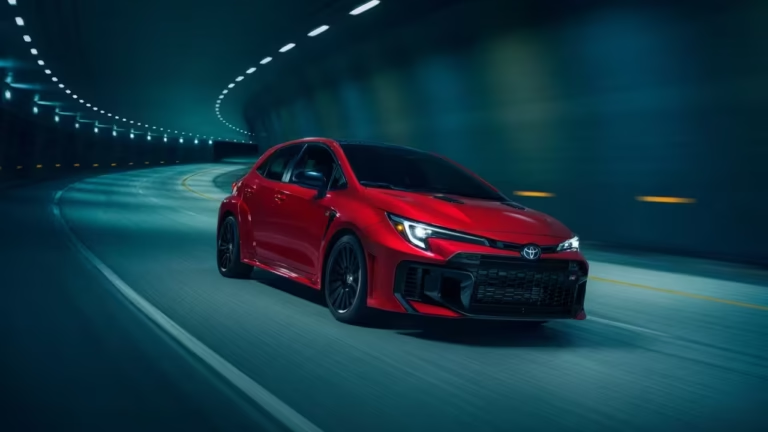
The Toyota Land Cruiser J300 shows what happens when a legendary off-road vehicle adopts modern powertrains, connected technology and advanced safety systems without abandoning its body-on-frame foundations. It is faster, lighter and more sophisticated than the previous 200 Series, yet it remains engineered for remote touring, heavy towing and difficult terrain.
Modern cars matter because buyers now expect one vehicle to perform several roles. A large SUV must be comfortable in traffic, stable on highways, connected to smartphones, safer in emergencies and capable of travelling far beyond paved roads. The Toyota Land Cruiser J300 addresses those demands with twin-turbo V6 engines, a performance-focused hybrid option, full-time four-wheel drive and a cabin that mixes digital displays with practical physical controls.
However, the J300 is not officially sold in the United States. American buyers receive the smaller Land Cruiser 250 Series, which uses a 2.4-litre four-cylinder hybrid powertrain. The full-size J300 is primarily offered in markets such as Australia, Japan, the Middle East and parts of Asia and Africa.
What Makes the Toyota Land Cruiser J300 a Modern Car?
A modern car is not defined solely by a large touchscreen or an electrified badge. It combines efficient engineering, active safety, connectivity, digital information and improved performance while remaining suitable for its intended purpose.
The Toyota Land Cruiser J300 uses Toyota’s GA-F architecture, a body-on-frame platform developed under the Toyota New Global Architecture strategy. Compared with the older J200, the platform improves structural rigidity, lowers the centre of gravity and reduces unnecessary weight while preserving the durability expected from a Land Cruiser.

Its modern-car credentials include:
- Twin-turbocharged V6 powertrains
- A 10-speed automatic transmission
- A one-motor i-FORCE MAX hybrid system
- Configurable digital instrument displays
- Wireless Apple CarPlay and Android Auto
- Connected vehicle services
- Adaptive cruise control and lane-support technology
- Multi-Terrain Select and camera-based off-road monitoring
- Electrically controlled suspension and differential systems
Rather than turning the Land Cruiser into a road-focused crossover, Toyota has used modern technology to strengthen its traditional capabilities.
Exterior Design and Road Presence
The Toyota Land Cruiser J300 retains the upright proportions and substantial road presence associated with the nameplate. Its broad grille, squared body, high bonnet and short overhangs communicate strength without relying on decorative styling alone.
Many exterior details serve practical purposes. The lighting units are positioned to reduce their exposure to trail damage, while the bumper shapes support useful approach and departure geometry. Most Australian variants provide approximately 235mm of running ground clearance, although exact angles and dimensions vary by grade.

The Sahara ZX has a more polished, road-oriented appearance with 20-inch alloy wheels and unique trim. In contrast, the GR Sport uses 18-inch wheels, black exterior details, dedicated bumpers and rally-inspired branding. Its smaller wheels also leave more tyre sidewall, which is valuable on rocks, corrugations and rough tracks.
The design is less extravagant than some luxury competitors. Nevertheless, that restraint suits a vehicle expected to remain functional in demanding environments.
Key Specifications
| Specification | 3.3L Twin-Turbo Diesel | 3.5L i-FORCE MAX Hybrid |
|---|---|---|
| Engine | 3.3-litre twin-turbo V6 diesel | 3.5-litre twin-turbo V6 petrol |
| Electric motor | None | Single integrated motor-generator |
| Maximum power | 227kW | 341kW combined |
| Maximum torque | 700Nm | 790Nm combined |
| Transmission | 10-speed automatic | 10-speed automatic |
| Drivetrain | Full-time 4WD with low range | Full-time 4WD with low range |
| Braked towing capacity | 3,500kg | 3,500kg |
| Combined fuel use | 8.9L/100km | 10.0L/100km |
| Fuel tank | 110 litres | 98 litres |
| Hybrid battery | Not applicable | 288V, 6.5Ah nickel-metal hydride |
| Seating | Five or seven, depending on grade | Five seats |
| Australian availability | GX to GR Sport/Sahara ZX | GR Sport and Sahara ZX |
The diesel produces 227kW and 700Nm, while the performance hybrid increases combined output to 341kW and 790Nm. Toyota positions the hybrid as a performance system rather than a conventional fuel-saving hybrid.
Engine Options, Horsepower and Torque
Twin-Turbo Diesel V6
The familiar choice for long-distance touring is the 3.3-litre twin-turbo diesel V6. It develops 227kW, equivalent to approximately 304 horsepower, and 700Nm of torque between 1,600 and 2,600rpm.
That broad low-speed torque band is well suited to towing, sand driving and climbing steep terrain. The 10-speed automatic keeps the engine within its strongest operating range without creating excessive gear hunting.
Official Australian combined fuel consumption is 8.9L/100km. Combined with the diesel model’s 110-litre dual-tank capacity, this gives it a major advantage for remote travel where fuel stations are widely separated.
i-FORCE MAX Performance Hybrid
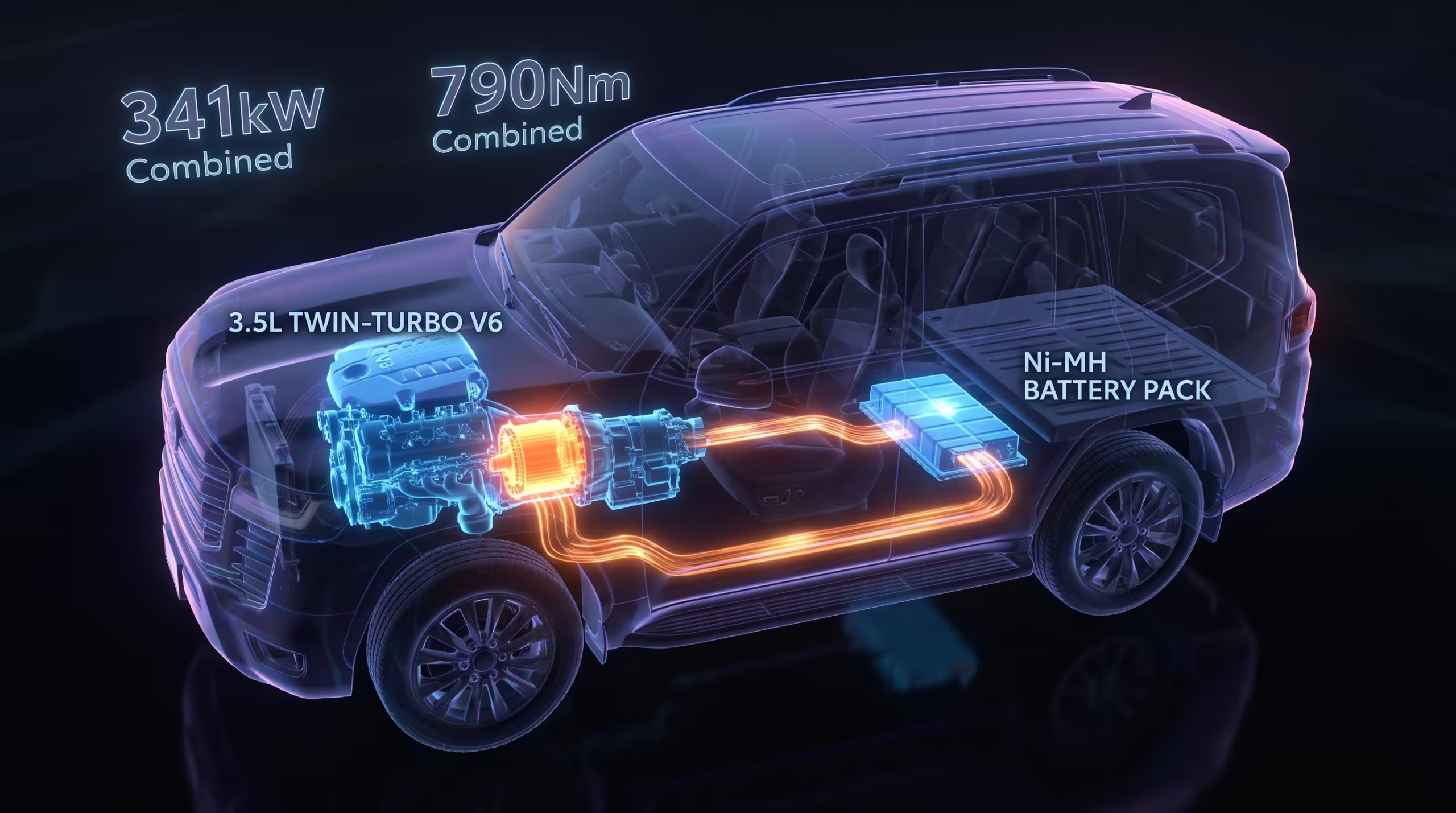
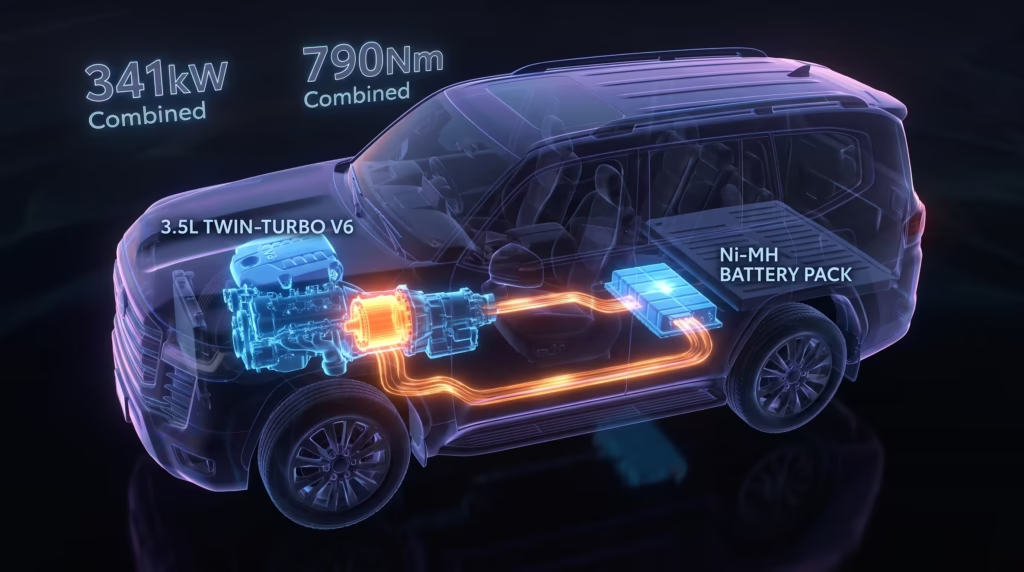
The Toyota Land Cruiser J300 Hybrid combines a 3.5-litre twin-turbo petrol V6 with an electric motor positioned between the engine and the 10-speed automatic transmission.
The petrol engine produces 305kW and 650Nm, while the motor contributes up to 36kW and 250Nm. Total system output reaches 341kW, or approximately 457 horsepower, and 790Nm.
This system is designed to improve acceleration, towing response and low-speed control. Electric assistance fills gaps in petrol-engine response, making overtaking and climbing feel more immediate. It can also move briefly under electric power at low speeds, although the petrol engine normally operates above approximately 30km/h.
Claimed Australian combined fuel consumption is 10.0L/100km. Therefore, the hybrid is more powerful but not more economical than the diesel. It also uses a smaller 98-litre fuel tank, reducing its potential touring range.
Hybrid Battery, EV Range and Charging
The J300 performance hybrid uses an air-cooled 288V, 6.5Ah nickel-metal hydride battery installed beneath the rear luggage area. Toyota protects the battery with a waterproof tray and a high-strength steel structure.
This is not a plug-in hybrid or battery-electric SUV. Consequently:
- It has no published long-distance electric driving range.
- It does not connect to a home charger or public charging station.
- There is no external charging speed or charging time.
- The battery is replenished through regenerative braking and the petrol engine.
The system prioritises torque and responsiveness rather than extended electric-only driving. Battery placement also raises the rear load floor and reduces some cargo flexibility compared with the diesel model.
Off-Road Performance and Driving Technology
The Toyota Land Cruiser J300 remains one of the most comprehensively equipped factory off-road SUVs available. Every Australian version includes permanent four-wheel drive, a low-range transfer case, a locking centre differential, Crawl Control, active traction control and Downhill Assist Control.
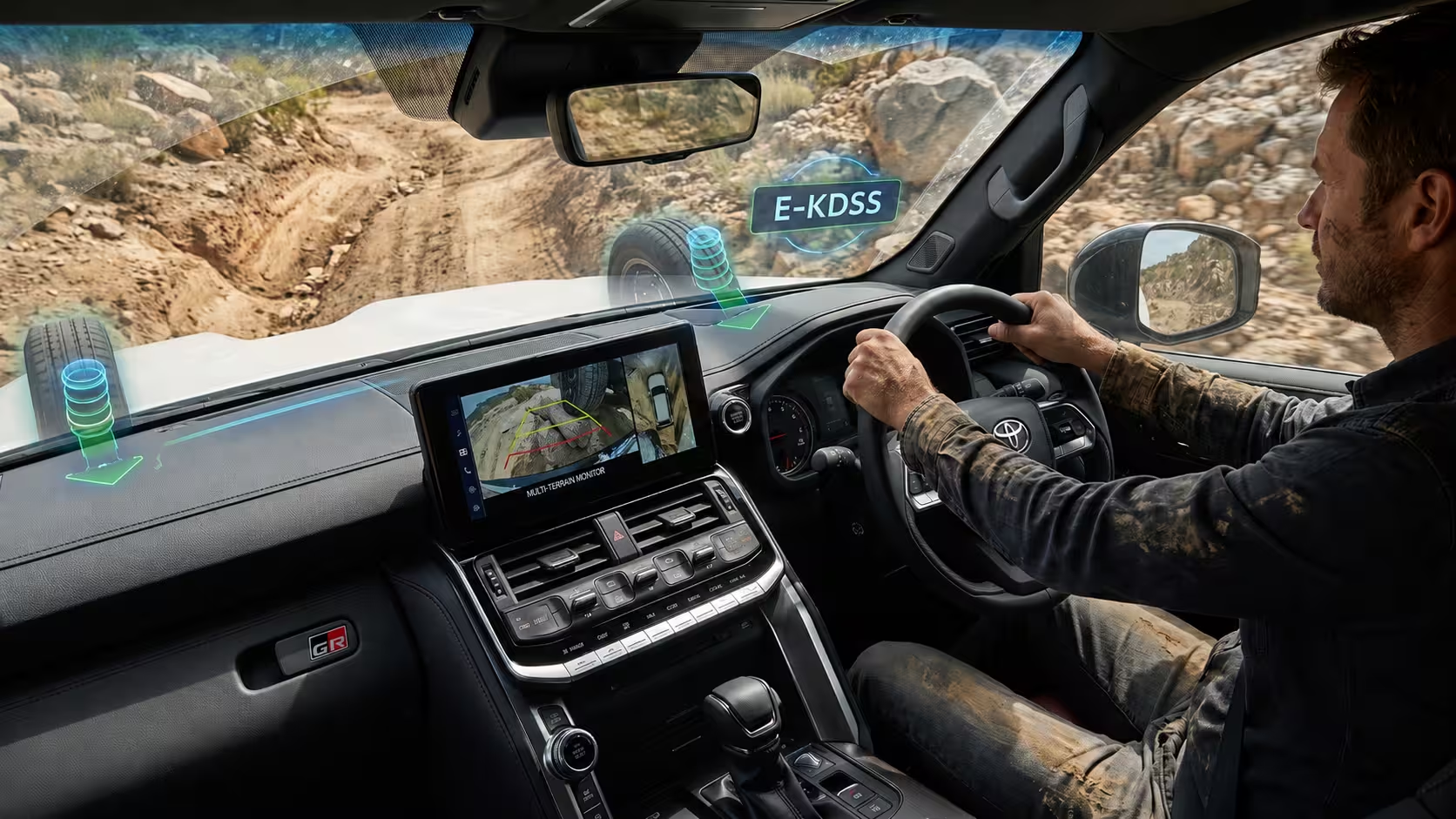
GXL and higher grades add Multi-Terrain Select, allowing the vehicle to adapt throttle response, braking and traction control for surfaces such as dirt, sand, mud, deep snow and rock.

A Multi-Terrain Monitor uses exterior cameras to display the vehicle’s surroundings. This is particularly useful when the bonnet blocks the driver’s view of rocks, deep ruts or sudden changes in trail direction.
The GR Sport is the most specialised off-road version. It adds:
- Locking front and rear differentials
- Electronic Kinetic Dynamic Suspension System
- Dedicated 18-inch wheels
- Off-road-focused exterior geometry
- Five selectable driving modes
E-KDSS can increase suspension movement during off-road driving while maintaining greater body control on sealed roads. This makes the GR Sport the strongest choice for technically difficult trails.
On-Road Driving Experience
Despite its improved platform, the Toyota Land Cruiser J300 still behaves like a large body-on-frame SUV. Its high seating position, substantial weight and long suspension travel create more body movement than a lower crossover or performance SUV.
However, steering accuracy, ride isolation and transmission behaviour are noticeably more polished than in older Land Cruisers. The diesel feels calm and muscular rather than fast. By comparison, the hybrid delivers stronger acceleration and more immediate throttle response, especially when overtaking or joining a highway.
The Sahara ZX is better suited to buyers who prioritise quiet road travel and premium styling. The GR Sport feels more purposeful on broken surfaces, although its specialist hardware does not make it a sports SUV in the conventional sense.
Urban usability remains limited by the vehicle’s size. Tight parking structures, narrow streets and small garages require planning, even with surround-view cameras and parking sensors.
Interior Comfort and Infotainment
The cabin balances modern displays with traditional usability. Toyota has retained separate physical controls for climate settings, drive modes, four-wheel-drive functions and frequently used vehicle systems. This reduces the need to search through touchscreen menus while driving.

Higher grades feature a 12.3-inch infotainment touchscreen, connected satellite navigation, wireless smartphone integration and a 12.3-inch digital instrument cluster. GX and GXL models use a smaller 7-inch digital driver display.
Available interior equipment includes:
- Wireless Apple CarPlay and Android Auto
- Toyota Connected Services
- Head-up display
- Four-zone climate control
- Heated and ventilated front seats
- Heated and ventilated second-row outer seats
- Wireless phone charging
- 14-speaker JBL audio
- Twin rear entertainment displays
- Panoramic View Monitor
- A centre-console cool box
The infotainment graphics are functional, although some competitors offer more visually sophisticated software. The J300’s advantage is that essential controls remain easy to locate.
Five- and seven-seat layouts are available across the diesel range, depending on grade. The performance hybrid is offered with five seats because its battery and related hardware occupy space beneath the rear luggage floor.
Safety and Driver-Assistance Technology
Most Toyota Land Cruiser J300 variants carry a five-star ANCAP safety rating based on testing conducted in 2022. The rating applies to petrol, diesel and hybrid models, but excludes the GR Sport.
The tested vehicle achieved:
- 89% for adult occupant protection
- 88% for child occupant protection
- 81% for vulnerable road-user protection
- 77% for safety assistance
Standard or widely available safety technology includes autonomous emergency braking, pedestrian and cyclist detection, junction assistance, adaptive cruise control, lane-departure alert, lane-trace assistance, road-sign recognition and multiple airbags.
These systems improve everyday protection, but they remain driver-assistance features rather than autonomous driving technology.
Toyota Land Cruiser J300 vs Older and Competing SUVs
| Vehicle | Core Character | Main Strength | Main Compromise |
|---|---|---|---|
| Land Cruiser J300 Diesel | Long-range body-on-frame 4WD | Touring range and low-speed torque | Large size and diesel ownership costs |
| Land Cruiser J300 Hybrid | High-output electrified 4WD | Acceleration and responsive power | Higher fuel use than the diesel |
| Land Cruiser J200 V8 Diesel | Traditional heavy-duty tourer | Proven V8 character and durability | Older technology and six-speed transmission |
| Lexus LX 700h | Luxury version of the GA-F platform | Premium cabin and refinement | Considerably higher purchase price |
| Defender 130 | Technology-focused adventure SUV | Flexible seating and modern infotainment | Less traditional ownership experience |
| Nissan Patrol | Large petrol-powered rival | Cabin space and strong performance | Petrol consumption and limited diesel choice |
Compared with the J200, the J300 provides more power, a broader transmission ratio spread, better connectivity and significantly more advanced driver assistance. Nevertheless, some traditionalists may prefer the older model’s V8 character and simpler cabin.
The Lexus LX shares important architecture and powertrain technology with the J300 but adds richer materials, more luxurious appointments and a higher price. The Defender offers more dramatic interior technology and up to eight seats in 130 form, while the Patrol remains a direct rival for buyers wanting a large body-on-frame SUV.
Pricing, Ownership and Maintenance Costs
Australian list pricing for the updated diesel Toyota Land Cruiser J300 begins at A$97,990 before on-road costs for the five-seat GX. The diesel range progresses through GXL, VX and Sahara before reaching the GR Sport and Sahara ZX.
| Australian Grade | Indicative List Price Before On-Road Costs |
|---|---|
| GX Diesel | A$97,990 |
| GXL Diesel | A$110,820 |
| VX Diesel | A$122,510 |
| Sahara Diesel | A$139,310 |
| GR Sport Diesel | A$146,160 |
| Sahara ZX Diesel | A$146,910 |
| GR Sport Performance Hybrid | A$155,990 |
| Sahara ZX Performance Hybrid | A$156,740 |
Prices may change with model-year adjustments, optional paint and regional charges. The latest hybrid launch pricing places both electrified grades roughly A$9,000 above their diesel equivalents.
The Land Cruiser is expensive to purchase, insure, fuel and equip. Large tyres, substantial fluid capacities and heavy-duty components can also increase long-term maintenance expenses.
However, Toyota supports the Australian range with a five-year, unlimited-kilometre vehicle warranty. Capped-price servicing is available for the first five years or 100,000km, with scheduled services priced at A$450 under the announced hybrid program.
Resale demand has historically been a major Land Cruiser strength, particularly in markets where buyers value towing, remote-area capability and established service support.
Real-World Usability
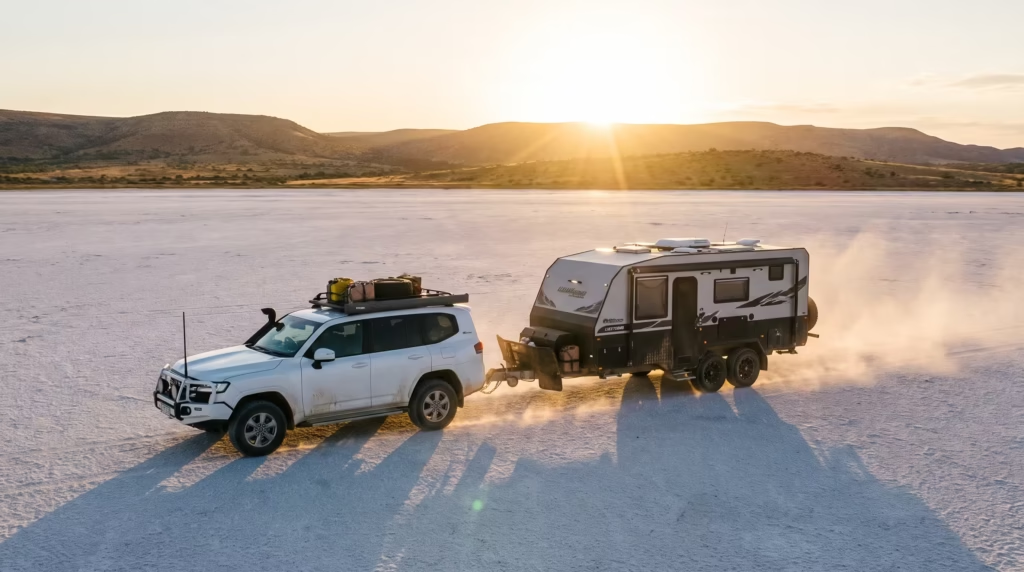
For long-distance overlanding, the diesel remains the most logical choice. Its lower official fuel consumption and larger tank provide greater range, while its torque delivery suits towing and sustained highway travel.
The hybrid is more appealing for owners who want effortless acceleration, smoother low-speed modulation and stronger performance under load. Nevertheless, its raised cargo floor, five-seat configuration and reduced fuel range introduce compromises for serious touring.
For daily driving, both powertrains offer excellent visibility, a comfortable driving position and strong cabin isolation. Yet the J300 can feel excessive for short urban journeys. Buyers who do not need 3,500kg towing capacity, low-range gearing or remote-area durability may find a smaller hybrid SUV more efficient and easier to operate.
Market Impact and Future Trends
The arrival of the Toyota Land Cruiser J300 Hybrid demonstrates that electrification in heavy-duty vehicles does not always focus on maximum fuel savings. Toyota uses electric torque to improve drivability, towing response and off-road control while retaining a mechanical transmission, full-time four-wheel drive and low-range gearing.
Future large SUVs are likely to combine tougher emissions requirements with greater electrification. Performance hybrids, plug-in hybrids and eventually battery-electric off-road vehicles will become more common. However, battery weight, charging access, towing range and remote-area reliability remain important engineering challenges.
The J300 suggests Toyota will electrify its most capable vehicles gradually while preserving the durability and functionality expected by traditional customers.
The Toyota Land Cruiser J300 succeeds because it modernises the Land Cruiser formula without replacing it. The diesel remains the stronger choice for long-range touring, fuel efficiency and traditional overlanding. Meanwhile, the performance hybrid delivers exceptional output, smoother acceleration and more responsive low-speed control.
Its size, price, fuel consumption and road manners prevent it from being the ideal vehicle for every buyer. It also lacks the polished luxury experience of the closely related Lexus LX. Nevertheless, few modern SUVs combine advanced technology, 3,500kg towing capacity, low-range gearing and genuine remote-area capability as convincingly as the J300.