Tesla All Cars Current and Upcoming Models Explained







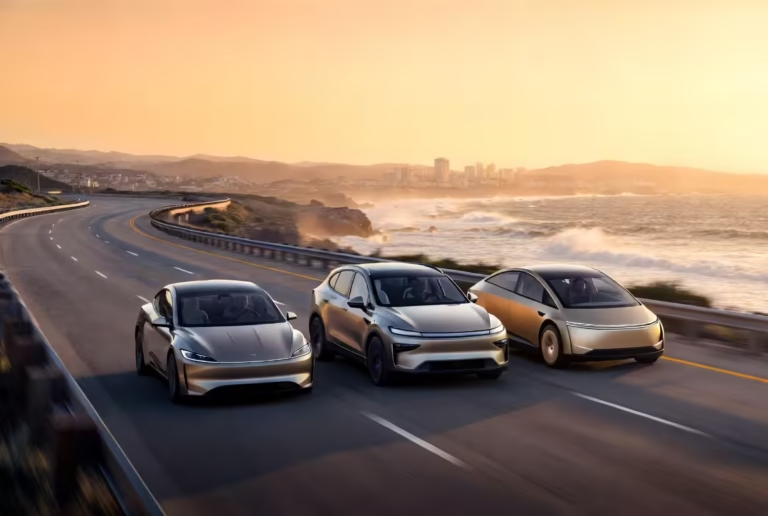
Tesla all cars now represent far more than a small collection of electric sedans. The company’s expanding vehicle portfolio includes affordable family cars, high-performance EVs, three-row crossovers, a stainless-steel pickup, commercial trucks and purpose-built autonomous vehicles.
The lineup is also changing quickly. Model 3, Model Y and Cybertruck form the core passenger range, while the longer Model Y L introduces greater third-row practicality. Meanwhile, Tesla’s U.S. pages state that Model S and Model X are no longer in regular production, although inventory and pre-owned examples may remain available. Roadster, Cybercab, Robovan and Semi represent different parts of Tesla’s next-generation mobility strategy.
This Tesla all cars guide explains the specifications, performance, range, charging, technology, safety, pricing and real-world usability of every important model.
What Are Modern Tesla Cars?
Modern Tesla vehicles are battery-electric cars powered by one or more electric motors. Unlike gasoline vehicles, they do not use internal-combustion engines, conventional multi-speed transmissions, fuel tanks or exhaust systems.
Every current passenger Tesla is an EV. Tesla does not currently sell a gasoline, diesel, plug-in hybrid or traditional hybrid model. Instead, the company concentrates on:
- Battery-electric powertrains
- Single-, dual- or tri-motor configurations
- Rear-wheel drive and all-wheel drive
- Regenerative braking
- Fast DC charging
- Over-the-air software updates
- Touchscreen-controlled cabin functions
- Camera-based driver-assistance technology
- Mobile-app connectivity
This design approach gives Tesla vehicles rapid throttle response, quiet operation and fewer routine powertrain service requirements than combustion-engine cars.
Tesla All Cars Lineup at a Glance
The following comparison table covers Tesla’s production, recently discontinued and upcoming vehicles. Prices reflect available U.S. information and may differ by trim, location, delivery fee and configuration.
| Tesla model | Vehicle type | Status | Maximum published range | Fastest published 0–60 mph | Indicative starting price |
|---|---|---|---|---|---|
| Model 3 | Compact electric sedan | Current | Up to 363 miles | 2.9 seconds | About $38,630 including listed fees |
| Model Y | Midsize electric crossover | Current | Up to 357 miles | 3.3 seconds | Varies by configuration |
| Model Y L | Long-wheelbase three-row crossover | Current/new | About 325 miles | 4.4 seconds | $61,990 before listed fees |
| Cybertruck | Electric pickup truck | Current | Up to 325 miles | 2.6 seconds | $79,990 for Premium AWD before fees |
| Model S | Luxury electric sedan | Production ended | Up to 410 miles | 1.99 seconds | Inventory or pre-owned pricing |
| Model X | Luxury electric SUV | Production ended | Up to 352 miles | 2.5 seconds | Inventory or pre-owned pricing |
| Roadster | Electric supercar | Upcoming | 620-mile target | 1.9-second target | Final price not confirmed |
| Cybercab | Autonomous two-seat EV | Upcoming | Not confirmed | Not confirmed | Not confirmed |
| Robovan | Autonomous passenger/cargo vehicle | Concept/upcoming | Not confirmed | Not confirmed | Not confirmed |
| Semi | Class 8 electric truck | Commercial rollout | Up to 500 miles | Not listed | Fleet pricing not published |
The table shows how broad the Tesla all cars lineup has become. However, target figures for vehicles that have not entered full production should not be treated as final customer specifications.
Tesla Model 3 The Accessible Electric Sport Sedan
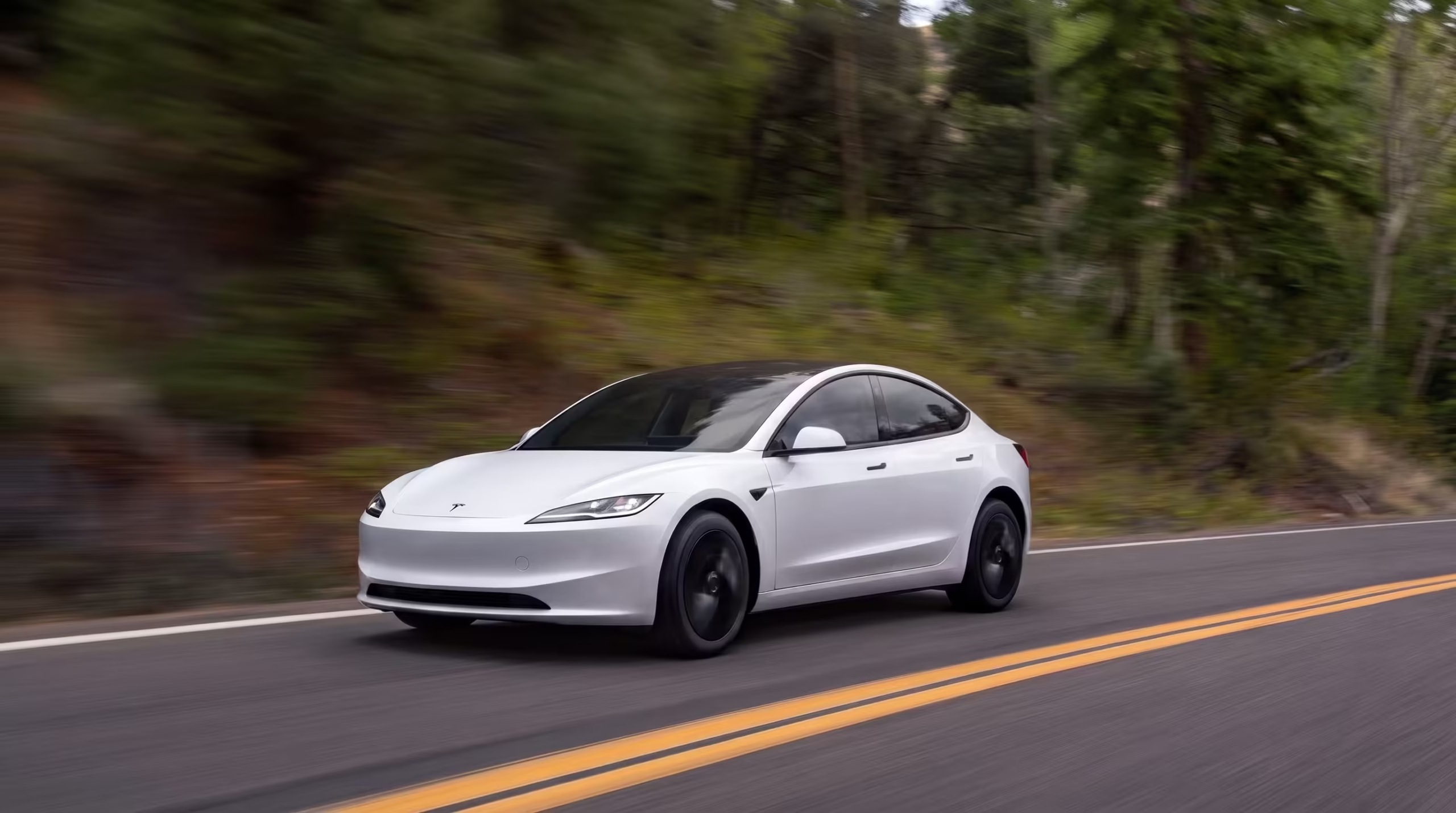
Model 3 remains the most affordable conventional passenger car in the Tesla all cars range. It combines a compact exterior with seating for five adults, 24 cubic feet of cargo capacity and a minimalist cabin centered around a 15.4-inch touchscreen.
Model 3 Range and Performance
The rear-wheel-drive Model 3 offers an EPA-estimated 321 miles of range and reaches 60 mph in 5.8 seconds. The Premium Long Range Rear-Wheel Drive version extends the published range to 363 miles while reducing the 0–60 mph time to 4.9 seconds.
Drivers seeking maximum acceleration can choose Model 3 Performance. It produces a published 510 peak horsepower, reaches 60 mph in 2.9 seconds and has a 163-mph top speed. Its estimated range is 309 miles.

Charging and Everyday Efficiency
Depending on the configuration, Model 3 supports up to 225 or 250 kW of Supercharging power. The most efficient long-range version can add up to 195 miles of range in 15 minutes under Tesla’s constant-speed test conditions.
Model 3 is particularly practical for commuters because of its compact dimensions, long potential driving range and low energy use. It is positioned against electric sedans such as the Hyundai Ioniq 6, BMW i4 and Polestar 2.
Model 3 prices shown by Tesla begin at approximately $38,630 including destination and order fees, while Premium and Performance versions are listed from approximately $44,130 and $56,630 respectively.
Tesla Model Y The Mainstream Family Crossover
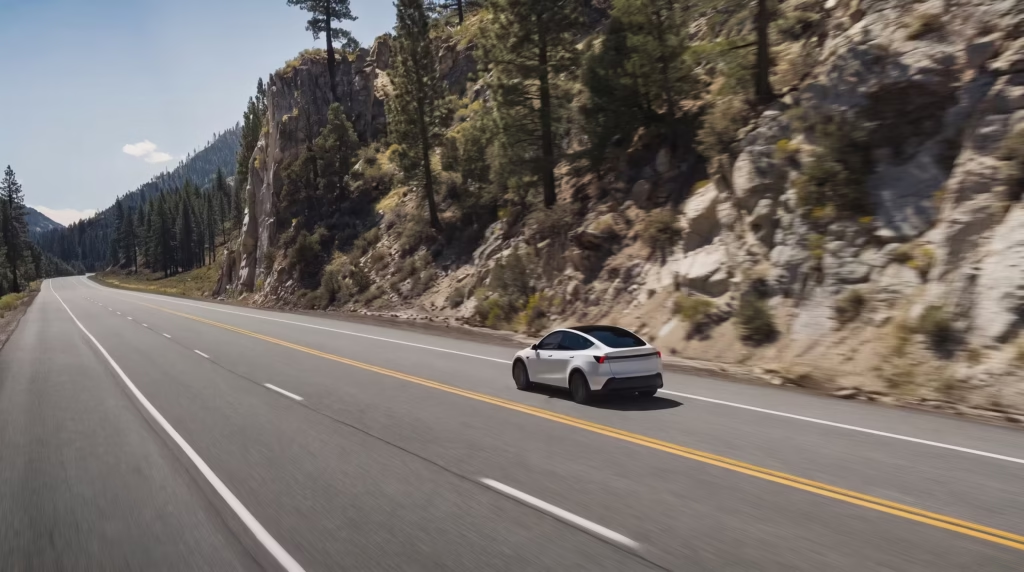
Model Y is the most versatile high-volume vehicle in the Tesla all cars collection. It combines crossover seating, a large cargo area, available all-wheel drive and access to Tesla’s charging network.
The standard rear-wheel-drive Model Y provides an EPA-estimated 321 miles of range, a 6.8-second 0–60 mph time and up to 74 cubic feet of cargo space. It supports up to 225 kW Supercharging and can add as much as 160 miles in 15 minutes under Tesla’s stated conditions.
Higher trims provide additional range, traction or acceleration. The Premium Rear-Wheel Drive version is rated for as much as 357 miles, while Model Y Performance delivers an EPA-estimated 306 miles and a claimed 3.3-second 0–60 mph time.
Interior and Infotainment
Depending on trim, Model Y includes a 15.4- or 16-inch central touchscreen. Premium versions also add an 8-inch rear display. Available features include heated seating, app-based climate controls, navigation, entertainment services, wireless connectivity and driver-profile synchronization.
The cabin offers more cargo flexibility than Model 3, making Model Y better suited to families, pets, luggage and outdoor equipment. Its key competitors include the Hyundai Ioniq 5, Kia EV6, Ford Mustang Mach-E and Volkswagen ID.4.
Tesla Model Y L More Space and Three Usable Rows
Model Y L is a stretched, long-wheelbase interpretation of Model Y. It measures approximately 195.6 inches long and offers seating for up to six adults.
The second row uses captain’s chairs with powered armrests, heating, ventilation and one-touch folding. The third row adds reclining and heated seats, while total cargo capacity reaches as much as 89 cubic feet with the rear seats folded.

Tesla lists an estimated 325-mile range, dual-motor all-wheel drive and a 4.4-second 0–60 mph time. Charging power reaches 250 kW, with up to 164 miles added in 15 minutes under the company’s stated conditions.
The Model Y L Premium is advertised from $61,990 before destination and order fees, or $63,630 when those listed fees are included. It provides an alternative to larger electric SUVs without moving to the size or weight of the discontinued Model X.
Tesla Cybertruck Electric Pickup With Unconventional Engineering
Cybertruck is the most visually distinctive vehicle in the Tesla all cars lineup. Its stainless-steel body panels, geometric profile and steer-by-wire system separate it from conventional electric trucks.
Cybertruck Performance and Utility
Cybertruck is offered in Dual Motor All-Wheel Drive, Premium All-Wheel Drive and Cyberbeast configurations.
The Premium All-Wheel Drive model provides:
- 325 miles of EPA-estimated range
- 4.1-second 0–60 mph acceleration
- Up to 11,000 pounds of towing capacity
- 120.7 cubic feet of total cargo capacity
- Up to 16 inches of ground clearance
- 325 kW maximum Supercharging
Cyberbeast increases output to a published 845 horsepower and reaches 60 mph in 2.6 seconds. Its estimated range is 320 miles.
Cybertruck’s official 123 kWh battery can also support Powershare functions. Available outlets provide power for equipment, while properly configured systems can use the vehicle for home backup or charging another EV.

Pricing and Real-World Use
The Cybertruck Premium All-Wheel Drive has a listed vehicle price of $79,990 before destination and order fees. Its towing capacity, six-foot bed and onboard power outputs make it useful for work or recreation.
However, its substantial width and weight may make it less convenient in tight urban parking spaces than Model 3 or Model Y. It competes with the Rivian R1T, Ford F-150 Lightning, GMC Hummer EV Pickup and Chevrolet Silverado EV.
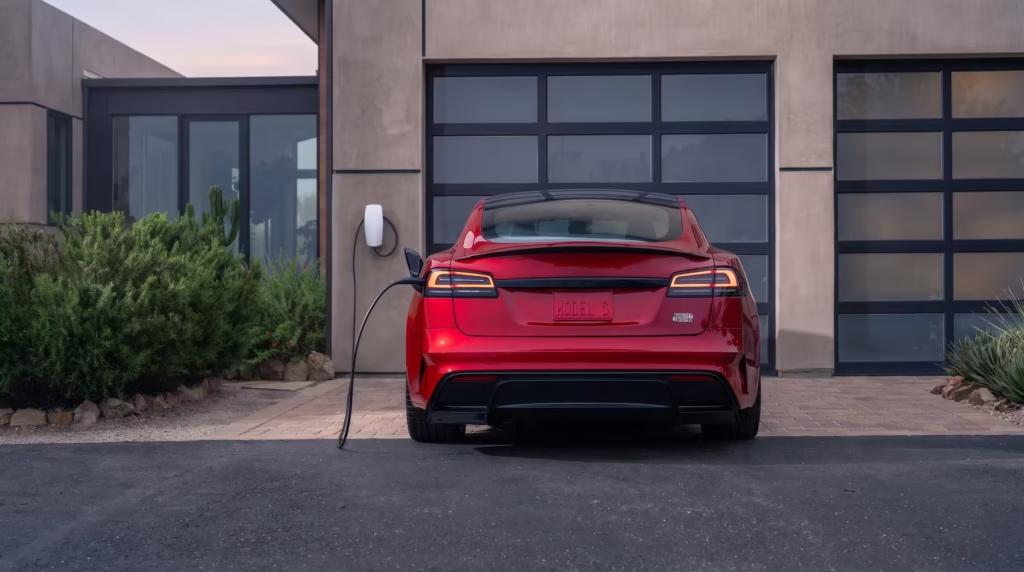
Tesla Model S The Performance Sedan That Defined the Brand
Model S helped establish Tesla as a serious premium-car manufacturer. As of August 2026, Tesla’s U.S. website states that Model S is no longer in regular production, although remaining inventory and pre-owned vehicles may still be offered.
The final published dual-motor Model S specification included:
- 410 miles of EPA-estimated range
- 670 peak horsepower
- 3.1-second 0–60 mph acceleration
- 130-mph top speed
- 250 kW maximum Supercharging
- 28 cubic feet of cargo capacity
Model S Plaid used three motors and produced a published 1,020 horsepower. Tesla listed a 1.99-second 0–60 mph time, a 368-mile range and a potential 200-mph top speed with the required hardware upgrade.
Even after production, Model S remains important because it demonstrated that an electric sedan could combine long range, luxury-car comfort and supercar-level acceleration.
Tesla Model X Falcon-Wing Luxury SUV
Model X was Tesla’s largest premium passenger SUV. Like Model S, it is now described by Tesla’s U.S. site as no longer in production, with inventory and pre-owned vehicles potentially remaining available.
The dual-motor Model X offered a published 352-mile EPA-estimated range, 670 horsepower and a 3.8-second 0–60 mph time. It also provided seating for up to seven, 94.5 cubic feet of cargo capacity and a 5,000-pound towing limit.
Model X Plaid increased output to 1,020 horsepower and reduced the published 0–60 mph time to 2.5 seconds. Its signature Falcon Wing rear doors remain one of the most recognizable designs in the modern EV market.
For most families, Model Y or Model Y L now provides a less expensive and more conventional ownership experience. Nevertheless, Model X remains attractive to used-EV buyers who want dramatic acceleration, three-row seating and distinctive doors.

Tesla Roadster The Delayed Electric Supercar
The original Tesla Roadster was produced from 2008 to 2012. The next-generation Roadster is designed as a four-seat electric supercar with a removable glass roof.
Tesla continues to advertise ambitious targets:
- 1.9-second 0–60 mph acceleration
- More than 250 mph of top speed
- Up to 620 miles of range
These are development targets rather than independently validated production specifications. Tesla has not published final battery capacity, charging performance or a confirmed retail-production price on the current Roadster page.
Roadster would occupy the highest-performance position in the Tesla all cars portfolio, competing with electric supercars rather than mainstream EVs.

Tesla Cybercab and Robotaxi
Cybercab is Tesla’s purpose-built two-seat autonomous vehicle. It is designed for ride-hailing rather than conventional owner-driven transportation.
Tesla’s Robotaxi service currently uses Model Y vehicles in selected U.S. cities, while the company states that Cybercab will provide rides in additional areas in the future. Unlike current Tesla passenger cars, Cybercab is designed around fully autonomous operation rather than a traditional steering-wheel-and-pedal layout.
Tesla has not confirmed final public specifications for Cybercab’s battery, range, charging speed, horsepower or consumer purchase price. Its success will depend not only on vehicle production but also on software maturity, regulatory approval and service-area expansion.

Tesla Robovan Autonomous Transport for People or Cargo
Robovan is a larger autonomous vehicle concept designed to transport groups, commercial goods or specialized equipment.
Tesla presents possible applications ranging from mass transportation and construction to food service. However, the company has not released complete production specifications, including range, capacity, battery size, charging performance or final availability.
Robovan illustrates how the future Tesla all cars strategy may extend beyond personal ownership into autonomous public and commercial transportation.
Tesla Semi Heavy-Duty Electric Freight Transport
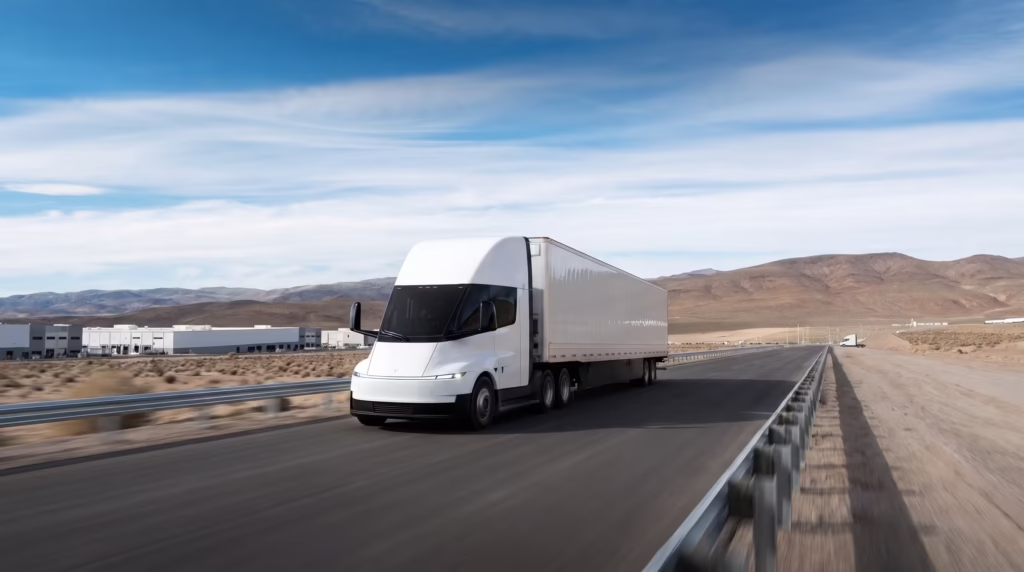
Tesla Semi is a Class 8 commercial truck designed for regional and long-distance freight operations. Tesla states that broader deliveries begin in 2026.
Two configurations are planned:
| Semi version | Estimated range | Powertrain | Maximum drive power | Energy consumption |
|---|---|---|---|---|
| Standard Range | About 325 miles | Three rear-axle motors | Up to 800 kW | 1.7 kWh per mile |
| Long Range | About 500 miles | Three rear-axle motors | Up to 800 kW | 1.7 kWh per mile |
Tesla says Semi can recover up to 60% of its range in 30 minutes using its high-output commercial charging system. The long-range version has a listed curb weight of approximately 23,000 pounds, while the truck is designed around an 82,000-pound gross combination weight.
Semi is not a direct part of Tesla’s consumer-car market, but it could influence fleet operating costs, charging infrastructure and zero-emission freight transportation.
Key Specifications and Technology
Battery Capacity
Tesla does not routinely publish official battery-capacity figures for Model 3, Model Y, Model S or Model X. Therefore, unofficial estimates should not be presented as confirmed specifications.
Cybertruck is the major exception, with Tesla listing a 123 kWh battery. Semi is described through range and energy-consumption figures rather than a publicly stated total battery capacity.
Horsepower and Torque
Tesla publishes horsepower for selected performance models:
- Model 3 Performance: 510 horsepower
- Model S: 670 horsepower
- Model S Plaid: 1,020 horsepower
- Model X: 670 horsepower
- Model X Plaid: 1,020 horsepower
- Cyberbeast: 845 horsepower
Official torque figures are not consistently published across the lineup. Electric motors deliver immediate torque from low speeds, but assigning unverified torque numbers would create misleading comparisons.
Charging Technology
Current Tesla passenger vehicles generally support maximum Supercharging rates between 225 and 325 kW, depending on the model. Cybertruck has the highest listed peak rate at 325 kW, while Model 3, Model Y, Model S and Model X reach up to 250 kW in applicable configurations.
Actual charging time changes with battery temperature, charger output, state of charge, weather, driving efficiency and vehicle configuration. The fastest charging normally occurs at a relatively low battery percentage before power gradually decreases.
Interior and Connectivity
The current Tesla all cars cabin philosophy relies heavily on centralized digital controls. Common technology includes:
- Large central touchscreens
- App-based vehicle access
- Navigation with charging-stop planning
- Wireless software updates
- Streaming and entertainment apps
- Remote climate control
- Digital driver profiles
- Bluetooth and cellular connectivity
- Rear entertainment screens on selected trims
- Sentry Mode and app-based camera access where available
Model S and Model X also used a separate digital driver display, while Model 3 and standard Model Y place most driving information on the center screen.
Driver Assistance and Safety
Tesla vehicles include active safety functions such as Forward Collision Warning, Automatic Emergency Braking and Lane Departure Avoidance. Blind-spot visualizations and warning lights are available on newer configurations.
Full Self-Driving (Supervised) can provide additional assisted-driving functions, but the driver must remain attentive and responsible. Current customer vehicles are not made fully autonomous simply by activating the supervised system.
Cybertruck has received a five-star overall NHTSA rating, while Tesla also highlights five-star safety results for Model Y. Safety performance can differ by model year and configuration, so buyers should review the rating for the exact vehicle they are considering.
Tesla Cars Compared With Older Vehicles
Older gasoline cars usually depend on mechanical controls, scheduled oil changes, multi-speed transmissions and dealer-installed software updates. Modern Tesla vehicles replace many of those systems with electric motors, regenerative braking, integrated software and remote updates.
Compared with older cars, the main benefits include:
- Quieter acceleration
- Immediate power delivery
- No tailpipe emissions
- Fewer routine powertrain services
- Home-charging convenience
- Continuously updated software
- More advanced app integration
However, older gasoline cars can often be refueled more quickly on long journeys. They may also be easier to repair in areas without nearby EV-certified service facilities.
Ownership and Maintenance Costs
Electric Tesla drivetrains do not require engine oil, spark plugs, exhaust-system service or conventional transmission maintenance. Regenerative braking may also reduce the frequency of friction-brake use.
Routine ownership still includes tires, cabin air filters, brake-fluid inspections, windshield-washer fluid, wheel alignment and other wear-related items. Performance models may consume tires more quickly because of their weight, power and wheel sizes.
Charging at home can reduce energy costs compared with gasoline, especially when owners have favorable off-peak electricity rates. Nevertheless, total ownership cost also depends on insurance, registration, local electricity prices, depreciation and repair costs.
Market Impact and Future Trends
The Tesla all cars lineup has influenced the wider automotive industry by demonstrating the appeal of long-range EVs, direct software updates, large touchscreens, high-speed charging and minimalist interiors.
Tesla’s next phase is moving beyond conventional passenger cars. Model Y L targets families needing more space, Cybertruck combines transportation with portable energy, Semi focuses on freight, and Cybercab and Robovan introduce purpose-built autonomous transportation.
Future Tesla vehicles are therefore likely to emphasize three areas: improved energy efficiency, software-defined features and greater integration between transportation, charging and energy storage.
The current Tesla all cars range is built around Model 3, Model Y, Model Y L and Cybertruck. These vehicles cover the most important consumer segments, from affordable sedans and family crossovers to high-performance electric pickups.
Model S and Model X remain historically important but are no longer listed as regular-production vehicles in the United States. Roadster, Cybercab, Robovan and Semi show where Tesla intends to expand next, although several specifications and production details remain unfinished.
For most buyers, Model 3 offers the strongest combination of affordability, efficiency and range. Model Y provides greater everyday practicality, Model Y L adds genuine three-row flexibility, and Cybertruck delivers the lineup’s highest utility and most unconventional engineering.