Subaru Impreza Review Practical AWD Hatchback for Modern Driving




The Subaru Impreza remains one of the most distinctive compact hatchbacks on the market because it follows a simple formula that many competitors have abandoned: practical five-door packaging, standard all-wheel drive, predictable handling, useful cargo capacity and straightforward everyday usability.
Modern cars increasingly rely on electrification, digital interfaces, connected technology and sophisticated driver-assistance systems. However, being modern does not necessarily mean adding complexity everywhere. The Impreza demonstrates another approach. It combines proven gasoline engines and Subaru’s Symmetrical All-Wheel Drive system with contemporary infotainment, connectivity and active safety technology.
For drivers who regularly encounter rain, snow, gravel roads or changing road conditions, that balance gives the Impreza a clear purpose.
What Makes a Modern Car Today?
A modern car is more than a newer version of an older vehicle. Today’s vehicles combine mechanical engineering with software, sensors, connectivity, safety automation and increasingly efficient powertrains.
Important modern-car features now include:
- Smartphone integration
- Advanced driver-assistance systems
- Automatic emergency braking
- Adaptive cruise control
- Digital vehicle controls
- Connected infotainment
- Efficient engine management
- Hybrid or electric propulsion on many models
- Improved crash structures
- Better passenger and cargo packaging
The Subaru Impreza does not lead every one of these categories. Instead, it concentrates on capability, safety, comfort and usability while keeping its mechanical layout relatively traditional.
2026 Subaru Impreza Trim Levels and Pricing
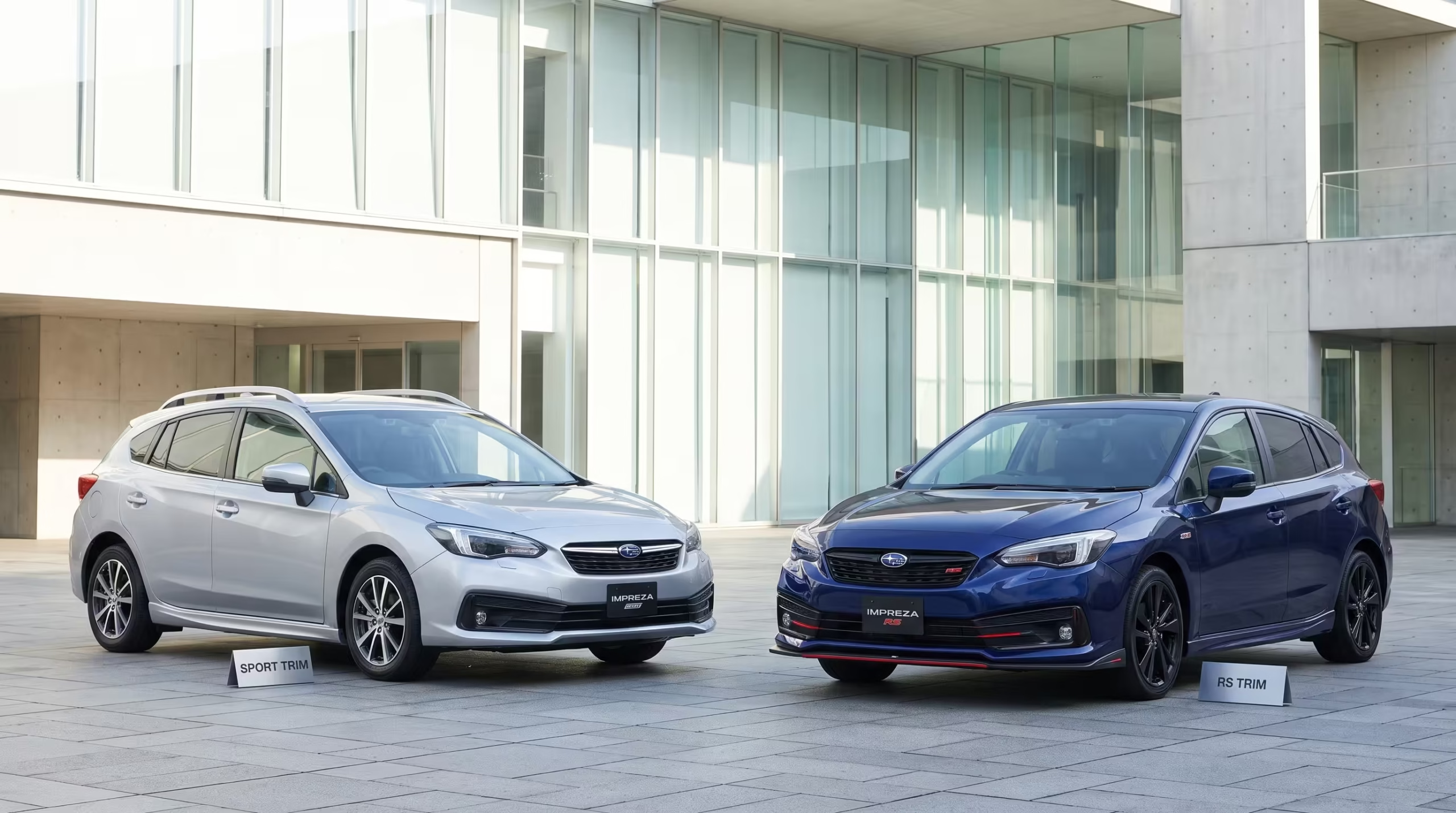
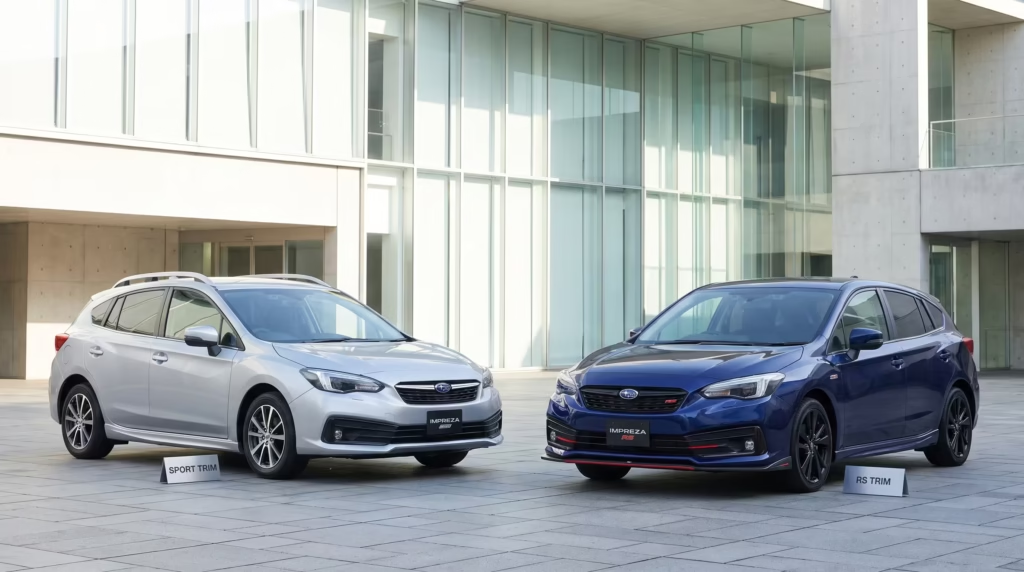
For 2026, the U.S. lineup consists of Sport and RS trims rather than the previous three-trim structure. Subaru lists the Sport at $26,595 MSRP and the RS at $29,495 MSRP, before destination charges and optional equipment.
| Trim | Engine | Horsepower | Torque | Drivetrain | EPA City/Highway | Starting MSRP |
|---|---|---|---|---|---|---|
| Sport | 2.0L Boxer 4-cylinder | 152 hp | 145 lb-ft | Symmetrical AWD | 27/33 mpg | $26,595 |
| RS | 2.5L Boxer 4-cylinder | 180 hp | 178 lb-ft | Symmetrical AWD | 26/33 mpg | $29,495 |
The Sport is the logical value choice. Meanwhile, the RS adds the stronger engine, distinctive exterior details, upgraded interior trim and a sportier personality.
Neither version is designed to compete directly with dedicated performance hatchbacks. Instead, both prioritize predictable daily transportation.
Subaru Impreza Engine and Performance
Two naturally aspirated Boxer four-cylinder engines define the current range.
The Sport uses a 2.0-liter engine producing 152 horsepower and 145 lb-ft of torque. It is paired exclusively with a Lineartronic continuously variable transmission.
Acceleration is adequate rather than exciting. Drivers should expect roughly nine-second territory from 0–60 mph, making the Sport better suited to commuting than aggressive driving.

The Subaru Impreza RS uses a larger 2.5-liter Boxer engine producing 180 horsepower and 178 lb-ft of torque. Independent testing of closely related RS configurations has placed 0–60 mph performance in the upper-seven-second range.
That improvement is noticeable during highway merging and passing, although the RS still does not transform the car into a hot hatch.
Why the Boxer Engine Matters
Subaru’s horizontally opposed engine places its cylinders lower and flatter than a conventional inline-four.
This contributes to a relatively low center of gravity, helping the car remain composed through corners. The result is one of the Subaru Impreza’s strongest dynamic qualities: stability.
Steering response is predictable, body motions are well controlled, and the chassis often feels more capable than the engines powering it.
Standard Symmetrical All-Wheel Drive
The biggest mechanical advantage remains standard Symmetrical AWD.
Many compact cars are fundamentally front-wheel-drive vehicles, with AWD either unavailable or restricted to certain configurations. Every current Impreza sends power through an all-wheel-drive system.
That matters most in real-world conditions.

Wet pavement, loose gravel, snowy roads and steep slippery driveways are situations where distributing power across four wheels can improve traction and driver confidence.
However, AWD does not eliminate the importance of appropriate tires or responsible driving. Its primary advantage is delivering usable traction consistently without requiring buyers to step up to a crossover.
Driving Experience and Ride Comfort
The Subaru Impreza is more rewarding as an everyday road car than its acceleration numbers suggest.
Ride quality is a particular strength. The suspension absorbs normal road imperfections without making the body feel excessively soft, while the low-mounted powertrain contributes to stable cornering.
The Sport receives a sport-oriented chassis setup and 18-inch wheels. The RS continues that theme while benefiting from its additional engine output.
The CVT is less impressive.
During relaxed driving, it operates smoothly and efficiently. Under heavy acceleration, however, engine speed can rise noticeably, producing more noise than actual sensation of speed.
Drivers coming from a conventional automatic or dual-clutch transmission may find the experience less engaging.
Still, for commuting, highway cruising and bad-weather driving, refinement matters more than dramatic gear changes.
Fuel Economy and Efficiency
Efficiency is respectable but not class-leading.
The 2.0-liter Sport is rated at up to 27 mpg city and 33 mpg highway, while the 2.5-liter RS is rated at 26 mpg city and 33 mpg highway.
Those figures demonstrate the main efficiency trade-off created by permanent AWD.
Several front-wheel-drive competitors can travel farther on each gallon, while hybrid alternatives perform significantly better during urban driving.
For buyers traveling large annual distances in mild climates, fuel economy deserves serious consideration. For drivers who frequently use AWD capability, the additional fuel consumption may be an acceptable compromise.
Does the Subaru Impreza Have a Hybrid or EV Version?
No. The current Subaru Impreza remains a gasoline-only model.
There is:
- No Impreza hybrid powertrain
- No plug-in hybrid version
- No battery-electric Impreza
- No EV battery capacity
- No electric driving range
- No DC fast-charging specification
Therefore, battery capacity, EV range and charging time are not applicable.
This is becoming a more significant distinction as compact competitors expand their electrified offerings.
A Honda Civic buyer, for example, can choose a hybrid powertrain, while the Impreza buyer is choosing conventional gasoline propulsion primarily to gain standard AWD and Subaru’s familiar mechanical layout.
Interior Space and Everyday Practicality
Dropping the sedan body style allows the current Subaru Impreza to focus entirely on the versatility of a five-door hatchback.
Cargo volume measures about 20.4 cubic feet behind the rear seats and expands to approximately 56 cubic feet with the rear seatbacks lowered.
That makes it genuinely useful for:
- Grocery runs
- Luggage
- Camping equipment
- Sports gear
- Small furniture
- Pet transportation
- Everyday family cargo

The hatch opening also makes bulky objects easier to load than they would be through a conventional sedan trunk.
Visibility remains another practical advantage. Large windows and sensible seating positions make the vehicle easy to place on crowded roads and in parking areas.
Cabin materials are less impressive. Harder plastics are noticeable, particularly compared with more upscale rivals.
Infotainment and Connectivity
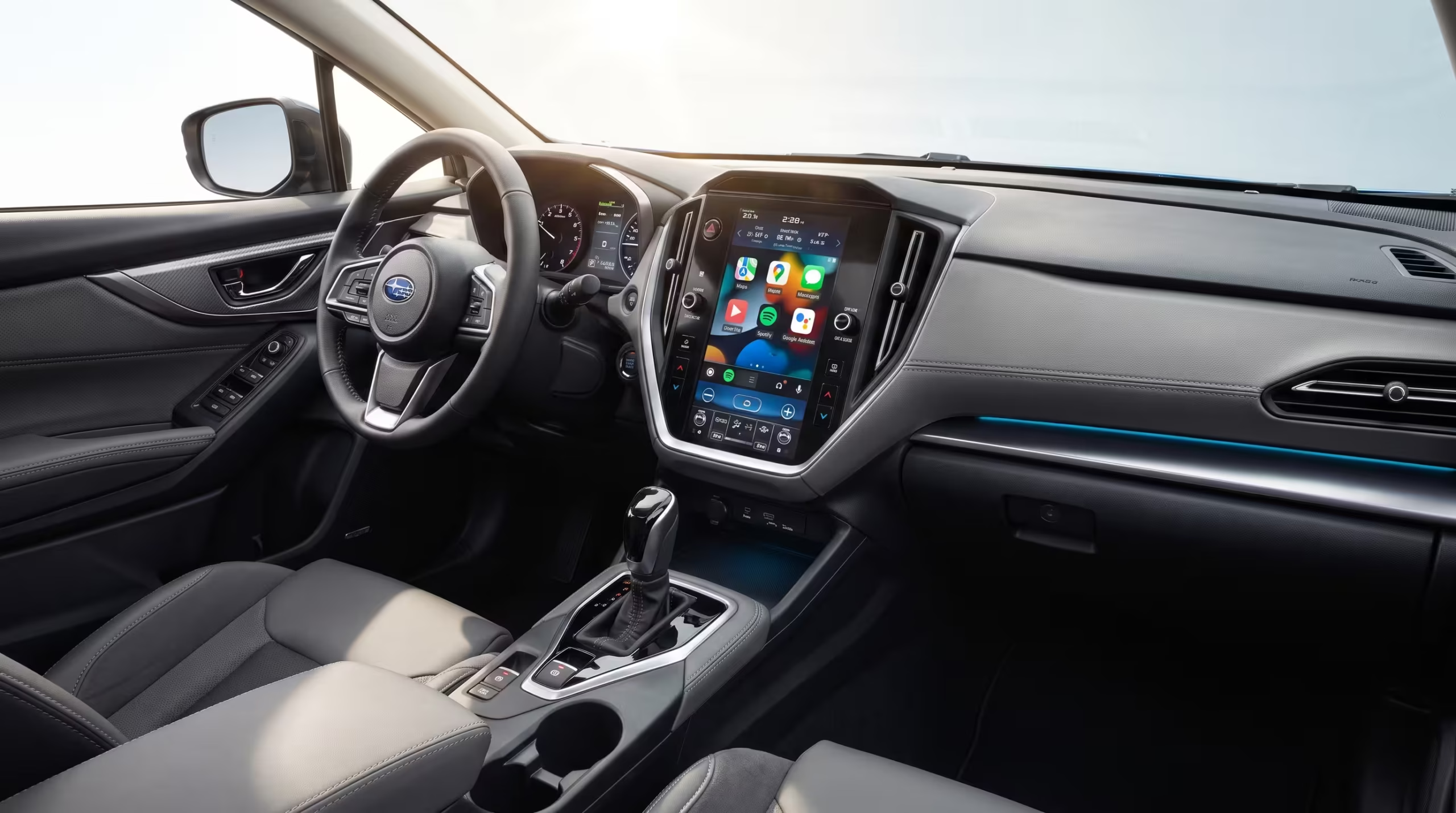
Technology takes a major step forward with the standard 11.6-inch portrait-oriented touchscreen.
The system includes wireless Apple CarPlay and Android Auto, Bluetooth connectivity and smartphone-focused multimedia functionality. Wireless device charging is also available.
The large vertical screen gives the dashboard a more contemporary appearance, although not every driver will prefer touchscreen-based vehicle controls.

Unlike newer cars built around expansive digital instrument panels, the Impreza keeps the driver’s information environment comparatively conventional. The main touchscreen rather than the gauge area provides most of the cabin’s digital presence.
That approach may actually appeal to drivers who want useful modern technology without turning the entire dashboard into a collection of screens.
Safety and Driver-Assistance Technology
Safety is central to the Subaru Impreza formula.
Subaru’s EyeSight Driver Assist Technology is standard and uses forward-facing cameras to support several active driver-assistance functions.
Depending on configuration, available or standard systems include features such as:
- Pre-collision braking
- Adaptive cruise control
- Lane-departure assistance
- Lane-centering support
- Blind-spot monitoring
- Rear cross-traffic alert
- Emergency lane assistance
- Rear-seat side airbags

The 2026 model also carries a five-star overall vehicle score from NHTSA, while Subaru backs the car with a three-year/36,000-mile limited warranty and a five-year/60,000-mile powertrain warranty.
These technologies make the Impreza particularly relevant for commuters and smaller households seeking modern safety systems without moving into a larger SUV.
Subaru Impreza Compared With Older Models
The modern Subaru Impreza feels considerably different from previous generations.
Older Imprezas were available in both sedan and hatchback body styles, and some versions could be ordered with manual transmissions. The current generation is hatchback-only and CVT-only.
The transformation reflects broader automotive-market changes.
Today’s version emphasizes:
- More advanced active safety
- Larger infotainment displays
- Wireless smartphone integration
- Improved structural refinement
- More sophisticated cabin technology
- Hatchback versatility
What has not changed is the underlying philosophy: a compact, relatively affordable vehicle built around a Boxer engine and standard AWD.
Enthusiasts may miss the simpler manual-transmission character of older models, but everyday buyers receive substantially more safety and connectivity technology.
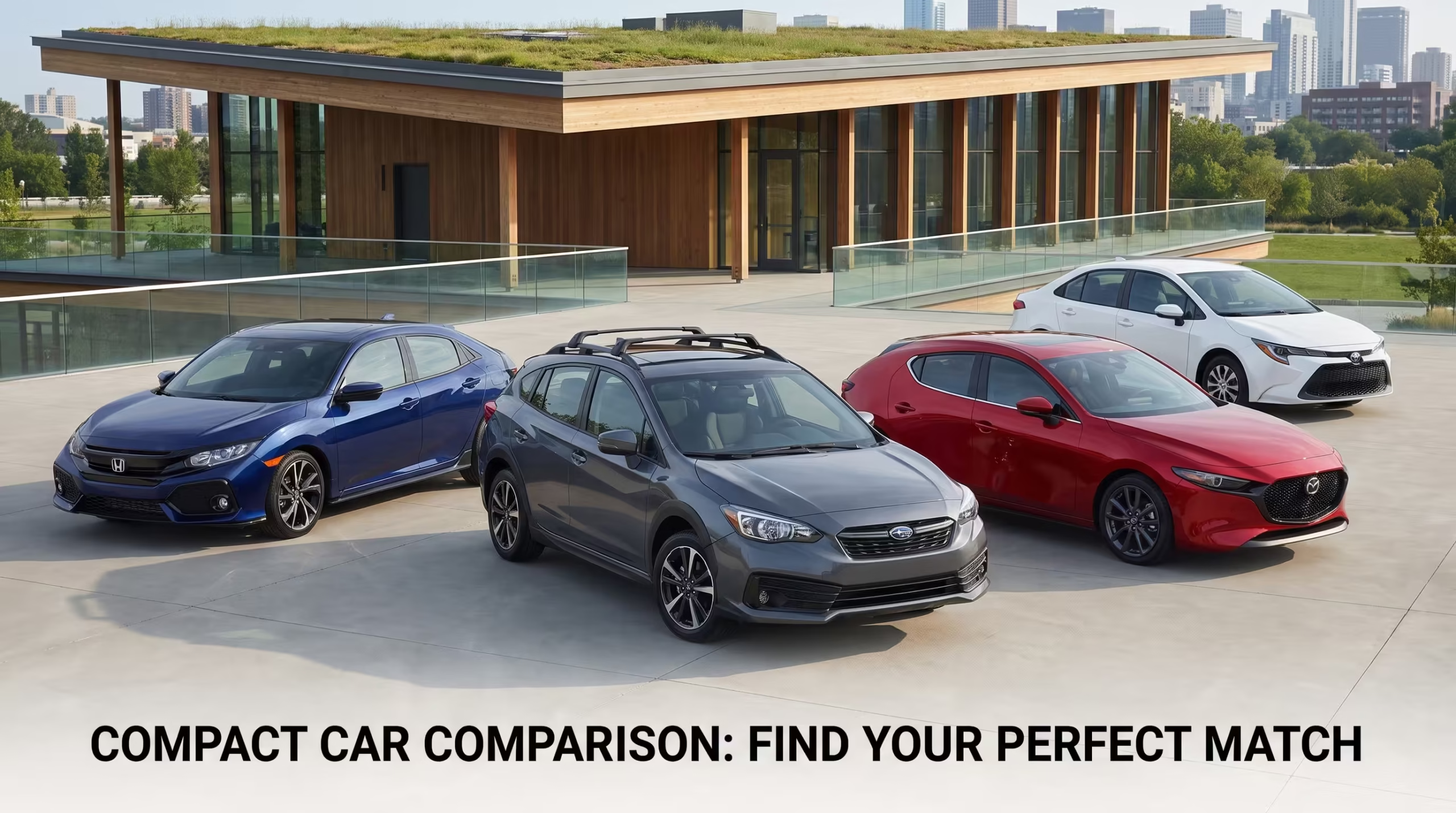
Subaru Impreza vs Honda Civic, Mazda3 and Toyota Corolla
| Model | Major Strength | AWD | Hybrid Option | Interior Character | Best For |
|---|---|---|---|---|---|
| Subaru Impreza | Standard AWD and balanced ride | Standard | No | Practical | All-weather usability |
| Honda Civic | Efficiency, space and performance choices | No | Yes | Modern and roomy | Efficiency-focused buyers |
| Mazda3 Hatchback | Premium cabin and refined handling | Available | No | Upscale | Style and interior quality |
| Toyota Corolla Hatchback | Efficiency and easy ownership | No | No hatchback hybrid | Simple and functional | Economical commuting |
The Civic provides stronger electrification and impressive overall efficiency.
The Mazda3 feels more premium and offers more powerful configurations, although its packaging can feel tighter.
The Corolla Hatchback emphasizes economy and simplicity.
The Subaru Impreza answers all three with something different standard AWD, excellent road manners and useful hatchback space.

Real-World Usability
Real-world value is where this car makes the strongest argument for itself.
A commuter who simply travels on dry urban roads may never exploit the AWD advantage. For that buyer, a more efficient front-wheel-drive compact could make more sense.
However, consider someone living in an area with four distinct seasons, frequent rain, steep roads or occasional unpaved routes.
The Subaru Impreza can provide useful traction without the added ride height, weight or crossover styling of an SUV.
It is also compact enough for city parking while retaining enough cargo flexibility for weekend travel.
That combination makes it an effective one-car solution for owners whose needs regularly change.
Ownership and Maintenance Costs
The Impreza’s conventional naturally aspirated engines avoid the additional hardware associated with turbocharging, hybrid batteries or complex plug-in systems.
Routine ownership still includes:
- Engine oil and filter changes
- Brake servicing
- Tire replacement and rotation
- Air and cabin filters
- Fluid inspections
- CVT maintenance
- AWD-system inspections
Owners should also remember that an AWD vehicle benefits from closely matched tires. Replacing a single severely worn or damaged tire can therefore require more consideration than it would on some two-wheel-drive cars.
Fuel spending may also be higher than with leading hybrid competitors.
On the other hand, buyers avoid EV charging requirements and hybrid-system complexity. For someone seeking a familiar gasoline-car ownership experience, that simplicity has value.
Future Trends and the Impreza
The next stage of the compact-car market will be shaped by electrification, software and increasing automation.
Hybrid systems are becoming more common because they can significantly reduce fuel consumption without requiring drivers to rely entirely on charging infrastructure. At the same time, EV development continues to improve range, charging speed and energy efficiency.
The current Subaru Impreza does not participate directly in that transition.
Instead, it represents a mature version of the traditional compact gasoline car: naturally aspirated engine, automatic transmission and mechanical AWD supported by modern electronics.
Whether that formula remains competitive long term will depend heavily on fuel prices, emissions requirements and buyer demand.
For now, its simplicity and all-weather capability give it a clear identity.
Key Specifications
| Specification | Sport | RS |
|---|---|---|
| Body Style | 5-door hatchback | 5-door hatchback |
| Engine | 2.0L Boxer 4-cylinder | 2.5L Boxer 4-cylinder |
| Horsepower | 152 hp | 180 hp |
| Torque | 145 lb-ft | 178 lb-ft |
| Transmission | Lineartronic CVT | Lineartronic CVT |
| Drivetrain | Symmetrical AWD | Symmetrical AWD |
| Fuel Economy | 27/33 mpg city/highway | 26/33 mpg city/highway |
| Wheels | 18-inch alloy | 18-inch dark-finish alloy |
| Infotainment | 11.6-inch touchscreen | 11.6-inch touchscreen |
| Apple CarPlay/Android Auto | Wireless | Wireless |
| Cargo Space | 20.4 cu. ft. | 20.4 cu. ft. |
| Maximum Cargo Space | Approx. 56 cu. ft. | Approx. 56 cu. ft. |
| Hybrid/EV | No | No |
| Starting MSRP | $26,595 | $29,495 |
Pros and Cons
Pros
- Standard Symmetrical All-Wheel Drive
- Comfortable, well-controlled ride
- Excellent outward visibility
- Practical hatchback cargo area
- Strong standard safety technology
- Wireless smartphone integration
- Stable and confidence-inspiring handling
- More powerful RS engine available
Cons
- No hybrid option
- Fuel economy trails efficient competitors
- CVT can become noisy under acceleration
- 2.0-liter engine feels slow
- Cabin materials are relatively basic
- No manual transmission
- RS performance remains modest for a sporty-looking trim
The Subaru Impreza succeeds because it understands its role. It is not trying to become a luxury hatchback, electric technology showcase or high-performance hot hatch.
Instead, it delivers standard AWD, comfortable road manners, useful cargo space, strong visibility and contemporary safety technology in a manageable compact package.
The Sport is best for drivers prioritizing value and everyday capability, while the RS provides enough additional power to make highway driving and acceleration noticeably easier.
Its disadvantages are equally clear. Fuel economy cannot match leading hybrids, interior materials remain ordinary, and the CVT limits driver engagement.
Even so, for drivers who need genuine all-weather traction without moving into an SUV, the Subaru Impreza remains one of the most practical compact hatchbacks available.