Cheapest Sport Cars 2026 Affordable Performance That Still Excites


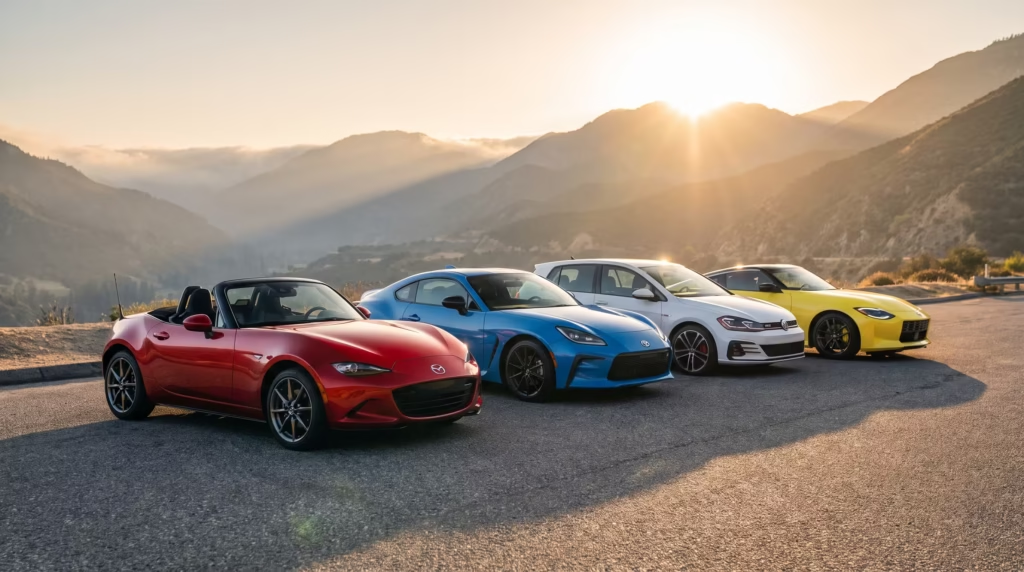
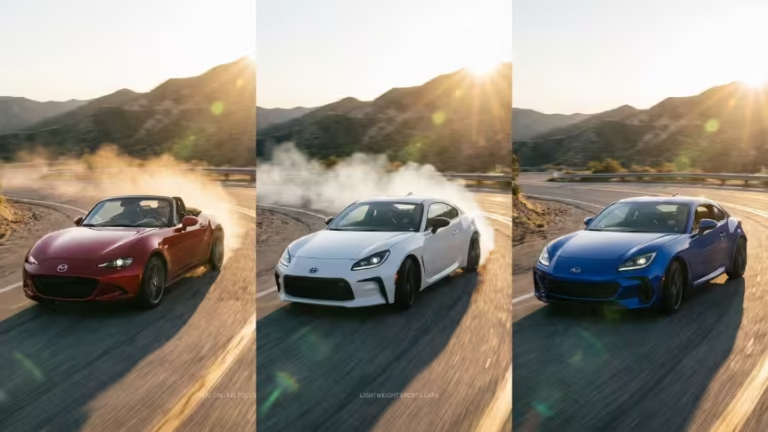
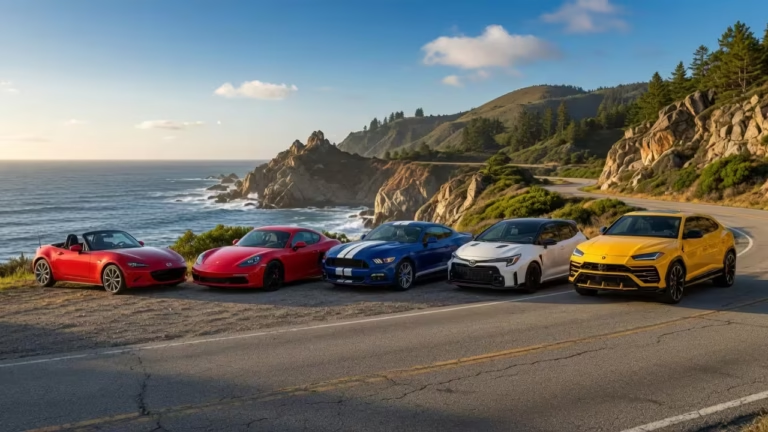
The cheapest sport cars prove that entertaining performance does not require a six-figure budget. For 2026, the Mazda MX-5 Miata, Toyota GR86, Ford Mustang EcoBoost, and Subaru BRZ continue to offer rear-wheel drive, responsive handling, and genuine driver involvement at prices close to those of well-equipped family cars.
Sports cars remain important because they preserve qualities that are disappearing from heavier modern vehicles. Low seating positions, direct steering, balanced chassis tuning, and available manual transmissions create a stronger connection between the driver and the road.
However, affordability involves more than the showroom price. Insurance, fuel, tires, servicing, depreciation, practicality, and European availability can completely change which model represents the best value.
What Is a Sports Car?
A sports car is designed primarily around performance, handling, and driver engagement. It normally has a low center of gravity, responsive steering, strong brakes, and a chassis tuned for cornering rather than maximum passenger space.
Traditional sports cars are often two-seat roadsters or compact coupes. The category can also include larger performance coupes such as the Ford Mustang.
The cheapest sport cars are not miniature supercars. They use relatively simple engines and affordable materials to deliver accessible performance without carbon-fiber bodies, active aerodynamics, or extremely expensive brakes.
Cheapest Sport Cars Compared
| Model | Starting U.S. MSRP | Engine | Power and torque | Transmission | Body style |
|---|---|---|---|---|---|
| Mazda MX-5 Miata Sport | $30,430 | 2.0-liter naturally aspirated four-cylinder | 181 hp and 151 lb-ft | Six-speed manual; automatic on selected trims | Two-seat convertible |
| Toyota GR86 | $31,400 | 2.4-liter naturally aspirated flat-four | 228 hp and 184 lb-ft | Six-speed manual or automatic | 2+2 coupe |
| Ford Mustang EcoBoost | $32,995 | 2.3-liter turbocharged four-cylinder | 315 hp and 350 lb-ft | Ten-speed automatic | Four-seat fastback |
| Subaru BRZ Limited | $35,860 | 2.4-liter naturally aspirated flat-four | 228 hp and 184 lb-ft | Six-speed manual or automatic | 2+2 coupe |
Prices exclude destination charges, taxes, registration, options, and possible dealer adjustments. European prices and specifications differ significantly.
Mazda MX-5 Miata The Purest Affordable Roadster
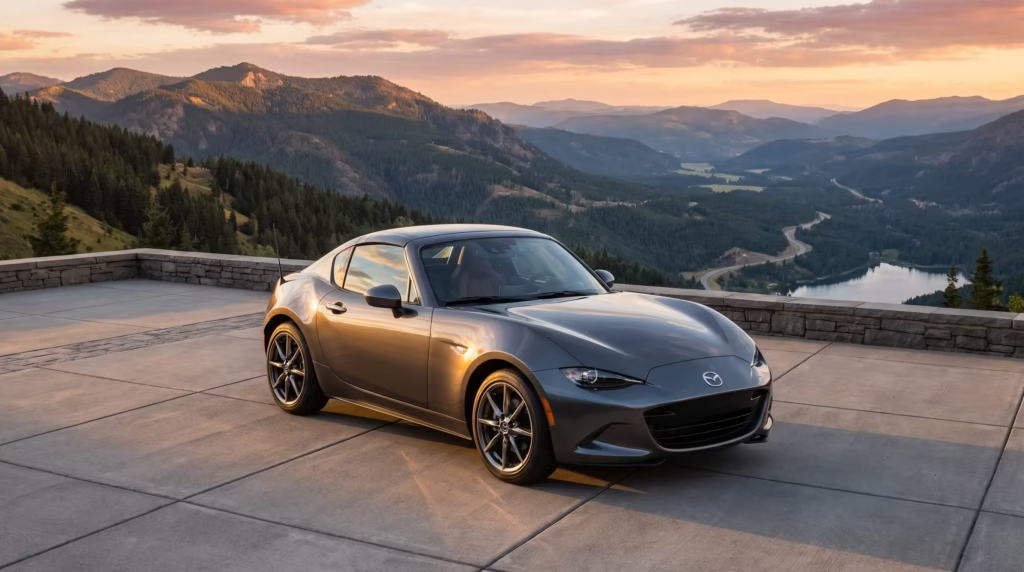
The Mazda MX-5 Miata is currently the least expensive vehicle in this cheapest sport cars comparison. More importantly, it remains one of the lightest and most focused new cars available.
Its 2.0-liter engine produces 181 horsepower and 151 lb-ft of torque. Those figures appear modest beside the Mustang, but the Miata’s low weight allows it to feel lively at legal road speeds.
A short-throw six-speed manual transmission is standard on the Sport model. Higher trims may also offer an automatic, although the manual better suits the car’s character.
The Miata’s main strengths include:
- Low curb weight
- Precise steering
- Rear-wheel drive
- Easy manual roof operation
- Strong fuel economy
- Manageable dimensions
Acceleration is brisk rather than dramatic, with performance generally in the mid-six-second range from 0 to 60 mph. Its real appeal comes from carrying speed through corners rather than chasing a high top-speed figure.
Ride, Braking and Handling
The Miata uses a compact chassis with double-wishbone front suspension and a multi-link rear layout. Body movement is noticeable, but it communicates weight transfer clearly and makes the car approachable.
Higher-performance Club versions add equipment such as sport-tuned suspension components, upgraded brakes, and a limited-slip differential.
The small tires are less expensive to replace than the wide rubber fitted to powerful coupes. They also allow drivers to explore the chassis without reaching dangerous road speeds.
Daily Usability
The Miata is easy to park and economical to operate, achieving up to approximately 29 mpg combined depending on transmission.
Its limitations are obvious: two seats, a small trunk, limited cabin storage, and significant road noise with the soft top raised. Tall drivers may also find the cockpit restrictive.
Even so, buyers who prioritize lightweight driving enjoyment will struggle to find a more rewarding new car for the money.

Toyota GR86 The Best Affordable Driver’s Coupe
The Toyota GR86 is one of the most complete cheapest sport cars because it combines serious handling with greater practicality than the Miata.
Its 2.4-liter flat-four engine produces 228 horsepower and 184 lb-ft of torque. Power goes exclusively to the rear wheels through a six-speed manual or six-speed automatic transmission.
Toyota estimates that the manual version can reach 60 mph in approximately 6.1 seconds, while the automatic requires about 6.6 seconds.
Chassis and Aerodynamics
The flat engine sits low in the chassis, supporting a low center of gravity. A standard limited-slip differential helps manage power when accelerating out of corners.
Aerodynamic details around the body help improve stability and airflow without relying on a large rear wing. The steering is quick, and the suspension provides stronger body control than the softer Miata.
The GR86 is especially suited to drivers interested in:
- Weekend back-road driving
- Entry-level track days
- Driver-development events
- Rear-wheel-drive handling
- Affordable modification
The suspension can feel firm on damaged roads, but it remains usable enough for regular commuting.
Cabin and Technology
The driver-focused cabin includes a digital instrument display and an 8-inch touchscreen. Smartphone connectivity, supportive front seats, and straightforward controls make the interior easy to understand.
The small rear seats are unsuitable for most adults, but they can carry children, bags, or occasional passengers. Folding them expands the cargo area enough to transport a set of track wheels or additional luggage.
This flexibility gives the GR86 a major advantage over the Miata.
Ford Mustang EcoBoost The Power and Practicality Choice
The Ford Mustang EcoBoost is no longer the cheapest model in this ranking, but it provides the most power and interior space among the cheapest sport cars.
Its turbocharged 2.3-liter engine generates 315 horsepower and 350 lb-ft of torque. A ten-speed automatic transmission is standard; Ford does not offer the current EcoBoost with a manual gearbox.
Strong low- and midrange torque makes the Mustang feel faster in everyday driving than the naturally aspirated Japanese coupes. It is particularly effective during highway merging and overtaking.
Interior and Infotainment
The Mustang combines a 12.4-inch digital instrument cluster with a 13.2-inch central touchscreen. Wireless smartphone integration and configurable drive displays give it the most technology-focused cabin in this group.
It also offers
- A larger trunk
- More front-seat space
- Small rear seats
- Multiple drive modes
- Standard driver-assistance technology
- Strong highway comfort
Its greater size and weight reduce the sense of delicacy found in the Miata, GR86, and BRZ. Nevertheless, its power, cargo space, and long-distance comfort make it the best all-rounder for many buyers.

USA and European Differences
The EcoBoost is widely available in the United States. European Mustang lineups are significantly different and generally focus on the more expensive 5.0-liter V8.
Therefore, European buyers should not assume that the affordable turbocharged Mustang can be ordered locally. Importing one may introduce registration, insurance, warranty, and parts complications.
Subaru BRZ Precise Handling With Standard Safety Technology
The Subaru BRZ shares its basic architecture, engine, and transmissions with the Toyota GR86. It produces the same 228 horsepower and 184 lb-ft of torque.
However, Subaru uses its own suspension calibration and steering tuning. The BRZ generally feels slightly more progressive near the limits of grip, while the GR86 is often tuned to rotate more readily.
The current U.S. BRZ lineup starts at $35,860, making it the most expensive entry in this cheapest sport cars table.
Its standard equipment helps explain part of that difference. EyeSight driver-assistance technology is standard, including on manual-transmission models.
Available safety systems include:
- Pre-collision braking
- Adaptive cruise assistance
- Lane-departure warning
- Blind-spot detection
- Rear cross-traffic alert
- Automatic high beams
The BRZ also includes a limited-slip differential, six-speed manual transmission, and a driver-centered digital display.
European availability is limited. Buyers outside North America should check local Subaru inventory rather than assuming a new BRZ can be ordered.

Performance, Acceleration and Top Speed
Among the cheapest sport cars, the Mustang delivers the strongest straight-line performance because of its turbocharged torque and greater output.
The Miata is the least powerful, yet its light weight and compact dimensions make it feel responsive. The GR86 and BRZ occupy the middle ground, offering stronger acceleration than the Mazda without the Mustang’s bulk.
Maximum speed is rarely the most useful measure for this category. Manufacturers do not consistently publish directly comparable top-speed figures, and reaching those speeds belongs only on an appropriate closed course.
For road driving, the more important factors are:
- Throttle response
- Gear ratios
- Brake feel
- Steering accuracy
- Tire quality
- Suspension control
- Predictable behavior near the limit
These characteristics determine whether a sports car remains enjoyable after the novelty of acceleration disappears.

Transmission Choices
Manual transmissions remain central to the appeal of the cheapest sport cars.
The Miata, GR86, and BRZ offer six-speed manuals with relatively short, direct shifts. They reward drivers who enjoy selecting gears and managing engine speed.
Automatic versions are easier in heavy traffic and add active driver-assistance functionality on certain models. However, they may feel less engaging on a winding road.
The Mustang EcoBoost is automatic-only. Its ten-speed transmission provides quick acceleration and relaxed highway cruising, but enthusiasts wanting a manual Mustang must move to a more expensive V8 model.
Braking and Tire Costs
The affordable models use conventional steel brakes rather than the carbon-ceramic systems found on supercars.
That is an advantage for ownership costs. Pads and rotors are easier to source and considerably cheaper to replace.
Track use changes the equation. Repeated hard braking can overheat standard pads and fluid, while aggressive driving increases tire wear.
Before attending a track day, owners should inspect:
- Brake-pad thickness
- Brake-fluid condition
- Tire tread and pressure
- Wheel fasteners
- Engine oil
- Cooling-system condition
Performance modifications should be chosen for durability and safety rather than appearance alone.
Fuel Economy and Running Costs
The Miata is the efficiency leader among the cheapest sport cars, delivering approximately 29 mpg combined.
Automatic GR86 and BRZ models can provide better highway economy than their manual equivalents, although their larger engine consumes more fuel than the Mazda.
The Mustang’s turbocharged engine can be reasonably efficient during steady highway travel. However, frequent use of its 350 lb-ft of torque quickly increases fuel consumption.
Insurance can vary more than fuel expense. Driver age, location, annual mileage, credit factors where permitted, and claims history all affect premiums.
Obtaining insurance quotes before buying is essential, especially for younger drivers.
Ownership and Maintenance Costs
The cheapest sport cars are mechanically simpler than most luxury performance cars, but they still require careful budgeting.
Expected expenses include:
- Oil and filter changes
- Performance tires
- Brake pads and rotors
- Insurance
- Registration
- Wheel alignment
- Premium fuel where recommended
- Clutch replacement on manual cars
- Depreciation and financing costs
The Miata’s smaller tires and lighter weight help control consumable costs. The GR86 and BRZ benefit from shared components and a large enthusiast aftermarket.
Mustang parts are widely available in the United States, but larger tires and greater power can raise costs.
A factory warranty provides valuable protection. Buyers planning substantial engine, suspension, or software modifications should understand how those changes could affect warranty coverage.
Comparing Affordable Sports Cars With Luxury Cars
Luxury coupes often provide quieter cabins, higher-quality materials, more powerful engines, and adaptive suspension.
However, added sound insulation, electric seats, larger wheels, and complex technology also increase weight and repair costs.
The cheapest sport cars frequently provide clearer steering and a more direct experience because they have fewer layers between the driver and the road.
A GR86 may lack the refinement of a premium German coupe, but it can be more enjoyable on a tight road. Similarly, a Miata can create excitement at speeds that would feel ordinary in a heavy luxury car.
Comparing Affordable Models With Supercars
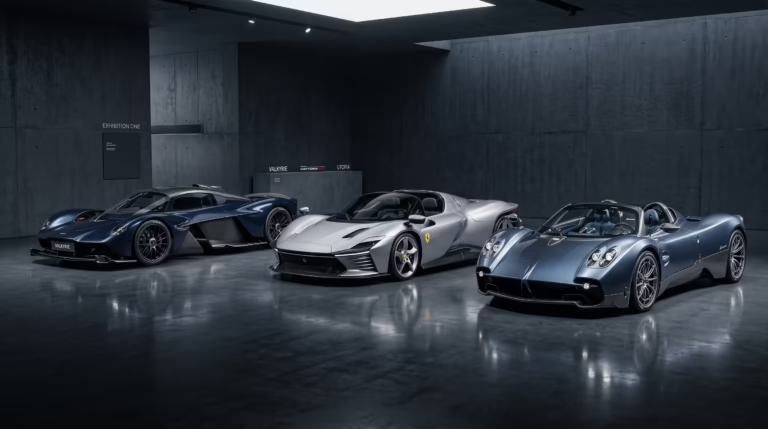
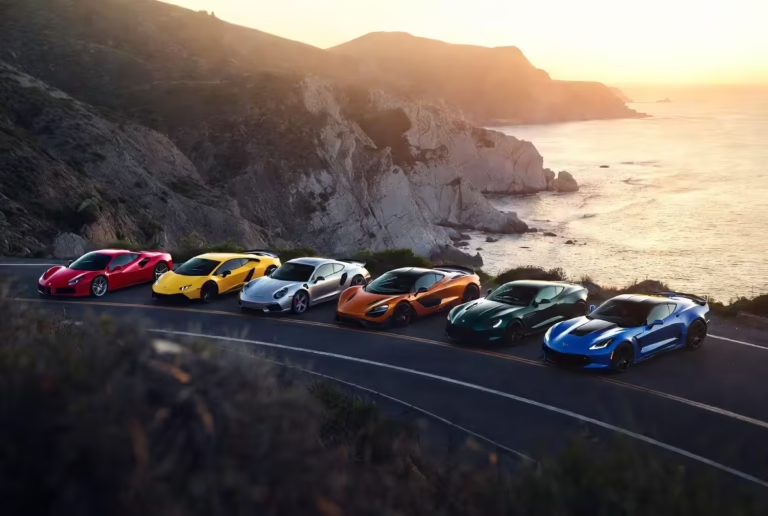
Supercars deliver far greater acceleration, braking capability, aerodynamic performance, and visual theater.
They also introduce extraordinary purchase prices, insurance premiums, servicing bills, and repair risks.
The cheapest sport cars are easier to use without anxiety. Owners can park them, commute in them, and explore their performance without worrying about damaging carbon-fiber bodywork or a five-figure braking system.
Affordable cars also teach useful driving skills. Modest power encourages drivers to preserve momentum, select the correct gear, and understand weight transfer.
Best Used Budget Alternatives
A used performance car can cost less than any new model in this guide, but age and condition matter more than the badge.
Popular choices include:
- Mazda MX-5 Miata NB or NC: Simple, lightweight, and supported by a large aftermarket
- C4 or C5 Chevrolet Corvette: Strong V8 performance with relatively accessible U.S. parts
- S197 Ford Mustang: Available with V6 or V8 power and broad modification support
- Honda Civic Si: Practical front-wheel-drive performance with a manual gearbox
- Older Subaru BRZ, Toyota 86, or Scion FR-S: Similar core experience to the current coupes at a lower price
Before purchasing, arrange an independent inspection. Check for rust, accident repairs, overheating, worn suspension, oil leaks, poor modifications, and evidence of repeated track use.
A cheap purchase can become expensive if it immediately needs tires, brakes, a clutch, cooling-system repairs, and suspension work.
Market Impact and Future Trends
The cheapest sport cars serve a shrinking but important market. SUVs and crossovers dominate new-car sales, while emissions and safety requirements make low-volume coupes increasingly expensive to develop.
Future affordable performance cars may use:
- Hybrid assistance
- Smaller turbocharged engines
- Synthetic or lower-carbon fuels
- Electrified rear axles
- Lighter battery systems
- More advanced stability control
- Subscription-based software features
Fully electric sports cars can deliver rapid acceleration, but battery weight remains a challenge for lightweight handling.
Manual transmissions are also becoming rarer. That makes the current Miata, GR86, and BRZ particularly significant for enthusiasts who value traditional controls.
Key Specifications and Buying Priorities
| Priority | Best choice | Reason |
|---|---|---|
| Lowest starting price | Mazda MX-5 Miata | Starts at $30,430 |
| Highest horsepower | Ford Mustang EcoBoost | 315 hp and 350 lb-ft |
| Best open-top experience | Mazda MX-5 Miata | Lightweight two-seat roadster |
| Best practical driver’s coupe | Toyota GR86 | Rear seats and folding cargo area |
| Most standard safety assistance | Subaru BRZ | EyeSight standard across the range |
| Best highway comfort | Ford Mustang EcoBoost | Larger cabin and strong turbo torque |
| Best manual experience | Miata, GR86 or BRZ | All offer six-speed manuals |
| Best European accessibility | Mazda MX-5 | Broadly offered in European markets |
The cheapest sport cars each approach affordable performance differently.
The Mazda MX-5 Miata is the purest and least expensive choice. The Toyota GR86 combines agile handling with useful cargo flexibility, while the Subaru BRZ offers similar performance with its own chassis tuning and strong standard safety equipment.
The Ford Mustang EcoBoost delivers the most power, technology, and everyday space, although its automatic-only powertrain and larger dimensions make it less intimate.
Before buying, compare insurance quotes, local availability, seating comfort, cargo needs, and realistic maintenance costs. Comment with your favorite affordable sports car, share this guide with another enthusiast, subscribe for more performance-car coverage, and read our related guides to used coupes and track-day preparation.