New Sport Cars 2026:Performance, Prices, and Top Models






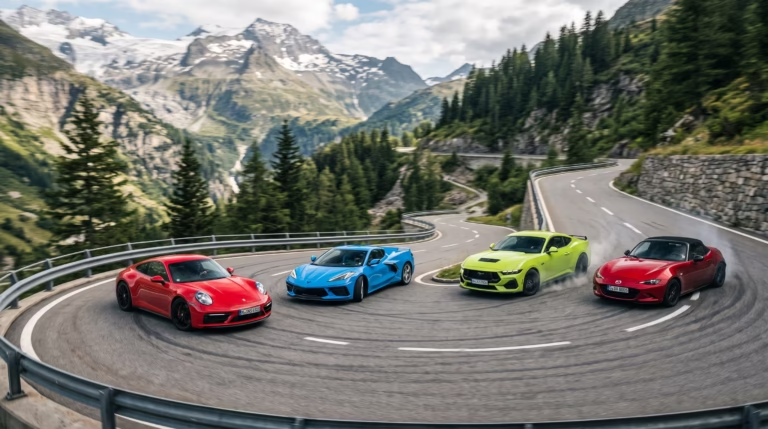
The new sport cars arriving for 2026 show how rapidly the performance world is changing. Turbocharged engines remain thrilling, yet hybrid systems, active aerodynamics, adaptive suspension, and advanced all-wheel drive now help modern sports cars accelerate harder and corner with greater confidence. Buyers can still choose among affordable rear-wheel-drive coupes, luxurious grand tourers, track-focused specials, and genuine hybrid hypercars.
Sports cars matter because they move engineering forward. Developments in braking, cooling, lightweight construction, aerodynamics, and powertrain control often influence mainstream vehicles later. More importantly, the best models deliver something specifications cannot fully describe: direct steering, predictable balance, strong braking confidence, and a cabin designed around the driver.
What Defines New Sport Cars in 2026?
A sports car is designed primarily around driving performance, rather than maximum passenger or cargo space. Most have a low seating position, responsive steering, a rigid structure, performance tires, powerful brakes, and either rear-wheel drive or a performance-oriented all-wheel-drive system.
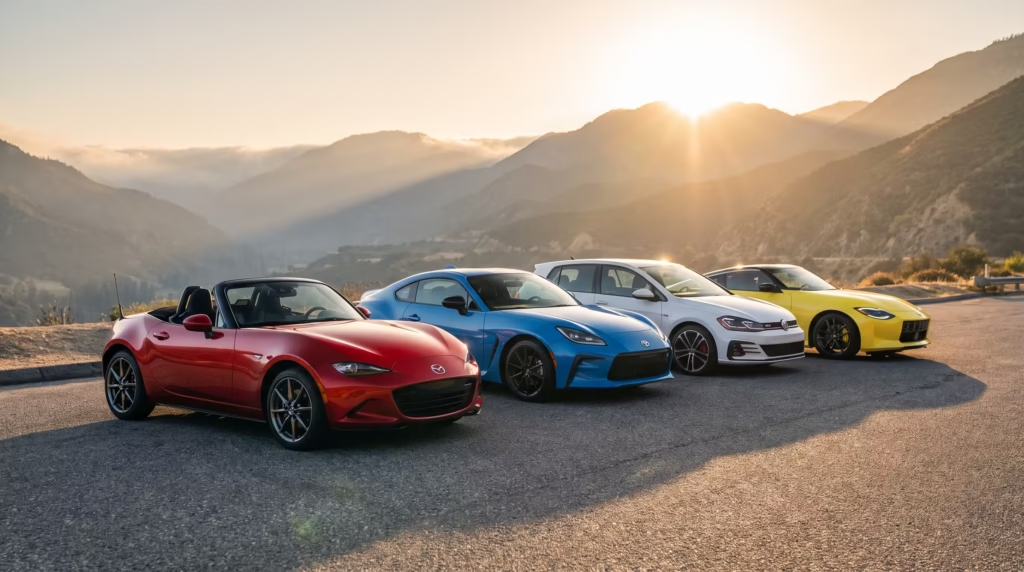
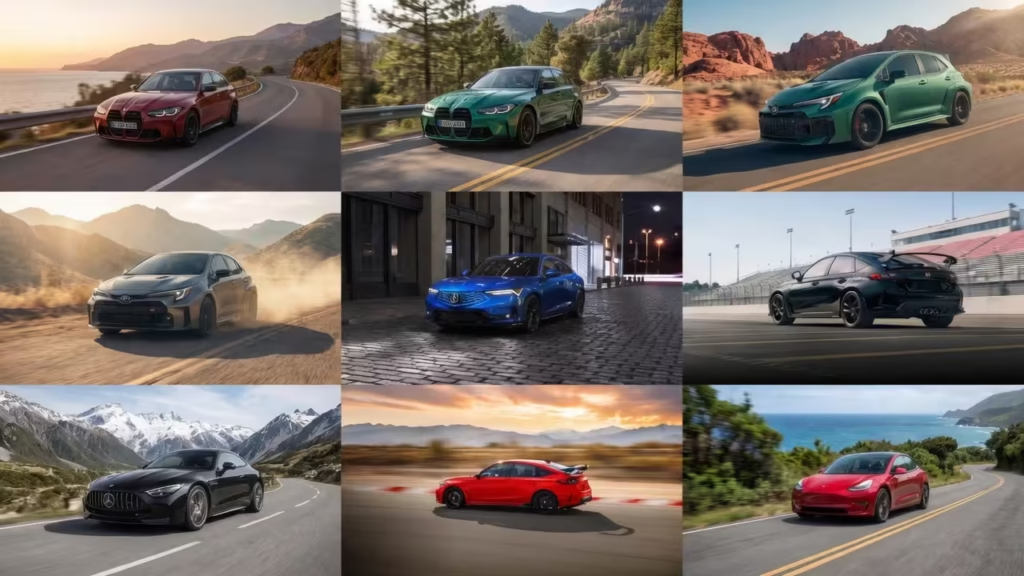
The latest high-performance vehicles cover a wide spectrum. The Toyota GR86 emphasizes lightness and accessible handling. The Nissan Z adds twin-turbo power and classic proportions. The BMW M2 CS and Mercedes-AMG GT combine track ability with premium equipment. At the top, the Porsche 911 Turbo S and Chevrolet Corvette ZR1X use electrification to improve response, traction, and speed.
For buyers, new sport cars now offer more variety than almost any previous generation.

Best New Sport Cars for 2026
Chevrolet Corvette ZR1X
The Corvette ZR1X combines a 1,064-horsepower 5.5-liter twin-turbo V8 with a 186-horsepower front motor for 1,250 combined horsepower and electrified all-wheel drive. Chevrolet recorded a 1.68-second 0–60 mph run on a prepared surface and an 8.675-second quarter-mile using production calibration, pump fuel, and street-legal tires. Pricing starts at $209,700 before destination and options.
It also completed a 6:49.275 Nürburgring Nordschleife lap with a development engineer driving. That result was listed in the prototype or pre-production category, so it should not be presented as an unrestricted production-car record. Even so, it demonstrates the capability of the chassis, cooling, brakes, aerodynamics, and hybrid system.
The ZR1X retains a usable front trunk and a driver-centered touchscreen cabin. However, insurance, tires, fuel, track servicing, and carbon-ceramic brake replacement can make ownership far more expensive than the purchase price alone suggests.

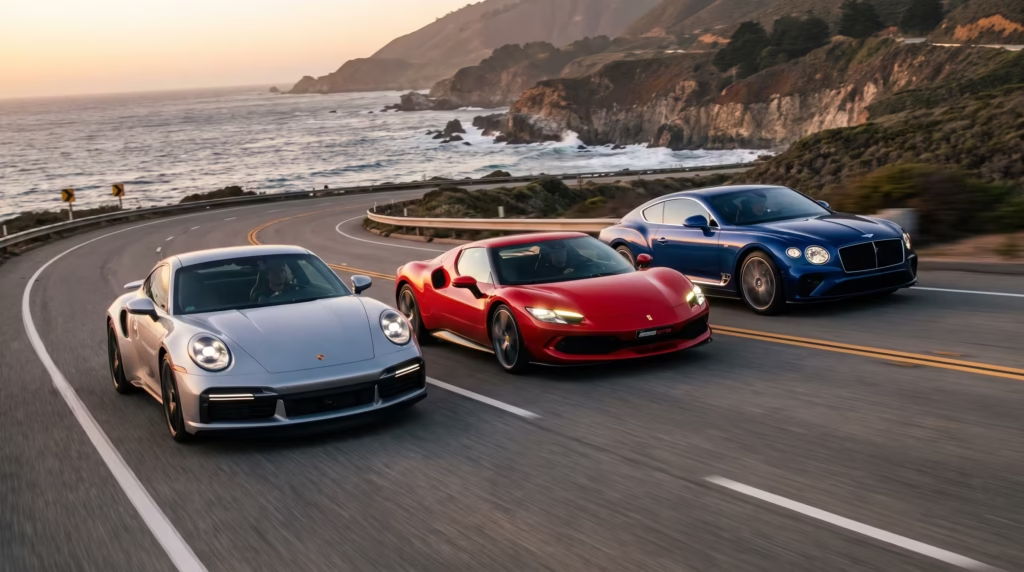
Porsche 911 Turbo S
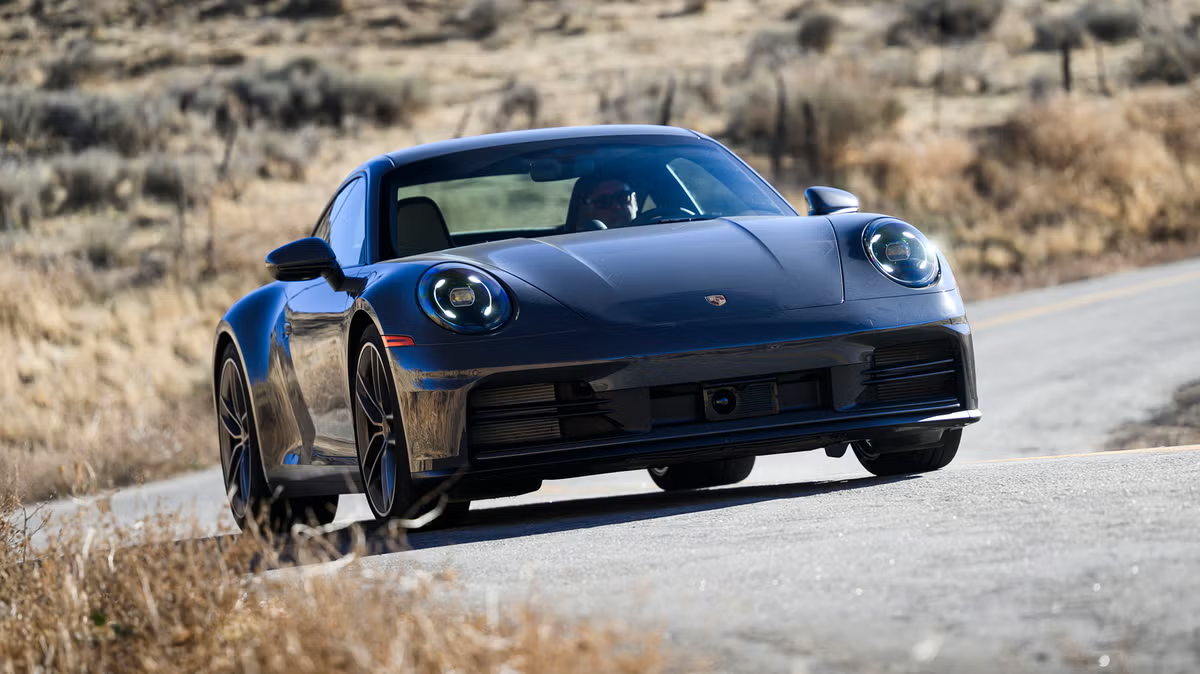
The 2026 Porsche 911 Turbo S is one of the most advanced new sport cars of the year. Its 3.6-liter flat-six works with a 400-volt T-Hybrid system, two electrically assisted turbochargers, an electric motor integrated into the eight-speed PDK transmission, and all-wheel drive.
Total output is 701 horsepower in U.S. specification, with 590 lb-ft of torque. Porsche states that the coupe can reach 60 mph in 2.4 seconds and a 200-mph top speed. Active aerodynamics, upgraded suspension, stronger cooling, and available electro-hydraulic roll control support both track pace and daily stability. U.S. pricing starts at $270,300 before delivery.
The driver-focused cabin adds digital displays, modern connectivity, configurable modes, and premium materials. Compared with many mid-engine supercars, it also offers better visibility, small rear seats, and useful luggage space.
Mercedes-AMG GT 63 PRO 4MATIC+
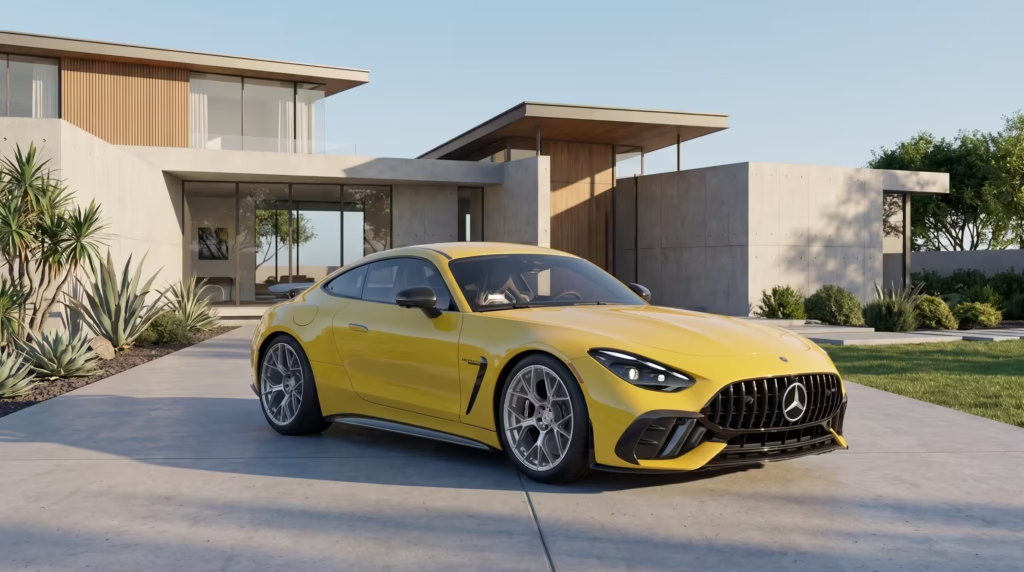
Among luxury-focused new sport cars, the Mercedes-AMG GT 63 PRO 4MATIC+ is a muscular grand tourer with serious circuit hardware. Its 4.0-liter twin-turbo V8 produces 612 PS in European measurement, approximately 603 mechanical horsepower, and 850 Nm of torque. Power goes through a nine-speed AMG transmission and fully variable all-wheel drive.
The PRO package adds stronger cooling, active roll stabilization, ceramic composite brakes, a revised splitter, dive planes, and an active rear-wing element. Its official top speed is 317 km/h, or about 197 mph.
Its advantage is breadth. It delivers strong acceleration and wet-weather traction, while the cabin provides premium materials, large displays, advanced infotainment, and more touring comfort than a stripped track car. Weight, complexity, fuel use, and consumable costs are the main compromises.
BMW M2 CS
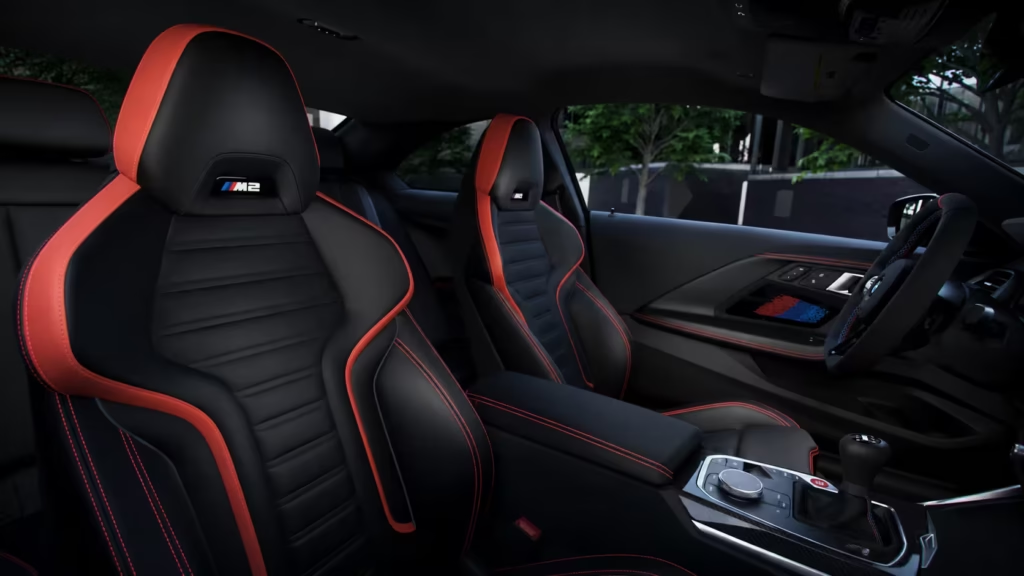
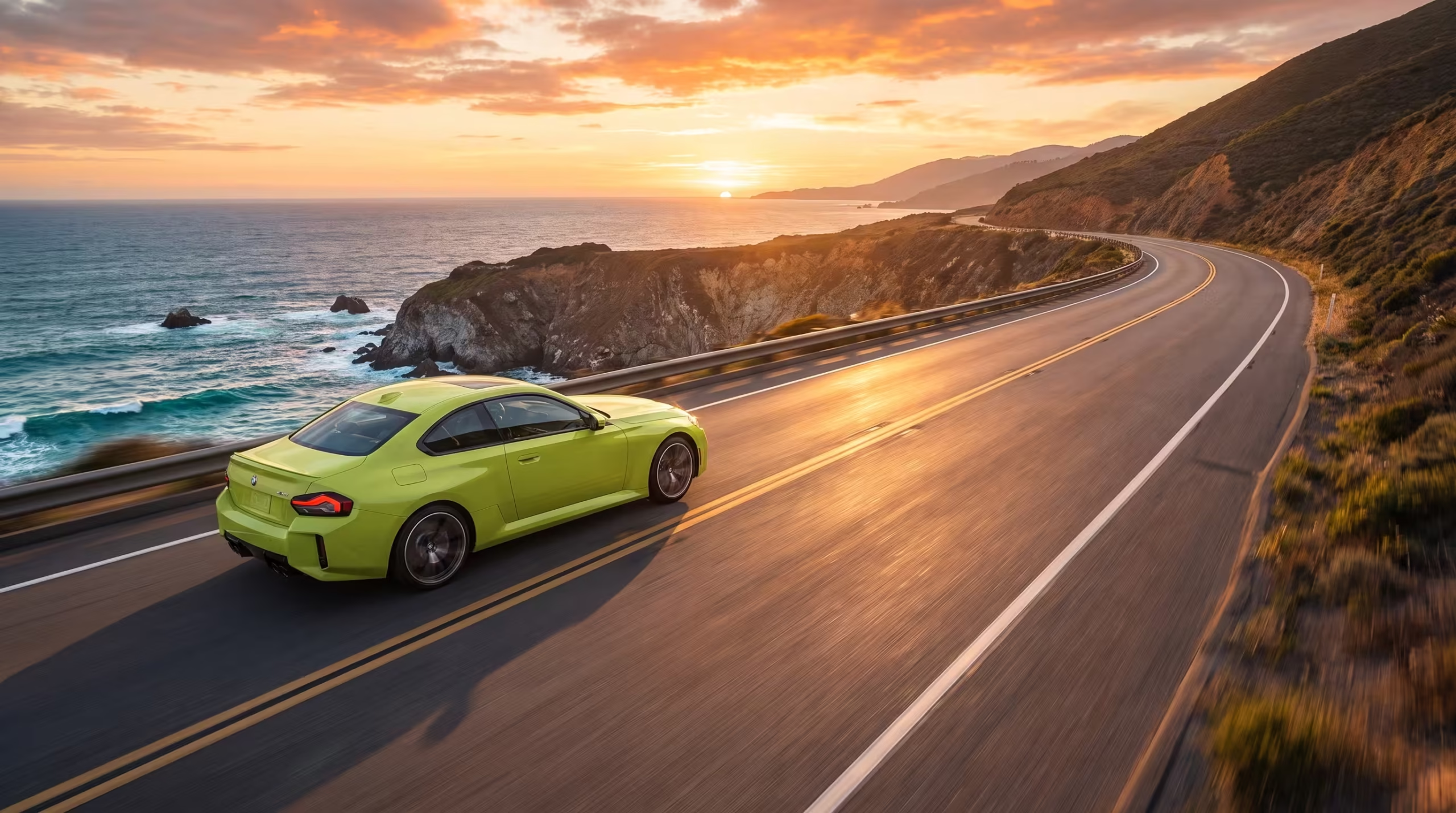
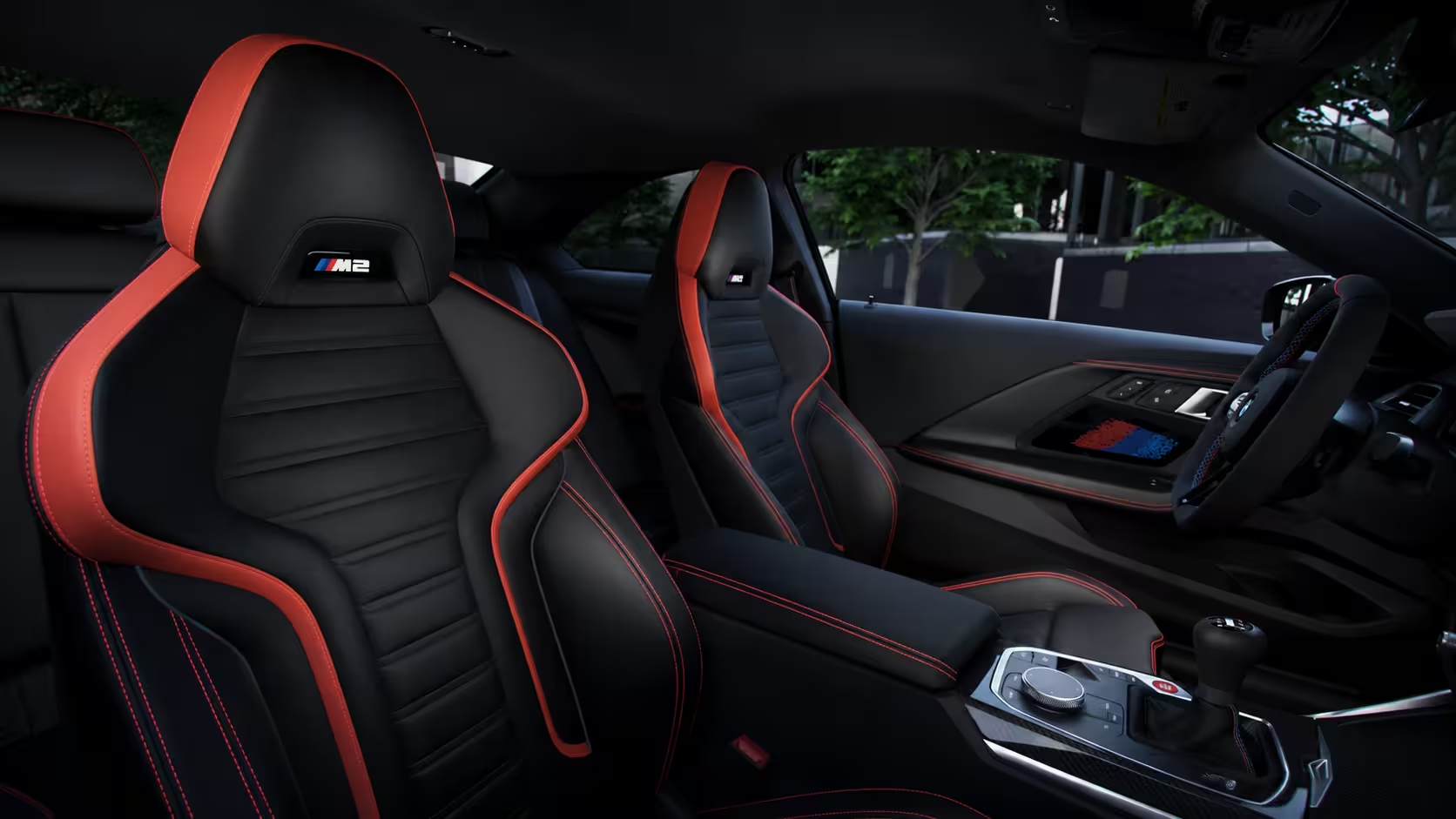
The BMW M2 CS represents the compact, rear-wheel-drive side of the market. Its twin-turbo 3.0-liter inline-six produces 523 horsepower and 479 lb-ft in U.S. specification. An eight-speed automatic drives the rear wheels, while adaptive suspension, an active differential, forged wheels, compound brakes, and carbon-fiber components sharpen the chassis.
BMW quotes 0–60 mph in 3.7 seconds and an electronically limited 188-mph top speed. U.S. pricing starts at $98,600 before destination, while the announced German price is €115,000. Production is limited.
The M2 CS is less exotic than the Corvette or Porsche, but its compact footprint, short wheelbase, rear-drive layout, and strong midrange torque may feel more interactive at normal road speeds.

Toyota GR86
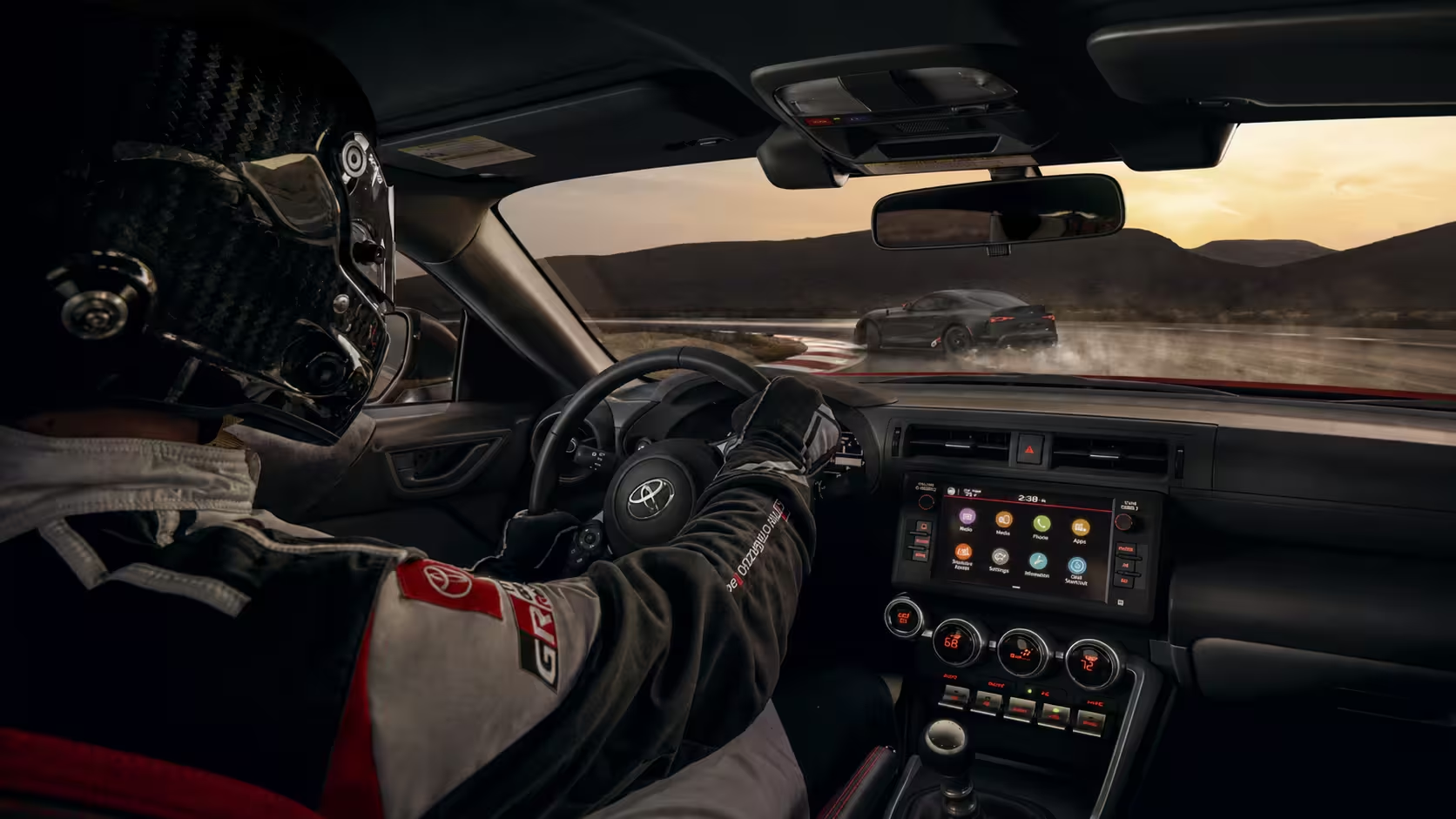
The Toyota GR86 proves that new sport cars do not need enormous horsepower. Its naturally aspirated 2.4-liter boxer engine produces 228 horsepower and 184 lb-ft, with a six-speed manual or automatic transmission. Rear-wheel drive, a low center of gravity, and predictable balance make it a strong platform for learning performance driving.
The 2026 GR86 starts at $31,400 in the United States. Toyota lists a 6.1-second 0–60 mph time and estimated fuel economy of 20 mpg city and 26 mpg highway for the displayed base specification. An available performance package adds Brembo brakes and SACHS dampers, while the cabin includes a digital gauge cluster and 8-inch touchscreen.
Its closest competitor is the Subaru BRZ. Compared with more powerful coupes, the GR86 costs less to buy, insure, fuel, and maintain, although rear-seat space and road-noise isolation are limited.

Nissan Z
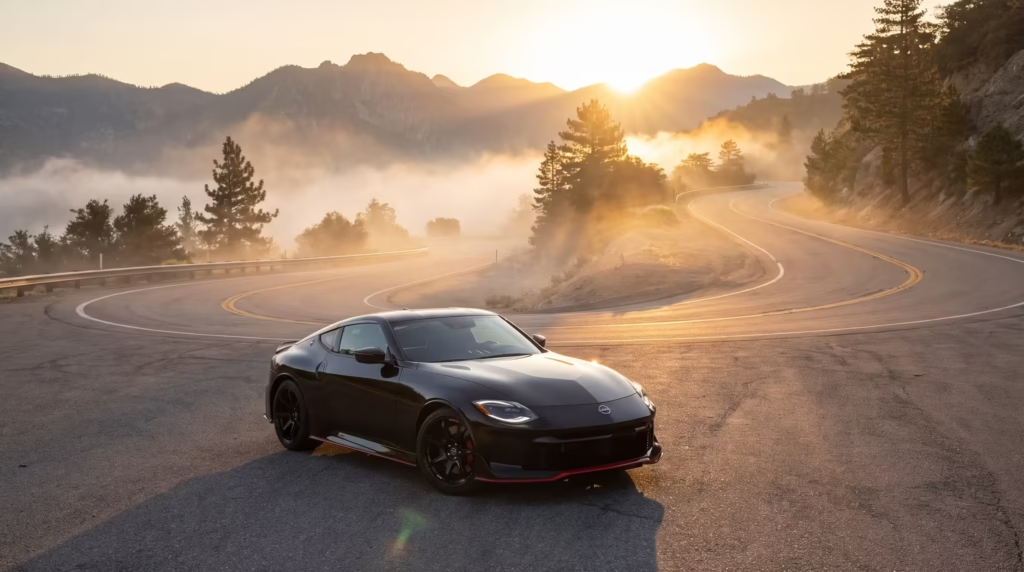
The 2026 Nissan Z uses a 3.0-liter twin-turbo V6. Standard versions produce 400 horsepower and 350 lb-ft, while the NISMO reaches 420 horsepower and 384 lb-ft. Regular trims offer a six-speed manual or nine-speed automatic; the NISMO uses the automatic.
U.S. pricing starts at $42,970. Performance trims add a mechanical limited-slip differential, larger brakes, forged wheels, and a 9-inch infotainment display with navigation.
The Z is faster in a straight line than the GR86 and offers a more dramatic engine, but it is heavier and less delicate at the limit. Its competitors include the Ford Mustang GT, Toyota GR Supra, and used premium coupes.
Key Specifications Comparison
| Model | Powertrain | Output | Transmission | Claimed Performance | U.S. Starting Price |
|---|---|---|---|---|---|
| Porsche 911 Turbo S | 3.6L twin-turbo flat-six hybrid, AWD | 701 hp, 590 lb-ft | 8-speed PDK | 0–60 mph: 2.4 sec; 200 mph | $270,300 |
| Corvette ZR1X | 5.5L twin-turbo V8 hybrid, eAWD | 1,250 hp combined | 8-speed dual-clutch | 0–60 mph: 1.68 sec on prepared surface | $209,700 |
| AMG GT 63 PRO | 4.0L twin-turbo V8, AWD | 612 PS, 850 Nm | 9-speed MCT | Top speed: 317 km/h | Market-dependent |
| BMW M2 CS | 3.0L twin-turbo inline-six, RWD | 523 hp, 479 lb-ft | 8-speed automatic | 0–60 mph: 3.7 sec; 188 mph | $98,600 |
| Toyota GR86 | 2.4L boxer four, RWD | 228 hp, 184 lb-ft | 6-speed manual or automatic | 0–60 mph: 6.1 sec | $31,400 |
| Nissan Z | 3.0L twin-turbo V6, RWD | 400 hp, 350 lb-ft | 6-speed manual or 9-speed automatic | Trim-dependent | $42,970 |
Prices exclude taxes, delivery, registration, options, and possible dealer adjustments. European prices differ because of taxes, emissions rules, equipment, and distribution.
Handling, Suspension, Brakes, and Aerodynamics
The defining quality of the best new sport cars is not horsepower alone. The GR86 delivers accessible balance through low weight and clear steering. The M2 CS adds adaptive damping and a controlled rear axle, while the AMG GT uses advanced suspension and all-wheel drive to manage greater mass and torque.
At supercar level, braking and heat management become critical. The Corvette uses track-focused cooling and available carbon-ceramic hardware, while the Porsche combines active aerodynamic elements with electronically managed chassis systems. These technologies improve repeated hard braking and high-speed stability, although they also increase repair costs.
Interior Technology, Infotainment, and Safety
Modern new sport cars no longer require primitive cabins. Digital gauges, smartphone integration, navigation, configurable drive modes, performance-data pages, and premium audio are now common.
The Porsche and Mercedes provide the richest luxury experience. The Corvette arranges major controls around the driver. The BMW balances motorsport-style seating with everyday connectivity. The GR86 and Nissan Z use simpler interfaces that may appeal to drivers who prefer physical controls.
Safety equipment varies by transmission, trim, and market. Common features can include stability control, tire-pressure monitoring, airbags, parking assistance, blind-spot monitoring, collision warnings, and automatic emergency braking. Buyers should compare exact trims because performance packages can change tires, seats, visibility, and driver-assistance availability.
Daily Comfort, Fuel Economy, and Ownership Costs
The most usable new sport cars are not always the fastest. The 911 Turbo S and AMG GT are comfortable over distance because of adaptive suspension, automatic transmissions, refined cabins, and all-wheel-drive traction. The GR86 is manageable in traffic but noisier, while the Nissan Z offers strong highway performance with only two seats.
Important running costs include:
- Premium fuel and high consumption during spirited driving
- Wide performance tires with short replacement intervals
- Insurance, brake pads, rotors, alignment, and track servicing
- Depreciation, storage, registration, and warranty coverage
- Specialized hybrid or carbon-ceramic components
The GR86 has the lowest financial barrier. The Nissan Z adds power without entering six-figure territory. The BMW and AMG require premium-car maintenance budgets, while the Porsche and Corvette are exotic-performance ownership propositions.
USA and Europe Availability
Availability differs across the Atlantic. The Porsche 911 Turbo S, Mercedes-AMG GT, and BMW M2 CS have established U.S. and European sales programs, although specifications, ratings, taxes, and standard equipment differ.
The GR86 and Nissan Z are easier to buy new in the United States than in many European countries. Corvette access in Europe is also more limited, with distribution, homologation, and dealer support varying by country. European buyers should confirm local warranty, parts support, emissions compliance, and official availability before ordering or importing new sport cars.
Sports Cars vs Luxury Cars and Supercars
A luxury coupe prioritizes comfort, isolation, and prestige. A sports car prioritizes response, control, and driver involvement. The AMG GT and 911 Turbo S combine both approaches, while the GR86 accepts more noise and less cabin space to remain light and communicative.
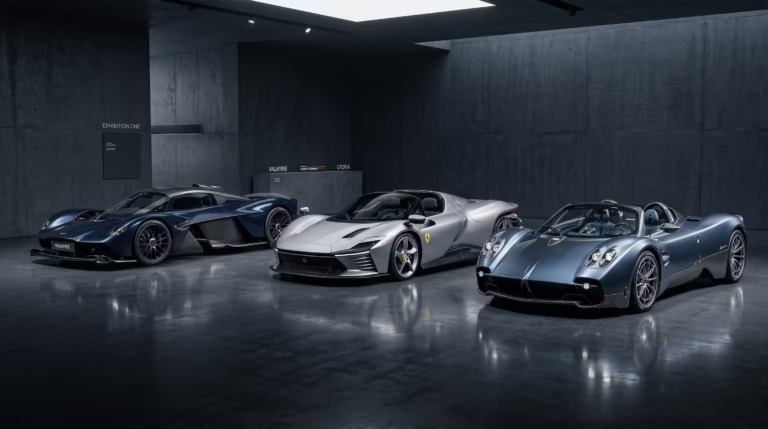
A supercar usually adds exotic construction, extreme acceleration, dramatic styling, and much higher ownership costs. The Corvette ZR1X reaches that territory through performance while undercutting many European hypercars. The Porsche is less theatrical but more versatile. The BMW and Nissan remain closer to traditional performance coupes.
Market Impact and Future Trends
The 2026 market suggests that electrification will enhance rather than immediately replace combustion performance. Electric motors can fill torque gaps, recover energy, support all-wheel drive, and reduce turbo lag. Active aerodynamics, adaptive damping, brake-by-wire systems, and software-controlled differentials will also expand.
At the same time, lightweight rear-wheel-drive coupes remain essential. The future of new sport cars will likely split into two paths: electrified flagship machines with extraordinary capability and simpler enthusiast models focused on affordability, low mass, and mechanical connection.
The leading new sport cars of 2026 serve different drivers. The Porsche 911 Turbo S is the complete high-speed all-rounder. The Corvette ZR1X delivers hypercar acceleration. The AMG GT blends luxury with V8 drama, while the BMW M2 CS offers compact rear-drive intensity. At lower prices, the Toyota GR86 and Nissan Z preserve traditional coupe values.
The right choice depends on more than horsepower. Budget, road conditions, transmission preference, passenger needs, dealer support, insurance, and running costs should shape the decision. Even in a market increasingly defined by software and electrification, the best cars still succeed by making the driver feel involved.