Best Automobile Brands in 2026 Ranked for Every Buyer


The best automobile brands in 2026 are not judged only by style, popularity, or badge value. For buyers in the USA and Europe, a good automobile brand should offer reliability, safety, comfort, performance, modern technology, fair maintenance costs, and strong resale value. Cars are long-term investments, so choosing the right brand can affect your budget for many years.
Today’s market is also more complicated than before. Some brands are known for dependable petrol and hybrid vehicles. Others are leading the shift toward electric vehicles, fast charging, software updates, and AI-powered safety systems. Meanwhile, luxury brands continue to compete on comfort, premium materials, infotainment, and driver-assistance technology.
In 2026, the smartest buyers are comparing more than horsepower or exterior design. They are asking practical questions: How reliable is the brand? How much will the repairs cost? Does it offer strong resale value? Is the EV range good enough? Are parts easy to find? Does the brand perform well in safety testing?
What Makes an Automobile Brand the Best?
Before ranking the top automobile brands, it is important to understand the criteria. A brand can be excellent in one area and average in another. For example, Toyota may lead in reliability and resale value, while technology. Lead in handling and premium performance. Tesla may be stronger in EV software, while Mercedes-Benz may lead in luxury comfort.
The main ranking factors include:
Reliability: This is one of the most important factors for long-term ownership. A reliable brand usually has fewer unexpected repairs, stronger engineering, and better owner trust.
Safety features: Modern cars should offer advanced safety systems such as automatic emergency braking, lane-keeping assistance, blind-spot monitoring, adaptive cruise control, and strong crash-test performance.
Fuel efficiency: Fuel economy matters for petrol, diesel, hybrid, and plug-in hybrid vehicles. For electric cars, buyers should compare EV range, charging time, battery capacity, and charging network access.
Electric vehicle innovation: In 2026, EV technology is a major part of brand value. Buyers are comparing battery range, fast-charging speed, over-the-air updates, thermal management, and long-term battery warranty.
Performance: Performance includes horsepower, torque, acceleration, braking, handling, and driving feel. Brands like BMW and Porsche are strong in this area.
Luxury and comfort: Premium buyers care about cabin quality, quietness, seats, suspension comfort, infotainment, and overall refinement.
Maintenance cost: A car may be affordable to buy but expensive to maintain. This is especially important for luxury brands and high-performance vehicles.
Resale value: Strong resale value helps owners save money when selling or trading in the car. Kelley Blue Book named Toyota the 2026 Best Resale Value Brand and Lexus the 2026 Best Resale Value Luxury Brand.
Customer satisfaction: A brand should deliver a good ownership experience, dealer support, warranty service, and long-term confidence.
Parts availability: For USA and European buyers, easy access to parts and service centres is a major advantage.
Best Automobile Brands Overall in 2026
Consumer Reports ranked Subaru, BMW, Porsche, Honda, Toyota, Lexus, Lincoln, Hyundai, Acura, and Tesla among its top 10 brands in its 2026 Automotive Brand Report Card. The ranking considered road-test scores, reliability, owner satisfaction, and safety.
However, the best car brand in the world depends on the buyer. A family may prefer Toyota or Honda. A luxury buyer may choose Mercedes-Benz, BMW, or Lexus. An EV buyer may prefer Tesla, Hyundai, Kia, or BYD. A performance driver may choose a Porsche or BMW M.
Toyota: Best for Reliability and Resale Value
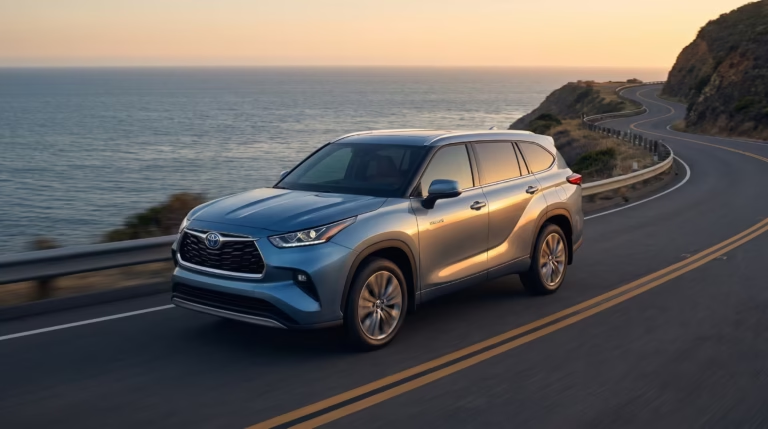
Toyota is one of the most reliable car brands in the world. It has built a strong global reputation by producing durable, efficient, and practical vehicles. For many buyers, Toyota is the safest overall choice because it offers dependable engineering, strong resale value, and lower ownership costs.
Popular Toyota models include the Corolla, Camry, RAV4, Highlander, Prius, Tacoma, Land Cruiser, and 4Runner. In the USA, Toyota is especially strong in sedans, SUVs, hybrids, and trucks. In Europe, Toyota’s hybrid lineup is very attractive for city drivers who want better fuel economy without relying fully on public charging.

Toyota also performs well in resale value. Kelley Blue Book named Toyota its 2026 Best Resale Value Brand, and several Toyota models appeared among the best resale-value vehicles of 2026.
Best for: Families, daily drivers, first-time buyers, long-term owners
Popular models: Corolla, Camry, RAV4, Land Cruiser, Prius
Strengths: Reliability, resale value, hybrid technology, low maintenance cost
Weaknesses: Some models have conservative interiors; performance options are limited
Estimated price position: Budget to upper-mid range
Toyota is the best choice for buyers who want a car that is easy to own, easy to maintain, and easy to sell later.
Honda: Best for Practical and Fuel-Efficient Cars
Honda is another excellent choice for buyers who want reliability, fuel efficiency, and everyday practicality. The brand has a strong reputation for reliable engines, smart packaging, and enjoyable driving dynamics.
Popular Honda models include the Civic, Accord, CR-V, HR-V, Pilot, and Jazz/Fit in some markets. The Civic is especially popular among students, commuters, and first-time buyers. The CR-V is a strong family SUV, offering comfort, space, fuel economy, and safety.

Honda’s biggest advantage is balance. A Honda vehicle usually feels practical but not boring. It can be efficient, reliable, safe, and enjoyable at the same time. Honda also benefits from good resale value and wide parts availability in both the USA and Europe.
Best for: Students, families, commuters, first-time buyers
Popular models: Civic, Accord, CR-V, HR-V, Pilot
Strengths: Reliable engines, good fuel economy, practical cabins, strong resale value
Weaknesses: Some models cost more than budget competitors; EV lineup is still developing
Estimated price position: Affordable to mid-range
Honda is one of the best car brands for people who want a smart daily-use vehicle with low ownership stress.
Mercedes-Benz: Best for Luxury and Comfort
Mercedes-Benz is one of the strongest, best luxury car brands in the world. The brand is known for premium interiors, advanced technology, smooth ride quality, and strong brand prestige. For buyers who want comfort and status, Mercedes-Benz remains one of the most desirable automobile companies.
Popular models include the C-Class, E-Class, S-Class, GLC, GLE, GLS, EQE, and EQS. The S-Class is often viewed as a technology leader in the luxury sedan segment, while the GLC and GLE are popular luxury SUVs in the USA and Europe.

Mercedes-Benz focuses on comfort, safety, and premium design. Its interiors often include high-quality materials, large digital displays, advanced lighting systems, and refined seating. The brand also invests heavily in electric vehicles and driver-assistance systems.
Best for: Luxury buyers, executives, premium SUV shoppers
Popular models: C-Class, E-Class, S-Class, GLC, GLE
Strengths: Comfort, luxury interiors, prestige, technology
Weaknesses: High maintenance cost; complex features can increase repair expenses
Estimated price position: Premium to ultra-luxury
Mercedes-Benz is best for buyers who want luxury, refinement, and advanced features more than low maintenance costs.
BMW: Best for Driving Performance
BMW is one of the best automobile brands for drivers who want performance and luxury together. The brand is famous for sporty handling, strong engines, premium interiors, and a driver-focused experience.
Popular BMW models include the 3 Series, 5 Series, 7 Series, X3, X5, X7, i4, i5, and iX. The 3 Series remains one of the most respected sport sedans, while the X3 and X5 are strong luxury SUVs. BMW’s M division also produces high-performance models with serious horsepower, torque, braking power, and track-focused engineering.

Consumer Reports ranked BMW second overall in its 2026 brand report card, behind Subaru and ahead of Porsche, Honda, Toyota, and Lexus.
Best for: Performance-focused luxury buyers
Popular models: 3 Series, 5 Series, X3, X5, i4
Strengths: Handling, acceleration, premium design, strong technology
Weaknesses: Maintenance and repair costs can be high
Estimated price position: Premium to luxury
BMW is ideal for buyers who want a car that feels exciting every time they drive.
Tesla: Best for Electric Vehicle Technology
Tesla is one of the most influential and best electric car brands in the modern market. The company helped push EVs into the mainstream by offering long-range electric cars, fast acceleration, strong software, and over-the-air updates.
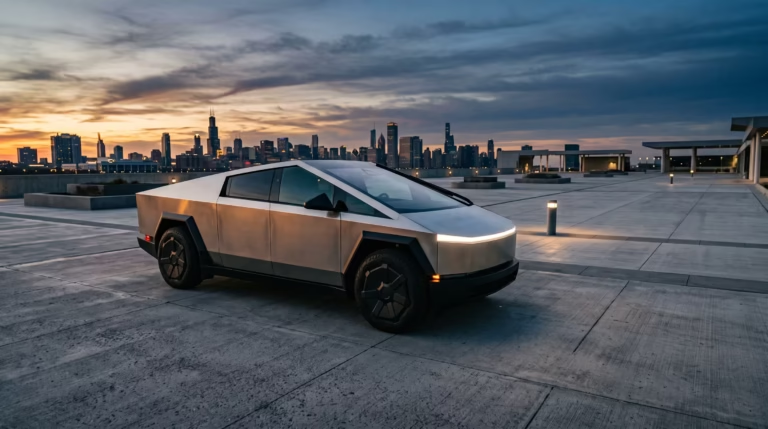
Popular Tesla models include the Model 3, Model Y, Model S, Model X, and Cybertruck. The Model 3 and Model Y are especially important because they offer long EV range, strong performance, and access to Tesla’s charging ecosystem in many markets.

Tesla’s advantages include software, charging convenience, minimalist interior design, and rapid acceleration. However, some buyers still report concerns about build quality, repair costs, insurance costs, and service availability depending on location.
Consumer Reports included Tesla in its top 10 overall brands for 2026 and noted that the Tesla Model Y was the most reliable EV in its report.
Best for: EV buyers, tech-focused drivers, long-distance electric driving
Popular models: Model 3, Model Y, Model S, Model X
Strengths: EV software, range, charging network, acceleration
Weaknesses: Build quality concerns; repairs can be expensive
Estimated price position: Mid-range EV to premium EV
Tesla is best for buyers who want a technology-first electric vehicle.
Hyundai: Best for Value and Modern Features
Hyundai has become one of the best value-focused automotive brands in the USA and Europe. The company offers modern design, strong warranties, advanced features, and competitive pricing.
Popular Hyundai models include the Elantra, Sonata, Tucson, Santa Fe, Kona, Ioniq 5, and Ioniq 6. The Ioniq 5 and Ioniq 6 are especially important because they show Hyundai’s strength in electric vehicle design, fast charging, and futuristic interiors.

Hyundai also competes strongly in family SUVs. The Tucson and Santa Fe offer good practicality, modern infotainment, safety features, and efficient powertrain options. For buyers who want technology without paying luxury-brand prices, Hyundai is a strong option.
Best for: Value buyers, families, EV shoppers, tech-focused drivers
Popular models: Elantra, Tucson, Santa Fe, Kona, Ioniq 5
Strengths: Warranty, technology, design, EV growth
Weaknesses: Resale value can vary by market
Estimated price position: Affordable to upper-mid range
Hyundai is one of the best choices for buyers who want modern features at a reasonable price.
Kia: Best for Budget-Friendly Modern Cars
Kia has improved dramatically over the past decade. Today, it is known for stylish design, strong warranties, good technology, and competitive pricing. It is one of the strongest, best automobile companies for buyers who want value and modern features.
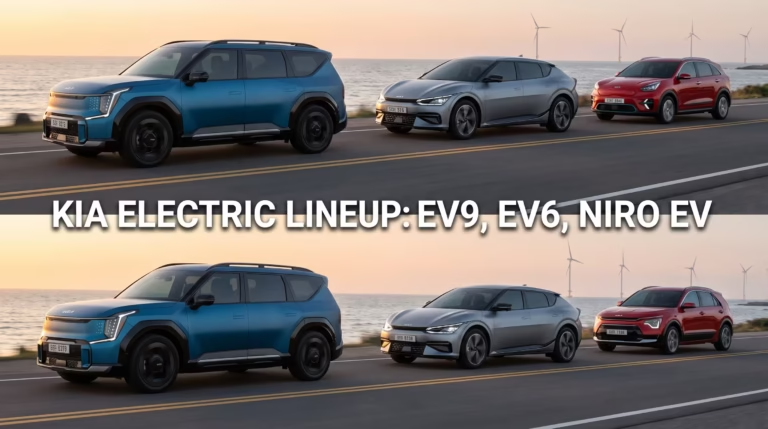
Popular Kia models include the Sportage, Sorento, Telluride, K5, Niro, EV6, and EV9. The Telluride is especially popular in the USA for families, while the Sportage, Niro, and EV6 are strong choices in Europe.

Kia’s EV6 and EV9 show that the brand is serious about electric vehicles. These models offer modern cabins, strong range options, fast-charging capability, and practical usability. For families, the Sportage and Sorento provide space and features at competitive prices.
Best for: Budget-conscious buyers, families, EV shoppers
Popular models: Sportage, Sorento, Telluride, EV6, EV9
Strengths: Design, warranty, features, value
Weaknesses: Dealer experience and resale value can vary
Estimated price position: Affordable to mid-range
Kia is best for buyers who want style and features without luxury-brand pricing.
Ford: Best for Trucks and SUVs
Ford is one of the most important American automobile brands, especially for trucks, SUVs, and performance vehicles. In the USA, Ford has a powerful reputation because of the F-Series pickup line, Mustang, Bronco, Explorer, and Ranger.
The Ford F-150 remains one of the most recognisable pickup trucks in the world. It is popular with families, businesses, contractors, outdoor drivers, and towing-focused buyers. The Mustang remains a performance icon, while the Bronco appeals to buyers who want off-road character.

Ford is also active in EVs with models like the Mustang Mach-E and F-150 Lightning. However, Ford’s reliability can vary by model, so buyers should research the exact vehicle before purchasing.
Best for: Truck buyers, SUV shoppers, performance fans
Popular models: F-150, Mustang, Explorer, Bronco, Ranger
Strengths: Trucks, towing, performance heritage, strong dealer network
Weaknesses: Reliability varies by model; some repairs can be costly
Estimated price position: Affordable truck/SUV to premium trims
Ford is the best choice for buyers who need truck capability, towing strength, or American performance style.
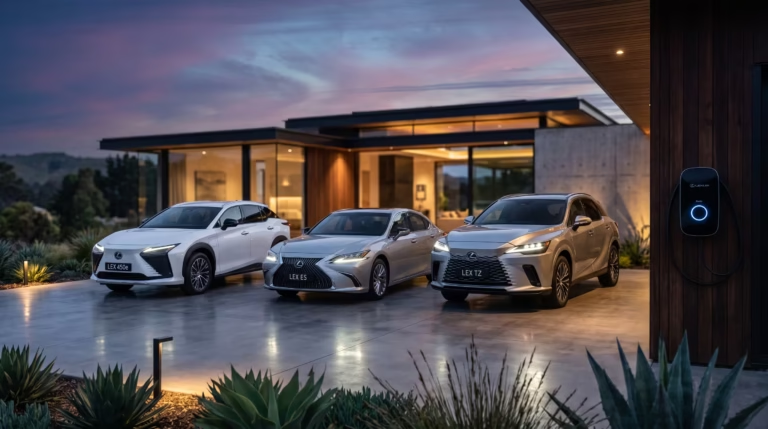
Lexus: Best for Luxury Reliability
Lexus is Toyota’s luxury division, and it is one of the best options for buyers who want comfort without major reliability concerns. The brand combines premium interiors, quiet cabins, smooth powertrains, and strong dependability.
Popular Lexus models include the RX, ES, NX, LX, GX, LS, and UX. The RX is one of the most popular luxury SUVs, while the ES is known for comfort and long-term ownership value. Lexus hybrids are also attractive for buyers who want luxury with better fuel efficiency.

J.D. Power ranked Lexus highest among all brands in its 2026 U.S. Vehicle Dependability Study for the fourth consecutive year.
Best for: Luxury buyers who want reliability
Popular models: RX, ES, NX, LX, GX
Strengths: Dependability, comfort, resale value, hybrid options
Weaknesses: Less sporty than BMW or Porsche
Estimated price position: Premium to luxury
Lexus is the best choice for buyers who want luxury without the stress of frequent repair problems.
Porsche: Best for Sports Cars and Premium Performance
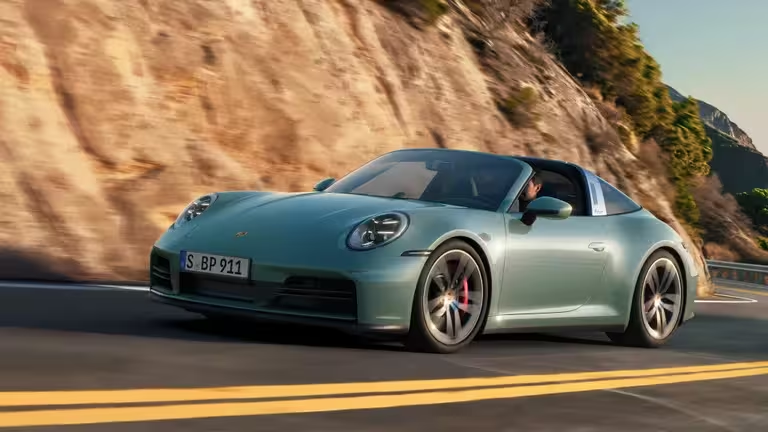
Porsche is one of the strongest performance-focused automobile brands in the world. It is known for excellent handling, precision engineering, high-quality interiors, and premium sports-car character.
Popular Porsche models include the 911, Cayenne, Macan, Panamera, Taycan, and 718 Cayman. The 911 remains one of the most respected sports cars ever made. The Macan and Cayenne make Porsche more practical for buyers who need SUV space but still want performance. The Taycan gives Porsche a serious position in the luxury EV segment.

Consumer Reports ranked Porsche third overall in its 2026 Automotive Brand Report Card, behind Subaru and BMW.
Best for: Sports-car fans, luxury buyers, performance SUV shoppers
Popular models: 911, Cayenne, Macan, Taycan, Panamera
Strengths: Handling, performance, engineering, brand prestige
Weaknesses: Expensive maintenance, options, and insurance
Estimated price position: Luxury to ultra-premium
Porsche is best for buyers who want emotional driving performance and can afford premium ownership costs.
Best Automobile Brands by Category
Most Reliable Automobile Brand
Toyota, Honda, and Lexus are among the strongest choices for reliability. Lexus ranked highest in J.D. Power’s 2026 dependability study, while Toyota and Honda continue to have strong reputations for long-term ownership.
Best Luxury Automobile Brand
Mercedes-Benz, BMW, Lexus, and Audi are strong luxury options. Mercedes-Benz is best for comfort and prestige. BMW is best for sporty driving. Lexus is best for dependable luxury. Audi is strong for premium interiors and all-wheel-drive confidence.
Best Electric Automobile Brand
Tesla, Hyundai, Kia, BYD, and Porsche are important EV brands. Tesla leads in software and charging convenience. Hyundai and Kia offer strong EV value. Porsche offers premium electric performance. BYD is growing quickly in the global EV market.
Best Budget Automobile Brand
Hyundai, Kia, Toyota, and Honda are excellent budget-friendly options. Hyundai and Kia usually offer more features for the price, while Toyota and Honda often deliver better resale value and long-term reliability.
Best Performance Automobile Brand
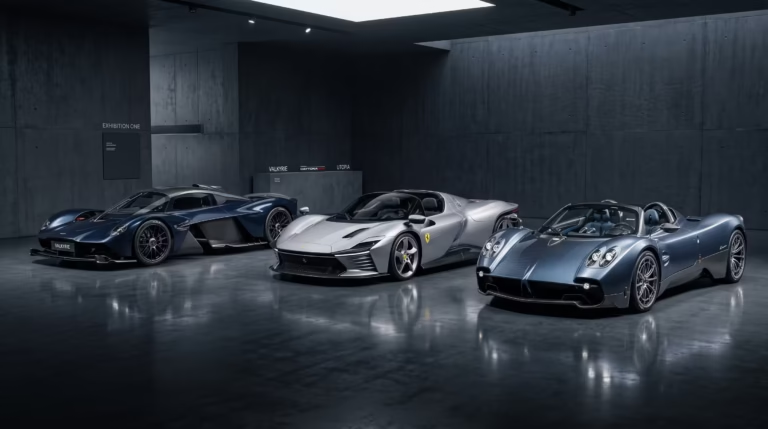
Porsche, BMW, Mercedes-AMG, Ferrari, and Lamborghini are top performance names. For daily usability, BMW and Porsche are often easier to live with than exotic brands. For extreme performance and prestige, Ferrari and Lamborghini remain dream-car choices.
Best Family Automobile Brand
Toyota, Honda, Hyundai, Subaru, and Kia are among the best for families. These brands offer SUVs, crossovers, strong safety features, practical interiors, and reasonable ownership costs.
Best Truck Brand
Ford, Toyota, Chevrolet, and Ram are leading truck brands. Ford is especially strong with the F-Series, while Toyota is known for long-term durability. Chevrolet and Ram are also major players in the North American truck market.
Automobile Brand Comparison Table
| Brand | Best For | Reliability | Luxury | Maintenance Cost |
|---|---|---|---|---|
| Toyota | Reliability and resale value | High | Medium | Low |
| Honda | Daily use and fuel economy | High | Medium | Low |
| Mercedes-Benz | Luxury and comfort | Medium | High | High |
| BMW | Performance and luxury | Medium-Good | High | High |
| Tesla | EV technology | Medium | High | Medium |
| Hyundai | Value and modern features | Good | Medium | Low |
| Kia | Budget features and design | Good | Medium | Low |
| Ford | Trucks and SUVs | Mixed | Medium | Medium |
| Lexus | Luxury reliability | High | High | Medium |
| Porsche | Premium performance | Good | High | High |
Important Things to Consider Before Choosing a Brand
Choosing from the best automobile brands should start with your real needs, not just online rankings. A brand that is perfect for one buyer may be wrong for another.
First, decide your budget. Include the purchase price, monthly payment, insurance, fuel or charging cost, taxes, registration, maintenance, and repairs. A luxury vehicle may look affordable as a used car, but repair costs can be much higher than those of a Toyota, Honda, Hyundai, or Kia.
Second, decide whether you want a new or used car. New cars offer warranty protection and the latest technology, but used cars may offer better value. However, used luxury cars can become expensive if they are out of warranty.
Third, compare fuel type. Petrol and diesel vehicles may still make sense for some long-distance drivers. Hybrids are excellent for fuel savings without charging. Plug-in hybrids work well if you can charge at home. EVs are best if you have reliable charging access.
Fourth, check maintenance cost and spare parts availability. Toyota, Honda, Ford, Hyundai, and Kia usually have wide service networks in many areas. Premium brands may require specialist service.
Fifth, consider resale value. Toyota, Honda, Lexus, Porsche, and some Ford trucks often perform well in resale-value rankings. Strong resale value can reduce your total ownership cost.
Finally, think about road conditions and family size. A small sedan may be ideal for city driving, while a family SUV may be better for children, luggage, and long trips. In snowy regions, all-wheel drive may be important.
Future of Automobile Brands in 2026 and Beyond
The future of automobile brands is being shaped by electric vehicles, hybrid cars, software, AI safety systems, and sustainable manufacturing.
In Europe, battery-electric cars reached 19.4% of the EU market in Q1 2026, while hybrid-electric vehicles captured 38.6% market share. Petrol and diesel combined fell to 30.3%, showing a major shift in buyer demand.
Electric vehicles will continue to improve in EV range, battery capacity, and charging time. More brands are moving toward 800-volt charging systems, better battery cooling, and smarter route planning. Buyers will also see more affordable EVs, especially from Hyundai, Kia, Tesla, BYD, Volkswagen, Renault, and other global manufacturers.
Hybrid vehicles will also remain important. Many buyers are not ready to switch fully to EVs because of charging concerns, apartment living, rural driving, or long-distance travel. That gives Toyota, Honda, Lexus, Hyundai, and Kia a strong position.
Self-driving technology will continue to develop, but full autonomy is still limited. Most 2026 vehicles use driver-assistance systems rather than fully self-driving systems. These features can help with lane keeping, parking, emergency braking, and highway cruising, but drivers still need to stay alert.
AI-powered safety systems, smart infotainment, voice controls, and over-the-air software updates will become more common. However, reliability will depend on how well brands manage software complexity. J.D. Power noted that software updates are becoming more routine, but owners do not always feel clear benefits from them.
Common Mistakes Buyers Make
Many buyers make expensive mistakes when choosing a car brand.
One common mistake is choosing only by design. A car may look beautiful but still have poor fuel economy, weak resale value, or high repair costs.
Another mistake is ignoring maintenance costs. This is especially risky with used luxury cars. A cheap used Mercedes-Benz, BMW, Audi, or Porsche can still have premium repair bills.
Some buyers also forget resale value. A vehicle with poor resale value may cost more in the long run, even if the purchase price is lower.
Another mistake is ignoring fuel economy or EV charging access. An EV is not convenient if charging stations are limited in your area. A large petrol SUV may not be practical if fuel prices are high.
Finally, many buyers skip the test drive. A car may look perfect online but feel uncomfortable, too small, too noisy, or difficult to park in real life.
Conclusion: Which Automobile Brand Should You Choose?
Overall, Toyota is one of the best automobile brands for reliability, resale value, and long-term ownership. Honda is excellent for daily driving, students, families, and first-time buyers. Mercedes-Benz is ideal for luxury and comfort, while BMW is better for people who want performance with premium quality.
Tesla is one of the strongest choices for EV buyers, especially those who value software and charging convenience. Hyundai and Kia are excellent for value, modern design, and EV growth. Ford remains a top choice for trucks and SUVs, while Lexus is the best option for dependable luxury. Porsche is the best choice for premium performance and sports-car emotion.
The right brand depends on your budget, lifestyle, driving needs, and local service support. Before buying, compare reliability, safety ratings, insurance costs, resale value, fuel economy, EV range, and maintenance costs. Then test-drive your top choices.
Now take action: shortlist three automobile brands from this guide, compare their best models in your budget, check local prices, and book a test drive before making your final decision.
Explore EVs, Cars & Bikes: –