Top 20 Luxury Cars Defining Excellence in Modern Automotive Engineering


The top 20 luxury cars available in 2026 represent the absolute peak of what the automotive industry can deliver. These machines blend handcrafted materials, cutting-edge electronics, refined performance, and silent electric propulsion into packages that redefine comfort, status, and capability. In an era when modern cars must balance traditional opulence with efficiency mandates, advanced driver-assistance systems, and electrified powertrains, this carefully curated selection stands apart. From whisper-quiet flagship sedans to high-performance grand tourers and capable luxury SUVs, each model advances the definition of premium motoring while addressing real-world demands for range, safety, and ownership practicality.
Modern cars matter more than ever because they no longer serve solely as status symbols. They function as rolling technology platforms that integrate seamless connectivity, predictive safety systems, and powertrains capable of delivering both effortless torque and impressive efficiency. Buyers today expect instant acceleration from electric architectures, theater-like rear entertainment, and suspension systems that isolate the cabin from virtually every road imperfection. The vehicles profiled here excel in these areas while offering distinct personalities—whether the peerless isolation of a Rolls-Royce, the dynamic chassis of a Porsche, or the value-packed sophistication of a Genesis.

Ultra-Luxury and Flagship Sedans
The full-size luxury sedan remains the purest expression of executive comfort. These cars prioritize rear-passenger isolation, advanced chassis control, and materials that feel closer to a private jet than a conventional automobile.
The Mercedes-Benz S-Class continues as the global benchmark for ride comfort and cabin refinement. For 2026 the lineup begins with the S 500 4MATIC, whose turbocharged 3.0-liter inline-six mild-hybrid produces 442 horsepower and 413 lb-ft of torque. The S 580e plug-in hybrid raises combined output to 503 horsepower and 553 lb-ft while delivering approximately 47 miles of electric range. The twin-turbo 4.0-liter V8 in the S 580 delivers 496 horsepower, and the range-topping AMG S 63 E Performance combines that V8 with an electric motor for 791 horsepower and a staggering 1,055 lb-ft of torque. Starting prices range from roughly $119,500 to nearly $190,000. The cabin features a vast digital cockpit, active body control suspension that anticipates road surfaces, and optional rear executive seating with massaging functions and tablet-style screens. Compared with older generations, the current W223 generation offers quieter operation, more advanced driver-assistance suites, and improved hybrid efficiency without sacrificing the signature S-Class float.
The Rolls-Royce Phantom occupies the absolute pinnacle of handmade craftsmanship. Its 6.75-liter twin-turbo V12 produces 563 horsepower and 664 lb-ft of torque, propelling the nearly three-ton sedan to 60 mph in just over five seconds while remaining almost completely isolated from road noise. Starting prices begin near $550,000 for the standard-wheelbase model and climb well beyond $600,000 for the Extended Wheelbase. The Starlight headliner, coach doors, and near-silent cabin create an experience unmatched by any other production automobile. Ownership costs reflect the bespoke nature of the vehicle; factory extended coverage is essential given the complexity of the electronics and coachwork.
BMW’s 7 Series pairs imposing presence with driver-focused electronics. The 740i uses a 375-horsepower turbocharged inline-six mild hybrid, while the 750e xDrive plug-in hybrid combines that engine with an electric motor for 483 horsepower and roughly 34 miles of electric range. The 760i xDrive’s twin-turbo 4.4-liter V8 produces 536 horsepower. Pricing starts near $99,300 and reaches approximately $125,000. Standout features include the massive rear Theater Screen, optional Bowers & Wilkins audio, and a curved dual-display digital dashboard. Real-world usability remains high thanks to available all-wheel drive and a refined eight-speed automatic.
The Genesis G90 has established itself as a genuine value leader among full-size flagships. Twin-turbo 3.5-liter V6 engines deliver either 375 or 409 horsepower depending on the presence of an electric supercharger and mild-hybrid system. All-wheel drive is standard, and pricing starts under $95,000—significantly below most German rivals—while still offering Nappa leather, power-reclining rear seats, and a quiet, meticulously assembled cabin. Fuel economy sits in the 17–26 mpg range depending on powertrain.
Bentley Flying Spur models for 2026 rely exclusively on plug-in hybrid powertrains pairing a twin-turbo 4.0-liter V8 with an electric motor. Output ranges from 671 to 771 horsepower and up to 738 lb-ft of torque, with approximately 30 miles of electric range. Prices begin around $265,000. The dual-clutch transmission and all-wheel drive deliver both grand-touring refinement and surprising agility. Cabin craftsmanship remains thoroughly British, with extensive wood, leather, and metal options.
The Audi A8 emphasizes composure and quattro all-wheel-drive confidence. Its turbocharged 3.0-liter V6 mild hybrid produces 335 horsepower and 369 lb-ft of torque, returning up to 27 mpg on the highway. Starting near $96,400, the long-wheelbase A8 L offers a dual-touchscreen cockpit, adaptive air suspension, and a high level of standard equipment. It undercuts many competitors while still delivering the quiet, stable ride expected of the class.
Finally, the Lexus LS closes out its current generation with a limited Heritage Edition featuring a 416-horsepower twin-turbo 3.4-liter V6 and all-wheel drive. Pricing sits near $99,000. Legendary build quality, a hushed cabin, and strong residual values continue to define the model even as the brand transitions toward electrified successors.

Cutting-Edge Tech and High-End Electric Vehicles
Electrification has transformed the luxury segment. Instant torque, near-silent operation, and advanced battery architectures now define the new flagships.
The Rolls-Royce Spectre brings classic Rolls isolation to a fully electric platform. Dual motors produce around 593 horsepower (up to 670 in Black Badge form) and substantial torque, with EPA estimates now approaching 300 miles of range from a large battery pack. Starting prices hover near $400,000. The cabin retains traditional Rolls-Royce materials while adding modern digital interfaces and over-the-air capability.
BMW’s i7 shares the 7 Series architecture but substitutes a high-voltage battery. Output ranges from 449 horsepower in the single-motor eDrive50 to 650 horsepower in the dual-motor M70 xDrive. Usable battery capacity exceeds 100 kWh, delivering EPA ranges between roughly 285 and 314 miles. Pricing starts just over $105,000. Optional rear Theater Screens and a fully digital cockpit create a lounge-like rear environment.
The Lucid Air continues to push range and efficiency boundaries. Trims span from the 430-horsepower Pure (up to 420 miles) to the tri-motor Sapphire with 1,234 horsepower and a 1.89-second 0-60 mph claim. The Grand Touring offers up to 512 miles of EPA range from its larger battery. Starting prices begin near $71,000 for the Pure and climb to $249,000 for the Sapphire. Rapid DC charging and a minimalist yet spacious cabin make the Air one of the most compelling long-distance electric luxury sedans.
Porsche’s Taycan prioritizes sports-car dynamics. Battery options of 89 or 105 kWh support ranges up to approximately 318 miles in the most efficient configuration. Power outputs stretch from just over 400 horsepower in base form to more than 700 horsepower in Turbo S and Turbo GT variants. Pricing starts near $106,000. The 800-volt architecture enables extremely fast DC charging, while the chassis delivers the handling precision expected of the brand.
The Mercedes-Benz EQS Sedan features a seamless Hyperscreen display spanning nearly the entire dashboard. A 118-kWh battery supports ranges between 367 and 390 miles depending on drivetrain. Power outputs range from 355 to 536 horsepower. Starting prices begin at approximately $99,900. Standard NACS adapters now improve charging convenience, and the air suspension delivers S-Class-like ride quality.
The Genesis Electrified G80 integrates dual electric motors into a classical midsize sedan proportion. Combined output sits around 365 horsepower with substantial torque, and the battery supports competitive range figures. Pricing remains well below many German electric rivals, preserving the brand’s value proposition while delivering dual-motor all-wheel drive and a richly appointed cabin.

Elite Luxury SUVs
Luxury SUVs now dominate sales volume, combining elevated seating, cargo versatility, and off-road capability with flagship refinement.
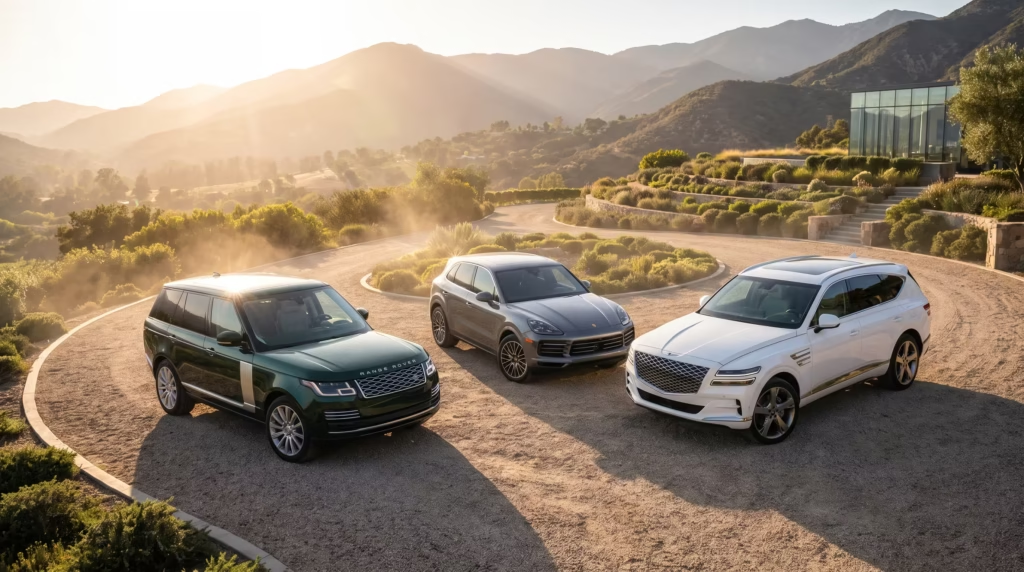
The Range Rover remains the class leader in blending genuine off-road hardware with sophisticated cabin appointments. Powertrains include a 395-horsepower turbo inline-six, a 543-horsepower plug-in hybrid with roughly 50 miles of electric range, and twin-turbo V8s producing up to 607 horsepower. Pricing starts near $115,000 and exceeds $240,000 for SV models. Air suspension, available seven-seat configurations, and a serene cabin make it equally capable on a mountain trail or a city boulevard.
The BMW X5 delivers responsive chassis dynamics, premium materials, and everyday usability. Mild-hybrid and plug-in hybrid powertrains offer strong performance and competitive efficiency. Pricing typically begins in the mid-$60,000 range and climbs with options. Sharp steering and balanced handling distinguish it from more comfort-oriented rivals.
The Volvo XC90 emphasizes Scandinavian design, multi-passenger practicality, and robust safety systems. Plug-in hybrid variants provide meaningful electric range while seating up to seven. The cabin features clean lines, high-quality textiles, and a large central touchscreen. Safety metrics remain among the strongest in the segment.
Porsche’s Cayenne functions as a driver-focused performance utility. Turbocharged engines and available hybrid systems deliver sharp steering response and high customizability. Pricing starts near $90,000 and rises substantially for Turbo and GTS variants. Real-world usability benefits from strong towing capacity and a configurable chassis.
The Genesis GV80 offers bold styling and extensive high-end features at a competitive price point starting in the high $50,000s. Turbo four-cylinder and twin-turbo V6 engines, including a mild-hybrid supercharged option, provide adequate performance, while the cabin rivals more expensive competitors in material quality and equipment levels.
Grand Tourers and High-Performance Exotics
For those who prioritize driving engagement alongside luxury, two standouts complete the list.
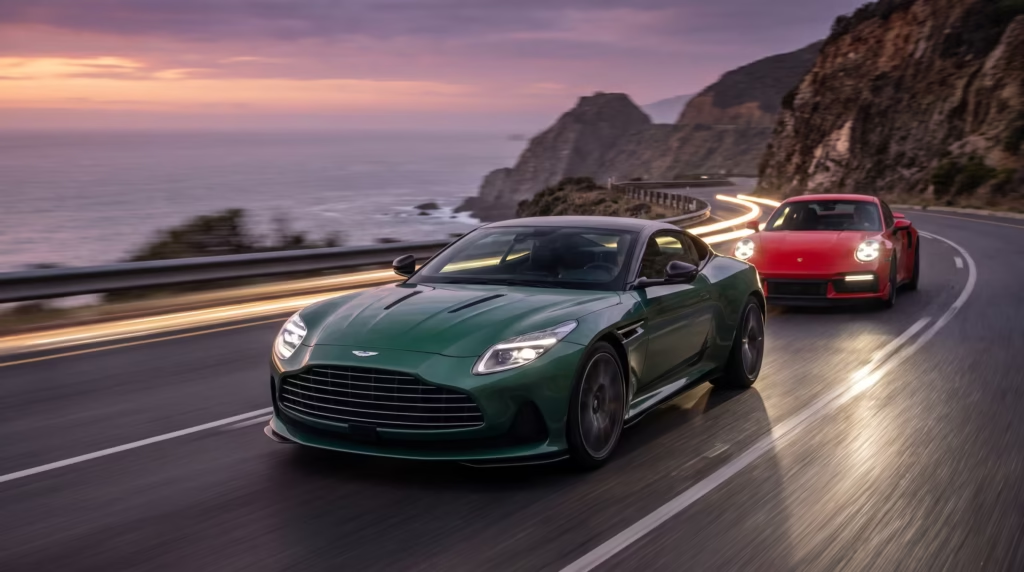
The Aston Martin DB12 packs a 671-horsepower (or 690-horsepower in S form) twin-turbo 4.0-liter V8 into a hand-assembled grand tourer. Rear-wheel drive, an eight-speed automatic, and a claimed top speed exceeding 200 mph deliver genuine performance credentials. Pricing starts near $250,000–$300,000 depending on body style and specification. The cabin balances sporty intent with British craftsmanship.
The Porsche 911 Turbo S now employs a hybrid system with electrically assisted turbos and a motor integrated into the dual-clutch transmission, producing 701 horsepower and 590 lb-ft of torque. All-wheel drive and advanced active aerodynamics enable everyday supercar performance with impressive foul-weather traction. Starting prices sit near $273,000. Acceleration to 60 mph occurs in approximately two seconds, yet the car remains usable as a daily driver.
Key Specifications Comparison
| Model | Starting Price (approx.) | Power Output | Powertrain Type | Notable Feature |
|---|---|---|---|---|
| Mercedes-Benz S-Class | $119,500 | 442–791 hp | Mild/PHEV/V8 | Active body control |
| Rolls-Royce Phantom | $550,000 | 563 hp | Twin-turbo V12 | Peerless isolation |
| BMW 7 Series | $99,300 | 375–536 hp | Mild/PHEV/V8 | Rear Theater Screen |
| Genesis G90 | $94,000 | 375–409 hp | Twin-turbo V6 | Value-packed Nappa cabin |
| Bentley Flying Spur | $265,000 | 671–771 hp | PHEV V8 | British craftsmanship |
| Audi A8 | $96,400 | 335 hp | Mild-hybrid V6 | Quattro standard |
| Lexus LS | $99,000 | 416 hp | Twin-turbo V6 | Legendary reliability |
| Rolls-Royce Spectre | $400,000 | ~593–670 hp | Dual-motor EV | Classic Rolls isolation |
| BMW i7 | $105,700 | 449–650 hp | Single/dual EV | High-voltage architecture |
| Lucid Air | $71,000 | 430–1,234 hp | Single/tri-motor EV | Class-leading range |
| Porsche Taycan | $106,000 | 400–700+ hp | Dual-motor EV | 800-volt fast charging |
| Mercedes EQS | $99,900 | 355–536 hp | Single/dual EV | Hyperscreen display |
| Range Rover | $115,000 | 395–607 hp | I6/PHEV/V8 | Off-road capability |
| Aston Martin DB12 | $250,000+ | 671–690 hp | Twin-turbo V8 | Grand tourer dynamics |
| Porsche 911 Turbo S | $273,000 | 701 hp | Hybrid flat-six | Everyday supercar performance |
Ownership Considerations and Future Trends
High-end flagships typically experience significant depreciation in the first three years. Factory extended warranties help offset the cost of complex electronic and suspension repairs. Powertrain choice remains critical: traditional twin-turbo engines still deliver character and long-range convenience, while electric architectures provide silent, instantaneous acceleration and lower operating costs when charging infrastructure is available.
Interior technology across the top 20 luxury cars centers on large digital dashboards, over-the-air updates, advanced voice assistants, and comprehensive driver-assistance suites that include adaptive cruise, lane centering, automatic emergency braking, and surround-view cameras. Safety ratings remain excellent, though real-world ownership costs—tires, brakes, and specialized service—run higher than mainstream vehicles.
Looking ahead, solid-state battery development, further integration of artificial intelligence into cabin systems, and continued refinement of plug-in hybrid and pure-electric architectures will shape the next generation of these vehicles. The current crop already demonstrates that luxury no longer requires compromise between performance, efficiency, and comfort.
The top 20 luxury cars of 2026 showcase the full spectrum of modern automotive achievement. Whether the priority is the absolute isolation of a Rolls-Royce Phantom, the range and efficiency of a Lucid Air, the off-road versatility of a Range Rover, or the thrilling dynamics of a Porsche 911 Turbo S, each model delivers a distinct and compelling experience. Buyers should weigh powertrain type, rear-seat amenities, ownership costs, and intended use carefully. These vehicles represent not only status but also the current state of the art in engineering, materials, and technology.