Tesla Cyberbeast Review Speed, Range and Real-World Value




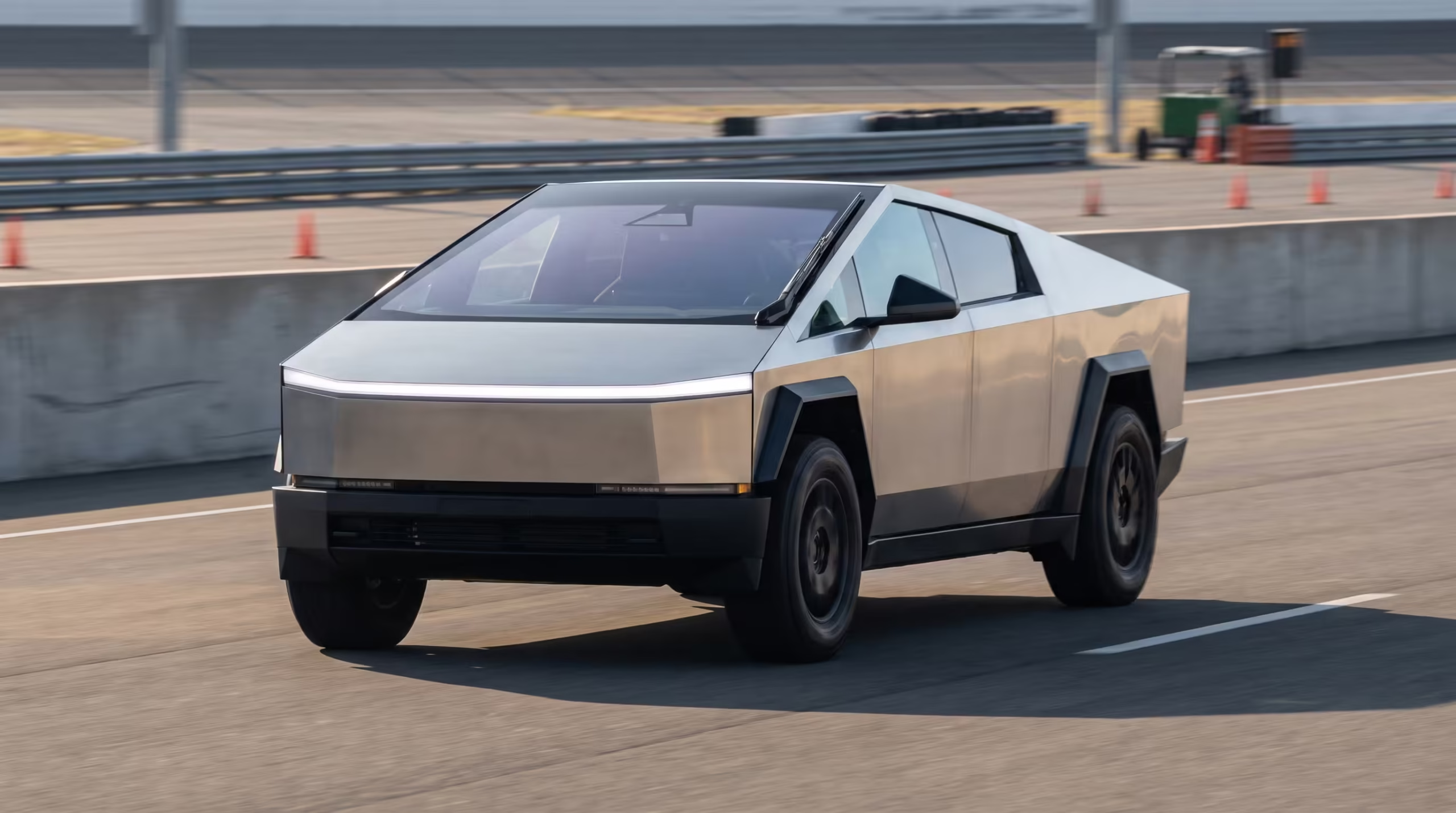


The Tesla Cyberbeast is the quickest and most powerful version of the Cybertruck, combining three electric motors, all-wheel drive, sports-car acceleration, and full-size pickup capability. Its stainless-steel body and angular shape attract attention, but the technology beneath that exterior is more important than the styling alone.
Electric vehicles matter because they can reduce gasoline use, eliminate tailpipe emissions, and deliver immediate torque. At the same time, buyers must consider battery production, charging access, towing range, purchase price, and real-world efficiency. The Tesla Cyberbeast demonstrates both the potential and the compromises of a large, high-performance electric truck.
Understanding EV and Hybrid Powertrains
An electric vehicle, or EV, runs entirely on battery power and electric motors. It does not have a gasoline engine or produce tailpipe emissions.
A conventional hybrid combines an engine with one or more electric motors. The battery is charged by the engine and regenerative braking rather than an external charging cable.
A plug-in hybrid, or PHEV, has a larger battery that can be charged externally. It can complete shorter trips on electricity before using its engine for longer journeys.
A mild hybrid uses a small electrical system to assist the engine. It cannot normally drive meaningful distances on electricity alone.
The Tesla Cyberbeast is a battery-electric vehicle. Every driving function, from acceleration to cabin heating, ultimately depends on stored electrical energy.
Tesla Cyberbeast Key Specifications
| Specification | Tesla Cyberbeast |
|---|---|
| Powertrain | Tri-motor all-wheel drive |
| Maximum power | 845 hp |
| Official torque figure | Not consistently published by Tesla |
| 0–60 mph | 2.6 seconds, claimed |
| Top speed | 130 mph |
| Estimated range | 320 miles |
| Battery capacity | Not officially published; independently estimated at about 123 kWh usable |
| Fast charging | Up to about 135 miles added in 15 minutes |
| Home charging | Up to 11.5 kW with suitable equipment |
| Maximum towing | 11,000 lb |
| Maximum payload | 2,500 lb |
| Bed dimensions | Approximately 6 feet by 4 feet |
| Seating | Five adults |
| Front display | 18.5-inch touchscreen |
| Rear display | 9.4-inch touchscreen |
| Vehicle weight | Approximately 6,863 lb |
| Current U.S. starting price | $99,990 before fees and options |
| European availability | Not officially offered for normal mass-market sale |
Specifications, pricing, and software features can change. Wheel choice, temperature, payload, towing, speed, and driving style also affect range and performance.
Performance, Horsepower and Acceleration
The Tesla Cyberbeast develops 845 horsepower from its tri-motor powertrain. Tesla does not consistently provide a consumer-facing torque figure, so third-party estimates vary and should not be treated as official specifications.
Its defining figure is the claimed 2.6-second 0–60 mph time. Beast Mode prepares the battery, motors, suspension, and traction systems for maximum acceleration.
That performance is remarkable for a truck weighing nearly 7,000 pounds. Acceleration is immediate because electric motors do not need to build engine speed or wait for a transmission to select a lower gear.
However, launch performance depends on:
- Battery temperature and charge level
- Tire condition and road surface
- Vehicle load
- Weather
- Selected driving mode
- Software limitations
Maximum acceleration should only be used where legal and safe. The truck’s weight means it carries considerable energy during emergency braking or sudden direction changes.

Battery Capacity and EV Range
Tesla does not publish a simple official battery-capacity figure for the Tesla Cyberbeast. Independent technical estimates generally place usable capacity at approximately 123 kWh.
The current estimated driving range is 320 miles. Real-world results may be lower when driving at motorway speeds, carrying heavy cargo, using large off-road tires, or operating in cold weather.
Towing can cause an especially significant reduction because a trailer adds weight and aerodynamic drag. Drivers planning long towing journeys should expect more frequent charging stops than the headline range suggests.
Efficiency may improve during slower city driving because regenerative braking recovers energy that would otherwise be lost as heat.
Charging Speed and Charging Time
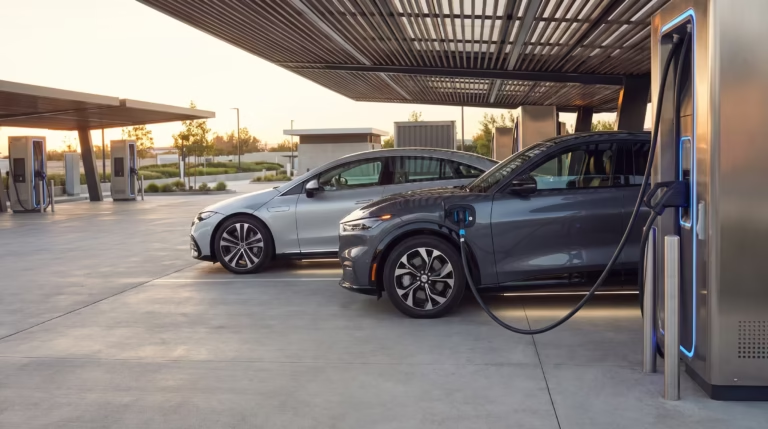
The Tesla Cyberbeast uses the North American Charging Standard connector in the United States and can access Tesla’s Supercharger network.
Tesla states that suitable fast chargers can add approximately 135 miles in 15 minutes. That figure represents ideal conditions rather than a guaranteed result.
Charging speed depends on:
- Battery state of charge
- Battery temperature
- Charger output
- Shared station demand
- Ambient temperature
- Battery preconditioning
Charging slows as the battery approaches full capacity. Consequently, road-trip drivers normally spend less time charging by stopping at a lower percentage and leaving before reaching 100%.
With a compatible 48-amp home charger providing up to 11.5 kW, a near-empty battery can require roughly 11 to 12 hours. Most owners will instead recharge overnight after shorter daily journeys.

Towing, Payload and Bed Utility
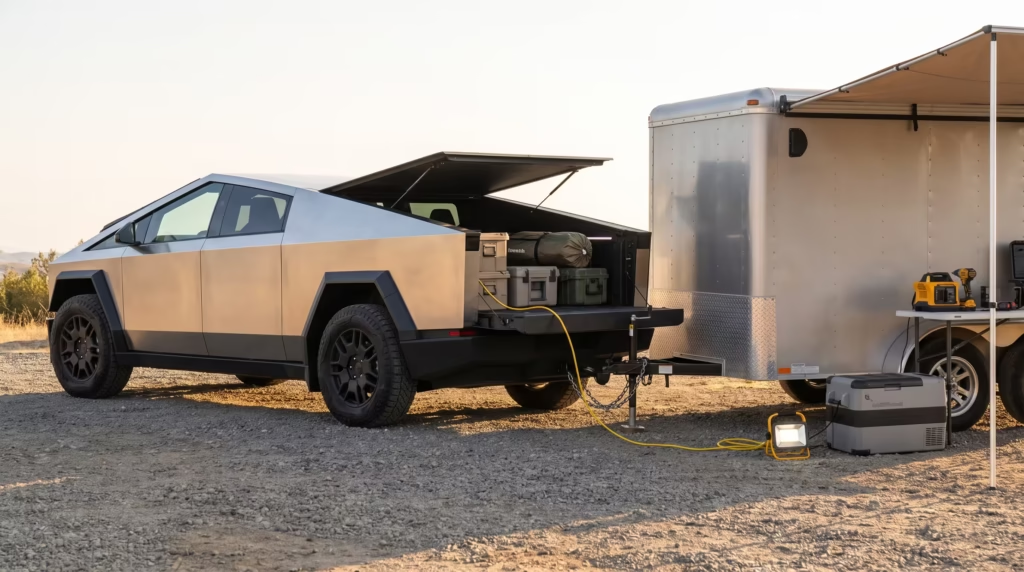
The Tesla Cyberbeast can tow up to 11,000 pounds when properly equipped. Its maximum payload rating is 2,500 pounds, although passengers, accessories, and cargo all count against that limit.
The six-foot bed includes a powered, lockable tonneau cover. Closing the cover provides weather-resistant storage and can reduce the aerodynamic disruption caused by an open pickup bed.
Useful cargo features include:
- Under-bed storage
- Adjustable tie-down points
- Powered tonneau cover
- Two 120V bed outlets
- One 240V bed outlet
- Cabin power outlets
- Integrated lighting
These outlets allow the truck to operate tools, camping equipment, and other electrical devices. Compatible Powershare equipment can also support backup-energy applications.
Steer-by-Wire and Rear-Wheel Steering
The Tesla Cyberbeast replaces a traditional mechanical steering column with steer-by-wire technology. Driver inputs are measured electronically and sent to steering actuators.
The steering ratio can change according to speed. Less hand movement is required in parking areas, while the system becomes calmer at higher speeds.
Rear-wheel steering further reduces the effective turning circle. At low speeds, the rear wheels turn in the opposite direction to the fronts, helping the large truck maneuver in tighter spaces.
The result is a vehicle that can feel smaller from the driver’s seat than its exterior dimensions suggest. Nevertheless, its width remains a challenge in narrow parking structures, older European streets, and crowded urban areas.

Suspension and Driving Experience
Adaptive air suspension gives the Tesla Cyberbeast variable ride height and substantial ground clearance in its highest setting.
On smooth roads, the truck is quiet and extremely quick. Its low battery placement helps reduce body roll, while torque distribution provides strong traction.
The driving experience is not identical to that of a lightweight sports car. The Cyberbeast is still tall, wide, and heavy. Its acceleration can disguise its mass, but the weight becomes more noticeable during braking, rapid cornering, and travel over uneven pavement.
Ride quality also depends heavily on tires. Off-road-oriented tires may increase noise and reduce efficiency compared with road-focused alternatives.
Interior Technology and Infotainment
The cabin follows Tesla’s minimalist approach. Most vehicle controls are operated through an 18.5-inch central touchscreen, while rear passengers receive a 9.4-inch display.
The front system manages:
- Navigation and charging-route planning
- Climate control
- Suspension settings
- Drive modes
- Camera views
- Media and entertainment
- Vehicle configuration
- Energy information
Over-the-air updates can introduce new functions or revise existing ones without a dealership visit.
The squared steering wheel and lack of a traditional driver instrument cluster require adjustment. Some drivers will appreciate the clean dashboard, while others may prefer physical controls and information directly behind the steering wheel.
Native Apple CarPlay and Android Auto are not the centerpiece of Tesla’s system. Buyers who depend on those interfaces should test the built-in software before purchasing.

Driver Assistance and Safety
The Tesla Cyberbeast includes cameras and active driver-assistance functions designed to support motorway and urban driving.
Depending on software, equipment, and market, available features may include adaptive cruise control, lane-centering assistance, automatic emergency braking, blind-spot visualization, parking cameras, and supervised automated-driving functions.
These systems do not make the truck autonomous. The driver must remain attentive, monitor the road, and be prepared to take control immediately.
Its stainless-steel exterior, unusual shape, substantial mass, and steer-by-wire architecture have also generated safety and regulatory debate. Owners should check current recall information and install available software or hardware remedies promptly.
Efficiency and Fuel-Cost Considerations
The Tesla Cyberbeast is rated at approximately 79 MPGe combined. That is considerably more energy-efficient than many high-performance gasoline trucks, although it is less efficient than smaller electric cars.
Home charging is normally cheaper than relying entirely on public fast chargers. Actual savings depend on:
- Local electricity prices
- Supercharger fees
- Annual mileage
- Towing frequency
- Climate
- Insurance
- Tire replacement
- Financing and depreciation
An owner with low-cost overnight electricity may save substantially on energy. Someone who frequently uses expensive public chargers while towing may see a smaller advantage.
Pricing and Availability in the USA and Europe
The current U.S. starting price for the Tesla Cyberbeast is approximately $99,990 before destination charges, taxes, accessories, and optional software.
Pricing has changed several times since launch, so buyers should check the live configurator before making a decision. They should also verify any tax incentive rather than assuming the truck qualifies.
The Cyberbeast is available through Tesla in the United States. Service access is strongest in markets where Cybertruck deliveries are officially supported.
In Europe and the United Kingdom, the truck is not offered as a normal mass-market model with broad type approval. Its dimensions, weight, lighting, exterior design, and pedestrian-safety requirements create significant regulatory obstacles.
Privately imported examples may exist, but registration legality, insurance, servicing, charging compatibility, and parts support can differ by country. European buyers should obtain written guidance from local authorities before importing one.
Tesla Cyberbeast Compared With Electric Pickup Rivals
| Vehicle | Fastest claimed 0–60 mph | Maximum advertised range | Main strength | Main compromise |
|---|---|---|---|---|
| Tesla Cyberbeast | 2.6 seconds | 320 miles | Acceleration, charging network and technology | Polarizing design and limited European availability |
| Rivian R1T | As quick as 2.5 seconds | Up to 420 miles in selected versions | Balanced road, utility and off-road ability | Smaller service network |
| GMC Hummer EV Pickup | About 2.8 seconds | Up to 363 miles in selected versions | Off-road hardware and cabin theater | Very high weight and energy use |
| Ford F-150 Lightning | About 4 seconds in quicker versions | Up to roughly 320 miles | Familiar truck packaging and dealer access | Less dramatic performance |
| Chevrolet Silverado EV | Varies by version | Longer-range versions exceed the Cyberbeast | Range and practical bed flexibility | Large dimensions and substantial weight |
The Tesla Cyberbeast is not automatically the best electric truck for every buyer. The Rivian provides a more conventional adventure-truck experience, while Ford and Chevrolet offer familiar pickup layouts. The Hummer EV is a closer match in performance and visual drama.
Comparison With Gasoline Trucks
Compared with a gasoline performance truck, the Tesla Cyberbeast offers immediate torque, quieter acceleration, regenerative braking, and lower routine powertrain maintenance.
It does not require engine oil, spark plugs, or exhaust-system repairs. However, its battery, suspension, tires, electronics, and body components remain expensive.
Gasoline trucks still refuel more quickly and may be easier to use for repeated long-distance towing. The Cyberbeast works best when owners can charge at home and plan fast-charging stops around their route.
Ownership and Maintenance Costs
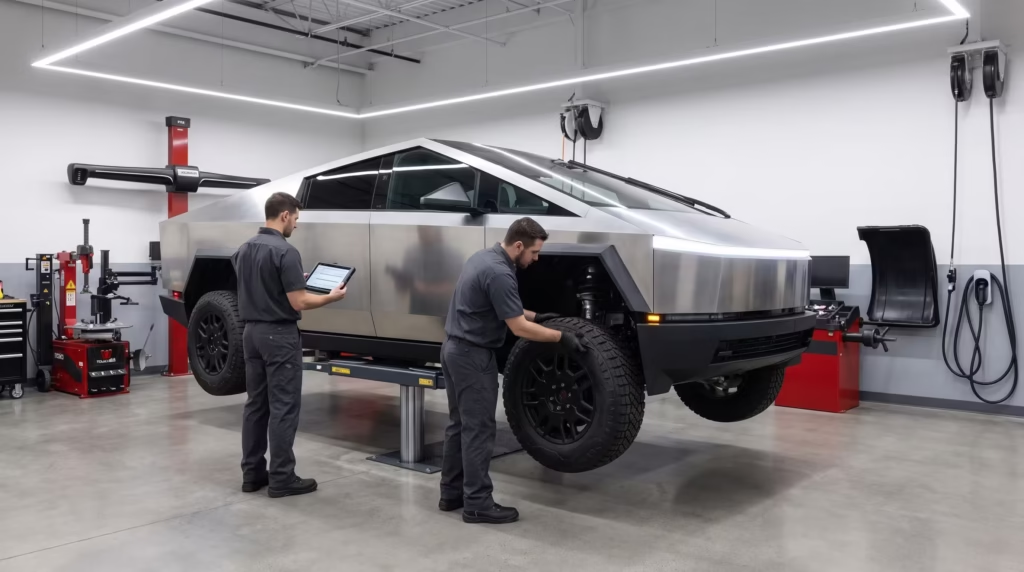
Routine maintenance for the Tesla Cyberbeast includes tire rotation, brake inspection, cabin filters, suspension checks, wiper components, and cooling-system monitoring.
Regenerative braking may reduce friction-brake wear, but the truck’s weight and power can accelerate tire wear.
Other ownership expenses may include:
- Higher insurance premiums
- Large replacement tires
- Home-charger installation
- Stainless-steel exterior care
- Collision repair
- Registration charges
- Depreciation
- Public charging fees
Repair access should be considered before purchase, particularly outside officially supported Cybertruck markets.
Environmental Impact and Market Influence
The Tesla Cyberbeast produces no tailpipe emissions, but it is not environmentally impact-free. Manufacturing its large battery, stainless-steel body, and heavy structure requires significant energy and raw materials.
Its environmental case is strongest when charged with lower-carbon electricity and used to replace a high-consumption gasoline truck. A smaller EV will generally require fewer resources and less energy per mile.
Even so, the Cyberbeast has influenced the market through its 48-volt electrical system, 800-volt-class battery architecture, steer-by-wire technology, rear-wheel steering, bidirectional power features, and unusual production methods.
Future electric trucks are likely to gain faster charging, lighter batteries, more accurate towing-range calculations, improved trailer-friendly charging stations, and stronger vehicle-to-home capability.
The Tesla Cyberbeast is one of the most unusual high-performance vehicles on sale in the United States. Its 845 horsepower, 2.6-second acceleration, 320-mile estimated range, 11,000-pound towing capacity, steer-by-wire system, and practical power outlets give it capabilities few trucks can match.
However, buyers must accept high pricing, considerable weight, reduced towing range, unconventional controls, and limited official availability in Europe.
Share your opinion in the comments, send this review to another EV enthusiast, subscribe for more electric-vehicle coverage, and explore our related guides to electric pickups, home charging, and EV ownership.