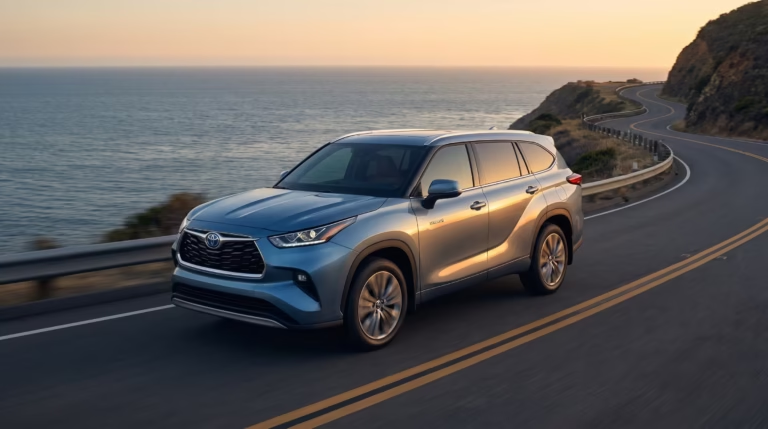
Toyota Prius Review The Ultimate Hybrid Transformed




Welcome to our in-depth Toyota Prius review. If you are in the market for a vehicle that seamlessly blends legendary fuel efficiency with a striking new design, you have come to the right place. The Toyota Prius is undoubtedly one of the most famous hybrid cars ever built and a true pioneer of fuel-efficient vehicles. Produced by the automotive giant Toyota, the Prius has been a global symbol of eco-friendly driving since its initial launch in Japan back in 1997.
Over the years, it has evolved significantly. What started as a quirky, simple hybrid sedan has transformed into a technologically advanced, stylish, and highly efficient vehicle that commands attention on the road. Gone are the days when driving a Prius meant sacrificing aesthetics for miles per gallon. The newest generation focuses heavily on performance and head-turning design, while strictly maintaining its hard-earned reputation for outstanding efficiency.
In this comprehensive Toyota Prius review, we will cover its exterior design, powertrain performance, unmatched fuel economy, interior comforts, cutting-edge technology, pros and cons, and ultimately determine whether it is worth your hard-earned money.
The Evolution of a Global Eco-Icon
To truly appreciate the current iteration of this vehicle, it is essential to understand its roots. When Toyota introduced the original Prius, it was a massive gamble. The automotive world was heavily reliant on purely internal combustion engines, and the idea of a mass-market hybrid electric vehicle (HEV) was revolutionary.
Throughout its first four generations, the Prius built a fiercely loyal customer base by offering unparalleled fuel economy and bulletproof reliability. It became the vehicle of choice for environmentally conscious drivers, daily commuters, and taxi fleets worldwide. However, earlier generations were often critiqued for their polarizing, function-over-form styling and sluggish acceleration.
Consequently, Toyota took this feedback to heart for the latest generation. They completely reimagined the platform, proving that you do not have to compromise on style or driving dynamics to drive green. The modern Prius is lower, wider, and significantly more powerful, marking a dramatic shift in the brand’s design philosophy. For more insights into how hybrid technology has evolved, check out internal guide on the history of hybrid electric vehicles.
2026 Toyota Prius Overview
Toyota Prius Key Specifications: Power Meets Efficiency
Before we dive into the subjective aspects of the car, let us examine the hard data. The hybrid synergy drive system in the latest Prius has received a massive upgrade. The specifications below highlight why the Prius remains one of the most efficient non-plug-in hybrid vehicles available on the global market today.
| Specification | Details |
| Engine | 2.0L 4-cylinder hybrid |
| Electric Motor | Permanent magnet synchronous motor |
| Combined Power | ~194 hp (FWD) / 196 hp (AWD) |
| Transmission | Electronically controlled CVT (e-CVT) |
| Drivetrain | Front-Wheel Drive (FWD) or All-Wheel Drive (AWD) |
| 0-100 km/h | ~7.2 seconds |
| Fuel Economy | ~57 MPG (approximate combined) |
| Seating Capacity | 5 passengers |
One of the most notable changes here is the leap in horsepower. Previous generations hovered around the 121-horsepower mark, which made highway merging a chore. By bumping the power up to nearly 200 horsepower, Toyota has transformed the vehicle’s driving dynamics without penalizing its fuel consumption.
A Striking New Exterior Design
Historically, the Toyota Prius was designed almost exclusively inside a wind tunnel, resulting in a shape that was aerodynamically brilliant but aesthetically divisive. The latest Toyota Prius introduces a major design change that has shocked the automotive press and consumers alike.
Modern Aesthetics
Design highlights of the new exterior include:
- Sleek coupe-like roofline: The roof apex was moved rearward, giving the car a sweeping, aggressive profile.
- Sharp LED headlights: The front fascia features a “hammerhead” design with distinctive, piercing daytime running lights.
- Aerodynamic body shape: The vehicle is lower and wider, giving it a planted, sporty stance.
- Sporty rear light bar: A continuous LED light bar stretches across the rear hatch, adding a premium, futuristic touch.
- Large alloy wheels: Depending on the trim, the Prius now sits on striking 19-inch wheels that fill the wheel arches perfectly.
The Importance of Aerodynamics
Even though it looks like a completely different car, aerodynamics remain extremely important in the Prius design. The aggressively raked windshield, hidden rear door handles, and carefully sculpted underbody panels all work in harmony to reduce drag. This slippery shape is crucial; it allows the car to cut through the air with minimal resistance, which is a primary factor in helping improve fuel efficiency at highway speeds.
Interior Comfort and Practical Cargo Space
Stepping inside the Prius, you are greeted by a cabin that feels vastly more premium than its predecessors. The interior offers a modern, minimalistic environment focused heavily on driver comfort, ergonomics, and seamless technology integration.
Cabin Features
Interior features that elevate the driving experience include:
- A high-mounted digital instrument cluster that sits above the steering wheel, acting almost like a head-up display to keep your eyes on the road.
- A large, crisp infotainment display seamlessly integrated into the center dash.
- Standard wireless Apple CarPlay & Android Auto for effortless smartphone mirroring.
- Premium soft-touch materials and ambient lighting in higher trim levels.
- Available heated and ventilated front seats, alongside a heated steering wheel for colder climates.
Space and Practicality
Passenger space in the front row is generous and comfortable for most drivers. The seats have been redesigned to offer better bolstering and support for long commutes. However, it is worth noting that the beautiful, sweeping exterior design does demand a slight compromise. The sloping roofline slightly reduces rear headroom for taller passengers, making the back seat feel a bit more intimate than the cavernous older models.
Despite this, the cargo area remains highly practical for everyday use. Thanks to the hatchback design, you have a wide, accessible opening to store groceries, large travel bags, and daily commuting gear. Folding the rear seats down flat opens up a surprising amount of utility space, proving that style has not completely overtaken substance.
Understanding the Hybrid Synergy Drive System
To fully grasp the appeal of this car, we must look under the hood. The Prius utilizes the latest iteration of Toyota’s renowned hybrid synergy drive system, which masterfully combines a high-efficiency gasoline engine with powerful electric motors.
How the Powertrain Works
The magic of the Prius lies in how seamlessly it manages its two power sources without any driver intervention required:
- Low-Speed Operation: At low speeds, such as in stop-and-go city traffic or parking lots, the car can run entirely on electric power. This means zero tailpipe emissions and absolute silence.
- Acceleration and Cruising: During harder acceleration or highway cruising, the 2.0L gasoline engine seamlessly kicks in, working together with the electric motor to provide maximum thrust and efficiency.
- Regenerative Braking: During braking or coasting, the electric motor runs in reverse, acting as a generator. This process recovers kinetic energy that would otherwise be lost as heat and stores it in the lithium-ion battery for future use.
A New Level of Performance
This system improves fuel efficiency while maintaining incredibly smooth performance. Because the electric motor provides instant torque off the line, the power delivery is immediate. Compared with older models, the new Prius is much quicker and significantly more responsive. Reaching 0-100 km/h in around 7.2 seconds is a massive improvement, making it genuinely brisk and highly impressive for a hybrid vehicle focused primarily on efficiency.
Unmatched Fuel Economy: Saving at the Pump
While the bold styling and improved acceleration grab headlines, fuel efficiency remains the Prius’s biggest strength and its core reason for existing.
Typical fuel economy figures for the base FWD model are staggering:
- City: ~57 MPG
- Highway: ~56 MPG
- Combined: ~57 MPG
Furthermore, even if you opt for the All-Wheel Drive version or the higher trim levels with larger wheels (which slightly increase rolling resistance), you will still effortlessly achieve over 50 MPG combined.
What does this mean in the real world? It means drivers can travel vast distances with minimal fuel consumption. If you drive 15,000 miles a year, the fuel savings compared to a traditional 25 MPG gas-powered sedan are monumental. By choosing a hybrid electric vehicle, you are not only saving thousands of dollars over the life of the vehicle, but you are also significantly reducing your personal environmental impact. For daily commuting, running errands, or long road trips, the Prius is undisputedly one of the most economical cars available today.
Driving Experience and Handling Dynamics
For years, the phrase “driving a Prius” was synonymous with a numb, uninspired experience. That is no longer the case. The modern driving experience is designed to strike a perfect balance between comfort and newfound efficiency-focused agility.
Key Driving Characteristics
- Smooth acceleration: The e-CVT and instant electric torque make accelerating onto highways completely effortless.
- Quiet cabin: Improved sound deadening and aerodynamic styling keep wind and road noise to a minimum, ensuring a tranquil environment.
- Light but accurate steering: Maneuvering through tight city streets and parking spaces is incredibly easy.
- Stable highway driving: The wider track and aerodynamic downforce keep the car feeling planted at higher speeds.
While it’s certainly not a dedicated sports car, the latest Prius is vastly more engaging than any previous version. Toyota achieved this by migrating the car to the TNGA-C (Toyota New Global Architecture) platform. Toyota comprehensively improved the suspension tuning, vastly increased the chassis rigidity, and sharpened the steering response. Consequently, these upgrades lower the center of gravity, making the car feel much more confident and planted on winding corners and sweeping highway off-ramps.
Cutting-Edge Technology and Safety Features
The modern driver demands connectivity and safety, and the Prius delivers on both fronts. It is packed with an impressive array of modern technologies that make life behind the wheel easier and safer.
Infotainment and Convenience
Important convenience features include:
- A large, intuitive touchscreen infotainment system (up to 12.3 inches on higher trims).
- An intelligent voice assistant that can control cabin temperature, audio, and navigation via simple conversational commands.
- Wireless phone charging integrated cleanly into the center console.
- A cloud-based navigation system that provides real-time traffic updates.
Toyota Safety Sense 3.0
When it comes to protecting you and your family, the Prius leaves nothing to chance. Comprehensive safety features come standard via the Toyota Safety Sense suite, including:
- Adaptive cruise control: Automatically adjusts your speed to maintain a safe distance from the car ahead, even bringing the car to a complete stop in heavy traffic.
- Lane keeping assist: Gently steers the vehicle to keep it centered within its lane.
- Automatic emergency braking: Detects pedestrians, cyclists, and vehicles, applying the brakes automatically if an imminent collision is detected.
- Blind-spot monitoring: Alerts you to vehicles in your blind spots, making lane changes much safer.
- Traffic sign recognition: Reads speed limit and stop signs, displaying them directly on the instrument cluster.
These systems work seamlessly in the background to help improve driver safety and reduce driving fatigue during long journeys.
Long-Term Reliability and Maintenance Costs
If there is one category where Toyota absolutely dominates the automotive landscape, it is longevity. One of the biggest advantages of owning a Prius is its legendary reliability.
Toyota has a virtually untouchable strong reputation for building durable vehicles. The Prius, specifically, is known for:
- Long battery life: The hybrid batteries are engineered to last the lifetime of the vehicle under normal conditions.
- Low maintenance costs: Regenerative braking saves wear and tear on your brake pads, and the hybrid system is remarkably simple to maintain.
- High resale value: Because of their reputation, used Prius models command top dollar on the second-hand market.
It is incredibly common to see Prius vehicles operating as taxis or ride-share vehicles. Many Prius vehicles on the road today have comfortably exceeded 300,000 km with nothing more than routine oil changes, tire rotations, and proper preventative maintenance. Additionally, for peace of mind, the hybrid batteries are covered by extremely long, comprehensive warranties in many markets (often up to 10 years or 150,000 miles).
Comparing the Best Hybrid Cars: Toyota Prius vs Competitors
The hybrid market has grown significantly since 1997. Today, the Prius faces stiff competition from various manufacturers. How does it stack up against other reliable hybrid sedans?
Some popular competitors include the Honda Insight (or the newer Civic Hybrid), the Hyundai Ioniq Hybrid, and its own stablemate, the Toyota Corolla Hybrid.
| Car Model | Fuel Economy | Power |
| Toyota Prius | ~57 MPG | ~194 hp |
| Hyundai Ioniq Hybrid | ~59 MPG | ~139 hp |
| Toyota Corolla Hybrid | ~50 MPG | ~138 hp |
The Verdict on the Competition
While the Hyundai Ioniq Hybrid might edge out the Prius by a single mile per gallon or two in certain configurations, it significantly lacks the horsepower and modern aesthetic appeal of the newly redesigned Toyota. The Corolla Hybrid is a fantastic, slightly cheaper alternative, but it uses an older, less powerful version of the hybrid powertrain and lacks the versatile hatchback cargo space.
Ultimately, the Prius balances efficiency, performance, striking design, and legendary reliability better than almost all of its rivals, firmly holding its position as the king of the hybrid segment.
Pros and Cons Breakdown
No vehicle is absolutely perfect, and it is important to weigh the good against the bad. Here is a quick summary of the strengths and weaknesses of the current Toyota Prius.
Pros
- ✔ Outstanding fuel economy: Near 60 MPG is a game-changer for your wallet.
- ✔ Proven hybrid technology: Over two decades of refinement make this system bulletproof.
- ✔ Reliable and durable: Built to last hundreds of thousands of miles with minimal fuss.
- ✔ Advanced safety features: Standard Toyota Safety Sense protects you on every journey.
- ✔ Low running costs: Cheaper fuel bills, less brake wear, and cheap parts.
Cons
- ✖ Rear visibility is slightly limited: The sharply sloped rear hatch and thick pillars create blind spots (though the standard blind-spot monitoring helps mitigate this).
- ✖ Not a performance-focused car: Despite the power bump, it is still built for efficiency, not track days.
- ✖ Higher price than some compact sedans: The upfront cost is higher than a standard gas-powered compact car.
Pricing and Value Proposition
Speaking of cost, the starting price of the latest Prius represents excellent value when you factor in the long-term fuel savings.
The base MSRP is roughly $27,000 to $36,000 depending on the specific trim level you choose (such as LE, XLE, or Limited) and whether you opt for All-Wheel Drive.
Higher trims naturally push the price upward but include premium features such as:
- Larger 12.3-inch touchscreen displays
- Premium JBL audio systems
- Upgraded interior materials like SofTex synthetic leather
- Fixed glass panoramic roofs
Even fully loaded with all available options, the Prius remains a relatively affordable option for a highly advanced hybrid vehicle, especially when compared to fully electric vehicles (EVs) on the market.
Is the Toyota Prius Worth It?
To conclude our Toyota Prius review, the answer is a resounding yes. The Toyota Prius remains one of the absolute best hybrid cars on the market today. It no longer requires buyers to compromise on style or power to achieve incredible fuel numbers.
It successfully combines excellent fuel efficiency, a suite of modern technology, rock-solid strong reliability, and remarkably comfortable everyday driving dynamics. For daily commuters, environmentally conscious drivers, ride-share operators, or anyone simply looking to dramatically slash their fuel costs, the Prius is a remarkably smart and practical choice.
The newest generation also adds genuinely brisk performance and a highly attractive, head-turning design, making the Prius more appealing today than it has ever been in its nearly thirty-year history.