Mazda3 Sedan 2026 Price, Specs, Turbo & Review

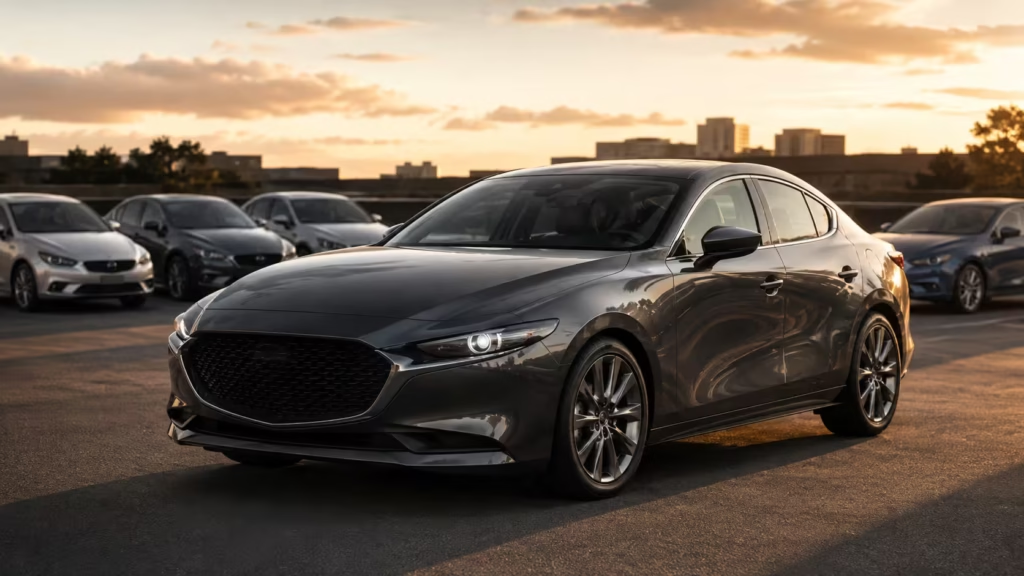

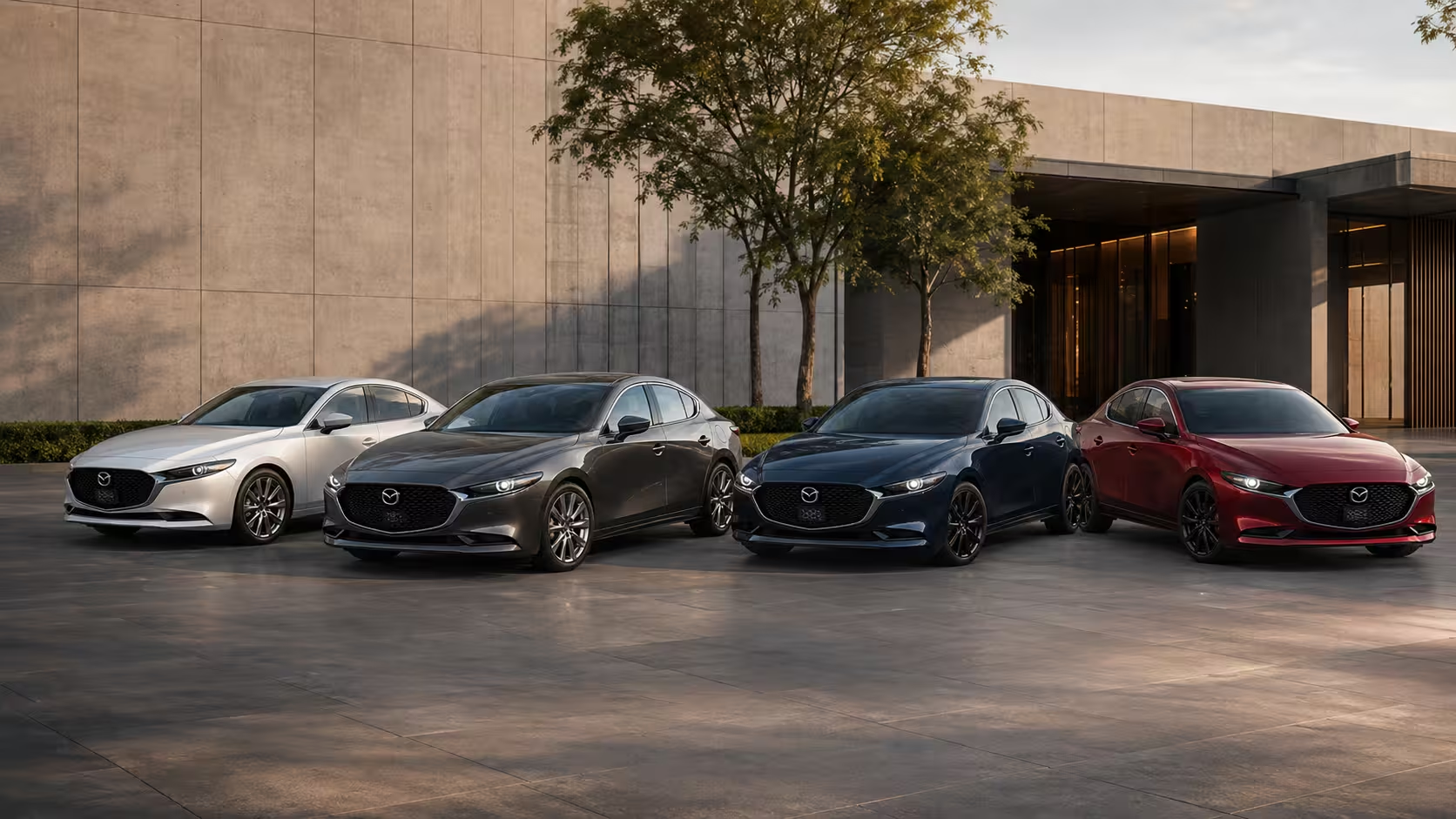
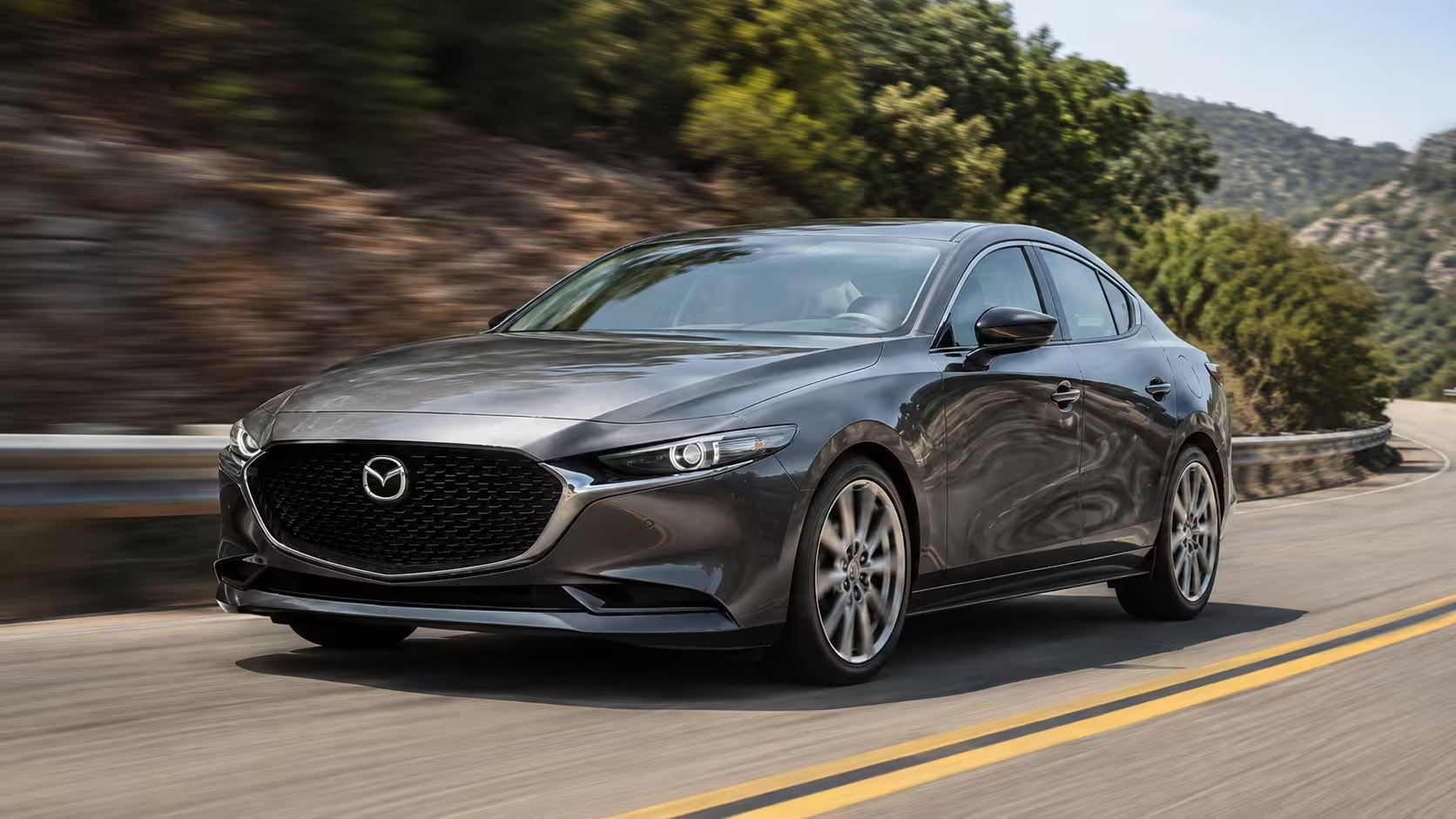

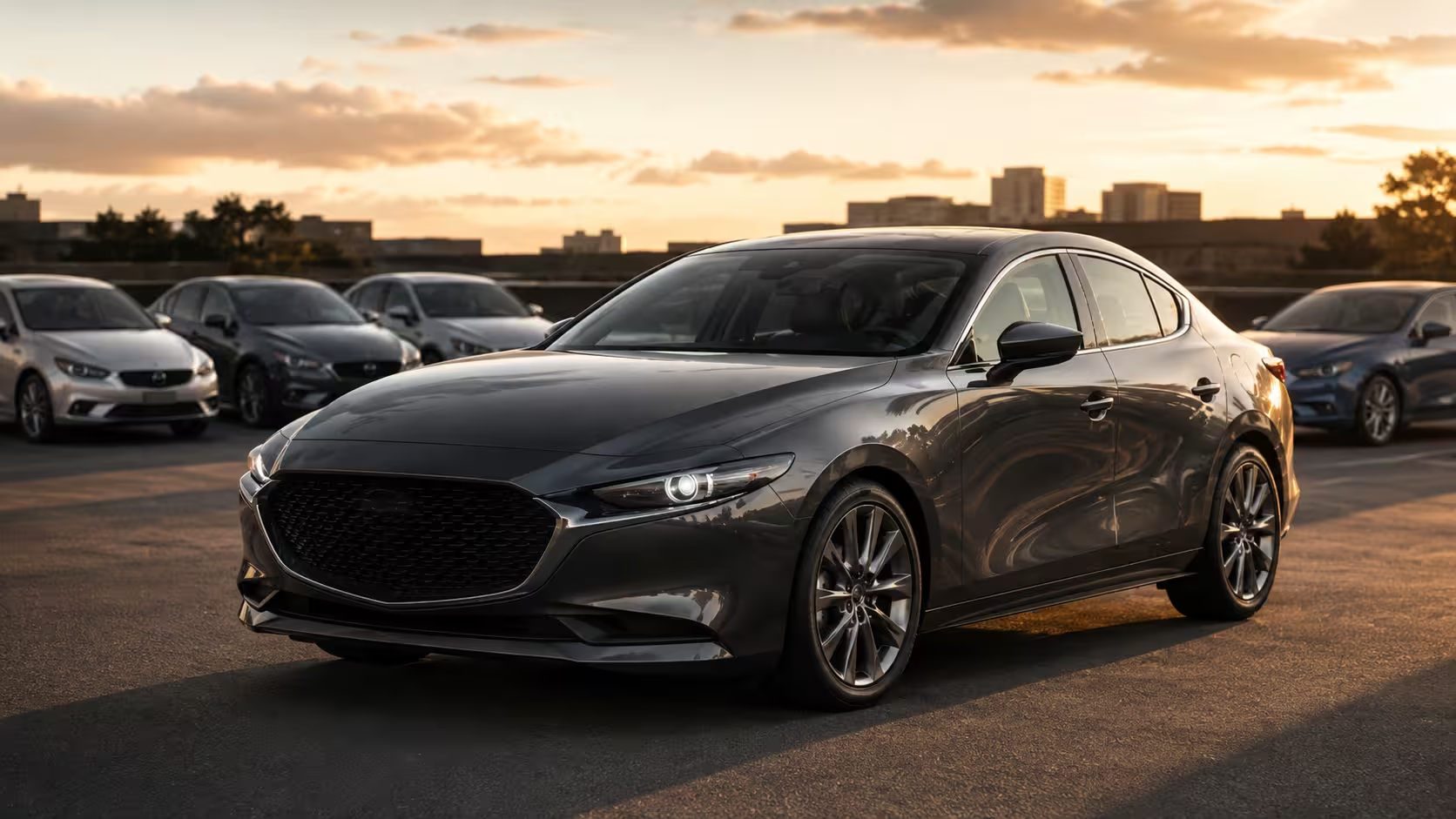
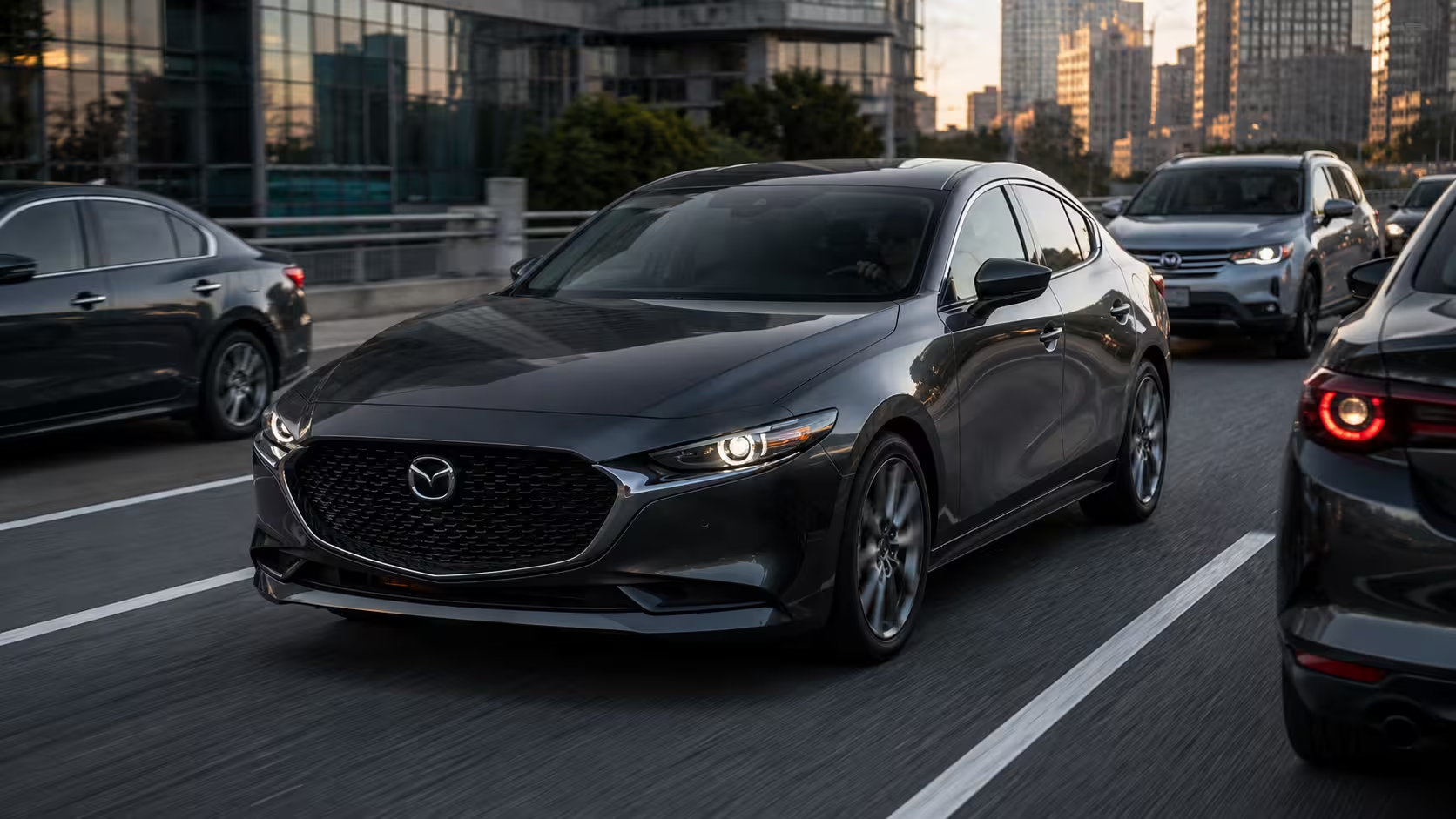
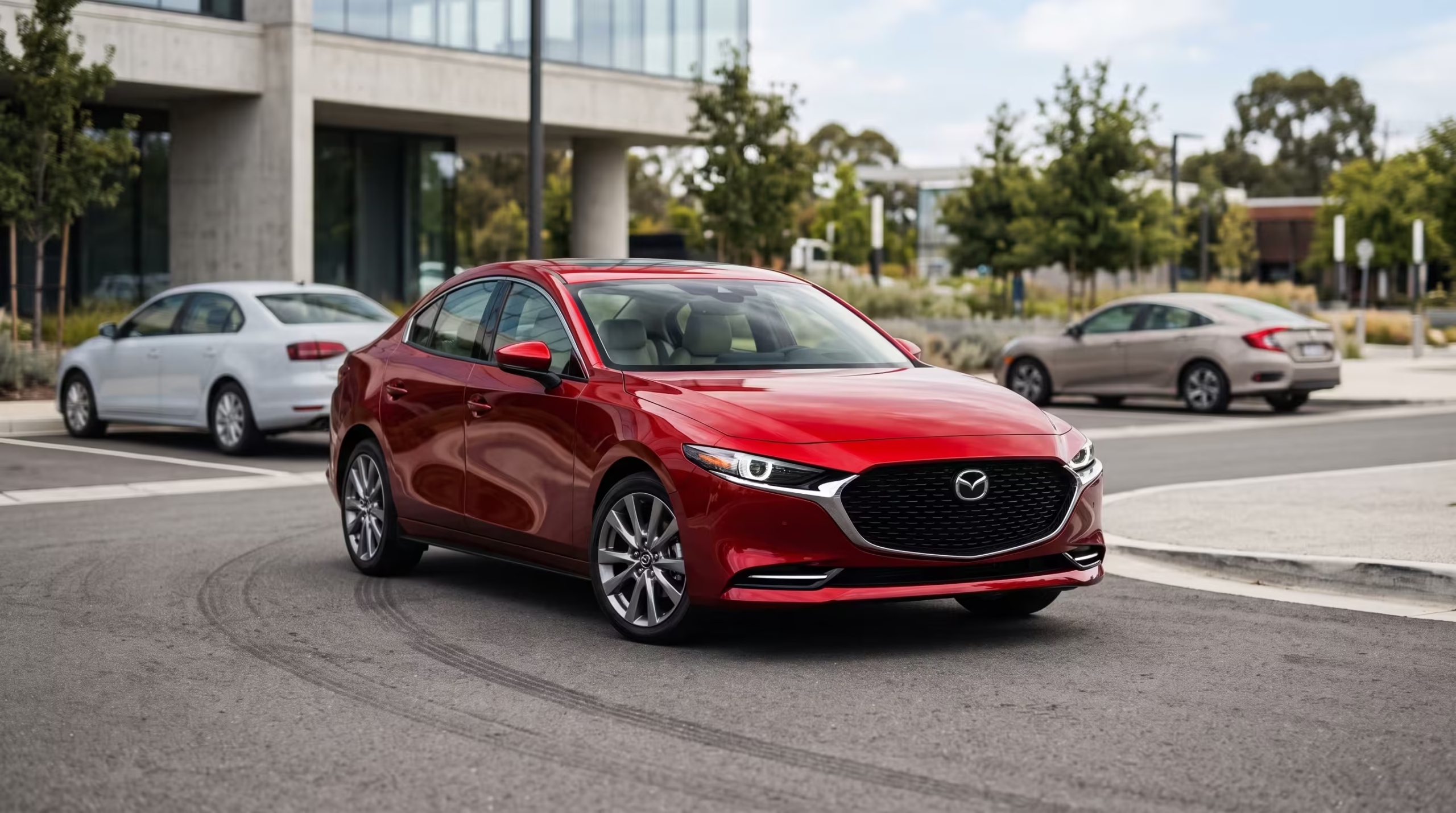
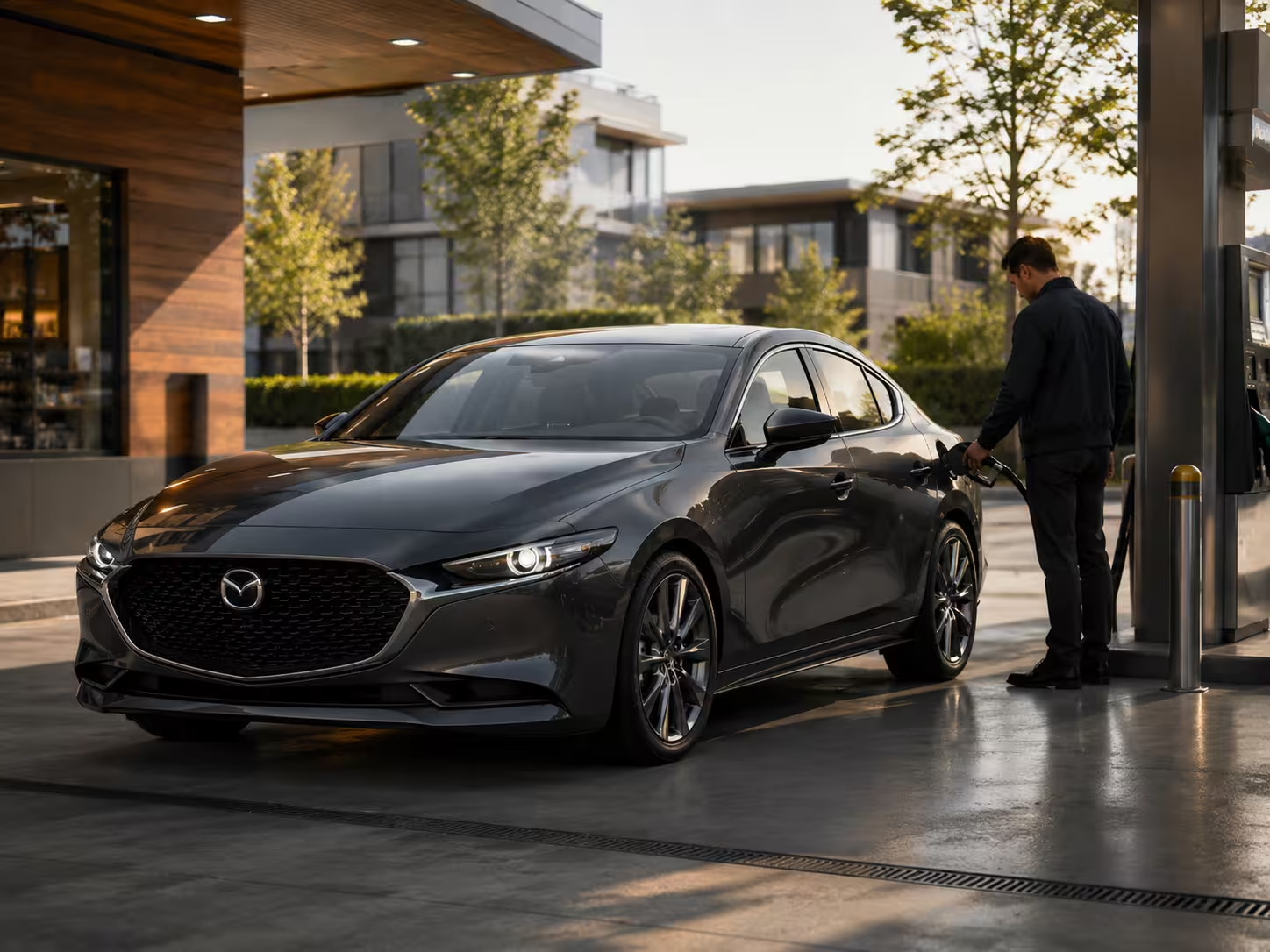


The Mazda3 Sedan remains one of the most distinctive compact cars for 2026 because it approaches everyday transportation differently. Instead of chasing maximum cabin space or relying on a continuously variable transmission, Mazda emphasizes elegant design, a driver-focused cabin, responsive road manners, and a conventional six-speed automatic. The result is a compact sedan that feels closer to an entry-level premium car than a basic commuter.
The Mazda3 addresses modern expectations with connected technology, active safety features, available all-wheel drive, and a polished cabin while retaining a more traditional gasoline-powered driving experience.
What Makes a Modern Car in 2026?
A modern car is no longer defined only by engine output or styling. Today, competitive compact models combine efficient powertrains, smartphone integration, connected services, digital driver information, advanced driver-assistance systems, refined interiors, and software-supported convenience features.
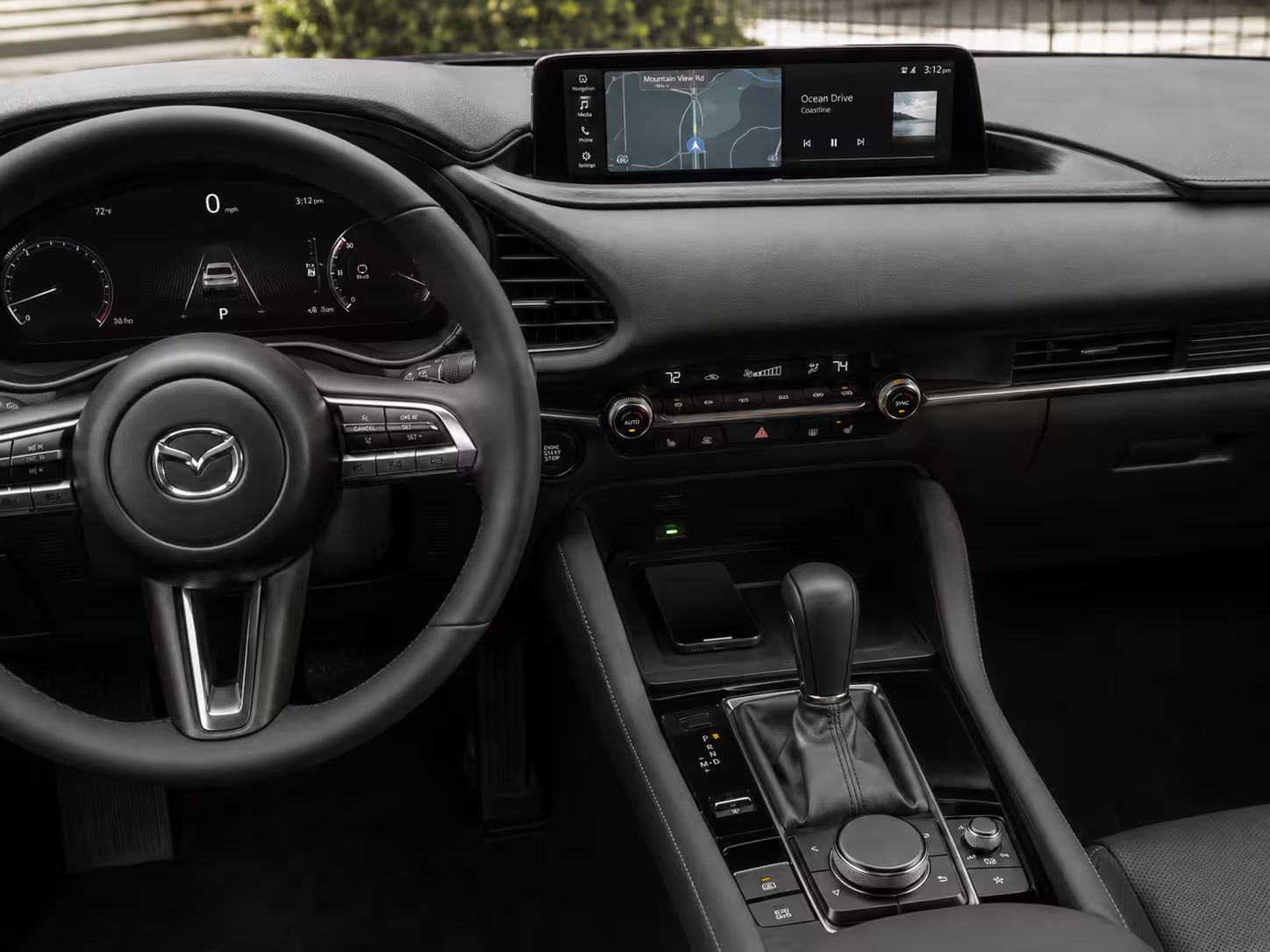
The Mazda3 fits that definition through available Alexa Built-in, Mazda Connected Services, Apple CarPlay and Android Auto, an available 10.25-inch center display, and a range of i-Activsense driver-assistance technologies. Mazda also retains physical controls for important functions rather than making the entire cabin touchscreen-dependent.

Mazda3 Sedan Engine Options and Performance
Two 2.5-liter four-cylinder powertrain configurations shape the 2026 lineup. Both use Mazda’s six-speed automatic rather than a CVT, giving acceleration and gear changes a more conventional feel.
2.5-Liter Naturally Aspirated Engine
Most versions use a 2.5-liter Skyactiv-G four-cylinder producing 186 horsepower and 186 lb-ft of torque. Front-wheel drive is standard on the 2.5 S, Select Sport, and Preferred trims, while the Carbon Edition adds i-Activ AWD.
In independent testing, a front-wheel-drive automatic sedan has reached 60 mph in about 7.0 seconds. That is quick enough for confident highway merging and everyday commuting without turning the car into a fuel-hungry performance model.
The naturally aspirated setup is arguably the best match for buyers who value predictable response, lower purchase cost, and everyday efficiency.
2.5-Liter Turbocharged Engine
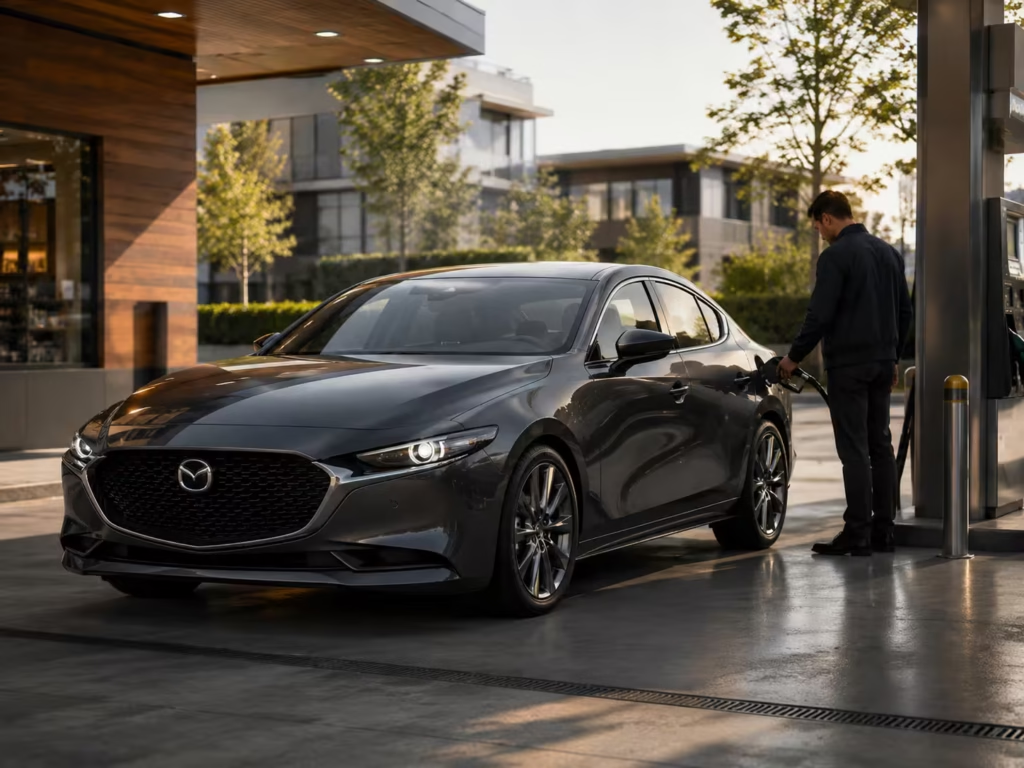
At the top of the range, the 2.5 Turbo Premium Plus combines a turbocharged 2.5-liter engine with standard i-Activ AWD. Output reaches up to 250 horsepower and 320 lb-ft of torque on 93-octane premium fuel. With regular 87-octane fuel, output falls to 227 horsepower and 310 lb-ft.
The turbo version has demonstrated roughly 5.6-second 0-60 mph performance in independent testing, giving the car acceleration that is unusually strong for a mainstream compact sedan.
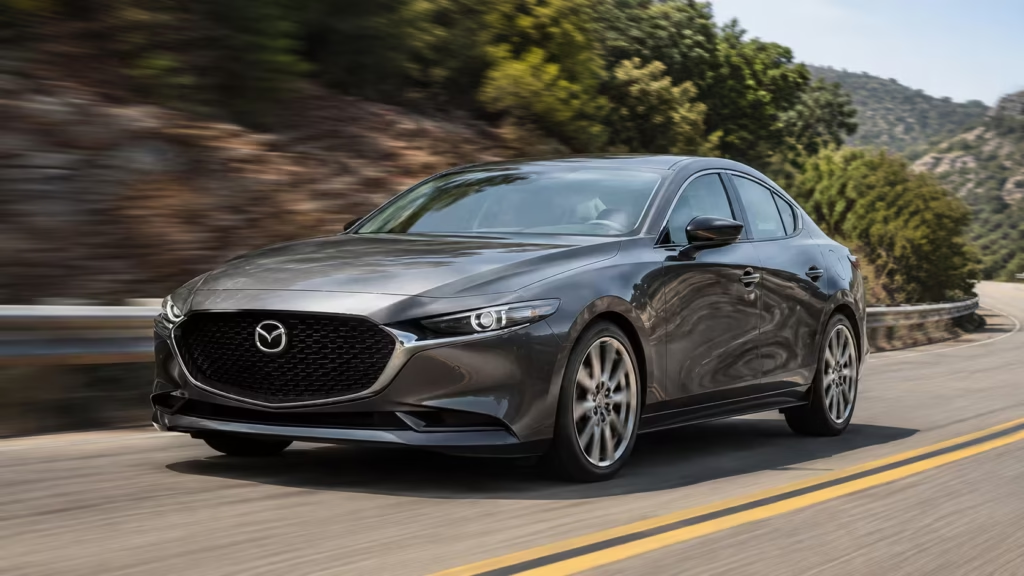
Rather than behaving like a high-strung sport compact, the turbo engine provides a strong wave of midrange torque. That makes passing easier and creates a more effortless character in everyday traffic.
Fuel Economy and Efficiency
Efficiency depends heavily on drivetrain choice. The front-wheel-drive non-turbo model is EPA-estimated at 27 mpg city, 36 mpg highway, and 30 mpg combined. The naturally aspirated AWD configuration is rated at 26/34/29 mpg.
The Turbo Premium Plus is listed at 23 mpg city, 34 mpg highway, and 29 mpg combined. Those figures are respectable for a powerful AWD compact, although buyers focused primarily on saving gasoline can find hybrid competitors with substantially better efficiency.
This is where Mazda’s priorities become clear. The car favors responsive performance, a conventional automatic transmission, and available AWD over class-leading fuel economy.
Does the Mazda3 Sedan Have a Hybrid or EV Version?
For the U.S. 2026 model year, the Mazda3 does not offer a hybrid, plug-in hybrid, or battery-electric powertrain. Therefore, EV range, battery capacity, DC fast-charging speed, and charging time do not apply to this model.
Buyers who want maximum fuel efficiency may prefer a hybrid competitor. However, drivers who want straightforward gasoline ownership may appreciate the Mazda’s familiar fueling routine and lack of charging requirements.
Future compact cars will increasingly combine refinement with electrification, but the 2026 model remains a gasoline-focused choice.

Interior Quality and Real-World Comfort
The sedan’s cabin is one of its strongest selling points. The dashboard uses a low, horizontal design, controls are logically grouped, and many surfaces have the appearance and finish buyers often associate with more expensive vehicles.
The front seats create a supportive, driver-focused environment, while the steering wheel, console controller, and major controls are positioned for easy use.
However, packaging is not perfect. Rear legroom measures about 35.1 inches, while rear headroom is also tighter than in some roomier compact sedans. Taller adults may therefore find the rear seats restrictive on longer journeys.
Trunk capacity is 13.2 cubic feet. That is sufficient for groceries, luggage, or several smaller bags, although buyers who frequently carry bulky items may prefer the Mazda3 hatchback.
Infotainment, Digital Displays and Connectivity
Technology in the Mazda3 is designed to reduce visual clutter. A 7-inch LCD meter display provides core vehicle information, while upper configurations can add a 10.25-inch full-color center display.
Available technology includes:
- Wireless Apple CarPlay and Android Auto
- Alexa Built-in
- Mazda Connected Services through the MyMazda app
- Available Qi wireless smartphone charging
- Available Mazda Online Navigation
- Available full-color Active Driving Display
- Bose 12-speaker premium audio on upper equipment
- Standard eight-speaker Mazda Harmonic Acoustics audio for 2026
For 2026, Mazda made the eight-speaker Harmonic Acoustics system standard while retaining the available Bose premium setup.

Safety and Driver-Assistance Technology
The sedan includes a wide range of active safety and driver-assistance technology. Equipment varies by trim, but i-Activsense features can warn drivers about potential hazards, help maintain lane position, manage following distance, and assist in reducing the severity of certain collisions.
Key systems include:
- Blind Spot Monitoring
- Rear Cross Traffic Alert
- Lane Departure Warning
- Lane-keep Assist
- Mazda Radar Cruise Control with Stop & Go
- Driver Attention Alert
- High Beam Control
- Smart Brake Support
- Rear seat alert
- Vehicle exit warning
The Turbo Premium Plus adds more advanced awareness and convenience equipment, including a 360-degree View Monitor, front and rear parking sensors, Smart Brake Support-Reverse, Smart Brake Support-Rear Crossing, Traffic Sign Recognition, Adaptive Front-lighting, and Cruising and Traffic Support.
2026 Mazda3 Sedan Key Specifications
| Specification | 2.5L Non-Turbo | 2.5L Turbo Premium Plus |
|---|---|---|
| Engine | 2.5L four-cylinder | 2.5L turbo four-cylinder |
| Horsepower | 186 hp | Up to 250 hp |
| Torque | 186 lb-ft | Up to 320 lb-ft |
| Transmission | 6-speed automatic | 6-speed automatic |
| Drivetrain | FWD or available AWD | Standard AWD |
| EPA economy | Up to 27/36/30 mpg | 23/34/29 mpg |
| 0-60 mph | About 7.0 sec, tested | About 5.6 sec, tested |
| Trunk volume | 13.2 cu ft | 13.2 cu ft |
| Seating | 5 | 5 |
| Hybrid/EV option | No | No |
2026 Trim Levels and Pricing
The 2026 lineup stretches from a well-equipped entry model to a near-luxury turbocharged AWD flagship. Current Mazda trim listings show the following starting prices.
| Trim | Starting MSRP | Notable Equipment |
|---|---|---|
| 2.5 S | $24,650 | 186-hp engine, FWD, 8-speaker audio, driver aids |
| 2.5 S Select Sport | $25,540 | 18-inch black wheels, leatherette seating, Alexa Built-in |
| 2.5 S Preferred | $27,290 | Power moonroof, heated front seats, power driver’s seat |
| 2.5 S Carbon Edition | $29,815 | i-Activ AWD, distinctive trim, red leather interior |
| 2.5 Turbo Premium Plus | $36,940 | Up to 250 hp, AWD, 360-degree camera, Bose audio |
Starting MSRP does not include destination charges, taxes, licensing, optional equipment, or possible dealer charges.

Mazda3 Sedan vs Compact Car Competitors
The compact-sedan segment gives shoppers several different priorities. The Mazda3 leans toward styling, cabin quality, available AWD, performance, and driving feel rather than maximum passenger volume.
| Model | Key Strength | Main Trade-Off |
|---|---|---|
| Mazda3 Sedan | Premium cabin, available AWD, strong turbo performance | Tight rear seat, no hybrid |
| Honda Civic | Spacious cabin, efficiency, broad powertrain selection | Less distinctive premium ambiance in lower trims |
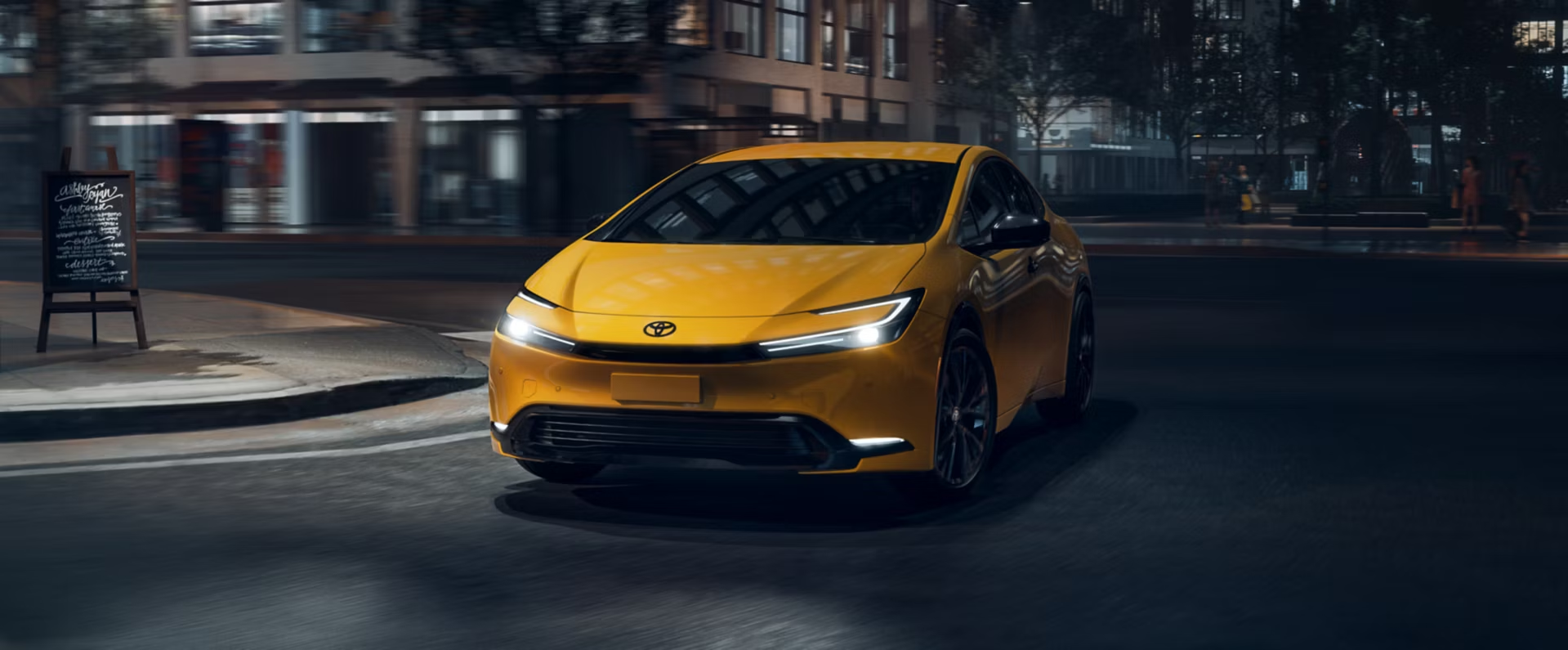
| Toyota Corolla | Efficiency, straightforward usability, hybrid availability | Less performance focus in mainstream trims |
| Hyundai Elantra | Technology, value, spacious cabin | Interior quality varies by trim |
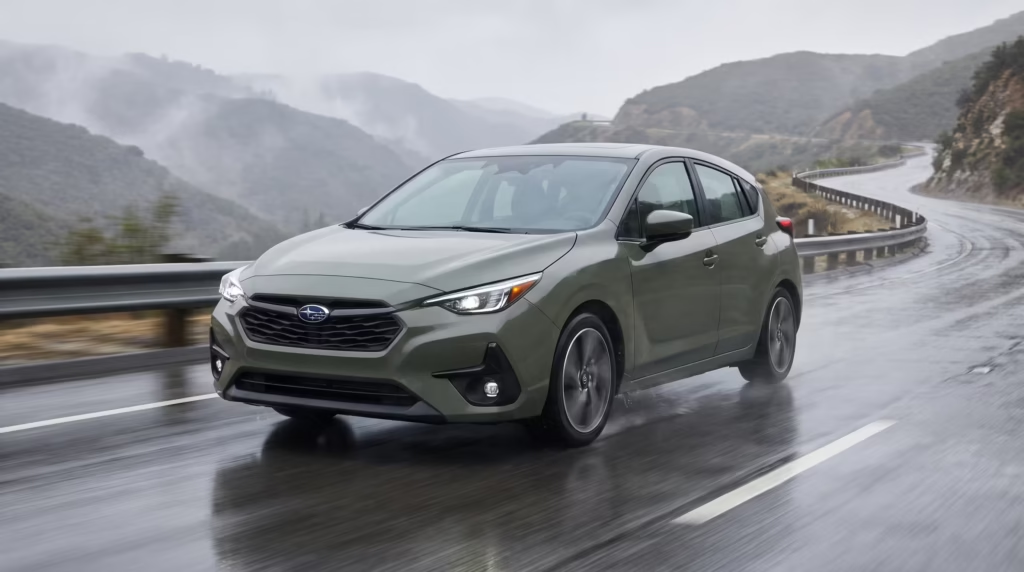
| Subaru Impreza | AWD practicality | Hatchback-only body style |
Drivers primarily concerned with rear-seat room or maximum gasoline savings may prefer another compact. However, buyers who value steering feel, cabin ambiance, available AWD, and strong turbo acceleration will find this Mazda unusually compelling.

Driving Experience More Grown-Up Than Sport-Compact
The driving experience is one of the Mazda’s defining qualities. Steering has a natural buildup of weight, body motions feel controlled, and the six-speed automatic avoids the elastic engine-note sensation associated with some CVTs.
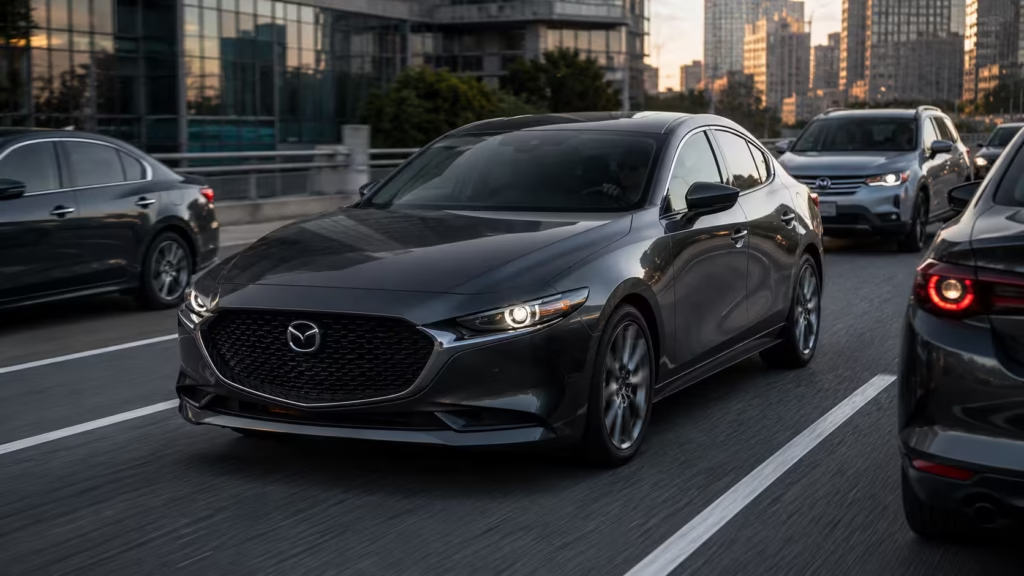
The non-turbo car feels balanced rather than aggressively fast. By comparison, the turbo configuration provides substantial low- and midrange thrust without turning the chassis into something harsh or nervous.
Standard AWD on the Turbo Premium Plus also helps manage the engine’s substantial torque, particularly when accelerating on wet or slippery pavement.
Real-World Usability
Daily ownership reveals the car’s main compromise: the front half of the cabin feels premium and driver-centered, while the rear seating area is less accommodating.
The sedan works especially well for singles, couples, commuters, and smaller households that do not regularly carry tall adults in the back. The traditional trunk handles normal errands effectively, while the four-door body remains convenient for everyday urban and highway use.
The Mazda3 Sedan therefore makes more sense as a stylish personal compact than as the segment’s ultimate space-maximizing family car.

Ownership and Maintenance Costs
The non-turbo model should generally be the simpler configuration for budget-conscious ownership because it avoids turbocharger complexity while also delivering stronger fuel economy. Its naturally aspirated engine is designed to run on regular unleaded gasoline.
The turbo engine can also operate on regular fuel, but its maximum advertised horsepower and torque require 93-octane premium fuel. Drivers who consistently want full performance should therefore consider the additional fuel expense.
Routine ownership includes familiar gasoline-car expenses such as:
- Engine oil and filter changes
- Tires and wheel alignment
- Brake servicing
- Fluids and filters
- 12-volt battery replacement
- Wiper blades
- Scheduled inspections
AWD versions also contain additional drivetrain hardware. Ultimately, insurance rates, annual mileage, tire selection, local labor costs, driving conditions, and maintenance habits can influence ownership expenses more than a single national cost estimate.
How It Compares With Older Compact Cars
Compared with compact sedans from a decade or two ago, the current Mazda3 demonstrates how significantly the category has matured.
Older economy cars often emphasized low purchase prices, simple audio systems, basic cruise control, and minimal sound insulation. Modern compact cars increasingly offer connected smartphones, active driver assistance, voice commands, sophisticated infotainment, premium audio, and advanced camera systems.
The 2026 car can combine a head-up display, surround-view camera technology, AWD, premium cabin materials, and turbocharged performance approaching what was once associated with more expensive sport sedans.
At the same time, Mazda has resisted one modern trend: replacing nearly every control with a touchscreen. That mixture of new technology and traditional ergonomics gives the interior a distinctive character.
Market Impact and the Future of Modern Compact Cars
The Mazda3 occupies an increasingly unusual position. Compact-car buyers are being pulled toward highly efficient hybrids on one side and compact SUVs on the other. Mazda continues to offer a low-slung sedan focused heavily on design and driver engagement.
For now, its appeal comes from delivering modern technology without eliminating traditional enthusiast-friendly qualities such as predictable shifting, a low driving position, responsive steering, and a strong gasoline engine.
As electrification grows across the industry, future compact cars will likely place greater emphasis on hybrid efficiency, software integration, smarter energy management, and increasingly sophisticated driver-assistance systems.
The 2026 Mazda3 Sedan is a refined compact car for buyers who want more personality than a typical commuter. Naturally aspirated versions combine useful performance with reasonable fuel economy, while the Turbo Premium Plus adds genuine acceleration, standard AWD, and an extensive technology package.
Its limitations are equally clear. Rear-seat space is tight, fuel economy cannot match the strongest hybrids, and there is no electrified powertrain. Yet for drivers who prioritize elegant design, quality cabin materials, responsive controls, and engaging road manners, it remains one of the most distinctive choices in the modern compact-car market.