Commuter Electric Scooters Best Models for Daily Urban Travel 2026



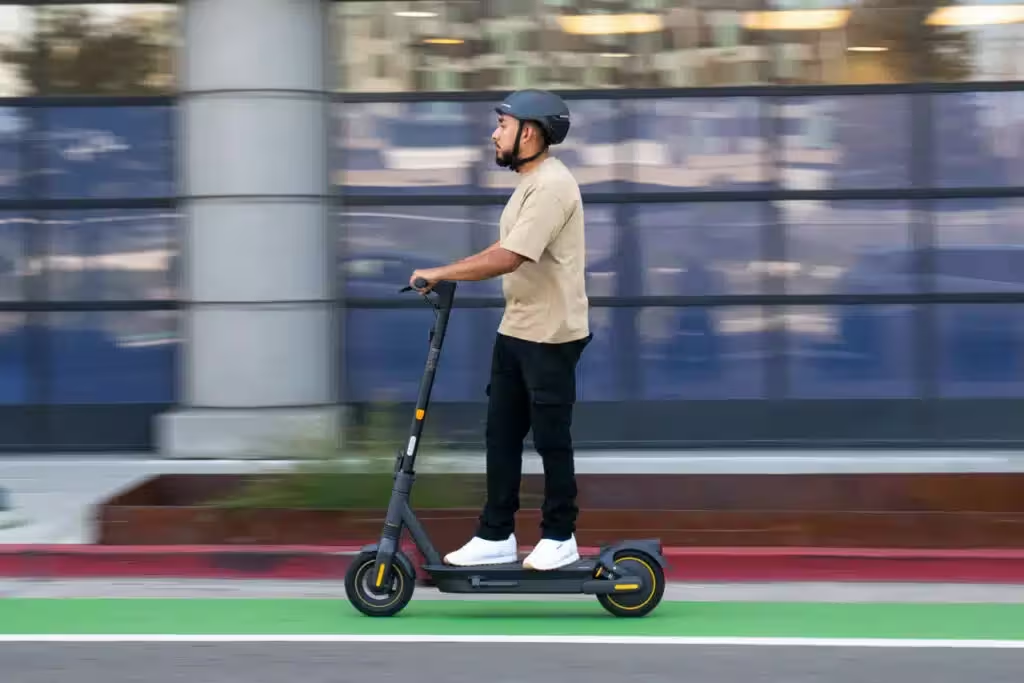
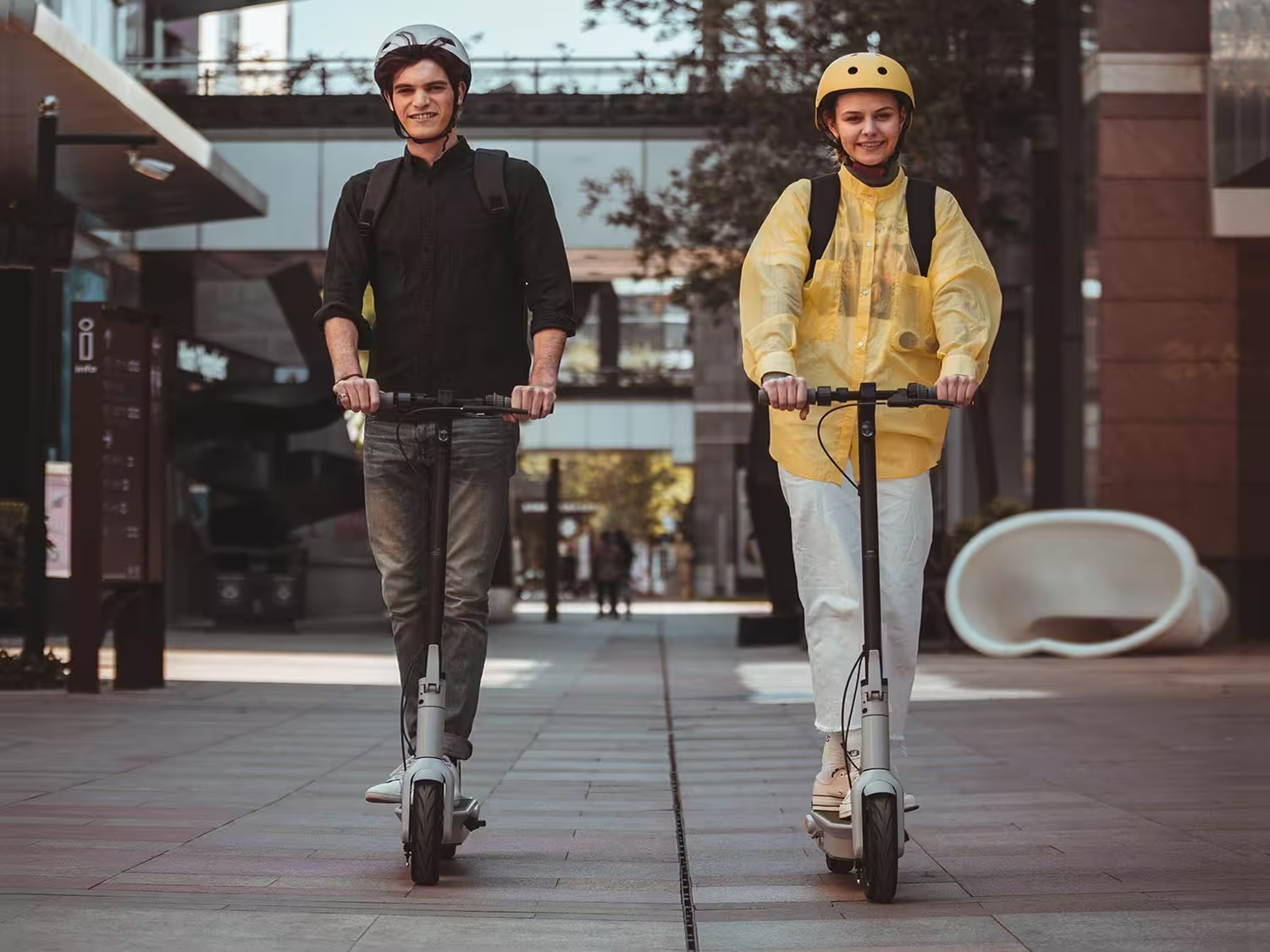
Commuter electric scooters balance portability, range, and ride quality to handle daily urban transit efficiently. The ideal choice depends on your daily distance, route terrain, and whether you need to lift the scooter onto public transit. Buyers across the United States and Europe now treat these devices as practical last-mile tools rather than novelties, driven by rising traffic congestion, parking costs, and the need for flexible short-trip mobility.
From Segway Ninebot and Xiaomi to Apollo, today’s leading options specialize in different strengths—long range, ultra-light folding, hill-climbing power, or value stability. Hybrids of performance and practicality make them viable alternatives to crowded buses or short car trips.
What Electric Scooters, Folding Scooters, and Performance Models Mean
Before comparing commuter electric scooters, it helps to separate the main categories.
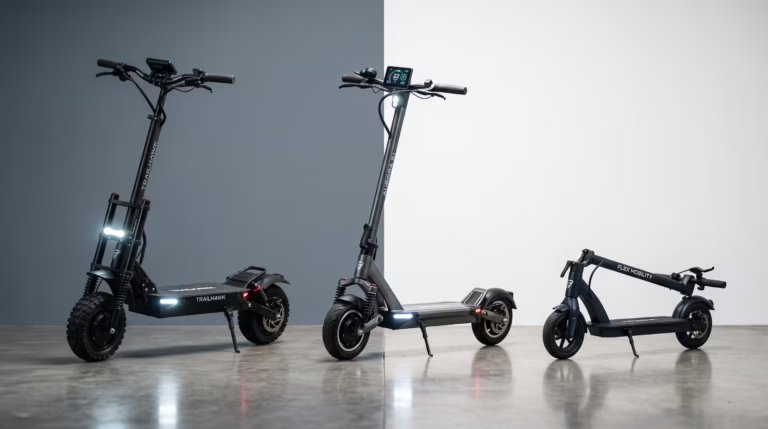
- Commuter electric scooters: Designed for daily urban travel with a balance of range (typically 20–45 miles), moderate speed, folding capability, and reliable brakes and lights.
- Folding electric scooters: Prioritize compact storage and low weight for multi-modal trips involving trains, buses, or stairs.
- Performance electric scooters: Emphasize higher top speed, dual motors, stronger acceleration, and better suspension for steeper hills or rougher pavement.
- Entry-level / lightweight models: Focus on simplicity, lower price, and easy carrying at the expense of range or comfort features.

Commuter Electric Scooters Leading the Market
Segway Ninebot KickScooter Max G2 and F3
The Segway Ninebot KickScooter Max G2 stands out for premium daily performance and rough-road comfort. It features dual suspension (front hydraulic and rear spring), claimed range up to 43 miles, a top speed of 22 mph, and Apple Find My integration. Weight sits at 53.5 lb, and the 551 Wh battery supports longer intervals between charges.
The Segway Ninebot F3 prioritizes mid-range value and structural stability with a magnesium-alloy frame. It delivers up to 44 miles maximum range, 20 mph top speed, front hydraulic and rear elastomer suspension, and a bright automatic front light. Its lighter build (around 41–42 lb) improves everyday handling.
Xiaomi Mi Electric Scooter Pro 2
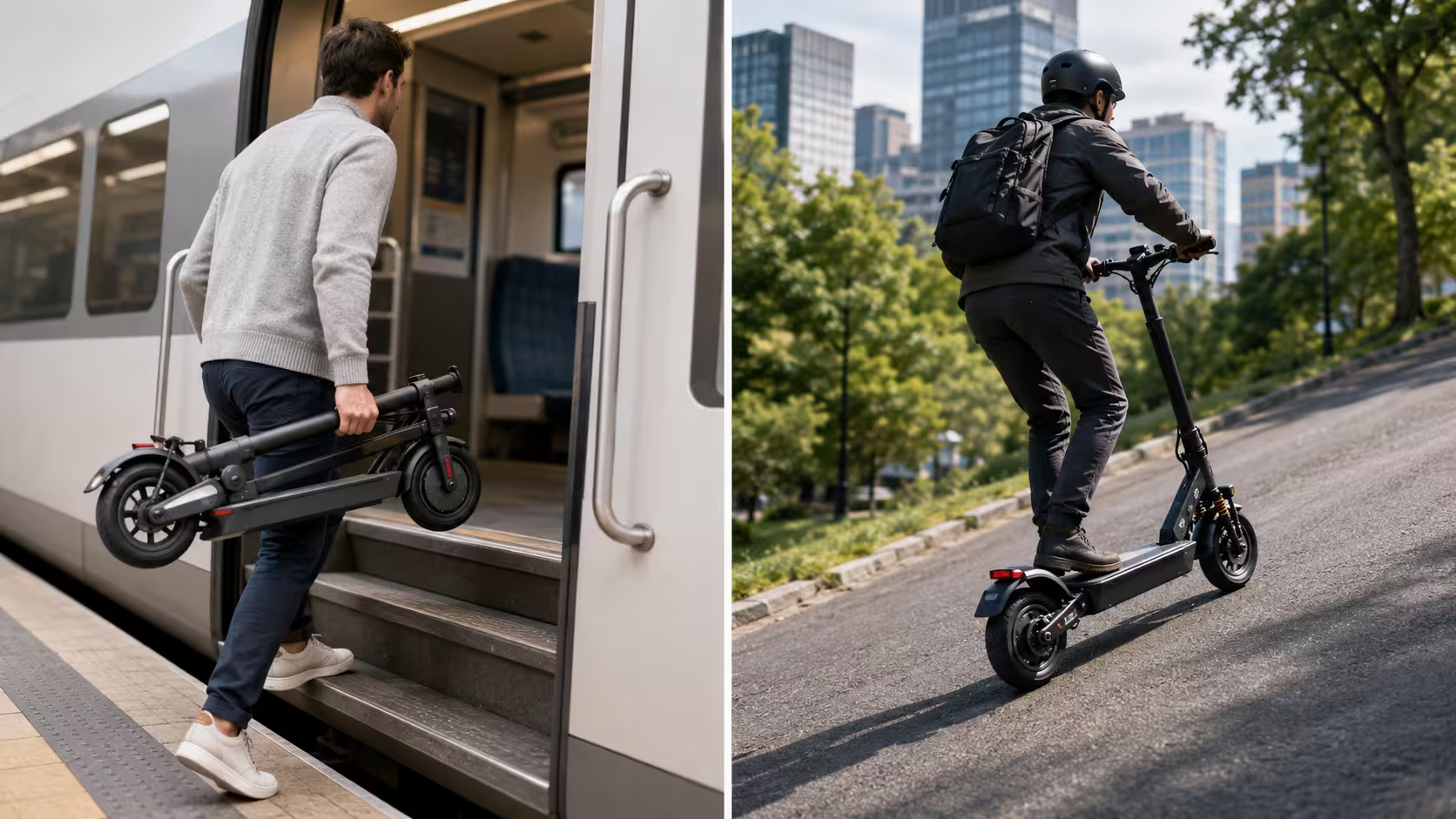
Xiaomi’s Pro 2 focuses on last-mile portability and mixed public-transit use. The highly lightweight 14.2 kg (31 lb) frame folds quickly. Claimed range reaches 28 miles, top speed is 15.5 mph, and 8.5-inch pneumatic tires provide a reasonable ride on city surfaces. Its compact size makes stair climbs and train boarding straightforward.
Apollo Go Electric Scooter
The Apollo Go targets speed and steep hills with dual motors producing strong combined output. It reaches a top speed of 28 mph, handles inclines up to 25%, and uses triple-spring suspension plus 9-inch self-healing tires. Range is listed around 30 miles, and the 46 lb weight remains manageable for many riders who need extra power without stepping into heavy performance territory.
Key Specifications Representative 2026 Commuter Models
| Model | Motor / Power | Battery | Claimed Range | Top Speed | Weight | Best For |
|---|---|---|---|---|---|---|
| Segway Ninebot Max G2 | 450 W continuous (1000 W peak) | 551 Wh | Up to 43 mi | 22 mph | 53.5 lb | Rough roads & long range |
| Xiaomi Mi Pro 2 | 300 W nominal (600 W peak) | ~446–474 Wh | Up to 28 mi | 15.5 mph | 31 lb | Portability & transit |
| Apollo Go | Dual motors (700 W continuous / 1500 W peak) | 540 Wh | Up to 30 mi | 28 mph | 46 lb | Hills & acceleration |
| Segway Ninebot F3 | 450 W nominal (1000 W peak) | 477 Wh | Up to 44 mi | 20 mph | ~41–42 lb | Value & stability |
Performance, Motor Power, Torque, and Riding Experience
Electric motors deliver immediate torque, making even modest-power scooters feel responsive from a standstill. Dual-motor designs such as the Apollo Go climb steeper grades and accelerate more confidently in traffic. Single-motor models like the Max G2 and F3 emphasize efficiency and quieter operation for flat-to-moderate city routes.

Higher peak power improves hill performance but can reduce range and increase tire wear. For most daily commuting, predictable throttle response and stable regenerative braking matter more than maximum acceleration figures.
Range, Battery Capacity, and Charging Time
Range is a primary decision factor for commuter electric scooters. Many solid options now deliver 25–45 miles under favorable conditions. Battery capacity (measured in Wh) is only one variable—aerodynamics, tire pressure, rider weight, temperature, and average speed all affect real-world distance.
Charging typically takes 6–9 hours from empty on a standard wall outlet. Some riders prefer overnight charging at home or work so the scooter is always ready. Models with higher-capacity packs reduce the need for mid-week top-ups on longer routes.
Braking, Suspension, Tires, and Ride Comfort
Dual braking systems that combine mechanical (drum or disc) front brakes with regenerative rear electric braking provide consistent stopping power. Front hydraulic suspension paired with rear spring or elastomer units, as seen on the Max G2 and F3, noticeably improves comfort over cracked pavement and expansion joints.
Tire choice is critical. Larger 9- or 10-inch self-sealing or tubeless pneumatic tires reduce puncture risk and absorb more vibration than solid or small-diameter options. Pneumatic tires require occasional pressure checks but deliver superior ride quality for daily use.

Frame Design, Weight, Portability, and Smart Features
Frame materials range from aluminum alloys to magnesium for strength-to-weight balance. Portability becomes decisive when riders must carry the scooter onto trains or up stairs. Models under 35 lb (such as the Xiaomi Pro 2) excel here, while dual-suspension units often exceed 50 lb and suit riders who store the scooter at both ends of the commute.
Many modern commuter electric scooters include bright LED lighting, turn signals, integrated displays, and smartphone apps for firmware updates, locking, and ride data. Some support Apple Find My or similar location services for added security.

Pricing and Availability
Prices for capable commuter electric scooters typically span the mid-$600 to mid-$1,000 range depending on features, brand, and region. Higher-suspension or dual-motor models sit toward the upper end. Availability is strong across major U.S. and European markets through official retailers and established online channels, though specific trim or color options can vary by country.

Commuter Electric Scooters vs E-Bikes and Public Transport
Compared with e-bikes, electric scooters generally fold more compactly, require less storage space, and cost less to buy and maintain. They lack the seating and longer-range capability of many e-bikes, however. Versus public transport, a scooter offers door-to-door flexibility and avoids wait times, yet still pairs well with trains or buses for multi-modal trips.
Ownership costs remain low: electricity is inexpensive, and routine maintenance centers mainly on tire pressure, brake pads, and occasional bearing or cable checks.
Environmental Impact and Real-World Usability
Electric scooters produce zero tailpipe emissions during use. Their overall footprint depends on manufacturing, battery production, and the electricity source used for charging. For short urban trips they can displace car use and reduce congestion.
Real-world success depends on route quality, local regulations, weather, and secure storage. Cold temperatures reduce range, while wet roads demand careful speed management even on IP-rated models.

Market Impact and Future Trends
Commuter electric scooters continue expanding as cities invest in micromobility infrastructure and riders seek affordable alternatives to cars and crowded transit. Future development focuses on higher energy-density batteries, improved puncture resistance, smarter connectivity, lighter high-strength frames, and better integration with public-transport apps and payment systems.
The strongest commuter electric scooters in 2026 succeed for different reasons. The Segway Ninebot Max G2 prioritizes long range and dual suspension for rough roads; the Xiaomi Pro 2 emphasizes extreme portability; the Apollo Go delivers dual-motor power for hills and speed; and the Segway F3 balances value, stability, and solid range.
The right model depends on daily distance, terrain, need to carry the scooter, budget, and local speed or path rules. Evaluating real commute distance, storage options, and test-ride feel remains more useful than focusing on any single specification.