Yamaha Bikes Best Sports, Naked and Adventure Models to Know




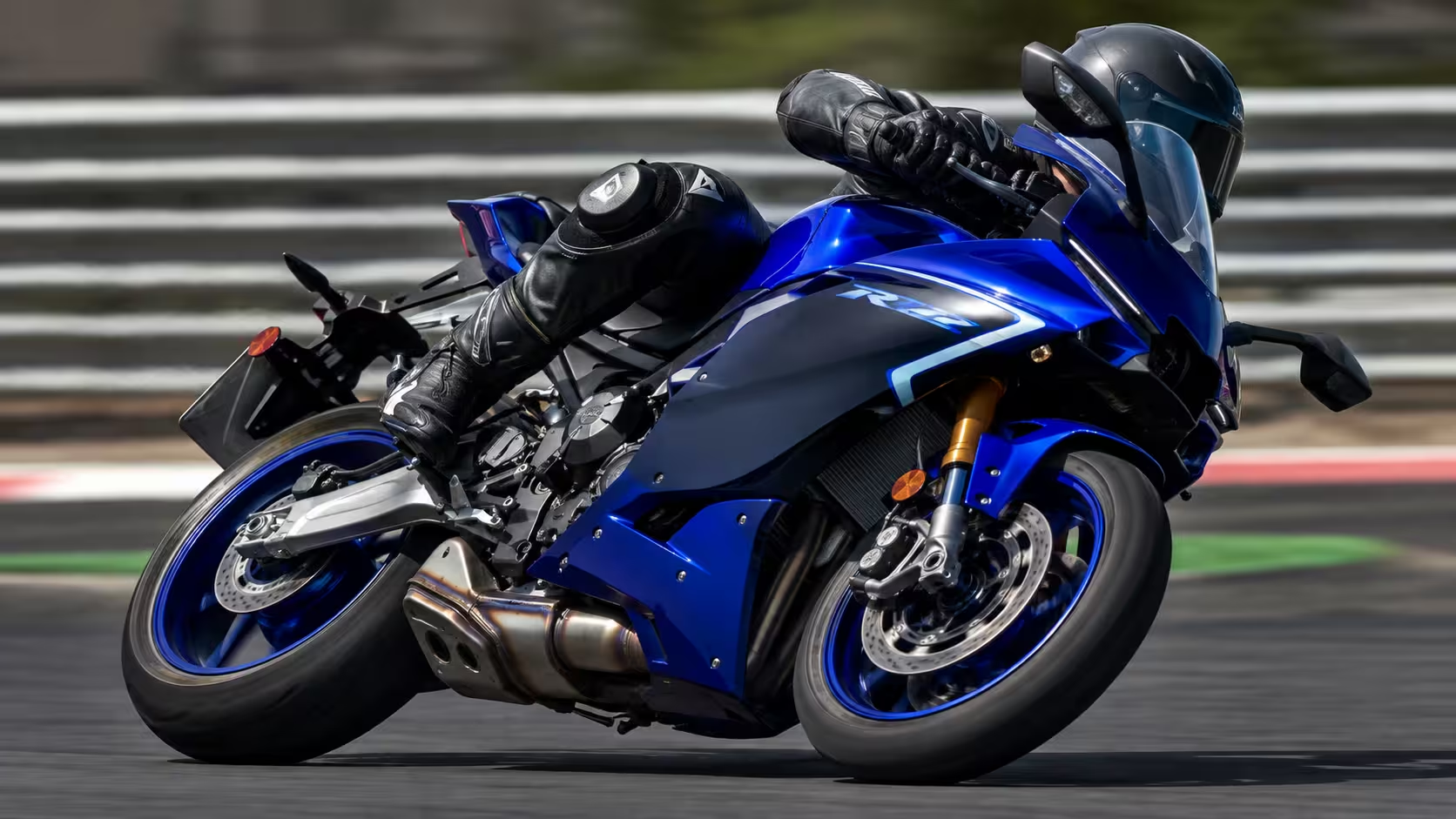

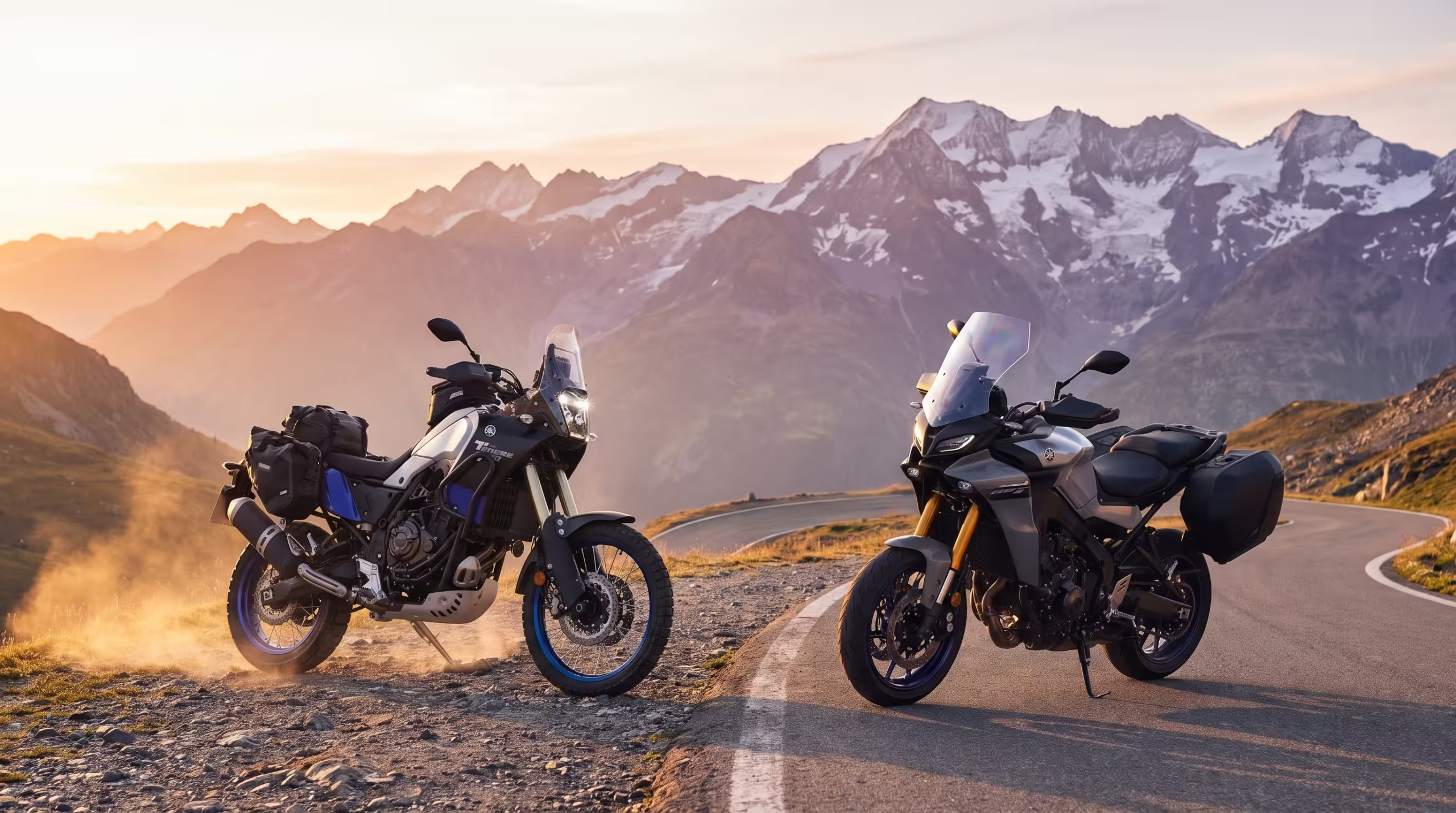


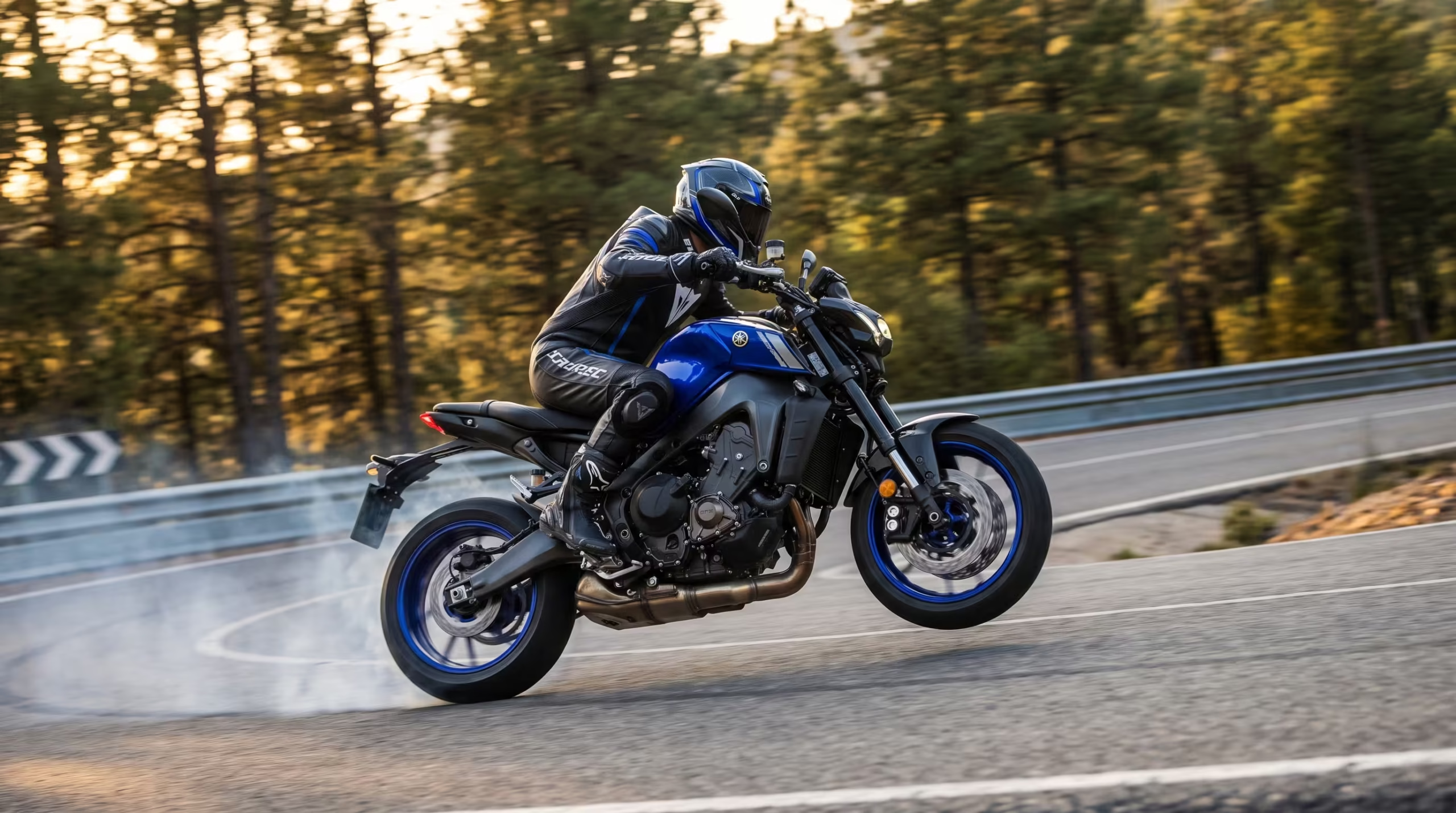
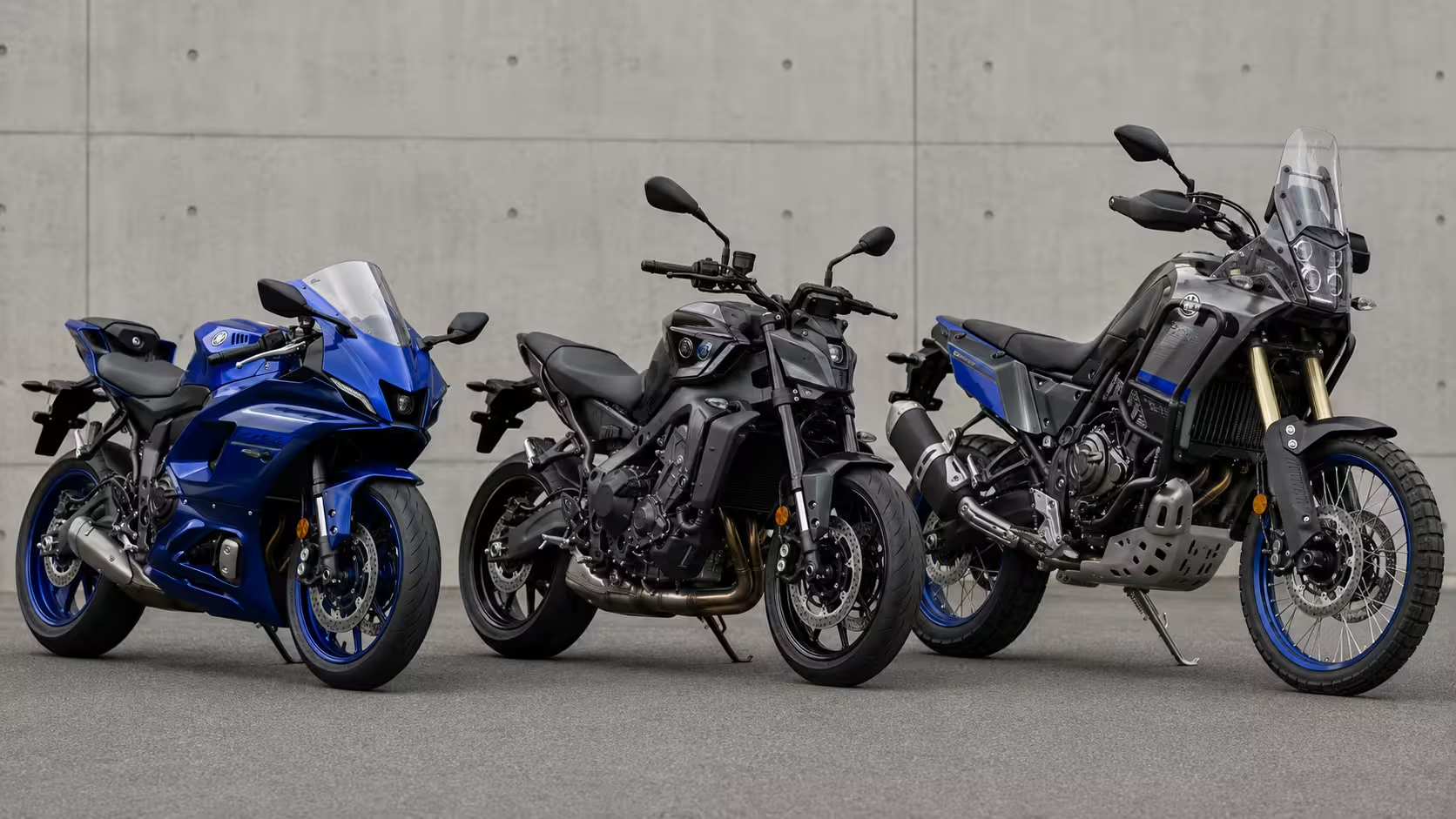


Modern yamaha bikes cover almost every corner of the performance motorcycle market, but the company’s sports machines remain some of its most recognizable products. From the accessible YZF-R3 and characterful YZF-R7 to the newer YZF-R9 and track-focused YZF-R1 family, Yamaha has developed a sports-bike ladder that can serve developing riders, experienced road users and serious circuit enthusiasts.
Sports motorcycles matter because they act as rolling laboratories for motorcycle engineering. Aerodynamics, lightweight chassis design, sophisticated suspension, ride-by-wire throttles, traction control and advanced braking systems often appear on performance models before spreading to more everyday machines. At the same time, today’s best yamaha bikes must deliver more than impressive lap-time potential. Buyers increasingly expect technology, manageable road manners, reasonable ownership costs and usable performance.
That balance explains why Yamaha’s sports range remains relevant in a market increasingly influenced by naked bikes, adventure motorcycles and crossover machines.
What Are Sports Bikes?
A sports bike is a motorcycle designed primarily around responsive handling, strong acceleration, aerodynamic efficiency and rider control. Compared with commuters or touring motorcycles, sport motorcycles generally feature a more forward riding position, aerodynamic fairings, firmer suspension and brakes designed to cope with higher speeds and repeated hard use.
However, the category is broader than it once was.
Entry-level models such as the YZF-R3 emphasize manageable power and lightweight handling, while middleweight machines such as the YZF-R7 provide stronger torque and more sophisticated chassis performance. At the upper end, superbikes such as the YZF-R1 are designed much more closely around racetrack requirements.
This variety makes yamaha bikes particularly interesting because similar styling can hide significantly different riding experiences.
A beginner-friendly twin-cylinder sports machine and a liter-class superbike may both wear aerodynamic bodywork, yet their performance, electronics, running costs and rider demands are dramatically different.
Yamaha Bikes Sports Range Explained
Yamaha’s current sports-bike philosophy can be understood through four important R-Series tiers.

Yamaha YZF-R3
The YZF-R3 is Yamaha’s accessible lightweight sports motorcycle. Its 321cc liquid-cooled parallel-twin engine is designed to offer predictable power delivery rather than overwhelming acceleration.
The engine produces around 42 PS, or approximately 41 horsepower depending on market specification, making the R3 considerably easier to manage than large-displacement performance motorcycles.
Its strengths include:
- Lightweight construction
- Smooth twin-cylinder engine response
- Manageable seat height and dimensions
- Aerodynamic R-Series styling
- Six-speed transmission
- Beginner-friendly power delivery
- Relatively economical ownership
Yamaha YZF-R7
The YZF-R7 takes a different approach. Instead of chasing traditional four-cylinder supersport horsepower figures, it uses Yamaha’s 689cc CP2 parallel-twin platform.
That engine is valued for strong usable torque, predictable throttle response and an engaging character at realistic road speeds. Output is approximately 73 horsepower, although exact figures can differ slightly according to regional specification and measurement standards.
Its narrow chassis, sporty suspension setup and aggressive riding position give it a more focused personality than Yamaha’s naked MT-07, even though the two motorcycles share the same basic engine architecture.
For many riders, the R7 represents one of the most balanced yamaha bikes because it combines genuine cornering ability with power that can still be explored without reaching superbike speeds immediately.
Yamaha YZF-R9
The YZF-R9 expands Yamaha’s middleweight sports strategy around the company’s 890cc CP3 inline-three engine.
Rather than simply placing fairings around an MT-series platform, Yamaha positions the R9 as a dedicated performance motorcycle with sports-focused chassis geometry, aerodynamic bodywork, advanced electronics and higher-specification suspension and braking components.
The three-cylinder engine offers considerably more performance than the R7 while remaining below the extreme output of a liter-class superbike.
For experienced riders, this makes the R9 particularly significant. It represents the growing modern preference for usable middleweight performance rather than relying exclusively on extremely high-revving engines.
Yamaha YZF-R1 and R1M
The YZF-R1 and R1M sit at the top of Yamaha’s traditional superbike hierarchy.
Both are centered around a 998cc inline-four crossplane engine, commonly known as the CP4. The crossplane crankshaft contributes to the distinctive engine character that separates these flagship yamaha bikes from conventional inline-four motorcycles.

The R1 family is built around racetrack-level acceleration, braking, electronic assistance and chassis response.
The R1M moves even further toward circuit use with premium components and technology designed for demanding riders.
Availability varies significantly by market, especially as emissions regulations and Yamaha’s regional model strategies continue to evolve.
Key Yamaha Sports Bike Specifications
| Model | Engine | Capacity | Approx. Power | Transmission | Character |
|---|---|---|---|---|---|
| YZF-R3 | Parallel-twin | 321cc | Around 41 hp | 6-speed | Lightweight beginner sport bike |
| YZF-R7 | CP2 parallel-twin | 689cc | Around 73 hp | 6-speed | Torque-rich middleweight |
| YZF-R9 | CP3 inline-triple | 890cc | Around 117–119 hp depending on specification | 6-speed | High-performance middleweight |
| YZF-R1 | CP4 inline-four | 998cc | Around 197–200 hp depending on specification | 6-speed | Flagship superbike |
| YZF-R1M | CP4 inline-four | 998cc | Similar core output to R1 | 6-speed | Premium track-focused superbike |
Engine Performance, Horsepower and Torque
Engine character is one of Yamaha’s greatest differentiators.
The R3’s 321cc parallel twin rewards riders who use the upper part of the rev range. It does not deliver the explosive thrust of a larger motorcycle, but its manageable output allows riders to concentrate on cornering lines, braking technique and gear selection.
The R7’s 689cc CP2 engine delivers substantially more low- and mid-range torque. Instead of demanding constant high-rpm riding, it responds strongly when accelerating out of slower corners.
The R9’s CP3 engine adds another cylinder and considerably more performance. Inline-three engines can provide an effective compromise between the flexible torque associated with twins and the high-rpm excitement associated with four-cylinder designs.
At the top, the R1’s CP4 engine brings superbike acceleration and approximately 200-horsepower-class performance.
Acceleration and Top-Speed Potential
Acceleration varies dramatically across Yamaha’s sports lineup.
The YZF-R3 is designed around accessible momentum and lightweight performance. It is capable of highway riding but should not be evaluated against high-capacity superbikes.
The R7 provides considerably stronger acceleration because of its larger-capacity CP2 engine and useful mid-range torque.
The R9 raises performance into a significantly more serious category. Its power-to-weight ratio gives experienced riders rapid acceleration while retaining a middleweight chassis concept.
The R1 operates on another level. Liter-class superbikes can accelerate extremely rapidly and achieve very high speeds under controlled conditions.
Top-speed figures published online often vary because rider size, gearing, aerodynamic conditions, testing methodology and regional electronic configurations can influence results. Therefore, real-world comparisons between yamaha bikes are more meaningful when based on engine character, roll-on acceleration, chassis behavior and intended use rather than one maximum-speed number.
Transmission and Clutch Systems
All major Yamaha R-Series sports motorcycles use six-speed transmissions, but the rider experience varies considerably.
Smaller machines rely on straightforward manual gearboxes designed for easy operation. Higher-performance models increasingly incorporate electronic shift assistance or more sophisticated transmission-related technology depending on trim and market.
A well-designed slipper or assist-and-slipper clutch can reduce rear-wheel instability during aggressive downshifting. On track-focused yamaha bikes, quickshifter technology can further reduce interruption during gear changes.
These systems are particularly valuable during spirited riding because they allow the rider to concentrate more consistently on braking points and corner entry.
Chassis, Handling and Suspension
A powerful engine alone does not make a great sports motorcycle.
Handling comes from the relationship between frame rigidity, steering geometry, suspension calibration, tires, weight distribution and rider position.
The R3 favors agility. Its light mass makes direction changes relatively easy, which benefits newer riders as well as experienced riders who enjoy maintaining momentum.

The R7 feels more serious. Its sports-oriented chassis and suspension create a sharper experience than the MT-07 platform with which it shares its basic CP2 engine.
The R9 pushes further toward high-performance road and circuit riding, while the R1 family uses sophisticated suspension and chassis technology designed for substantially higher braking and cornering loads.
This progression is one reason yamaha bikes can appeal to riders across different skill levels without forcing every buyer into the same performance category.
Braking Performance
Sports motorcycles require braking systems that provide both power and feedback.
On lightweight machines, outright braking force is less important than predictable response and easy modulation. As motorcycle weight, speed and engine performance increase, larger braking components and more sophisticated electronic management become increasingly important.
Higher-tier Yamaha sports motorcycles use premium radial-mount braking hardware and advanced ABS strategies depending on model.
Good braking performance is not simply about stopping distance. Riders also need lever feel, consistency during repeated braking and enough feedback to understand what the front tire is doing.
For track-oriented yamaha bikes, brake resistance to heat and repeated hard use becomes especially important.
Aerodynamics and Fairing Design
The aerodynamic bodywork of Yamaha’s R-Series does more than create a racing-inspired appearance.
Full fairings help manage airflow around the motorcycle and rider. At higher speeds, reducing drag improves stability and efficiency while carefully shaped bodywork can reduce turbulence.
Modern sports bikes may also use aerodynamic features influenced by racing development.
The R-Series visual identity generally includes:
- Compact frontal areas
- Low windscreens
- Sculpted side fairings
- Centralized mass
- Narrow tail sections
- Aggressive lighting arrangements
- Race-inspired intake styling
As performance rises, aerodynamics becomes increasingly important because wind resistance grows dramatically with speed.

Riding Position and Daily Comfort
One of the most important differences among yamaha bikes is ergonomics.
The R3 remains relatively approachable for everyday riding. Its handlebars and foot controls create a sporting position, although it is generally less demanding than larger track-oriented models.
The R7 has a more committed riding position. Lower clip-on handlebars and higher footpegs place the rider in a posture better suited to cornering but potentially more tiring during slow urban riding.
The R9 and R1 move further toward performance-oriented ergonomics.
This matters because the motorcycle that feels perfect during a 20-minute track session may feel less comfortable during a long commute.
Anyone comparing sports motorcycles should therefore consider
- Wrist pressure
- Knee angle
- Seat padding
- Heat management
- Wind protection
- Passenger requirements
- Typical trip distance
Rider Technology and Electronics
Electronic rider aids have transformed high-performance motorcycles.
Modern premium yamaha bikes may incorporate systems such as
- Ride-by-wire throttle
- Multiple riding modes
- Traction control
- ABS
- Slide-related intervention
- Lift control
- Engine-brake adjustment
- Quickshifter functions
- Launch-oriented settings
- Electronic suspension on selected versions
Digital Displays and Connectivity
Motorcycle dashboards have evolved from simple analog gauges into full information centers.
Entry-level models typically prioritize essential information such as speed, rpm, fuel level, gear position and warning indicators.
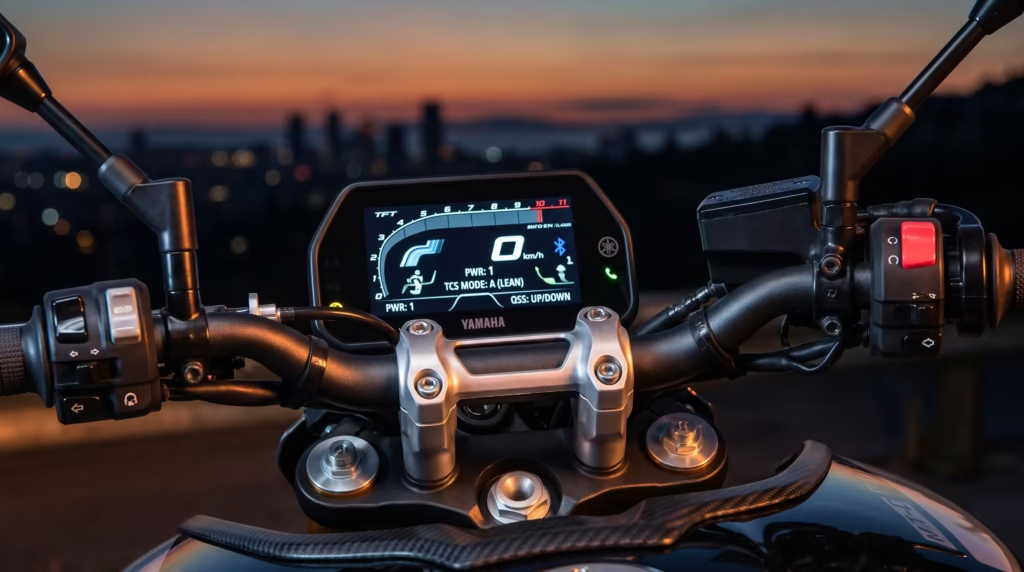
More advanced yamaha bikes can feature TFT displays, configurable interfaces and smartphone-related connectivity depending on model and region.
Connected features may provide access to:
- Call or message notifications
- Ride information
- Navigation-related functions
- Motorcycle status
- Smartphone integration
- Customizable display layouts
Traction Control, ABS and Riding Modes
ABS is now an important feature across many modern motorcycles, while traction control becomes increasingly valuable as power rises.
On smaller sports bikes, electronic intervention may be relatively simple. On high-performance motorcycles, advanced systems can use sophisticated sensors to evaluate motorcycle movement.
Riding modes can change throttle response, power delivery and intervention levels depending on the motorcycle.
For road-focused buyers comparing yamaha bikes, these systems can improve versatility. A motorcycle can feel calmer in poor conditions while still providing sharper responses when desired.
Fuel Economy and Running Costs
Fuel economy generally decreases as engine capacity and performance increase.
A lightweight R3 will usually be substantially cheaper to fuel than an R1 during comparable everyday use. Tire costs also rise with performance because larger motorcycles often use wider, softer compounds.
Typical running expenses include:
- Fuel
- Engine oil and filters
- Tires
- Brake pads
- Chain and sprocket maintenance
- Insurance
- Scheduled servicing
- Registration or road taxes
- Consumable fluids
An R7 or R3 will normally be less expensive to operate than an R1-class superbike.
This is an important reason riders should look beyond purchase price when comparing yamaha bikes.
Yamaha Sports Bike Pricing
Pricing differs substantially across countries because of taxes, import duties, currency fluctuations, dealer fees, equipment packages and local distributor policies.
In relative terms, Yamaha’s sports range follows a clear hierarchy.
The R3 occupies the accessible end of the lineup. The R7 represents a significant step upward in chassis capability and engine performance. The R9 moves into a premium middleweight category, while the R1 and R1M traditionally occupy the highest price tier.
For worldwide buyers, comparing official local pricing is more meaningful than converting the price from another country because regional costs can differ dramatically.
Used yamaha bikes can also provide a lower entry cost, although condition, service history and modifications should heavily influence value.
Worldwide Availability
Yamaha operates globally, but not every motorcycle is sold in every country.
Regional emissions standards, licensing systems, customer demand and homologation requirements influence the lineup.
The R3 has traditionally been one of the more widely available Yamaha sports models because its engine capacity works well across numerous licensing categories and markets.
Availability of the R7 is also broad, although colors and equipment can differ.
Newer models such as the R9 can reach markets on different schedules, while the road-going status of the R1 family varies more significantly by region.
Therefore, riders researching yamaha bikes internationally should confirm the exact model year and road-registration status with Yamaha’s official distributor in their country.
Yamaha Sports Bikes vs Major Competitors
| Yamaha Model | Typical Rival Category | Key Yamaha Character |
|---|---|---|
| YZF-R3 | Kawasaki Ninja 500, Honda CBR500R-type lightweight sports class | Light, rev-friendly twin-cylinder character |
| YZF-R7 | Aprilia RS 660, Honda CBR650R and similar middleweights | Torque-rich CP2 engine and focused chassis |
| YZF-R9 | Ducati Panigale V2-class and modern performance middleweights | Strong CP3 triple performance |
| YZF-R1 | Honda CBR1000RR-R, Kawasaki ZX-10R, BMW S 1000 RR-class superbikes | Crossplane CP4 character and track focus |
Sports Bikes vs Naked Bikes
The difference between sports and naked yamaha bikes is particularly easy to understand by comparing the R-Series with the MT family.
The MT-03 and R3 use related engine concepts but deliver different experiences. The MT favors upright ergonomics and urban visibility, while the R3 offers wind protection and sportier styling.
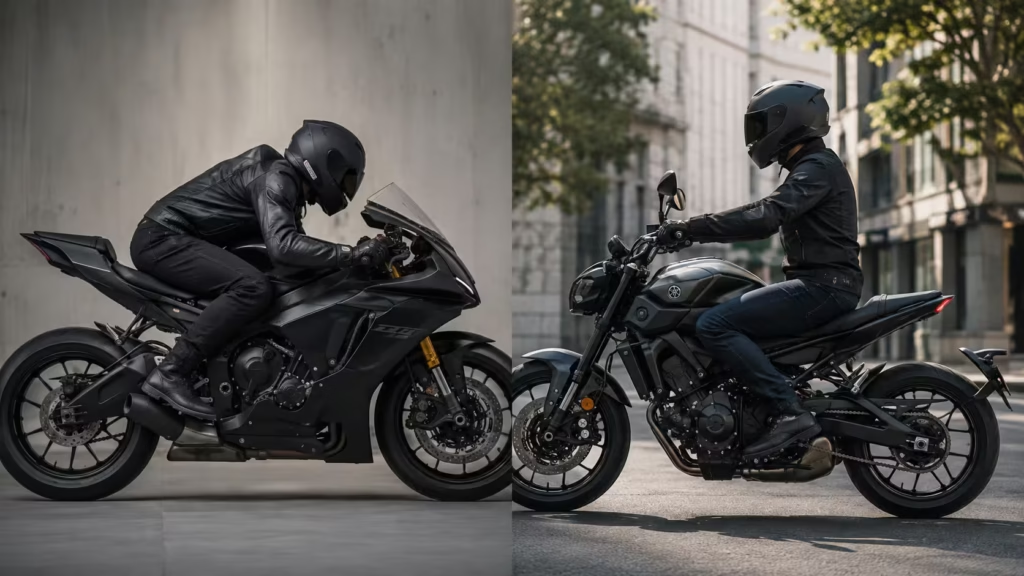
The difference becomes even clearer with the MT-07 and R7. Both use the 689cc CP2 platform, yet the R7 is far more focused around sporty ergonomics and cornering behavior.
Naked motorcycles generally offer:
- More upright seating
- Better low-speed comfort
- Easier city maneuverability
- Less aerodynamic protection
- Wider handlebars
Sports motorcycles generally provide:
- Better high-speed wind protection
- More aerodynamic bodywork
- More committed ergonomics
- Sharper track-focused positioning
Neither layout is automatically superior.
Sports Bikes vs Touring Motorcycles
Touring motorcycles prioritize comfort, luggage capacity, wind protection and long-distance stability.
Yamaha’s Tracer family demonstrates this philosophy by combining performance-oriented engines with more upright ergonomics and practical touring features.
A rider covering hundreds of highway kilometers regularly may prefer a Tracer over an R-Series machine.
In contrast, riders prioritizing cornering precision, aerodynamic styling and circuit ability will usually prefer sports-focused yamaha bikes.
Adventure models such as the Ténéré 700 move even further from sports-bike design by emphasizing suspension travel, rough-road capability and upright control.
Sports Bikes vs Superbikes
Not every sports motorcycle is a superbike.
The term superbike generally refers to the highest-performance production sport motorcycles, commonly using engines around 1,000cc and incorporating advanced chassis and electronic technologies.
The R3, R7 and R9 are sports bikes, but the R1 belongs much more clearly in superbike territory.
That distinction is important.
A middleweight can sometimes provide a more rewarding road experience because riders can use a greater portion of its performance without immediately entering extreme speeds.
For experienced track riders, however, a superbike provides acceleration, braking and high-speed capability that smaller motorcycles cannot match.
Daily Riding Comfort
Daily usability depends on rider height, flexibility, traffic conditions and journey length.
Sports-bike ergonomics can place additional pressure on the wrists and neck, particularly during slow riding where aerodynamic airflow provides little support.

The R3 is generally the easiest R-Series model for regular commuting.
The R7 combines manageable engine behavior with a considerably sportier seating position.
The R9 and R1 place performance higher on the priority list, so riders using them daily should understand the ergonomic compromise.
For commuters, factors such as steering lock, engine heat, fuel range and luggage options can matter just as much as acceleration.
Track Performance
A racetrack reveals strengths that may not be obvious on public roads.
Sharp steering, suspension control, brake consistency and corner-exit acceleration become much more important.
The R3 can be an excellent learning platform because its lower power encourages riders to improve lines and maintain corner speed.
The R7 provides stronger braking and acceleration while retaining approachable power.
The R9 occupies a much more serious performance category and should appeal to riders wanting modern electronics and CP3 power without jumping directly to a liter-class machine.
The R1 remains the most extreme track-oriented member of the traditional yamaha bikes sports hierarchy.
Maintenance Costs and Reliability Considerations
Routine motorcycle maintenance is essential regardless of engine size.
Chain adjustment, tire pressure, fluid checks, brake inspection and scheduled servicing affect both performance and long-term ownership costs.
Smaller-capacity motorcycles generally consume tires and brakes more slowly than superbikes when ridden similarly.

High-performance models can become considerably more expensive if used frequently on circuits because tires, brake components and servicing are consumed faster.
Unmodified yamaha bikes with documented service histories are often easier to evaluate on the used market than heavily customized examples.
Prospective buyers should also consider the availability of replacement parts and qualified servicing in their region.
Ownership Experience
Choosing a motorcycle involves more than reading a specification sheet.
The best model should suit the rider’s experience, roads, budget and riding frequency.
An R3 owner may value lightweight handling and affordable fuel consumption. An R7 rider may prioritize CP2 torque and sharp styling. An R9 buyer may want a modern middleweight capable of serious road and track performance.

An R1 owner is more likely to prioritize sophisticated engineering, speed and circuit capability.
The diversity of yamaha bikes allows riders to enter the sports category without immediately committing to superbike levels of cost and performance.
Market Impact of Yamaha Sports Motorcycles
Yamaha has played a major role in shaping the modern performance motorcycle market.
The R-Series established a strong visual and engineering identity, while technologies developed for flagship motorcycles influenced other Yamaha categories.
More recently, the success of the CP2 and CP3 engine families has demonstrated that real-world torque and character can be as commercially important as maximum horsepower.
The R7 represents this shift clearly. Rather than recreating the high-revving supersport formula of previous decades, it uses a versatile parallel twin in a focused chassis.
The arrival of the R9 develops that strategy further by combining stronger three-cylinder performance with dedicated sports-bike engineering.
Future Trends in Yamaha Bikes and Sports Motorcycles
The future sports-bike market is likely to become increasingly technology-driven.
Manufacturers must balance performance with emissions regulations, noise restrictions, affordability and changing rider expectations.
Several trends are already shaping the category:
- More sophisticated electronic rider aids
- Greater use of IMU-based control systems
- Improved smartphone integration
- Advanced aerodynamic development
- Lightweight materials
- More efficient engines
- Growing focus on usable middleweight performance
- Increased crossover between road and track technology
Middleweight motorcycles are likely to remain particularly important because they can offer impressive performance without the extreme operating costs associated with top-tier superbikes.
The YZF-R3 delivers lightweight, accessible performance suitable for developing riders. The YZF-R7 adds substantially more torque and a focused chassis without moving into superbike territory. The YZF-R9 brings high-performance CP3 power and modern technology to the middleweight segment, while the YZF-R1 and R1M represent Yamaha’s most specialized superbike engineering.
Among modern yamaha bikes, the best choice ultimately depends on where and how the motorcycle will be ridden. Riders who prioritize affordability and manageable performance may prefer the R3. Those wanting a stronger road-and-track balance can consider the R7 or R9, while experienced riders seeking maximum circuit capability will naturally look toward the R1 family where available.
Understanding engine character, ergonomics, electronics, ownership costs and regional availability provides a far better basis for choosing a sports motorcycle than horsepower alone.