Street Motorcycles Complete Sports Bike Guide 2026


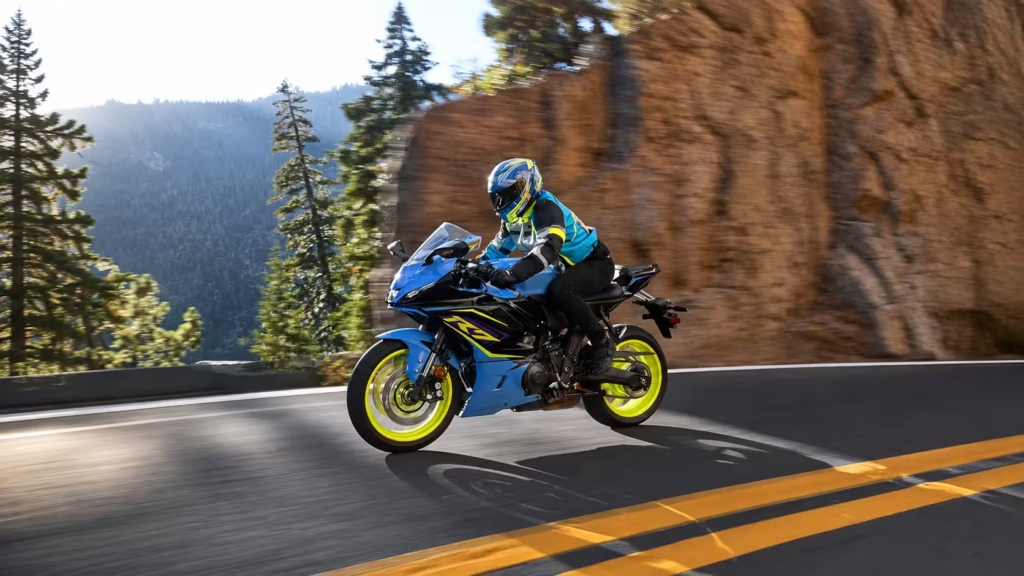

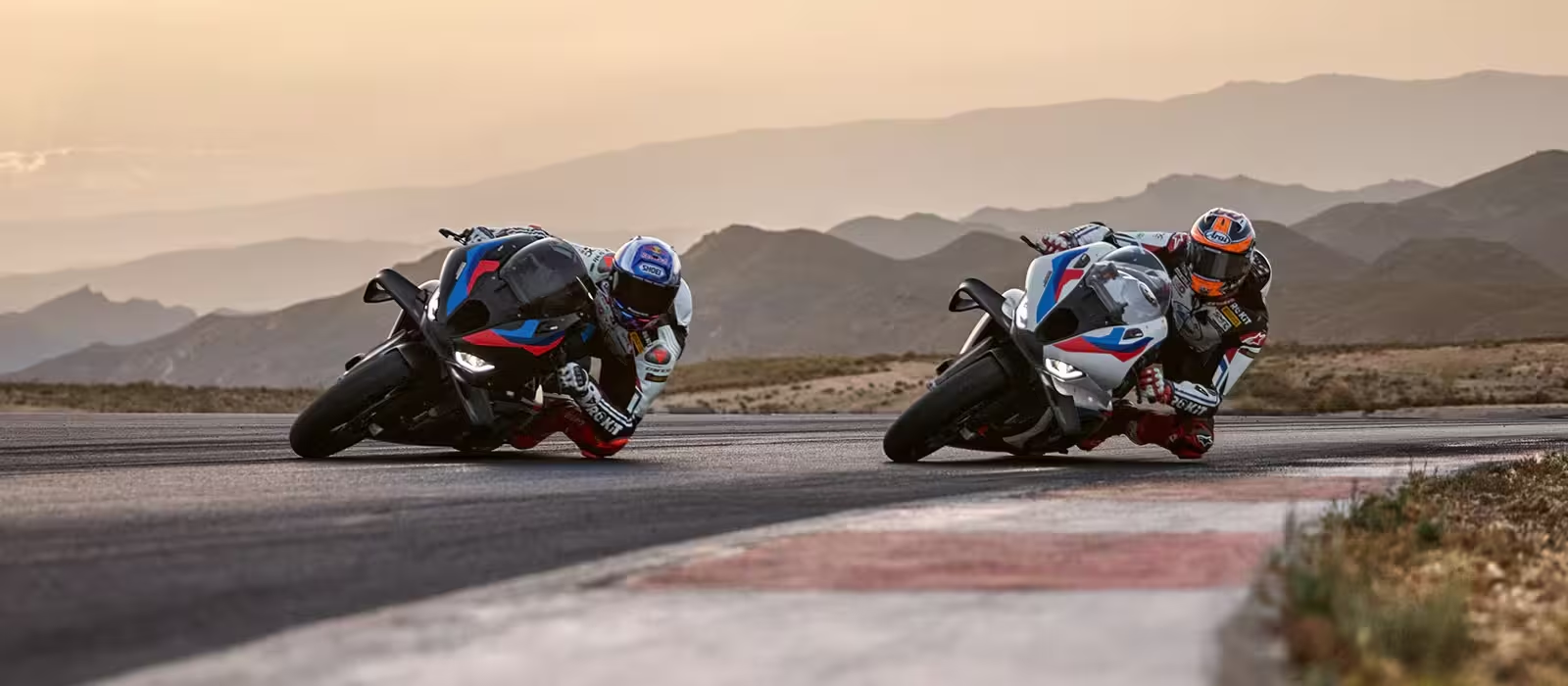
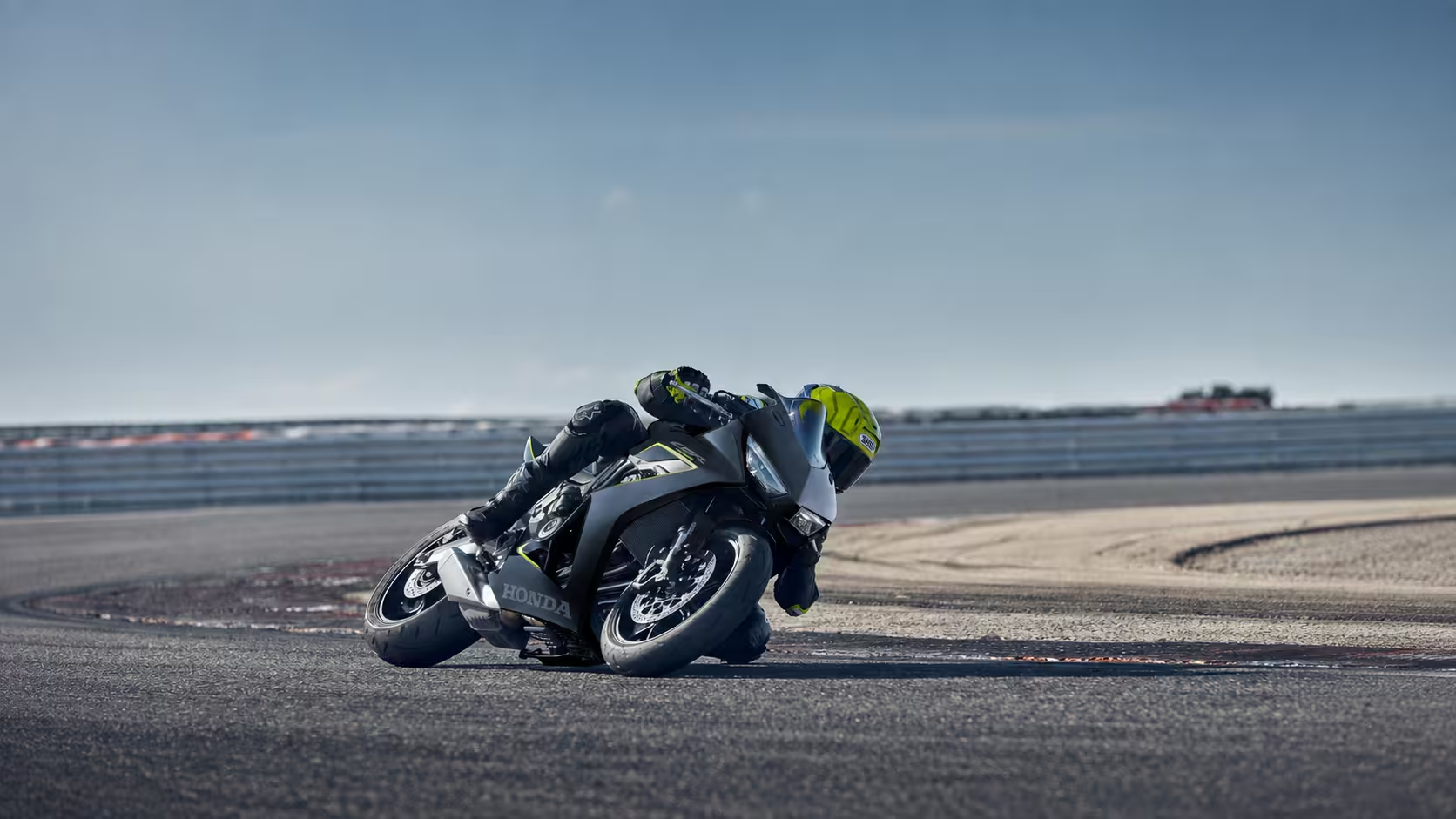


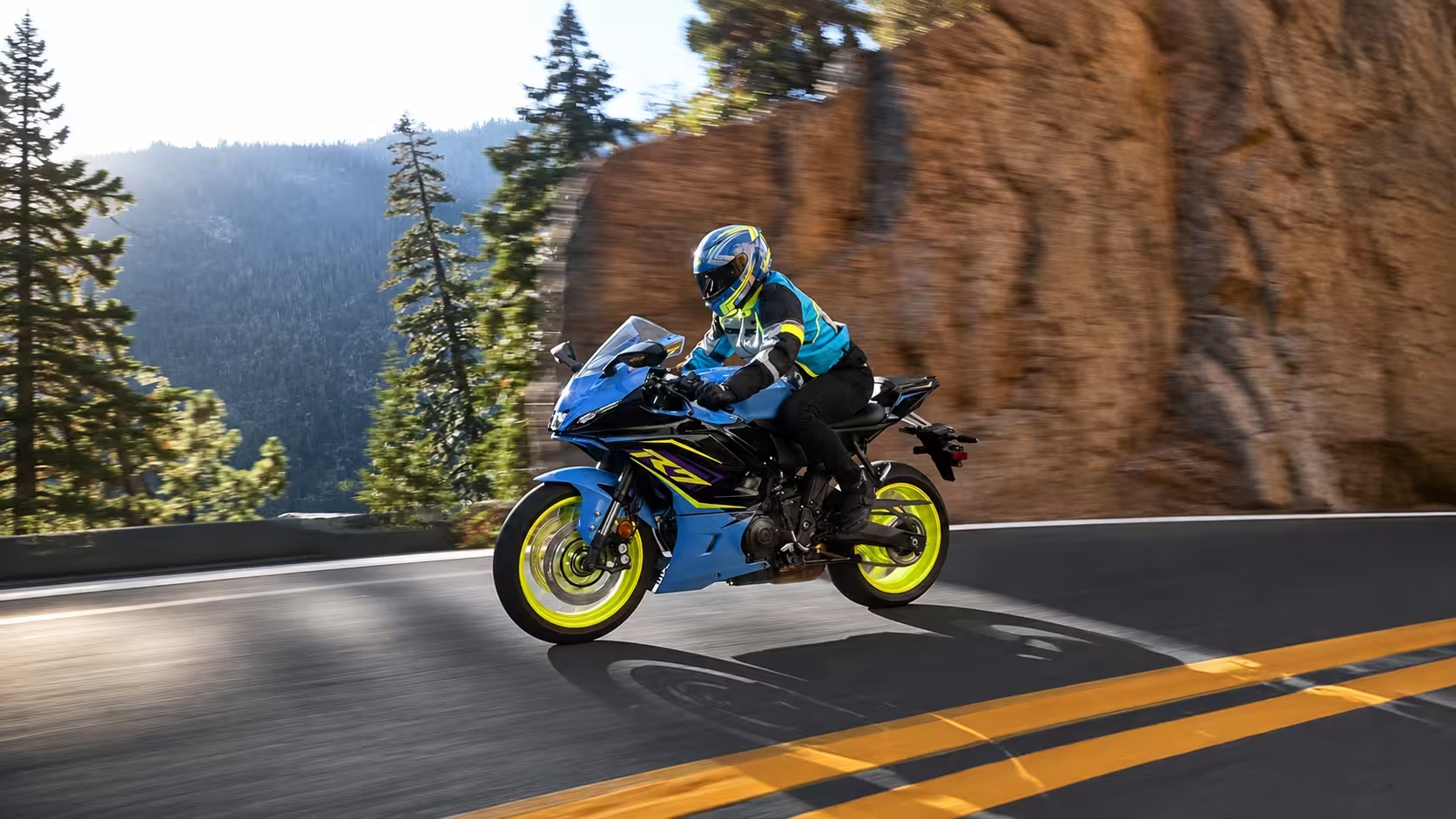

Street motorcycles range from approachable 400–500cc sport machines to 200-horsepower superbikes. Sports bikes remain central to this market because they bring race-derived aerodynamics, responsive chassis engineering, powerful brakes, and sophisticated electronics to road-legal motorcycles. Yet the ideal choice is not automatically the fastest bike. It is the machine whose performance, ergonomics, costs, and technology match the rider’s experience and real-world needs.
Modern sport motorcycles are more diverse than their sharp bodywork suggests. Some prioritize daily usability, while others are built around lap-time performance. Buyers can therefore choose between beginner sport bikes, torque-focused middleweights, high-revving four-cylinders, and elite superbikes within the wider street motorcycles category.
What Defines Sports-Focused Street Motorcycles?
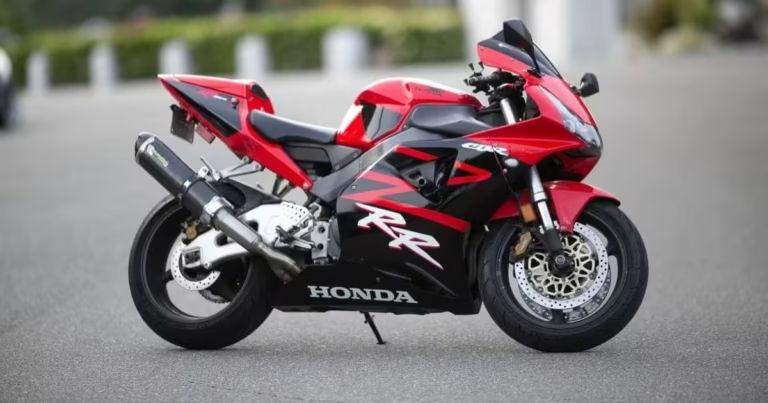
A sports bike is a road-legal motorcycle designed around responsive acceleration, precise cornering, strong braking, and aerodynamic efficiency. Most use full or partial fairings, 17-inch wheels, firm suspension, a six-speed transmission, and a riding position that places more weight toward the front tire.
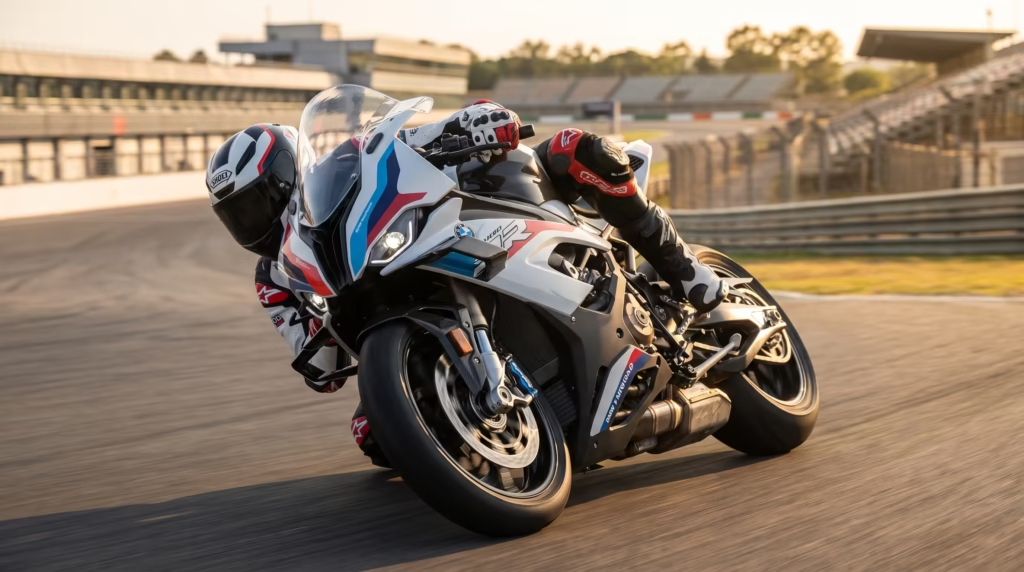
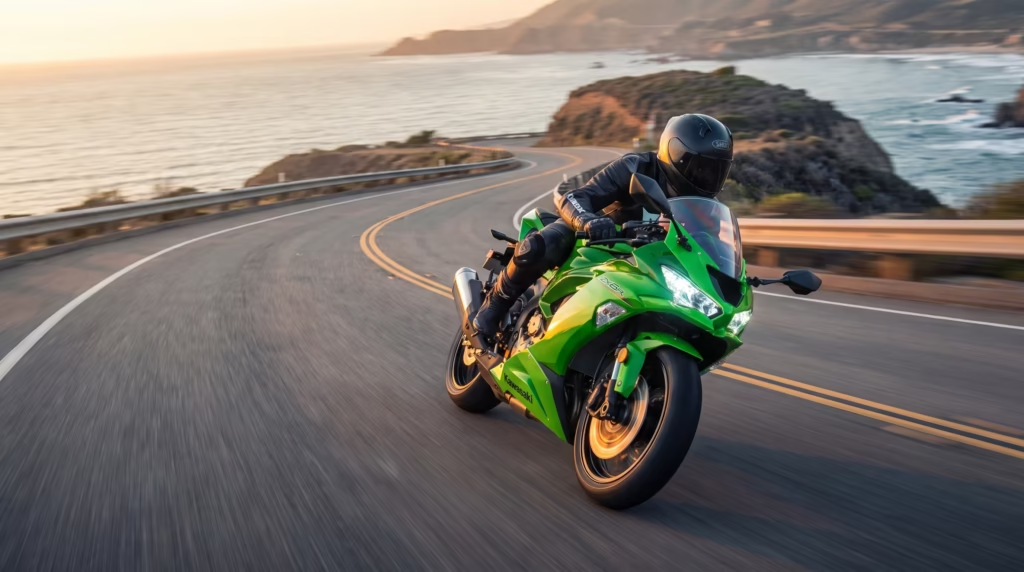
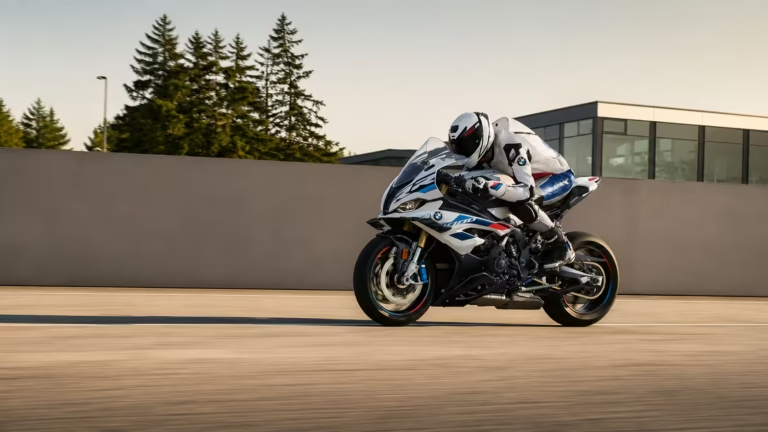
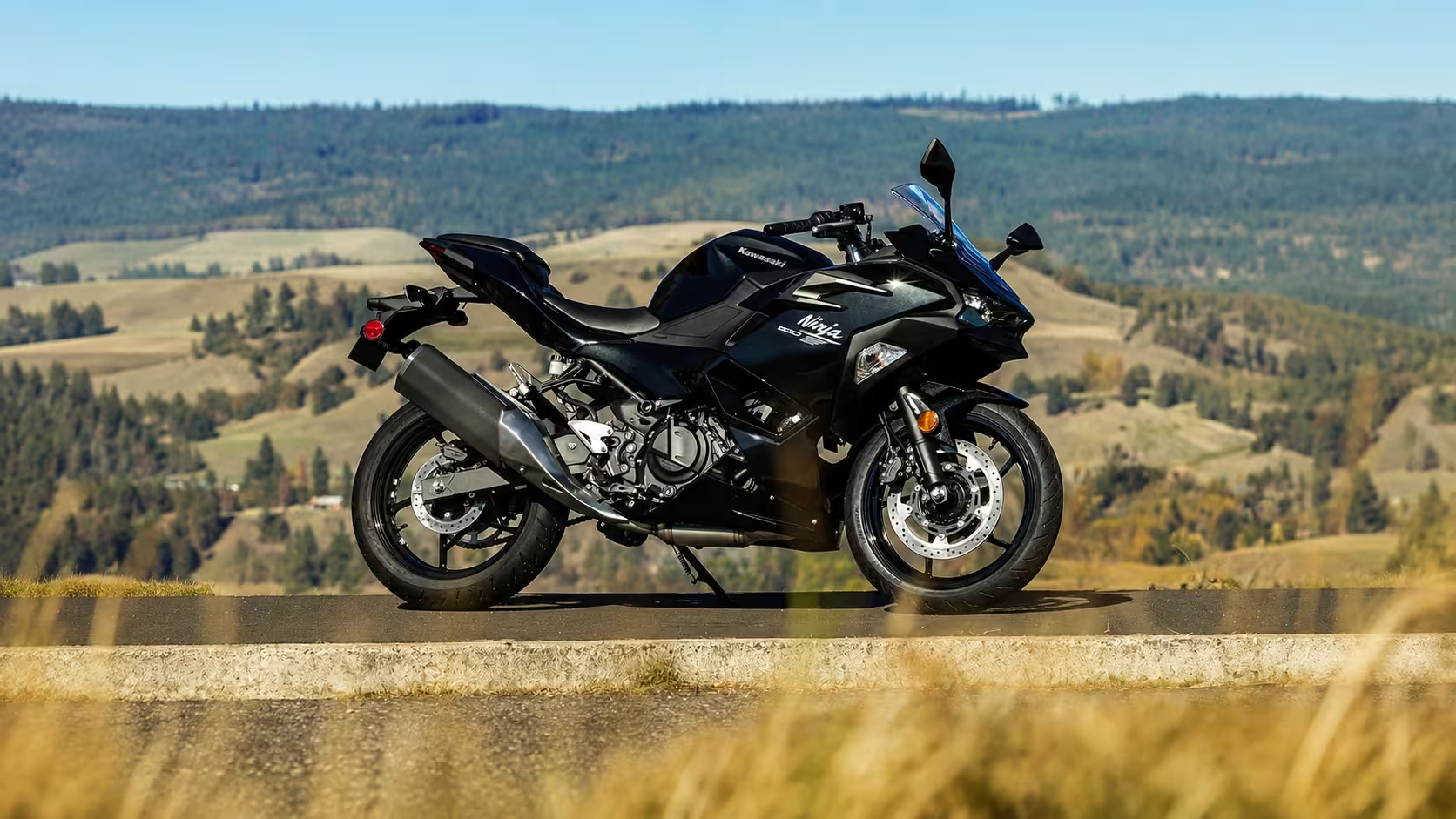
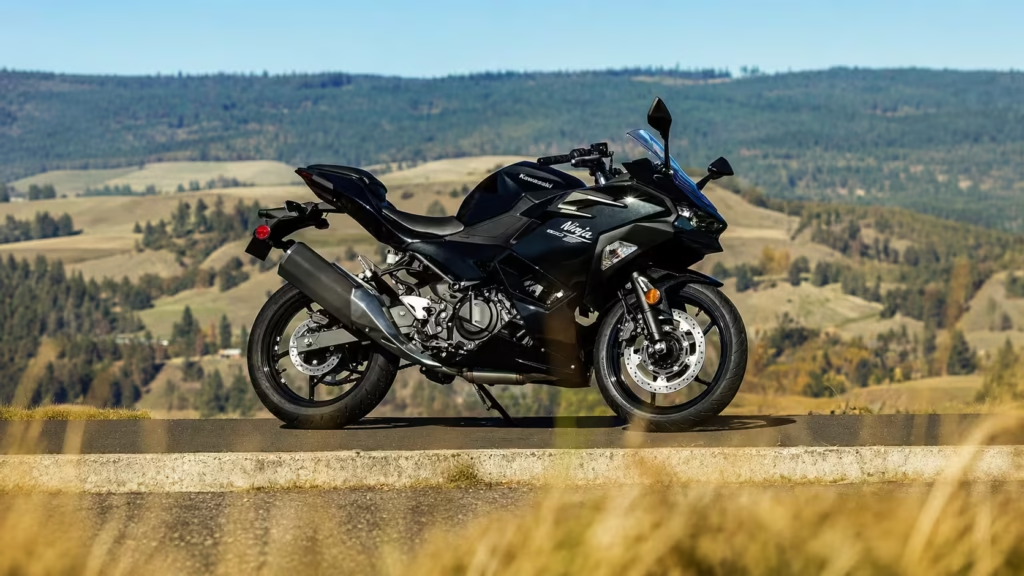
Not all faired street motorcycles are extreme racing machines. A Kawasaki Ninja 500 is light and accessible, while a BMW S 1000 RR is a genuine superbike with a 999cc inline-four, 205 horsepower in US specification, and a published maximum speed of 188 mph.
The category includes beginner sport bikes, middleweight sport motorcycles, track-focused supersports, and liter-class superbikes.
Engine Performance, Horsepower, and Torque
Engine configuration shapes how sports-focused street motorcycles feel more than displacement alone. Parallel twins produce useful low- and midrange torque, making them effective in traffic and on winding roads. Inline-four engines are smoother and generally build more power at high rpm. Triple-cylinder engines combine strong midrange response with an energetic top end.
The 451cc parallel-twin in the 2026 Kawasaki Ninja 500 produces 33.4 kW, or 45 PS, and 42.6 Nm in European specification. The Yamaha R7’s 689cc twin produces 54 kW, or 73.4 PS, and 68 Nm. Honda’s CBR650R uses a 649cc inline-four producing 70 kW and 63 Nm, while the US-specification BMW S 1000 RR reaches 205 horsepower and 83 lb-ft.
These figures reveal different priorities. The Ninja emphasizes accessible response, the R7 usable torque and chassis feel, the CBR650R high-rpm four-cylinder character, and the S 1000 RR elite performance.

Acceleration and Top-Speed Expectations
Acceleration depends on power, torque, gearing, weight, aerodynamics, electronics, surface conditions, and rider input. Manufacturers do not consistently publish official 0–60 mph or 0–100 km/h figures, so unofficial comparisons can vary considerably.
Beginner street motorcycles provide enough acceleration for commuting, highway merging, and back-road riding without the abrupt response of a superbike. Middleweights such as the Yamaha R7 and Suzuki GSX-8R deliver stronger roll-on performance, especially through the midrange. Liter-class superbikes accelerate far harder and reach higher terminal speeds, although that performance has limited relevance during ordinary road use.
For most owners, throttle response, gear spacing, braking confidence, and corner-exit drive are more useful measures than maximum speed.
Transmission and Clutch Systems
Most sport-oriented street motorcycles use a six-speed sequential gearbox and chain final drive. Assist-and-slipper clutches reduce lever effort and control rear-wheel back torque during downshifts.
The Ninja 500 and Yamaha R7 use six-speed transmissions with wet multiplate clutches. Suzuki equips the GSX-8R with a six-speed gearbox, assist-and-slipper clutch, and standard bidirectional quickshifter. Honda’s CBR650R E-Clutch electronically engages and disengages the clutch while preserving manual gear selection.
For commuting, light clutch action and clean low-speed fueling may matter more than a quickshifter. On track, clutchless shifting can improve consistency and reduce workload.
Handling, Suspension, and Chassis Balance
The best street motorcycles feel predictable before they feel fast. Geometry, mass distribution, tire size, suspension quality, and frame rigidity determine how confidently a bike turns, holds a line, and absorbs imperfect pavement.
Entry-level machines often use non-adjustable forks and preload-adjustable rear shocks. Middleweights may add inverted forks, firmer damping, radial brakes, and sportier geometry. Superbikes usually provide extensive adjustment, lightweight components, and optional electronic damping.
The Ninja 500 uses a steel trellis frame, 41mm telescopic fork, and preload-adjustable rear shock. The R7 uses a 41mm fork and a compact 1,395mm wheelbase in European specification. The GSX-8R combines a Showa SFF-BP inverted fork with a link-type rear shock, while the CBR650R uses a 41mm Showa SFF-BP fork and aluminum swingarm.

Braking Performance and Safety Technology
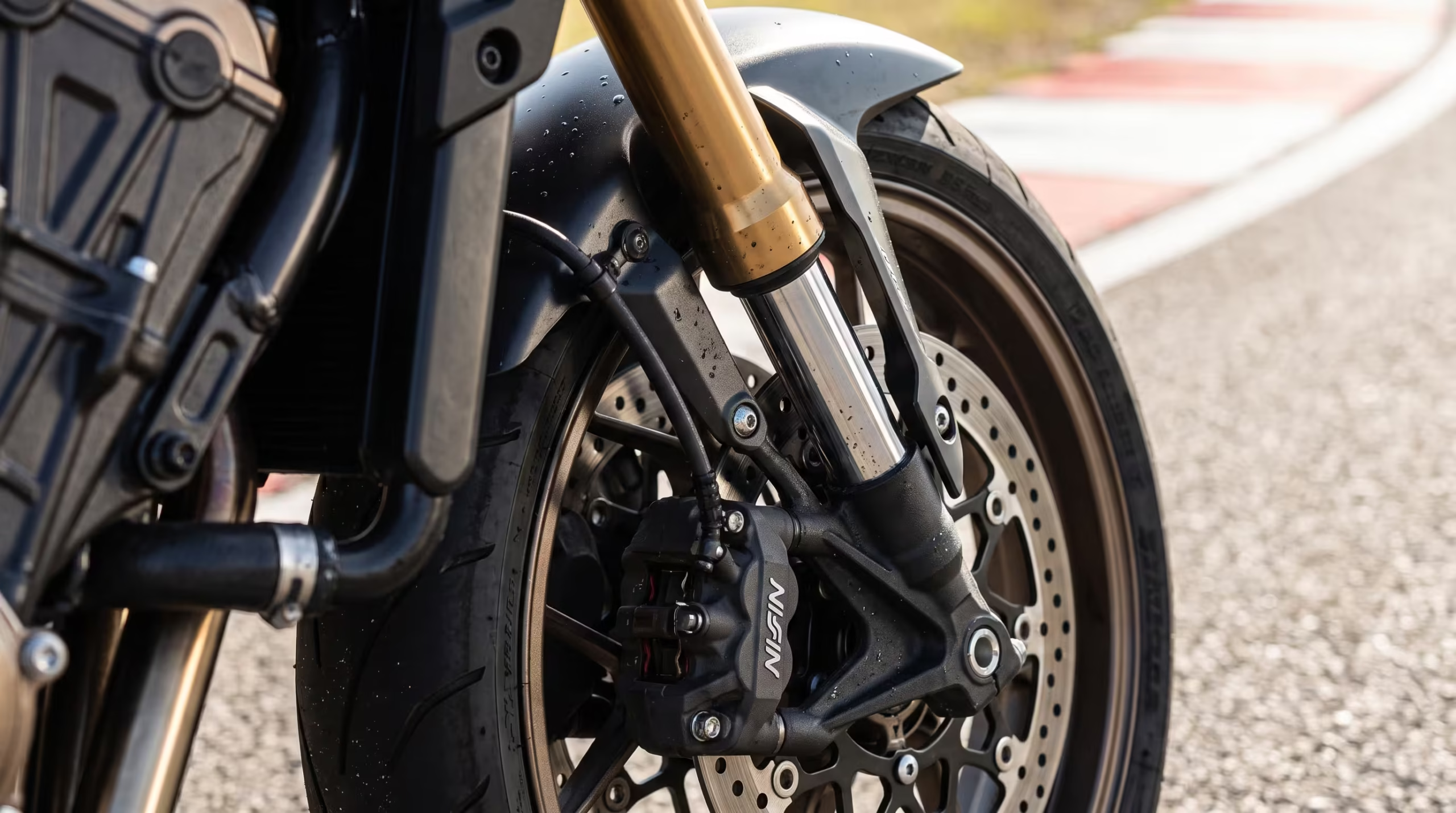
Braking hardware becomes more sophisticated as power and weight rise. Beginner street motorcycles may use a single front disc, while middleweights and superbikes usually use dual front discs with radial-mounted calipers.
ABS is common across the category, although equipment varies by market and trim. Traction control, riding modes, engine-brake management, wheelie control, cornering ABS, and launch control become more common on premium machines.
The Suzuki GSX-8R combines dual 310mm front discs, radial-mount four-piston calipers, ABS, selectable power delivery, and multi-level traction control. The CBR650R uses dual 310mm front discs with four-piston calipers and ABS. Advanced superbikes add lean-sensitive systems coordinated through an inertial measurement unit.
Aerodynamics and Fairing Design
Fairings distinguish sports bikes from many other street motorcycles. They manage airflow, reduce wind pressure, support high-speed stability, direct cooling air, and help the rider maintain a compact position.
The GSX-8R’s full fairing was wind-tunnel tested, while its front bodywork directs airflow around the rider. The Ninja 500 uses compact full-fairing bodywork intended to combine sporting appearance with approachable proportions.
Riding Position and Daily Comfort
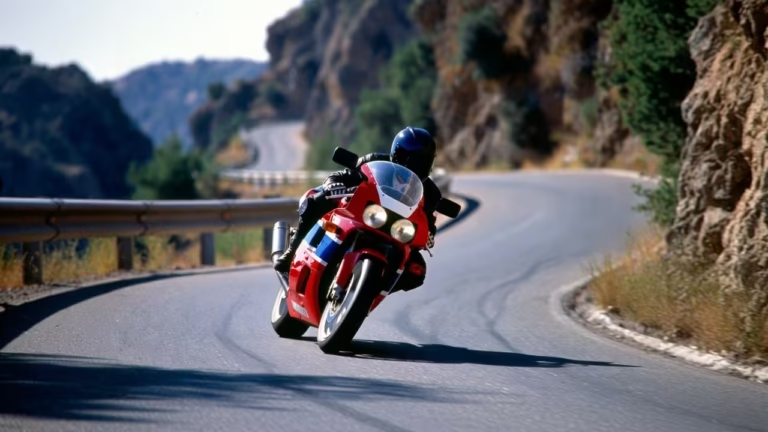
Riding position varies widely across street motorcycles. Beginner and road-focused sports bikes usually offer a moderate forward lean and manageable seat height. Supersport and superbike models place the handlebars lower and footpegs higher to improve ground clearance and front-end feedback.
For commuting, wrist angle, clutch action, mirrors, engine heat, and low-speed balance matter more than peak horsepower. The Ninja 500’s 785mm European seat height and light chassis make it approachable. The 2026 R7 has a taller 830mm seat and more committed posture. The CBR650R’s 810mm seat provides a middle ground between road comfort and sport-bike control.

Digital Displays, Connectivity, and Rider Technology
Technology now separates many modern street motorcycles. Basic LCD dashboards show speed, rpm, fuel, gear position, and trip data. Higher trims add TFT screens, smartphone pairing, navigation prompts, notifications, and configurable ride settings.
The Ninja 500 SE offers a TFT display with smartphone connectivity, while the standard model uses a connected LCD. The GSX-8R includes a five-inch color TFT and selectable engine modes. Honda gives the CBR650R a five-inch TFT with RoadSync connectivity.

Key Specifications Comparison
| Motorcycle | Category | Engine | Published Output | Key Technology | 2026 US Base Price |
|---|---|---|---|---|---|
| Kawasaki Ninja 500 | Beginner sport | 451cc parallel-twin | 45 PS / 42.6 Nm, EU spec | ABS available, assist/slipper clutch, connected display | $5,399 |
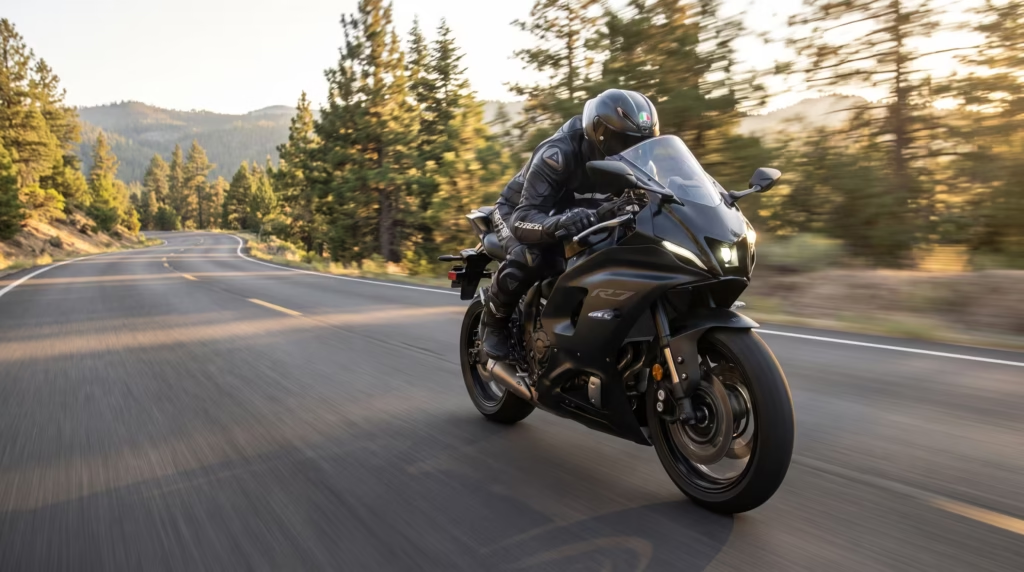
| Yamaha R7 | Middleweight supersport | 689cc parallel-twin | 73.4 PS / 68 Nm, EU spec | Sport chassis, assist/slipper clutch | $9,399 |
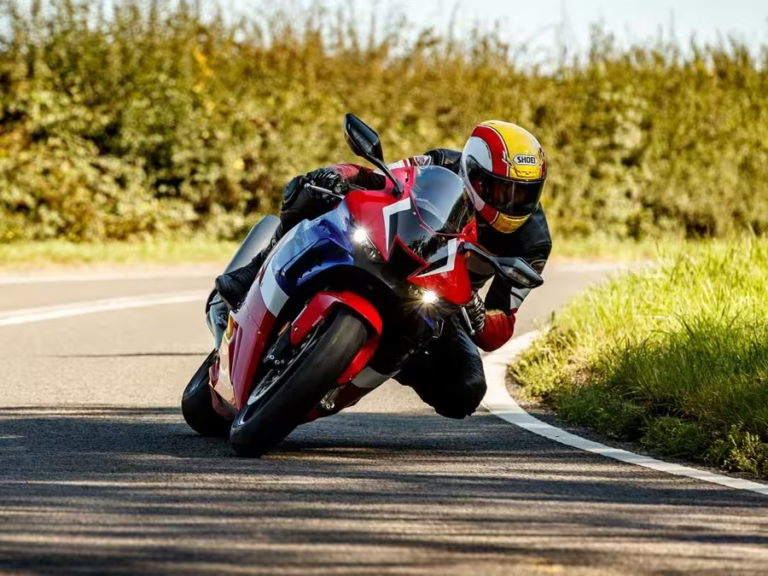
| Honda CBR650R E-Clutch | Middleweight sport | 649cc inline-four | 70 kW / 63 Nm, EU spec | E-Clutch, ABS, TFT, connectivity | $9,199 |
| Suzuki GSX-8R | Middleweight sport | 776cc parallel-twin | Output varies by market | Ride modes, traction control, quickshifter, TFT | $9,699 |
| BMW S 1000 RR | Superbike | 999cc inline-four | 205 hp / 83 lb-ft, US spec | IMU-based electronics, advanced ride modes | $20,890 |
US prices shown are manufacturer-listed base figures before destination charges, taxes, registration, and dealer adjustments. These models or close regional equivalents are also marketed across Europe, although specifications, trim packages, licensing classifications, and prices differ by country. The 2026 R7 is listed from £9,504 in the UK, while the 2026 CBR650R E-Clutch is listed at £8,899.
Sports Bikes vs Naked Bikes, Touring Bikes, and Superbikes
Sports bikes and naked bikes often share engines and frames, but naked street motorcycles remove much of the fairing and usually use wider handlebars with a more upright posture. They are convenient in urban riding but expose the rider to more wind at highway speeds.
Touring motorcycles emphasize luggage, passenger space, wind protection, fuel range, and long-distance ergonomics. They are heavier but better suited to extended travel.
A superbike is a sports bike with more extreme priorities: stronger brakes, more power, sharper geometry, advanced electronics, and greater track capability. It also usually costs more to insure, service, fuel, and equip with tires.
For many buyers, a 500–800cc road-focused sport bike offers the strongest balance. It preserves the style and handling of performance bikes without the expense or intensity of a liter-class machine.
Fuel Economy, Maintenance, and Running Costs
Smaller street motorcycles generally use less fuel, consume tires more slowly, and cost less to insure. The 2026 Ninja 500 is rated at 3.8 L/100 km in European specification, while Yamaha lists the US R7 at 59 mpg. Actual consumption changes with speed, traffic, load, weather, and throttle use.
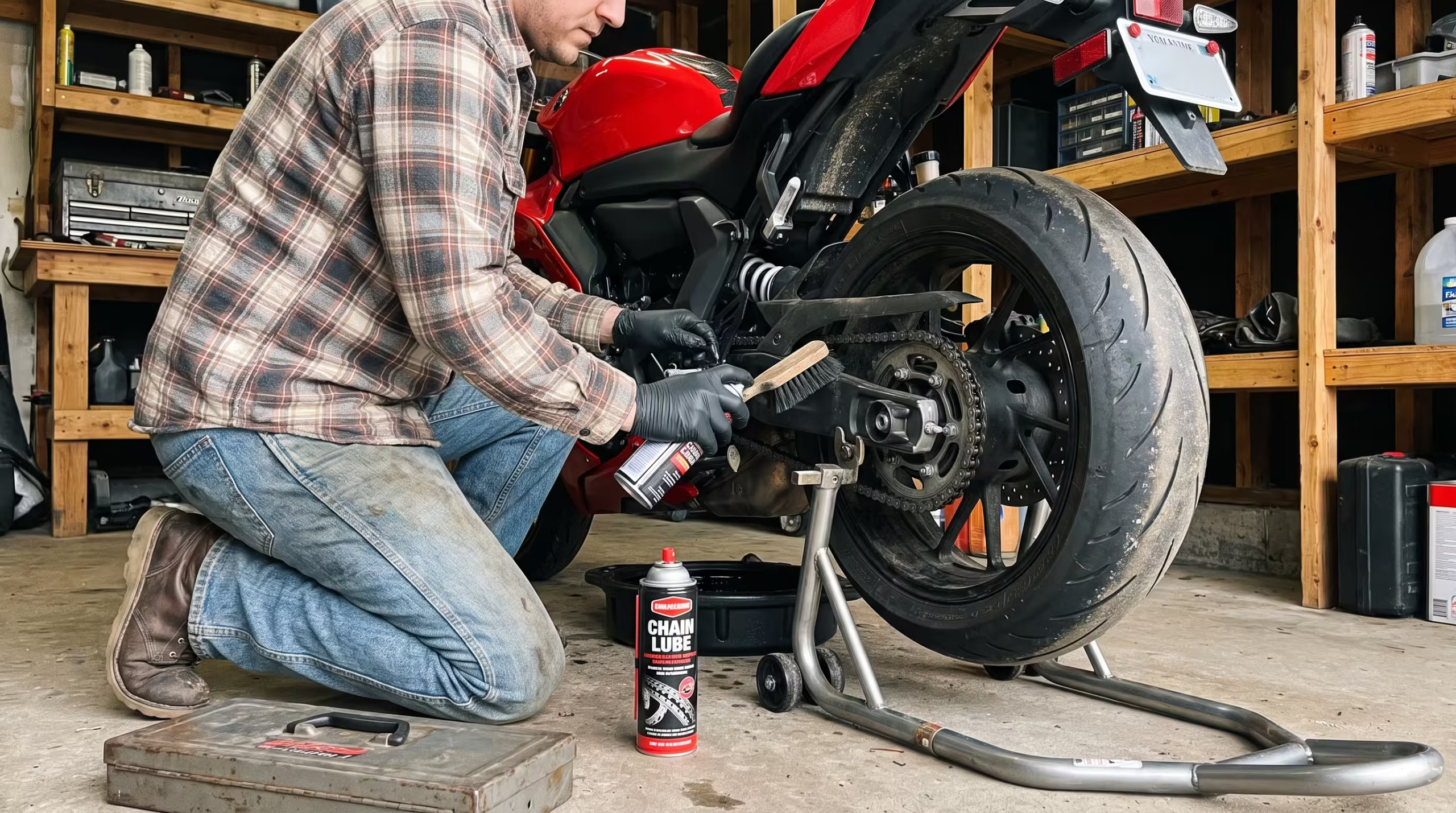
Routine costs include oil and filters, chain service, brake fluid, coolant, tires, brake pads, valve inspections, insurance, registration, and depreciation. Powerful models may consume premium tires quickly, particularly during track use.
Parallel-twin middleweights are often economical to maintain. Inline-four and superbike engines may involve higher labor charges, costlier consumables, and shorter tire life. Scheduled-maintenance intervals and dealer rates should be compared before purchase.

Real-World Usability and Ownership Experience
Daily street motorcycles need predictable low-speed control, manageable heat, usable mirrors, practical fuel range, and ergonomics that suit the owner.
The Ninja 500 combines light weight, moderate output, low running costs, and full-size styling. The R7 is more committed and rewards riders who value cornering precision. The GSX-8R offers stronger road comfort, midrange character, and a comprehensive electronics package. The CBR650R stands apart through its smooth inline-four and E-Clutch option. The S 1000 RR targets experienced riders seeking elite road-and-track performance.
Pricing and Availability in the USA and Europe
The US market offers street motorcycles from Japanese, European, American, and electric manufacturers. Beginner sports bikes commonly start in the mid-$5,000 range, middleweights often cost around $9,000–$13,000, and premium superbikes can exceed $20,000 before options.
Europe provides a similarly broad selection, but A1 and A2 licensing structures influence model availability and restricted-power versions. Taxes, on-road fees, emissions equipment, trim levels, and currencies also affect pricing.
Buyers comparing regional versions should confirm whether ABS, quickshifting, connectivity, restricted-power compatibility, or optional equipment is standard.
Market Impact and Future Trends
The future of sports-focused street motorcycles is moving toward smarter electronics, cleaner engines, improved aerodynamics, and broader usability. Middleweight parallel twins are becoming increasingly important because they deliver strong road torque while remaining lighter and less expensive than traditional inline-four superbikes.
Premium machines are adding advanced inertial sensors, semi-active suspension, configurable engine braking, data logging, and smartphone integration. Electric performance motorcycles will expand as battery weight, charging access, purchase price, and track range improve.
How to Choose the Right Street Motorcycle
Choose according to your experience, budget, comfort needs, and the type of riding you plan to do.
- Select a standard or naked bike when upright ergonomics, easy handling, and everyday versatility are priorities.
- Choose a beginner sport bike when you want lightweight performance, manageable power, and affordable ownership.
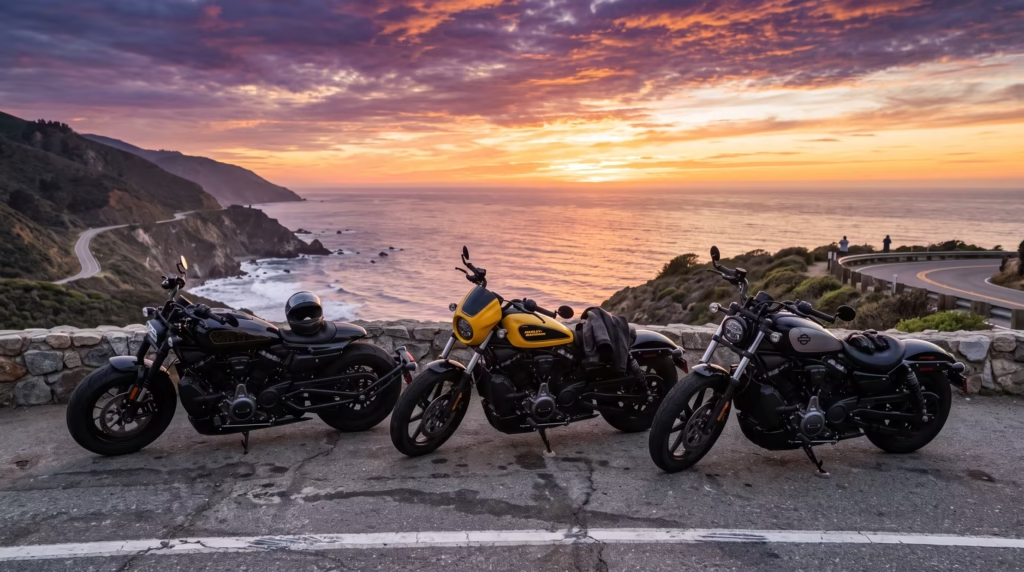
- Consider a cruiser when a low seat height, relaxed riding position, and comfortable urban or highway travel matter most.
- Choose a touring motorcycle for long-distance comfort, wind protection, luggage capacity, and passenger-friendly features.
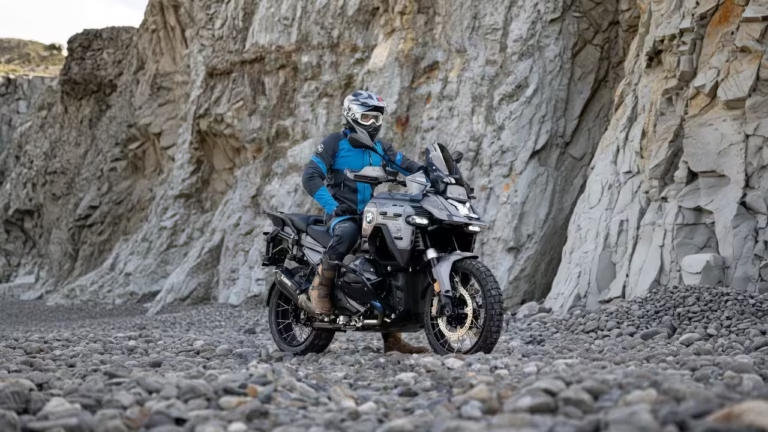
- Select an adventure bike when your riding includes highways, rough roads, and occasional off-pavement travel.
- Consider a superbike only when its high performance, aggressive ergonomics, ownership costs, and advanced technology match your experience and intended use.
- Choose an electric street motorcycle when instant torque, quiet operation, and lower routine maintenance suit your budget and charging access.
Among all street motorcycles, the best one is the motorcycle that feels natural, remains comfortable, fits your budget, and matches your riding style.
Sports-focused street motorcycles now serve a wider range of riders than ever. Lightweight twins make the category approachable, middleweights combine road usability with serious performance, and superbikes showcase the most advanced engines, aerodynamics, brakes, and electronics available on road-legal motorcycles.
A thoughtful purchase balances engine character, ergonomics, technology, ownership cost, and intended use. Maximum horsepower may define the specification sheet, but predictable handling, usable torque, comfort, and confidence define the better motorcycle.