Electric Cars Brands Best EV & Hybrid Makers to Know in 2026


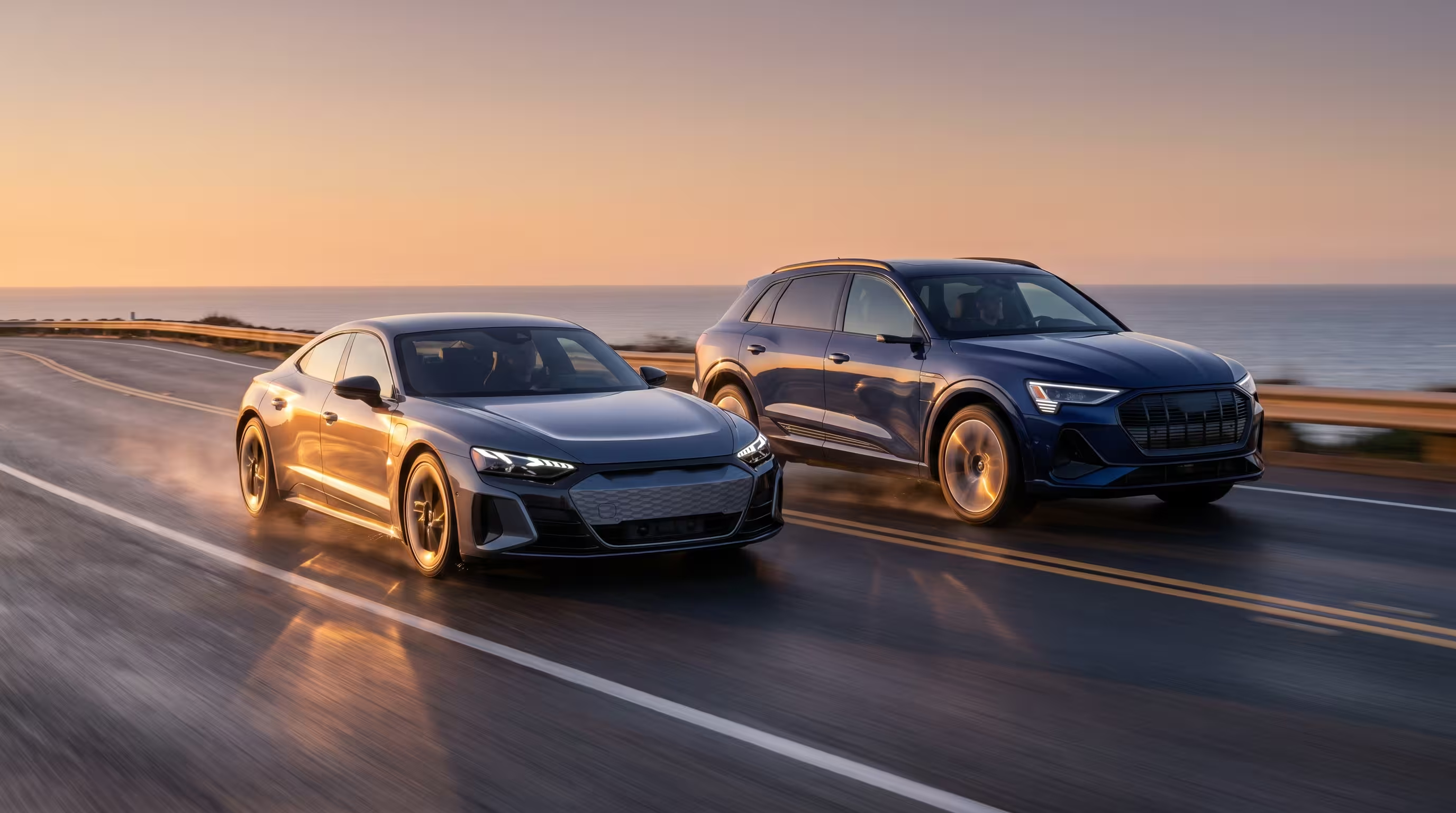


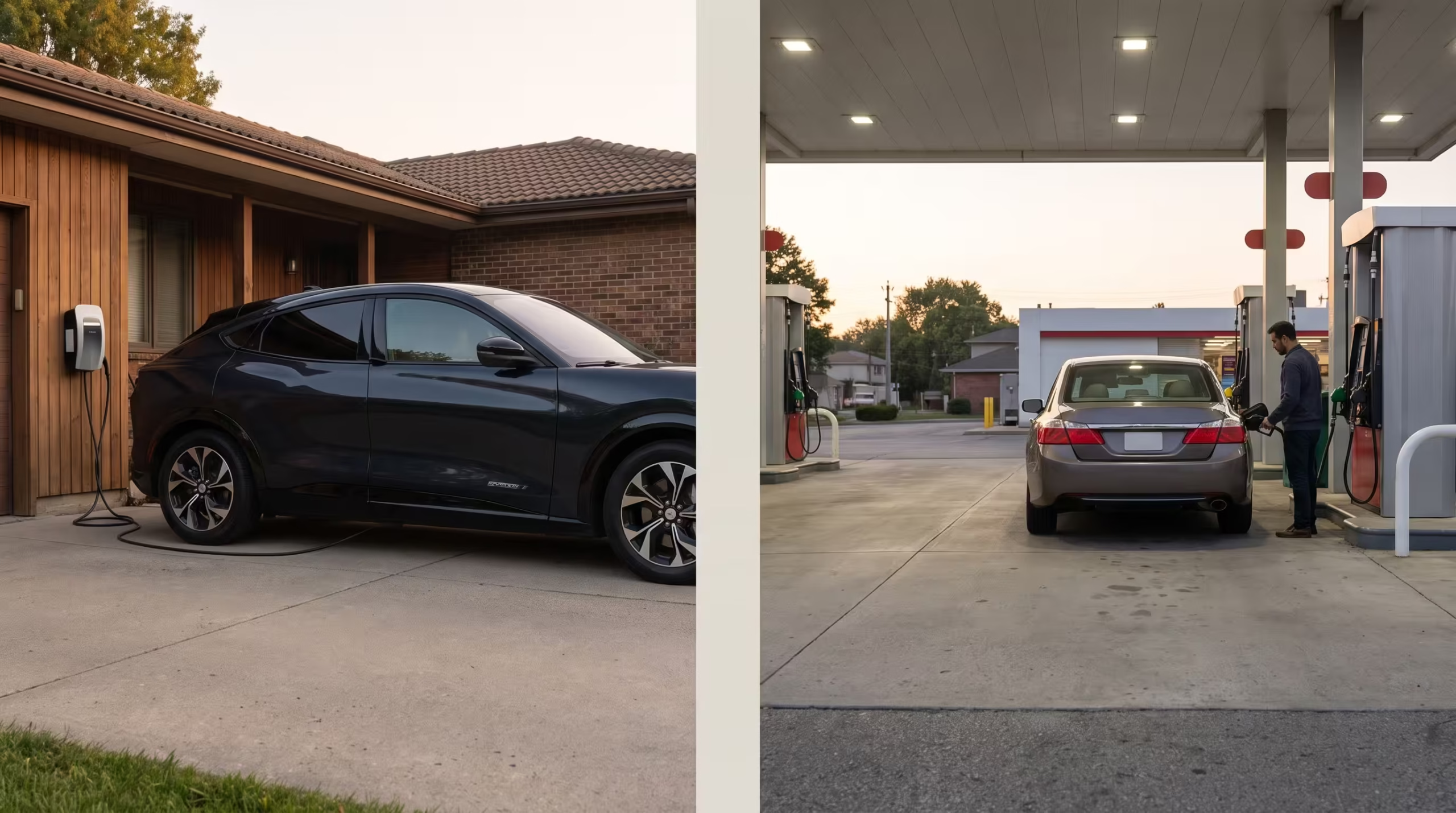


Electric cars brands now compete on far more than battery range. Buyers in the United States and Europe are comparing charging speed, efficiency, software, safety, performance, ownership costs, and whether a pure EV or hybrid powertrain fits daily life. Electrified cars are no longer a niche: global electric-car sales exceeded 20 million in 2025, equal to about one-quarter of new-car sales worldwide.
From Tesla and BYD to Hyundai, Kia, BMW, Mercedes-Benz, Ford, Chevrolet, Rivian, Lucid, and Polestar, today’s leading electric cars brands have distinct strengths. Hybrids and plug-in hybrids also remain important for drivers who want lower fuel use without relying entirely on public charging.
What EV, Hybrid, Plug-In Hybrid, and Mild Hybrid Mean
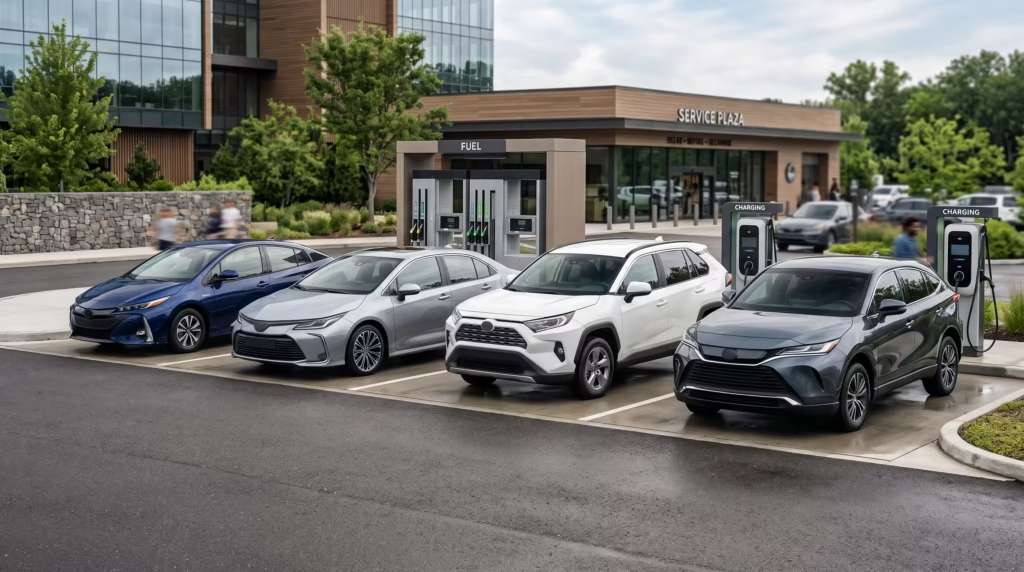
Before comparing electric cars brands, it helps to separate the major powertrain types.
- Battery electric vehicle (BEV/EV): Runs only on electricity, using a high-voltage battery and one or more electric motors.
- Hybrid electric vehicle (HEV): Combines a gasoline engine with an electric motor and small battery that recharges through the engine and regenerative braking.
- Plug-in hybrid (PHEV): Adds a larger rechargeable battery, allowing useful electric-only driving before the gasoline engine is needed.
- Mild hybrid (MHEV): Uses a small electrical system to assist the engine but usually cannot drive meaningful distances on electricity alone.

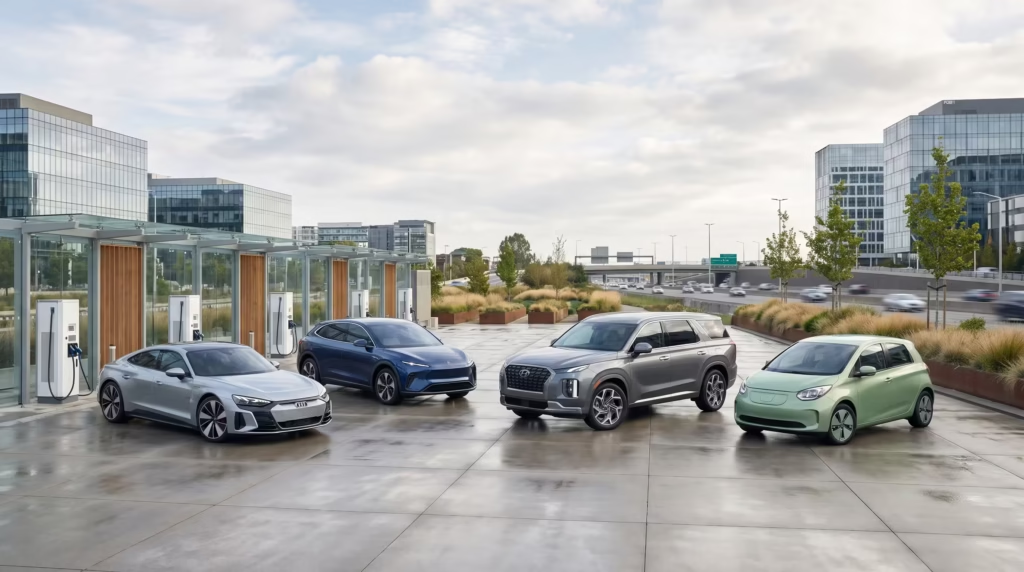
Electric Cars Brands Leading the Market
Tesla and BYD
Tesla remains one of the industry’s defining EV companies. The Model 3 and Model Y combine efficient electric powertrains, strong software integration, frequent over-the-air updates, and access to Tesla’s charging ecosystem. Premium rear-drive versions of the 2026 Model 3 reach up to 363 miles EPA, while the Model Y Premium RWD is rated as high as 357 miles. Tesla Superchargers can add substantial range in about 15 minutes under suitable conditions.
BYD has become a global force through extensive in-house battery and vehicle manufacturing. Its Blade Battery uses lithium-iron-phosphate chemistry, while European models such as the SEAL and SEALION 7 compete on equipment, performance, range, and price. The SEALION 7 is offered in Europe with batteries up to 91.3 kWh, WLTP range up to 502 km, and charging up to 230 kW depending on version.
Hyundai, Kia, Ford, and General Motors
Among mainstream electric cars brands, Hyundai and Kia stand out for their 800-volt platforms. The 2026 Hyundai IONIQ 5 reaches up to 318 miles of EPA-estimated range in selected rear-drive versions, while compatible DC fast charging can take the battery from 10% to 80% in as little as about 20 minutes.
The 2026 Kia EV6 reaches up to 319 miles EPA in several rear-drive trims.
Ford gives familiar nameplates an electric twist with the Mustang Mach-E and F-150 Lightning. In Europe, the updated Mach-E can reach up to 615 km WLTP in rear-drive extended-range form.
Chevrolet targets a more accessible price point with the 2026 Equinox EV, which starts at $34,995 and offers up to 319 miles of EPA-estimated range in front-wheel-drive form.
BMW, Mercedes-Benz, Rivian, Lucid, and Polestar
Premium electric cars brands increasingly compete on efficiency. The 2026 BMW i4 eDrive40 carries a U.S. range estimate of roughly 307–333 miles depending on configuration.
The new Mercedes-Benz CLA Electric shows where next-generation premium EVs are heading. Its European specification reaches up to 792 km WLTP and supports DC charging up to 320 kW on suitable 800-volt equipment.
Rivian focuses on premium electric trucks and SUVs. The R1S offers up to 410 miles of EPA-estimated range in certain configurations, and 2026 R1 vehicles use a native NACS charge port.
Lucid prioritizes efficiency and long-range luxury. The 2026 Air Grand Touring is rated at up to 512 miles EPA and up to 819 hp, while the Air Pure offers up to 420 miles and 430 hp.
Polestar blends Scandinavian design with performance-focused electric engineering. The Polestar 4 offers up to 310 miles EPA in rear-motor form; the dual-motor version produces 544 hp and 506 lb-ft of torque.
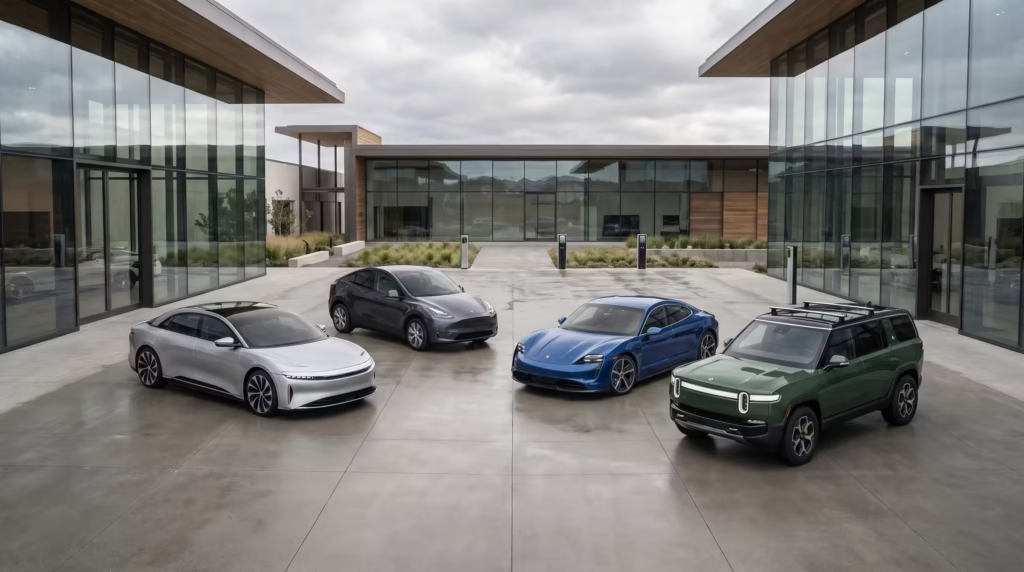
Key Specifications Representative 2026 EVs
| Brand / Model | Power / Torque | Battery | Official Range | Fast Charging | Position |
|---|---|---|---|---|---|
| Hyundai IONIQ 5 | Varies by trim | Up to 84 kWh | Up to 318 mi EPA | 10–80% in about 20 min | Mainstream crossover |
| Chevrolet Equinox EV | Varies by FWD/AWD | High-voltage EV battery | Up to 319 mi EPA | About 80 mi added in 10 min | Value-focused SUV |
| BMW i4 eDrive40 | Rear-drive EV | High-voltage lithium-ion | 307–333 mi U.S. estimate | DC fast charging | Sport-luxury EV |
| Mercedes-Benz CLA Electric | Varies by version | High-voltage EV battery | Up to 792 km WLTP | Up to 320 kW | Efficient premium sedan |
| BYD SEALION 7 | 230–390 kW | 82.5 or 91.3 kWh | Up to 502 km WLTP | Up to 230 kW | European midsize SUV |
| Rivian R1S | Up to 1,025 hp in Quad examples | Large/Max packs | Up to 410 mi EPA | Up to 300 kW network capability | Adventure SUV |
| Lucid Air | 430–1,234 hp across 2026 range | Large traction battery | Up to 512 mi EPA | High-speed DC charging | Long-range luxury sedan |
| Polestar 4 | 272 or 544 hp; 253–506 lb-ft | 100 kWh | Up to 310 mi EPA | Up to 200 kW | Premium SUV coupe |
Performance, Horsepower, Torque, and Driving Experience
Instant torque is one reason EVs often feel faster than their horsepower figures suggest. Electric motors deliver strong response from low speed without waiting for engine revs or a transmission downshift.
Still, the quickest electric cars brands are not automatically best for daily use. High-output models can exceed 1,000 hp, but extra performance may increase tire wear, energy use, and price. For most drivers, ride quality, visibility, and predictable regenerative braking matter more.
Hybrids feel more conventional, but electric assistance can improve urban efficiency. The 2026 Honda CR-V Hybrid uses a 204-hp system and can reach 43 mpg city in selected U.S. configurations.
EV Range, Battery Capacity, and Charging Time
Range remains one of the biggest differences between electric cars brands. Many mainstream EVs now sit in the roughly 250–350-mile EPA range bracket, while specialist long-range cars go considerably farther.
Battery capacity is measured in kilowatt-hours (kWh), but a bigger battery does not automatically mean a better EV. Aerodynamics, motor efficiency, tire size, weight, temperature, and driving speed all influence real-world EV range.

Charging speed matters just as much. An EV that sustains a strong charging curve can be a better road-trip car than a longer-range rival that charges slowly. Hyundai’s European IONIQ 5, for example, uses an 800-volt battery system and can add significant range in 15 minutes under suitable conditions.
Fuel Economy, Efficiency, and Ownership Cost
Ownership cost depends on electricity or fuel prices, insurance, depreciation, financing, tire replacement, and charging habits. Electric cars brands generally remove routine items such as oil changes, spark plugs, exhaust repairs, and many engine-related services. Regenerative braking can also reduce friction-brake use.
Heavy performance EVs may consume tires quickly, while insurance or collision repair can be expensive. Home charging usually improves the cost equation.
For hybrid owners, fuel economy remains the biggest attraction. Hybrids can be particularly efficient in urban traffic because regenerative braking recovers energy that would otherwise be lost as heat.
Interior Technology, Infotainment, and Safety
Modern electric cars brands increasingly treat the cabin as a digital platform. Large touchscreens, phone apps, route planning, charging-station integration, wireless smartphone connectivity, digital keys, voice assistants, and over-the-air updates are becoming common.
Driver-assistance features can include adaptive cruise control, lane-centering, blind-spot monitoring, automatic emergency braking, surround-view cameras, and parking aids. Hardware and software quality vary by brand.
EV architecture can create a flatter floor, longer wheelbase, or extra storage, although styling can still compromise visibility or cargo flexibility.

Pricing and Worldwide Availability
Electric cars brands now cover a much broader price range. Chevrolet’s Equinox EV sits in the mid-$30,000 bracket in the U.S., while Rivian’s R1S starts above $80,000 and Lucid’s 2026 Air range stretches from premium to ultra-luxury pricing.
European prices differ with VAT, equipment, import costs, and local incentives.
Worldwide availability also varies:
- Tesla, Hyundai, Kia, BMW, Mercedes-Benz, Volkswagen, Audi, Porsche, and Polestar sell EVs across multiple major international markets.
- BYD is strong in China, Europe, Latin America, and other international markets, with a rapidly expanding global footprint.
- Rivian remains primarily focused on North American consumer vehicles, although the company also has a European commercial-vehicle presence.
- Lucid sells in North America and has expanded sales and service operations into selected European markets.
- Toyota, Honda, Hyundai, Kia, Ford, BMW, and Mercedes-Benz continue to offer hybrid or plug-in-hybrid alternatives in many regions.

Electric Cars Brands vs Gasoline Cars
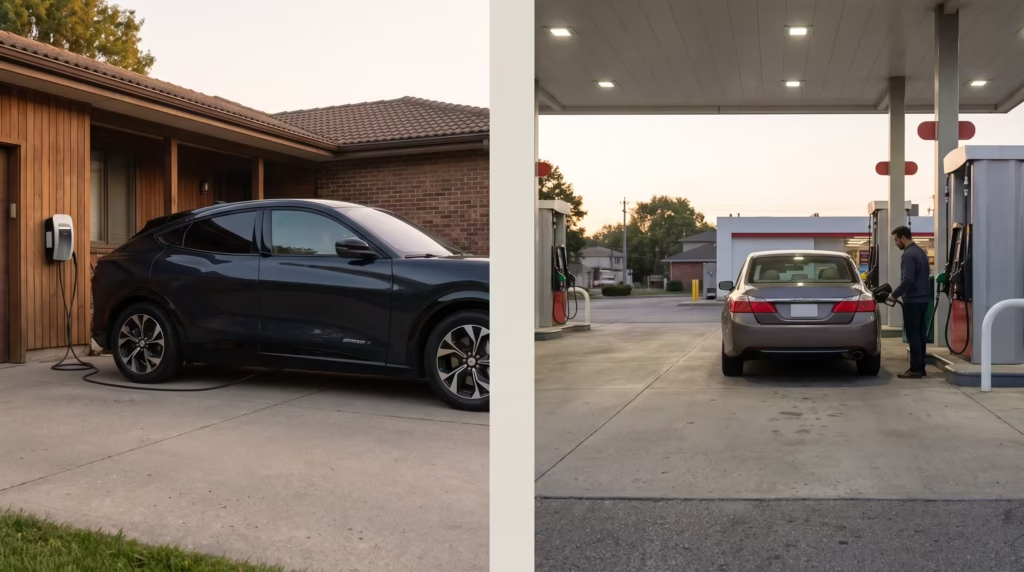
Compared with gasoline cars, EVs generally provide quieter operation, immediate torque, fewer routine drivetrain service items, and convenient home charging. They also produce no tailpipe emissions while driving.
Gasoline cars still suit buyers who cannot charge at home or travel through areas with sparse charging infrastructure.
Hybrids sit between the two. They reduce fuel use without requiring charging, while PHEVs can cover short trips electrically and use gasoline for longer journeys. This flexibility is why many shoppers compare electric cars brands with hybrid models rather than gasoline-only cars.
Environmental Impact and Real-World Usability
EVs have no tailpipe emissions, but their full footprint includes battery production, manufacturing, electricity generation, and recycling.
Daily routine matters even more than headline range. A 300-mile EV charged at home can be extremely convenient for a 30-mile commute. Conversely, a remote-area driver may find a hybrid or PHEV more practical.
Cold weather, sustained motorway speeds, heavy loads, roof boxes, and aggressive driving can reduce range. Buyers should therefore evaluate electric cars brands around realistic journeys, not only laboratory figures.
Market Impact and Future Trends
Electric cars brands are changing vehicle engineering, software, charging infrastructure, and global supply chains. Electric-car sales exceeded 20 million in 2025, reaching a 25% global share. The latest 2026 outlook expects electric cars to approach roughly 29% of worldwide new-car sales this year.
Competition is moving toward lower-cost batteries, faster charging, better cold-weather performance, more efficient motors, and wider use of lithium-iron-phosphate chemistry. Europe faces stronger competition from Chinese manufacturers, while North America continues expanding NACS integration.
The strongest electric cars brands in 2026 succeed for different reasons. Tesla emphasizes software and charging integration; BYD combines battery expertise with global scale; Hyundai and Kia excel at fast-charging mainstream EVs; BMW and Mercedes-Benz push premium efficiency; Chevrolet and Ford target familiar mass-market segments; Rivian focuses on adventure; Lucid on long-range luxury; and Polestar on design-led performance.
The right vehicle depends on location, mileage, home-charging access, budget, climate, range needs, and driving priorities. Comparing local specifications, insurance, efficiency, service coverage, and charging access is more useful than choosing by badge alone.