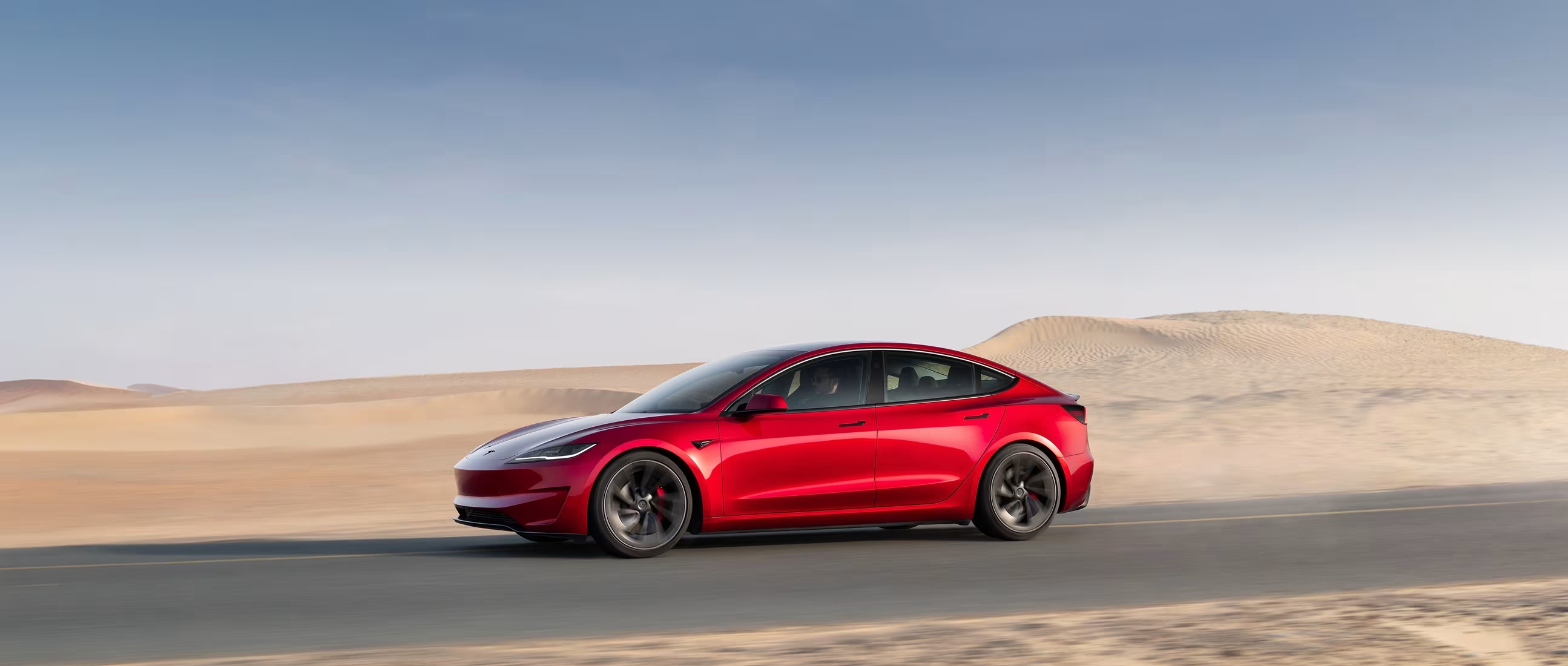
Tesla EV Guide Range, Charging, Cost and Future Trends





Tesla has become one of the most influential names in the global electric car market, but today’s buyers are asking smarter questions than ever. Range matters. Charging speed matters. Ownership cost matters. And for drivers in the USA and Europe, the decision is no longer just “electric or gasoline.” It is now a deeper choice between EVs, hybrids, plug-in hybrids, and increasingly efficient gasoline cars.
Electric and hybrid vehicles matter because the automotive market is changing fast. Fuel prices, emissions rules, charging infrastructure, battery development, and software-defined cars are reshaping what buyers expect from a modern vehicle. Tesla sits at the center of that shift, not only because of its electric powertrains, but also because of its Supercharger network, minimalist interiors, over-the-air updates, and strong real-world usability.
What Makes Tesla Important in the EV Market?
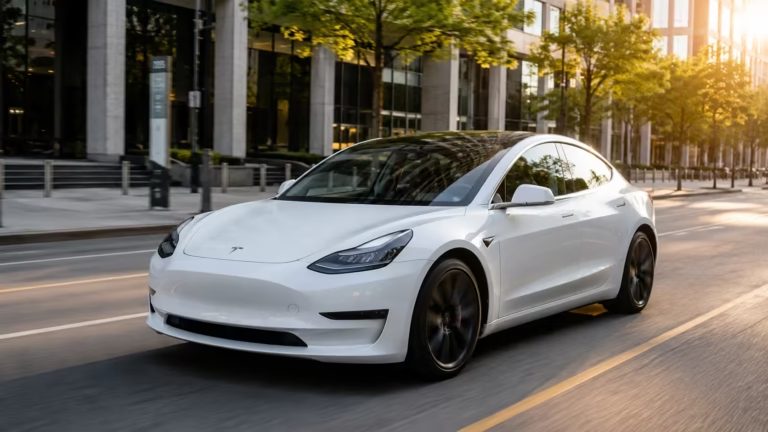
Tesla is not just another electric car brand. It helped push battery-electric vehicles from niche products into mainstream family, commuter, and performance-car territory. In the USA, the Model 3 and Model Y remain key choices for buyers who want long range, quick acceleration, and a charging ecosystem that feels easier to use than many rival networks.
In Europe, the story is more competitive. Volkswagen, BMW, Mercedes-Benz, Hyundai, Kia, Renault, Peugeot, Volvo, Polestar, and BYD all offer strong electric alternatives. However, Tesla still has major strengths in EV range, software, efficiency, and charging convenience.
The biggest appeal is simple: Tesla vehicles feel built around the electric lifestyle rather than adapted from gasoline-car thinking.
EV, Hybrid, Plug-In Hybrid and Mild Hybrid Explained
Before comparing Tesla with competitors, it is important to understand the main electrified vehicle types.
Battery-Electric Vehicle
A battery-electric vehicle, or BEV, runs only on electricity. It has no gasoline engine, no fuel tank, and no tailpipe emissions while driving. Tesla vehicles are BEVs. They use a large battery pack, one or more electric motors, and external charging from home chargers, public chargers, or Superchargers.
Traditional Hybrid
A hybrid uses a gasoline engine and an electric motor together. It does not need to be plugged in. The battery is charged through regenerative braking and the engine. Toyota Prius and many Toyota Hybrid models are common examples.
Plug-In Hybrid
A plug-in hybrid, or PHEV, combines a gasoline engine with a larger battery that can be charged from an external outlet or charger. It can drive short distances on electricity, then use gasoline for longer trips. This setup works well for buyers who want electric commuting but are not ready for a full EV.
Mild Hybrid
A mild hybrid uses a small battery and electric assistance system to improve fuel economy. However, it cannot drive on electric power alone. It is usually cheaper than a full hybrid but offers smaller efficiency gains.
Tesla Performance: Instant Torque and Smooth Acceleration
One of the biggest differences between an EV and a gasoline car is torque delivery. A gasoline engine usually builds power as revs rise. An electric motor delivers strong torque almost instantly, which makes acceleration feel sharp, smooth, and effortless.
Tesla models are known for this direct response. Even non-performance versions feel quick in city traffic and confident during highway passing. The Model 3 and Model Y are especially popular because they combine daily practicality with strong acceleration.
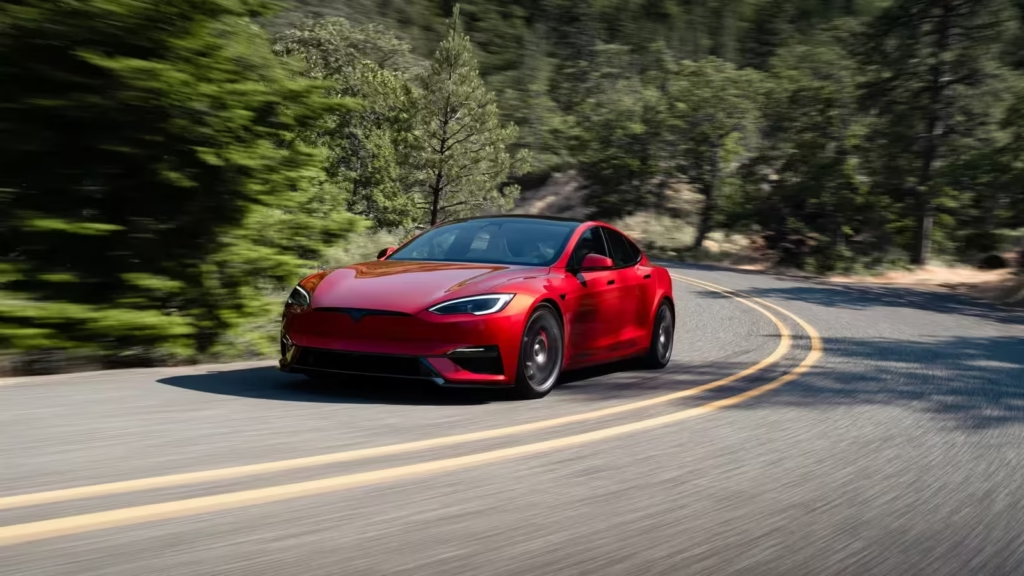
At the top end, Model S Plaid shows how far electric performance has come. It produces 1,020 hp and delivers supercar-level acceleration, while the standard Model S still offers strong dual-motor performance. For buyers who want an EV that can replace both a luxury sedan and a performance car, this remains one of the strongest examples.
Horsepower and Torque: What Buyers Should Know
Tesla publishes some horsepower figures, especially for Model S, but it does not consistently list official horsepower and torque numbers for every Model 3 and Model Y trim in every market. That is important because many websites estimate power output differently.
For a trustworthy buying guide, the safest approach is to focus on manufacturer-published figures such as:
- 0–60 mph acceleration
- Drive type: rear-wheel drive or all-wheel drive
- EPA or WLTP range
- Charging speed
- Efficiency
- Battery category: Standard Range or Long Range
This matters because EV performance is not only about peak horsepower. Motor tuning, battery output, software limits, tire choice, weight, and temperature all affect real-world acceleration.
Tesla EV Range and Battery Capacity
Range is one of the biggest reasons buyers consider Tesla. In the USA, range is usually shown through EPA estimates. In Europe, range is commonly shown through WLTP figures. These numbers are useful, but real-world range can change based on speed, weather, elevation, tire size, and driving style.
Tesla lists battery types by category, such as Standard Range and Long Range, rather than always publishing exact usable battery capacity in kWh for every trim. For shoppers, that means the practical question is not only “How big is the battery?” but also “How efficient is the vehicle?”
That is where Tesla does well. A highly efficient EV can travel farther with a smaller battery than a less efficient rival with a larger pack. This helps reduce weight, charging cost, and energy use.

Charging Speed and Charging Time
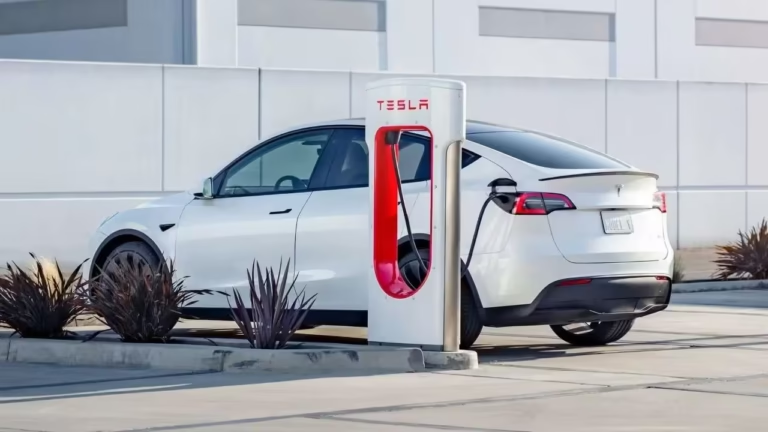
Charging is one of Tesla’s biggest ownership advantages. The brand’s Supercharger network remains one of the most recognized fast-charging systems in the world. Many current models can use high-speed DC charging, while home charging remains the most convenient option for daily use.
For everyday drivers, charging usually works in three ways:
- Home charging: Best for overnight charging and daily commuting.
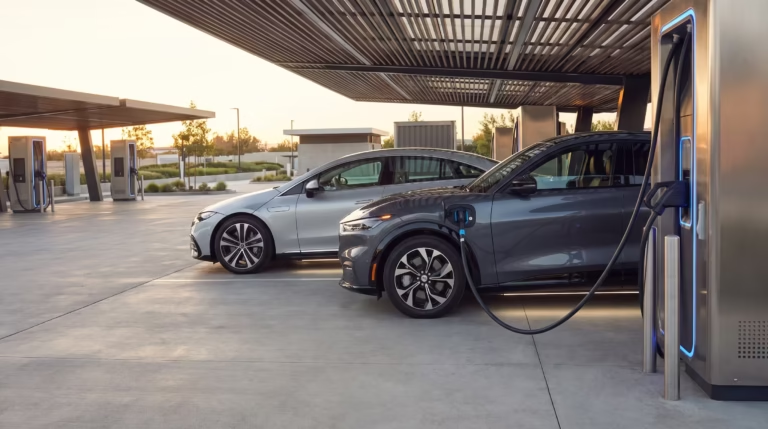
- Public AC charging: Useful at workplaces, hotels, shopping centers, and city parking.
- DC fast charging: Best for road trips and quick top-ups.
Charging time depends on charger power, battery temperature, state of charge, and vehicle configuration. A 10–80% fast-charge stop is usually more useful than charging to 100% on road trips because charging slows as the battery fills.
Fuel Economy and Efficiency
Tesla vehicles do not use miles per gallon like gasoline cars. Instead, efficiency is measured through MPGe, miles per kWh, or kWh per 100 km depending on market.
This is where EVs usually beat gasoline cars. Electric motors waste less energy as heat, and regenerative braking recovers energy during slowing. In city driving, this can make an EV feel especially efficient compared with a petrol or diesel vehicle.
Hybrids also perform well in urban driving because they recover braking energy and use electric assistance. However, a full EV has the advantage of skipping gasoline entirely.
Interior Technology and Infotainment
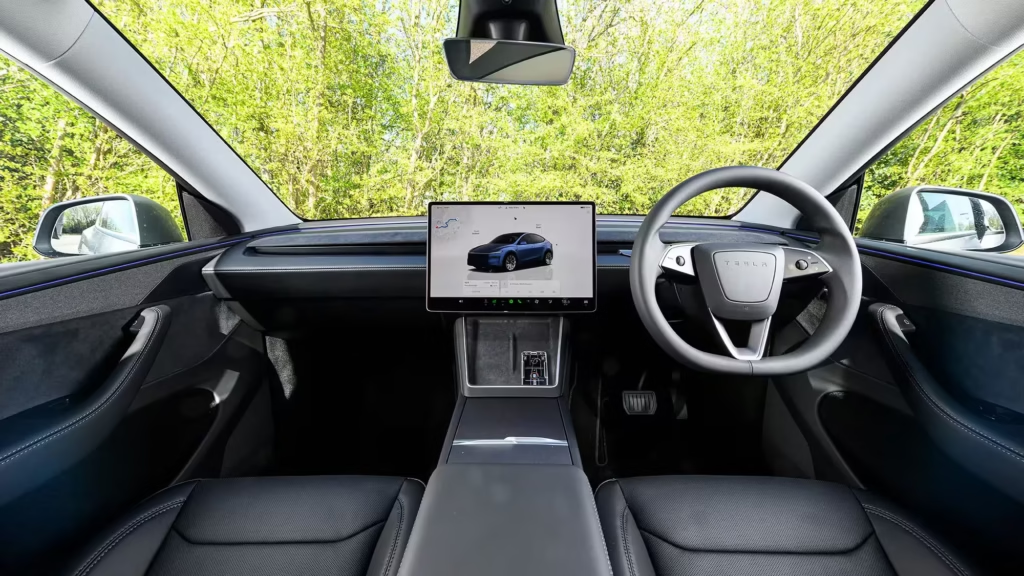
Tesla interiors are known for a clean, screen-focused design. Most controls are handled through a central touchscreen, with features such as navigation, media, climate control, charging settings, camera views, and vehicle settings integrated into the interface.
The strongest infotainment features include:
- Large central touchscreen
- Built-in navigation with charging route planning
- Over-the-air software updates
- Mobile app control
- Streaming and entertainment features
- Rear display on newer Model 3 and Model Y versions in some markets
- Voice commands and connected services
However, the minimalist layout is not for everyone. Some drivers prefer traditional buttons for climate control, mirrors, or driving settings. This is an area where brands like BMW, Hyundai, Kia, and Mercedes may feel more familiar to traditional car buyers.


Driver-Assistance and Safety Features
Tesla offers advanced driver-assistance features, but buyers should understand the wording carefully. Systems such as Autopilot and Full Self-Driving capability are driver-assistance technologies, not fully autonomous driving systems. The driver must stay attentive and ready to take control.
Key safety and assistance features may include:
- Adaptive cruise control
- Lane-keeping assistance
- Emergency braking
- Blind-spot camera views
- Parking cameras
- Collision warnings
- Over-the-air safety and software updates
For shoppers, the best advice is simple: treat driver-assistance as support, not a replacement for safe driving.
Tesla Pricing and Availability in the USA and Europe
Tesla pricing changes often by market, trim, incentives, and delivery timing. In the USA, the Model 3 and Model Y are positioned as the brand’s most accessible mainstream vehicles, while Model S and Model X sit higher in the luxury segment.
In Europe, pricing varies by country because of taxes, incentives, registration fees, and local equipment rules. The UK and EU markets also use WLTP range figures rather than EPA estimates, so buyers should avoid comparing American and European range numbers directly.
Availability is generally strong in both the USA and Europe, but delivery timing can vary depending on configuration, color, wheels, trim, and local stock.
Tesla vs Gasoline Cars
Compared with gasoline cars, Tesla vehicles offer clear strengths:
- Lower energy cost when charged at home
- Less routine maintenance
- No oil changes
- Instant torque
- Quiet driving experience
- Strong city efficiency
- Lower local emissions while driving
However, gasoline cars still have advantages for some buyers:
- Faster refueling
- Lower entry price in some segments
- Familiar service networks
- No charging planning needed
- Better fit for drivers without home charging
The right choice depends on lifestyle. A driver with home charging and a daily commute may save more with an EV. A driver who parks on the street and frequently travels through areas with weak charging coverage may still prefer a hybrid or gasoline car.
Tesla vs Hybrid and Plug-In Hybrid Competitors
A hybrid is the easiest step into electrification because it does not require charging. A plug-in hybrid is more flexible because it can handle short electric trips and long gasoline journeys. But Tesla offers the cleaner and simpler EV experience because there is no engine, no fuel system, and fewer traditional maintenance items.
Against hybrid rivals, Tesla wins on:
- Electric-only driving
- Acceleration smoothness
- Lower tailpipe emissions
- Charging network integration
- Software updates
Hybrids and plug-in hybrids win on:
- Refueling convenience
- Long-distance flexibility
- Lower charging dependence
- Better fit for rural drivers without reliable chargers
For many USA and European buyers, the choice comes down to home charging. If you can charge at home, a Tesla becomes much easier to live with.
Real-World Usability and Driving Experience
A good EV must do more than deliver strong numbers. It must work in daily life. Tesla’s real-world usability is strong because the cars are easy to drive, quiet at speed, and simple to charge when the route-planning system is used correctly.
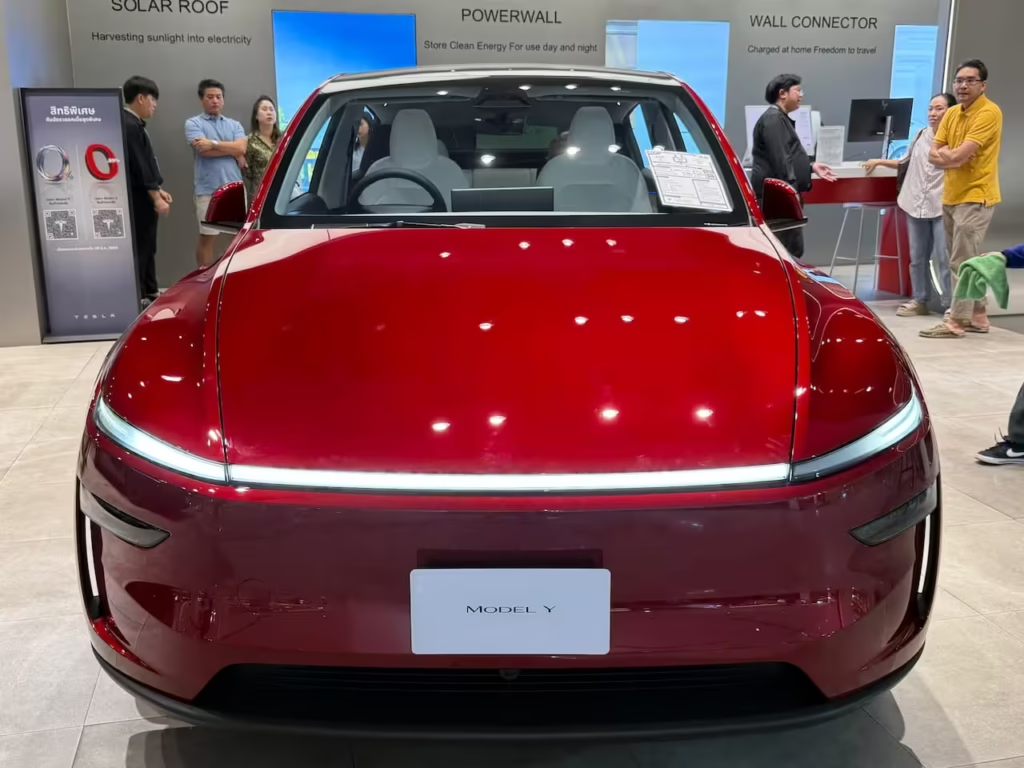
The Model Y is the most practical choice for families because of its cargo space, SUV shape, and available seating flexibility in some markets. The Model 3 is better for drivers who want a lower, more efficient sedan. Model S targets luxury and long-distance performance, while Model X focuses on large SUV practicality.
On the road, the experience is calm but quick. The lack of gear changes makes acceleration smooth, and regenerative braking can reduce brake use in daily driving.
Ownership Cost and Maintenance Cost
Ownership cost is one of the strongest EV arguments. A Tesla may cost more upfront than some gasoline cars, but running costs can be lower over time, especially for owners who charge at home.
Potential savings include:
- No gasoline bills
- No oil changes
- Less brake wear due to regenerative braking
- Fewer moving parts than combustion-engine cars
- Software updates without dealer visits
However, buyers should also consider:
- Insurance cost
- Tire wear from instant torque and vehicle weight
- Fast-charging cost on road trips
- Repair cost after accidents
- Battery warranty coverage
- Local electricity prices
A realistic ownership calculation should compare the monthly payment, electricity cost, insurance, maintenance, depreciation, and charging access.
Environmental Impact
Tesla vehicles produce no tailpipe emissions while driving. That is a major advantage in cities where air quality is a concern. However, the full environmental picture also includes electricity generation, battery production, mining, recycling, and vehicle manufacturing.
Even so, EVs usually become cleaner over time as electrical grids add more renewable energy. In Europe, where many countries are expanding wind, solar, and cleaner electricity sources, the long-term environmental benefit can be significant.
For buyers, the cleanest setup is home charging with renewable electricity where available.
Market Impact and Future Trends
Tesla changed what buyers expect from modern cars. Software updates, fast charging, minimalist cabins, huge screens, and EV performance are now mainstream talking points across the industry.
The next stage will be even more competitive. Expect stronger pressure from:
- Lower-cost Chinese EVs
- European electric SUVs
- More affordable compact EVs
- Faster charging batteries
- Better plug-in hybrids
- Expanded public charging networks
- Software-defined vehicle platforms
Tesla’s future advantage will depend on affordability, battery efficiency, charging access, product updates, and driver-assistance development. The brand remains powerful, but the EV market is no longer a one-brand race.
Conclusion
Tesla remains one of the most important names in the electric vehicle world because it combines long range, strong acceleration, efficient batteries, useful software, and one of the best-known charging networks. Still, buyers should compare EVs, hybrids, plug-in hybrids, and gasoline cars based on their own driving habits.
If you can charge at home and want a quiet, quick, tech-focused vehicle, a Tesla can be a strong choice. If you lack charging access or regularly drive in areas with limited infrastructure, a hybrid or plug-in hybrid may be more practical.
What do you think—would you choose a full EV, a hybrid, or stay with gasoline for now? Comment below, share this article, subscribe for more automotive guides, and read our related EV comparison articles.
Key Specifications Section
| Category | Tesla Model 3 | Tesla Model Y | Tesla Model S |
|---|---|---|---|
| Vehicle Type | Battery-electric sedan | Battery-electric SUV | Battery-electric luxury sedan |
| Powertrain | RWD or AWD, market dependent | RWD or AWD, market dependent | Dual Motor or Tri Motor |
| Battery | Standard/Long Range, trim dependent | Standard/Long Range, trim dependent | Long-range performance battery |
| USA Starting Price | From about $38,630 | From about $41,630 | Higher luxury segment pricing varies |
| Range | EPA/WLTP varies by market | EPA/WLTP varies by market | Up to 410 miles EPA for Model S |
| Performance Highlight | Performance trim 0–60 mph as low as 2.9 sec in some markets | Performance trim 0–60 mph around 3.3 sec in some markets | Plaid: 1,020 hp, 0–60 mph in 1.99 sec |
| Charging | AC home charging + DC fast charging | AC home charging + DC fast charging | Up to 250 kW Supercharging |
| Interior Tech | Central touchscreen, rear screen on newer trims | 16-inch center screen on newer versions, rear screen | Premium cabin, central display, digital tech |
| Best For | Commuters, efficiency-focused buyers | Families, SUV buyers, road trips | Luxury EV and performance buyers |
FAQ
1. Is Tesla fully electric or hybrid?
Tesla vehicles are fully electric. They do not use gasoline engines, hybrid systems, or plug-in hybrid powertrains.
2. Is an EV better than a hybrid vehicle?
An EV is better for drivers who can charge easily and want lower tailpipe emissions. A hybrid is better for drivers who want improved fuel economy without relying on charging.
3. How long does it take to charge a Tesla?
Charging time depends on charger type, battery level, temperature, and model. Home charging is best overnight, while DC fast charging is best for road trips and short charging stops.
4. Are Tesla vehicles expensive to maintain?
Routine maintenance is usually lower than a gasoline car because there are fewer moving parts and no oil changes. However, tires, insurance, and accident repairs can still be expensive.
5. Which is better for long trips: Tesla or plug-in hybrid?
A Tesla can be excellent for long trips if Supercharger access is strong along the route. A plug-in hybrid may be better in areas where charging stations are limited.