Fully Electric Cars The Complete 2026 Buyer’s Guide


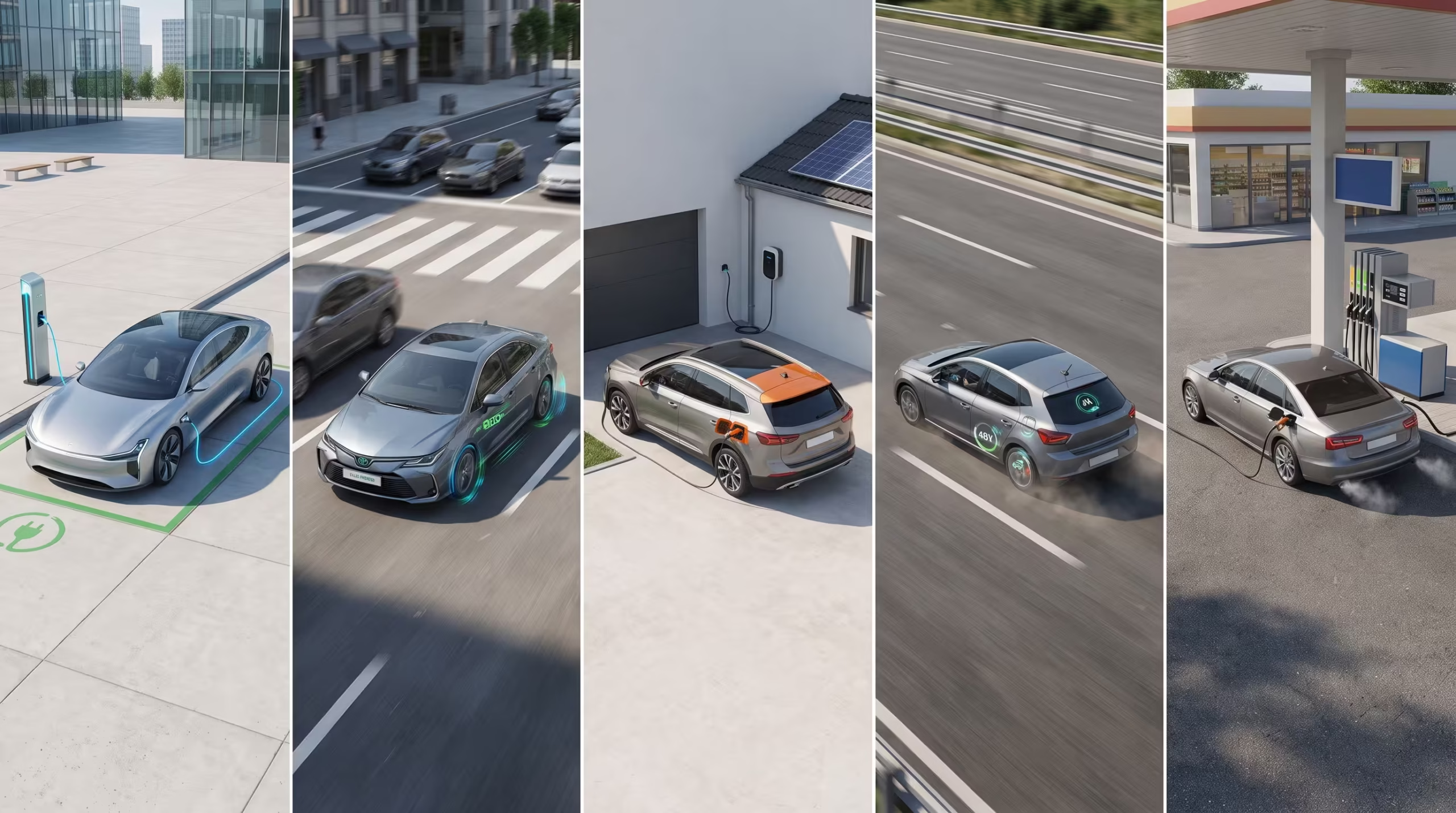


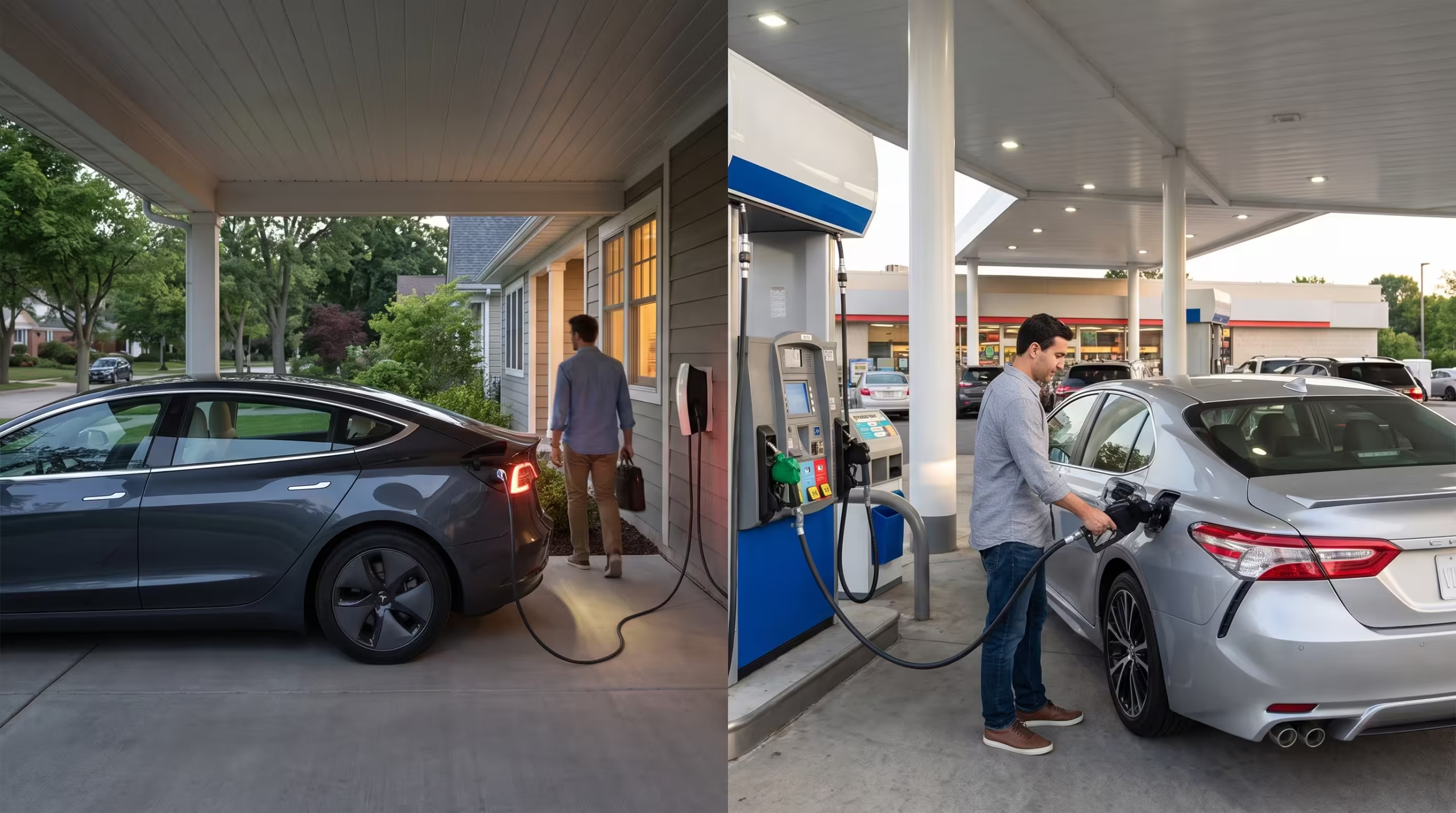
At the same time, hybrids remain relevant for motorists who cannot charge at home or regularly drive through areas with limited charging infrastructure. Choosing between an EV, hybrid, plug-in hybrid, and conventional gasoline car therefore depends on more than fuel savings. Range, charging access, climate, insurance, depreciation, and real-world driving habits all matter.
What Are Fully Electric Cars and Hybrid Vehicles?
A fully electric vehicle, also called a battery-electric vehicle or BEV, uses one or more electric motors powered entirely by a rechargeable battery. It has no gasoline engine, produces no tailpipe emissions, and is charged from an external electricity source.
Electric motors deliver maximum torque almost instantly. As a result, even relatively affordable fully electric cars can feel responsive in urban traffic without requiring large horsepower figures.
Hybrid vehicles combine an internal-combustion engine with varying levels of electric assistance.
EV vs Hybrid vs Plug-In Hybrid vs Mild Hybrid
| Powertrain | Main Energy Source | External Charging | Typical Electric-Only Capability | Best Suited For |
|---|---|---|---|---|
| Fully electric vehicle | Rechargeable battery | Required | Entire journey | Drivers with reliable charging access |
| Full hybrid | Gasoline and small battery | No | Short, low-speed periods | Urban driving without home charging |
| Plug-in hybrid | Gasoline and larger battery | Recommended | Commonly 20–60 miles, depending on model | Short electric commutes with gasoline backup |
| Mild hybrid | Gasoline with electrical assistance | No | Cannot normally drive on electricity alone | Buyers seeking modest efficiency improvements |
| Gasoline vehicle | Gasoline | No | None | Areas with limited charging infrastructure |
A full hybrid can move short distances using electric power, while regenerative braking recharges its battery. A plug-in hybrid has a larger battery and can complete more daily journeys without starting the gasoline engine. A mild hybrid mainly assists acceleration and powers electrical systems.

Best 2026 Fully Electric Cars at a Glance
The models below represent several important EV categories, including compact sedans, two-row crossovers, three-row family SUVs, and affordable entry-level vehicles.
| Model | Body Style | Maximum U.S. Range | Power and Torque | Battery Capacity | Rapid-Charging Performance | U.S. Starting Price |
|---|---|---|---|---|---|---|
| Tesla Model 3 Premium RWD | Compact sedan | 363 miles | Not officially disclosed | Not officially disclosed | Up to 250 kW; as much as 195 miles added in 15 minutes | $44,130 including destination and order fees |
| Hyundai Ioniq 5 | Two-row crossover | 318 miles | 168–320 hp; up to 446 lb-ft | 63 or 84 kWh | Around 20 minutes from 10–80% on compatible high-power equipment | From $35,000 |
| Tesla Model Y Premium RWD | Midsize crossover | 357 miles | Not officially disclosed | Not officially disclosed | Up to 250 kW; as much as 182 miles added in 15 minutes | Dynamic regional pricing |
| Kia EV9 | Three-row SUV | 230–305 miles | 215–379 hp; up to 443 lb-ft on regular AWD models | 76.1 or 99.8 kWh | Approximately 20–24 minutes from 10–80% on a 350-kW charger | From $54,900 |
| Nissan Leaf S+ | Subcompact crossover | 303 miles | 214 hp and 261 lb-ft | 75 kWh usable | Approximately 35 minutes at peak DC charging conditions | From $29,990 |
The figures represent specific trims or the broader model range, so buyers should compare equivalent configurations rather than judging a vehicle only by its highest advertised range. Tesla does not publish conventional horsepower, torque, or battery-capacity figures for these configurations.

2026 Tesla Model 3 The Efficiency Leader
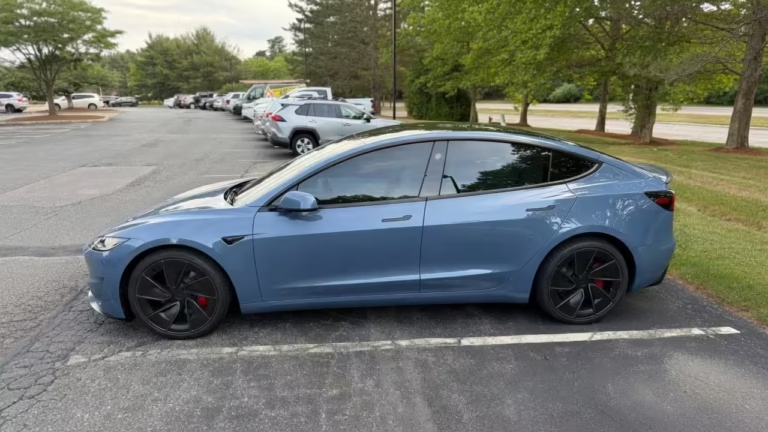
The 2026 Tesla Model 3 remains one of the strongest choices for drivers prioritizing efficiency, acceleration, charging convenience, and long-distance usability. Its low body, aerodynamic shape, and carefully integrated software help it travel farther per unit of battery energy than many heavier electric crossovers.
The Premium Rear-Wheel Drive version carries an EPA-estimated range of 363 miles and can add up to 195 miles of rated range in 15 minutes under favorable charging conditions. Its 15.4-inch central touchscreen controls navigation, entertainment, climate functions, charging, and most vehicle settings, while rear passengers receive an additional eight-inch display.

On the road, the Model 3 combines quick steering with a low center of gravity. Its suspension is firmer than that of comfort-focused competitors, although newer versions feel more composed and better isolated than earlier cars.
The native route planner and Supercharger integration remain major strengths. Nevertheless, the screen-led control layout, limited conventional switchgear, and absence of widely published motor specifications will not appeal to every buyer.
2026 Hyundai Ioniq 5 The Best All-Round Electric Crossover
The Hyundai Ioniq 5 combines futuristic styling with one of the most practical interiors among fully electric cars. Its long wheelbase creates generous passenger space, while the flat floor improves rear-seat comfort and cabin flexibility.
U.S. models use either a 63-kWh or 84-kWh battery. The long-range rear-wheel-drive configuration offers up to 318 miles of EPA-estimated range, 225 horsepower, and 258 lb-ft of torque. Dual-motor all-wheel-drive models produce as much as 320 horsepower and 446 lb-ft.
Its 800-volt electrical architecture is the headline feature. On compatible high-output equipment, the battery can charge from 10% to 80% in around 20 minutes. North American models also use a native NACS port, although peak charging time varies between NACS Superchargers and higher-voltage CCS equipment used with an adapter.
Inside, twin 12.3-inch displays, smartphone connectivity, connected navigation, available vehicle-to-load power, and Highway Driving Assist 2 give the Ioniq 5 a more conventional interface than Tesla’s minimalist layout.
Ride quality is relaxed and compliant, making the Hyundai particularly effective on broken urban roads and long motorway journeys.
2026 Tesla Model Y Practical Range and a Strong Charging Ecosystem
The refreshed Model Y addresses two major criticisms of the previous version: ride stiffness and cabin noise. Revised suspension tuning, improved sealing, and acoustic glass create a calmer experience, especially at motorway speeds.
The entry version offers around 321 miles of EPA-estimated range, while the Premium Rear-Wheel Drive configuration can reach 357 miles. Premium AWD models combine a 327-mile rating with a claimed 4.6-second 0–60 mph time. Depending on configuration, Tesla quotes charging gains of roughly 169–182 miles in 15 minutes.
Cargo capacity, a large hatch opening, strong mobile-app integration, and reliable journey planning make the Model Y highly usable as a family vehicle. Its infotainment system is responsive and supports frequent over-the-air updates.
However, drivers who prefer physical controls or native Apple CarPlay and Android Auto may find rival systems more familiar.
2026 Kia EV9 The Electric SUV for Larger Families
The Kia EV9 is one of the few fully electric cars designed around genuine three-row family use. Depending on configuration, it provides six- or seven-passenger seating, substantial cargo flexibility, available all-wheel drive, and towing capacity of up to 5,000 pounds.
Battery options include 76.1-kWh and 99.8-kWh packs. U.S. range spans approximately 230 miles for the entry Light RWD to 305 miles for the Light Long Range RWD. Regular dual-motor AWD configurations produce 379 horsepower and 443 lb-ft, while the entry rear-wheel-drive version develops 215 horsepower and 258 lb-ft.
Despite its size, the EV9’s 800-volt platform allows a 10–80% recharge in approximately 20–24 minutes on compatible 350-kW equipment. Its NACS port also broadens public charging access, although charging can take longer on lower-voltage stations.
The cabin features a combined panoramic display, wireless smartphone integration, tri-zone climate control, available second-row captain’s chairs, vehicle-to-load power, and an extensive driver-assistance package.
Its main disadvantages are its higher purchase price, large exterior dimensions, and increased energy consumption compared with smaller EVs.
2026 Nissan Leaf The Affordable Long-Range Choice
The redesigned Nissan Leaf moves beyond the limited-range hatchback formula associated with previous generations. It is now a streamlined subcompact crossover with modern charging standards, a 75-kWh usable battery, and up to 303 miles of EPA-estimated range.
Every currently listed U.S. trim produces 214 horsepower and 261 lb-ft of torque. Prices begin at $29,990 before the destination charge, placing the Leaf among the most accessible long-range fully electric cars in the American market.
The Leaf separates AC and DC charging connections, using J1772 for Level 2 charging and NACS for rapid charging. Nissan lists a 6.5-hour 240-volt charge and approximately 35 minutes under peak DC fast-charging conditions.
Higher trims add dual 14.3-inch screens, Google built-in, wireless Apple CarPlay and Android Auto, a head-up display, premium audio, and vehicle-to-load capability. Standard safety equipment includes Nissan Safety Shield 360, while ProPILOT Assist reduces workload during motorway driving.
Performance and Driving Experience
The appeal of fully electric cars extends beyond environmental considerations. Electric motors respond without waiting for an engine to build revs or a transmission to change gears. This makes city driving smoother and overtaking more immediate.
A lower-mounted battery also reduces the center of gravity. Sedans such as the Model 3 can therefore feel agile, while larger models such as the EV9 remain stable despite their substantial weight.
Yet EV mass still matters. Heavy batteries can increase tire wear and become noticeable during hard braking or rapid direction changes. Regenerative braking helps recover energy, but its calibration varies considerably. Tesla favors strong one-pedal behavior, while Hyundai and Kia provide adjustable regeneration through steering-wheel paddles.
Range, Charging and Real-World Usability
Advertised range should be treated as a comparison figure rather than a guaranteed distance. High motorway speeds, low temperatures, strong winds, steep roads, roof boxes, towing, and heavy climate-control use can increase consumption.
For many drivers, charging consistency is more important than the highest possible peak rate. A vehicle that maintains a strong charging curve may complete a road trip more quickly than one that briefly reaches a higher maximum.

Home charging remains the easiest ownership model. An overnight Level 2 session can replenish most daily mileage while the driver sleeps. Apartment residents and drivers dependent on public infrastructure should examine nearby charging reliability and pricing before purchasing fully electric cars.
European buyers should also compare WLTP ratings rather than directly matching them with U.S. EPA figures. The two testing systems use different procedures and are not interchangeable.
Interior Technology and Safety
Modern EV cabins increasingly function as connected digital environments. Large touchscreens, smartphone apps, route-based charging plans, remote climate control, digital keys, and over-the-air software updates are becoming standard expectations.
The Model 3 and Model Y provide the most software-centered experience. The Ioniq 5 and EV9 combine digital displays with more physical controls, while the Leaf offers a familiar dashboard supported by Google built-in on higher trims.
Common driver-assistance features include:
- Automatic emergency braking
- Lane-keeping and lane-centering assistance
- Adaptive cruise control
- Blind-spot monitoring
- Rear cross-traffic alert
- Parking sensors and surround-view cameras
- Driver-attention monitoring
These systems can reduce workload, but they still require active driver supervision.
Ownership Costs and Maintenance
Fully electric cars usually require fewer routine mechanical services than gasoline vehicles. There is no engine oil, spark plugs, exhaust system, or conventional multi-speed transmission to maintain.
Typical service items include:
- Tires and wheel alignment
- Cabin air filters
- Brake fluid
- Suspension components
- Cooling-system inspections
- Wiper blades and washer fluid
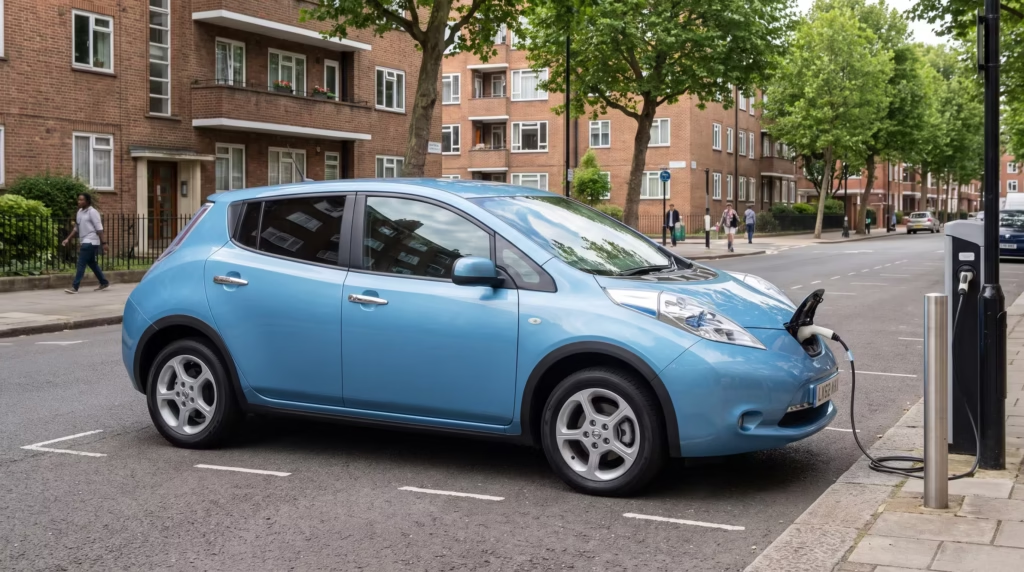
Regenerative braking can reduce physical brake wear. However, EV tires may wear faster because of vehicle weight and instant torque.
Electricity costs vary by country, charging provider, and time of day. Home charging is usually the most economical option, while repeated use of high-priced rapid chargers can narrow the operating-cost advantage.
Insurance and depreciation can also change the ownership calculation. Buyers should compare complete annual costs rather than focusing only on electricity versus gasoline.
Fully Electric Cars Compared With Gasoline Vehicles
Gasoline vehicles still offer rapid refueling, widespread infrastructure, and predictable long-distance operation. They may remain more practical for drivers who tow frequently, travel through remote regions, or cannot access dependable charging.
However, fully electric cars provide several everyday advantages:
- Quieter operation
- Immediate acceleration
- Lower routine maintenance
- Home refueling convenience
- No tailpipe emissions
- Reduced exposure to gasoline-price changes
- Cabin preconditioning while plugged in

The better choice depends on usage. A household with home charging and a predictable commute can gain more from an EV than a driver regularly covering remote routes without charging access.
Worldwide Availability and Regional Differences
The Model 3, Model Y, Ioniq 5, and EV9 are sold across major North American and European markets, although trims, battery sizes, charging connectors, pricing, and standard equipment differ.
The new Leaf is also intended as a broader global product, but launch timing and specifications vary by country. North American models use NACS rapid charging, while European versions generally follow regional CCS standards.
Taxes, registration charges, company-car rules, urban-emission policies, and local incentives can substantially change the final cost. Buyers should therefore compare the exact specification sold in their country rather than relying on another market’s price or driving-range figure.
Environmental Impact and Future Market Trends
Fully electric cars produce no tailpipe emissions, which improves local air quality in densely populated areas. Their total environmental impact still includes battery-material extraction, manufacturing, electricity generation, shipping, and eventual recycling.
The balance generally improves as electricity grids add renewable and lower-carbon generation. Battery recycling, repairable battery packs, renewable manufacturing energy, and responsible mineral sourcing will become increasingly important measures of EV sustainability.
Future development is likely to focus on lower-cost battery chemistry, improved cold-weather efficiency, faster charging, bidirectional energy systems, better route planning, and more affordable compact models.
The strongest 2026 fully electric cars now cover a broad range of needs. The Tesla Model 3 emphasizes efficiency and long-distance charging, while the Hyundai Ioniq 5 combines rapid charging with comfort and interior flexibility. The Model Y delivers practical cargo space and mature route planning, the Kia EV9 serves larger families, and the redesigned Nissan Leaf brings competitive range to a lower price point.
An EV is most compelling when its range, charging requirements, cabin space, and total ownership cost match the driver’s real routine. Hybrids remain useful transitional options, but fully electric cars now provide a realistic primary-vehicle solution for a growing number of American and European households.