All EV Guide Electric, Hybrid and Plug-In Cars Explained




The all EV market is no longer a niche. Electric crossovers, family SUVs and affordable commuters now compete directly with gasoline vehicles, while hybrids offer a lower-risk step toward electrification. For U.S. and European buyers, the right powertrain can reduce running costs and improve daily drivability.
However, the language can be confusing. A battery electric vehicle is fully electric, but a hybrid still burns fuel. A plug-in hybrid can complete shorter journeys on electricity, while a mild hybrid cannot normally drive on electric power alone. This guide explains the differences, compares real-world usability and highlights notable all EV models for different budgets.
What Does All EV Mean?
In everyday automotive use, all EV describes a vehicle powered only by electricity stored in a rechargeable battery. The more precise industry term is battery electric vehicle, or BEV. A BEV has no gasoline or diesel engine, produces no tailpipe emissions and must be connected to an external charger.
That separates it from electrified vehicles that still use combustion engines. Plug-in hybrids can charge from the grid and drive a limited distance without fuel, while conventional hybrids recharge through regenerative braking and engine operation. Mild hybrids provide electrical assistance but cannot function as true electric cars.
EV, Hybrid, Plug-In Hybrid and Mild Hybrid Differences
| Powertrain | External charging | Electric-only driving | Gasoline engine | Best suited to |
|---|---|---|---|---|
| Battery electric vehicle (BEV) | Yes | Full-time | No | Drivers with reliable home or public charging |
| Plug-in hybrid (PHEV) | Yes | Usually short to moderate trips | Yes | Mixed commuting and long-distance use |
| Full hybrid (HEV) | No | Brief, low-speed operation | Yes | Fuel savings without plugging in |
| Mild hybrid (MHEV) | No | Normally no | Yes | Modest efficiency gains and smoother stop-start driving |
A BEV is the only true all EV option in this group. PHEVs commonly provide roughly 15 to more than 60 miles of electric driving before the engine becomes necessary, depending on model and conditions. Full hybrids use a smaller battery to support the engine, while mild hybrids mainly assist acceleration, accessories and stop-start operation.

How an All EV Powertrain Changes Performance
Electric motors deliver torque almost immediately, so even modest electric cars feel responsive in urban traffic. Unlike a gasoline engine, an electric motor usually provides smooth acceleration through a single-speed reduction gear.
Horsepower indicates how quickly a vehicle can perform work, while torque describes rotational force. Battery temperature, state of charge, weight, tires and software can still alter performance.
The driving experience is typically quiet and refined. Low-mounted battery packs also reduce the center of gravity, which can improve stability. However, heavy batteries may make an all EV model feel less agile on narrow roads than a lighter gasoline car.

EV Range, Battery Capacity and Efficiency
Battery capacity is measured in kilowatt-hours, or kWh. A larger battery can support a longer driving range, but efficiency is equally important. A streamlined car with a smaller pack may travel farther than a large, heavy SUV with more stored energy.
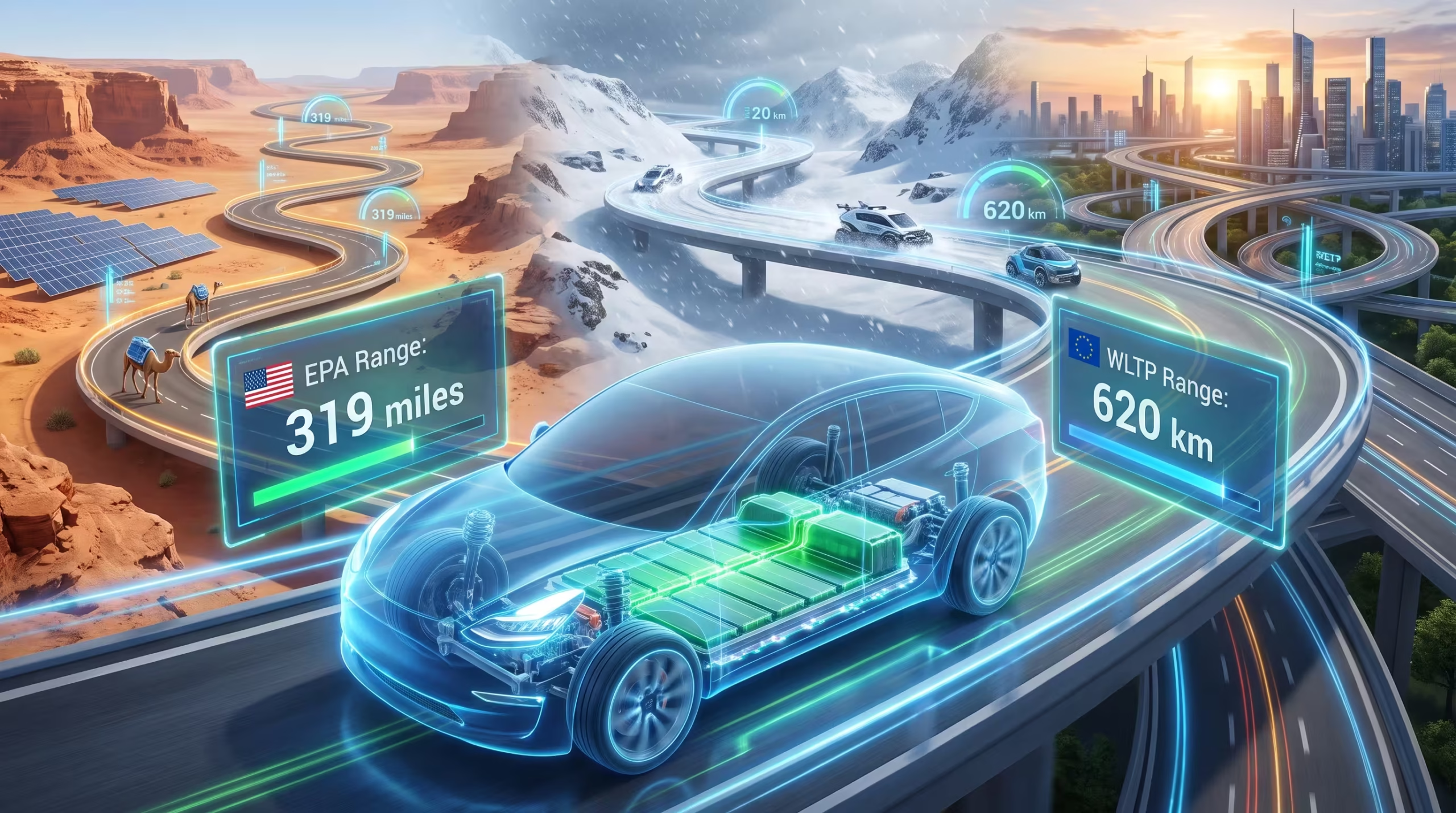
For U.S. shoppers, EPA range is the most useful comparison figure. European buyers usually see WLTP figures, which should not be compared directly with EPA ratings because the test procedures differ. Current mainstream models demonstrate the spread: the 2027 Chevrolet Bolt is rated at 262 EPA miles, the 2026 Chevrolet Equinox EV reaches 319 EPA miles in front-wheel-drive form, and the Hyundai IONIQ 9 offers up to 335 EPA miles in the United States or up to 620 km WLTP in Europe.
Real-world range can fall during high-speed motorway driving, cold weather, heavy towing or repeated hard acceleration. Cabin heating also consumes energy, although heat-pump systems can reduce the winter penalty. Therefore, an all EV purchase should be based on the buyer’s most demanding regular journey, not only the official maximum.

Charging Speed and Charging Time
Charging has three practical levels:
- Standard household charging: Slow but useful for low-mileage drivers.
- Level 2 or AC wallbox charging: The preferred home-charging solution for overnight replenishment.
- DC fast charging: Designed for motorway stops and rapid road-trip charging.
Peak charging power matters, but the charging curve matters more because output slows as the battery fills. Therefore, 10-to-80-percent times are more useful than peak output alone.
The 2027 Chevrolet Bolt supports 150-kW-class DC charging and can complete a 10-to-80-percent session in about 25 minutes. The 2026 Subaru Solterra takes about 28 minutes, while the Hyundai IONIQ 9 can achieve roughly 24 minutes on a suitable 350-kW charger.
For daily use, an all EV is most convenient when charging happens while the car is parked at home or work. Drivers who depend entirely on public infrastructure should compare local charger reliability, pricing and queue levels before buying.

Key Specifications of Popular New All-EV Models
| Model | Starting price | Official range | Power | Charging highlight | Market position |
|---|---|---|---|---|---|
| 2027 Chevrolet Bolt | $27,600 advertised starting price | 262 miles EPA-estimated | Not emphasized in current consumer specifications | About 25 minutes, 10–80% | Low-cost U.S. electric hatchback/crossover |
| 2026 Chevrolet Equinox EV | $34,995 | 319 miles FWD; 307 miles AWD | 213 hp FWD; 288 hp AWD | DC fast-charging capability | Value-focused midsize electric SUV |
| 2026 Subaru Uncharted | $34,995 | More than 300 miles available | Up to 338 hp | NACS fast charging; cold-weather capability | Compact electric crossover |
| 2026 Subaru Solterra | $38,495 | Up to 288 miles | Up to 338 hp | About 28 minutes, 10–80% | Standard-AWD adventure SUV |
| 2026 Hyundai IONIQ 9 | $58,955 | Up to 335 miles EPA; 620 km WLTP | Varies by drivetrain | About 24 minutes, 10–80% | Premium three-row family SUV |
| Tesla Model Y | Varies by trim and market | Varies by configuration | Varies by configuration | Broad fast-charging access | Established electric crossover benchmark |
Chevrolet currently advertises the Bolt at $27,600, while its configurator and launch communications show that equipment, destination charges and model timing can affect the transaction figure. The Equinox EV combines a $34,995 entry price with a 17.7-inch center display and more than 300 miles of range. Subaru’s Uncharted starts at $34,995, while the Solterra starts at $38,495 and adds standard all-wheel drive. Hyundai lists the IONIQ 9 from $58,955 in the United States.
Interior Technology, Infotainment and Safety
Large touchscreens, digital instruments, route-based charging planners, smartphone apps and software updates are now expected in the all EV class.
The Equinox EV features a 17.7-inch center touchscreen with available connected services. The IONIQ 9 combines a 12.3-inch infotainment display with a 12.3-inch digital cluster, wireless smartphone integration and seating for six or seven, depending on configuration.
Safety technology commonly includes automatic emergency braking, blind-spot monitoring, lane support, adaptive cruise control and surround-view cameras. Buyers should compare standard equipment rather than assuming every feature is included. Advanced highway-assistance systems can reduce fatigue, but they still require the driver to remain attentive.

All-EV Availability in the USA and Europe
Availability differs sharply by region. The Chevrolet Bolt and Equinox EV are primarily North American products. Subaru’s Solterra is sold in both the United States and Europe, while the Uncharted has been confirmed as part of Subaru’s expanding European electric range. The Hyundai IONIQ 9 and Tesla Model Y also serve both markets, although specifications, equipment, charging connectors and pricing vary by country.
European shoppers should compare WLTP range and VAT-inclusive prices. U.S. shoppers should focus on EPA range, destination charges and insurance. An all EV should make financial sense before incentives are counted.
All EV Versus Gasoline Cars
Compared with a gasoline vehicle, an all EV model offers quieter operation, instant response and no tailpipe emissions. Home charging can also remove weekly fuel-station visits. Maintenance is generally simpler because there is no engine oil, exhaust system, spark plugs or conventional multi-speed transmission.

Gasoline cars still hold advantages for rapid refueling, remote travel and towing over long distances. They may also cost less upfront in some segments. Meanwhile, cold-weather range loss and inconsistent public charging can complicate electric road trips.
The strongest case for an all EV is a predictable daily routine with convenient charging. The strongest case for gasoline or hybrid power is frequent long-distance travel through areas with limited charging.
Competitor Comparison by Buyer Type
Budget-focused shoppers should compare the Bolt with entry-level compact EVs and used late-model electric cars. The Equinox EV competes with mainstream electric crossovers by emphasizing range, cabin space and a lower starting price.
The Subaru Uncharted and Solterra target drivers who value traction, ground clearance and cold-weather preparation. Their natural rivals include other compact AWD electric SUVs. The IONIQ 9 competes with premium three-row EVs, where charging speed, third-row comfort, luggage room and towing ability matter more than headline acceleration.
The Tesla Model Y remains a reference point for software, efficiency and charging convenience. However, a rival may offer better comfort, controls, dealer support or standard equipment.
Real-World Usability and Driving Experience
Before choosing an all EV, calculate the weekly mileage, overnight parking situation and longest routine trip. A 250-mile electric car can be more practical than a 350-mile model if it charges reliably at home and costs substantially less.
For urban driving, regenerative braking can reduce brake use and enable near one-pedal operation. On motorways, quietness and smooth power delivery reduce fatigue. Families should test rear-seat comfort, cargo space and child-seat access because battery packaging can raise the floor.
Towing requires extra planning. Electric motors provide excellent low-speed torque, but trailers increase aerodynamic drag and energy consumption. Drivers should expect more frequent charging stops and confirm whether chargers can accommodate a vehicle with a trailer attached.
Ownership Cost and Maintenance
The purchase price is only one part of all EV ownership. Buyers should estimate electricity, fast charging, insurance, tires, depreciation and home-charger installation.
Routine maintenance can be cheaper because electric vehicles have fewer service items. However, their weight and immediate torque can accelerate tire wear. Collision repairs and insurance may also be expensive on technology-heavy models.
PHEVs need both electric-system care and conventional engine maintenance. HEVs can deliver excellent fuel economy without charging, but they still require oil changes, exhaust maintenance and gasoline. Over several years, the lowest-cost option depends on mileage, energy prices and resale value rather than powertrain type alone.
Environmental Impact and Market Trends
A BEV produces zero direct tailpipe emissions, while a PHEV does so only when operating in electric mode. Total environmental impact still depends on electricity generation, battery production, vehicle size, manufacturing and end-of-life recycling.
The market is moving toward cheaper batteries, faster charging, heat pumps and smarter route planning. Hybrids remain important because they reduce fuel use without requiring charging.
The next phase of the all EV market will be defined less by novelty and more by value. Buyers will expect competitive prices, honest range, stable software, dependable chargers and strong resale performance.
Pros and Cons of All-EV Ownership
| Benefits | Trade-offs |
|---|---|
| No gasoline purchases | Higher upfront cost in some classes |
| Smooth, immediate acceleration | Range can fall in winter or while towing |
| Convenient home charging | Public charging may be slower or less reliable than expected |
| Fewer routine engine-related services | Tire and insurance costs can be higher |
| Zero tailpipe emissions | Apartment residents may lack dependable charging |
| Quiet, refined driving | Long trips require more planning |
The all EV category now covers affordable commuters, capable crossovers and premium family SUVs. BEVs provide the cleanest break from gasoline, while PHEVs, full hybrids and mild hybrids offer different balances of efficiency and convenience.
For most buyers, the right decision comes down to charging access, daily mileage, climate, road-trip frequency and budget. Compare official range using the correct regional test cycle, examine charging time rather than peak kW alone, and calculate total ownership cost. Then comment with your preferred model, share this guide, subscribe for future EV coverage and explore related electric-car comparisons.