BMW Sportbike Guide Why the S 1000 RR Still Sets the Standard


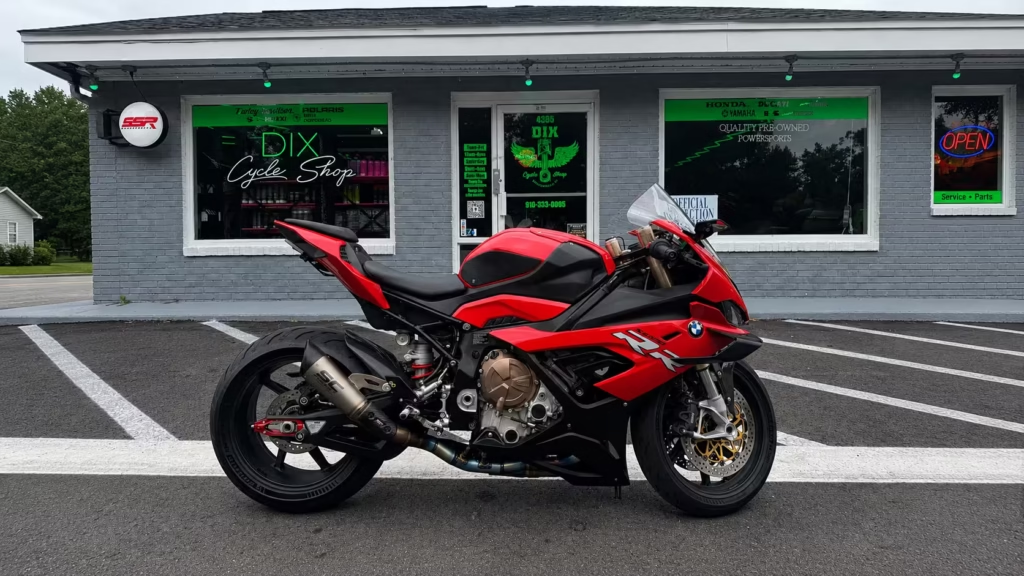


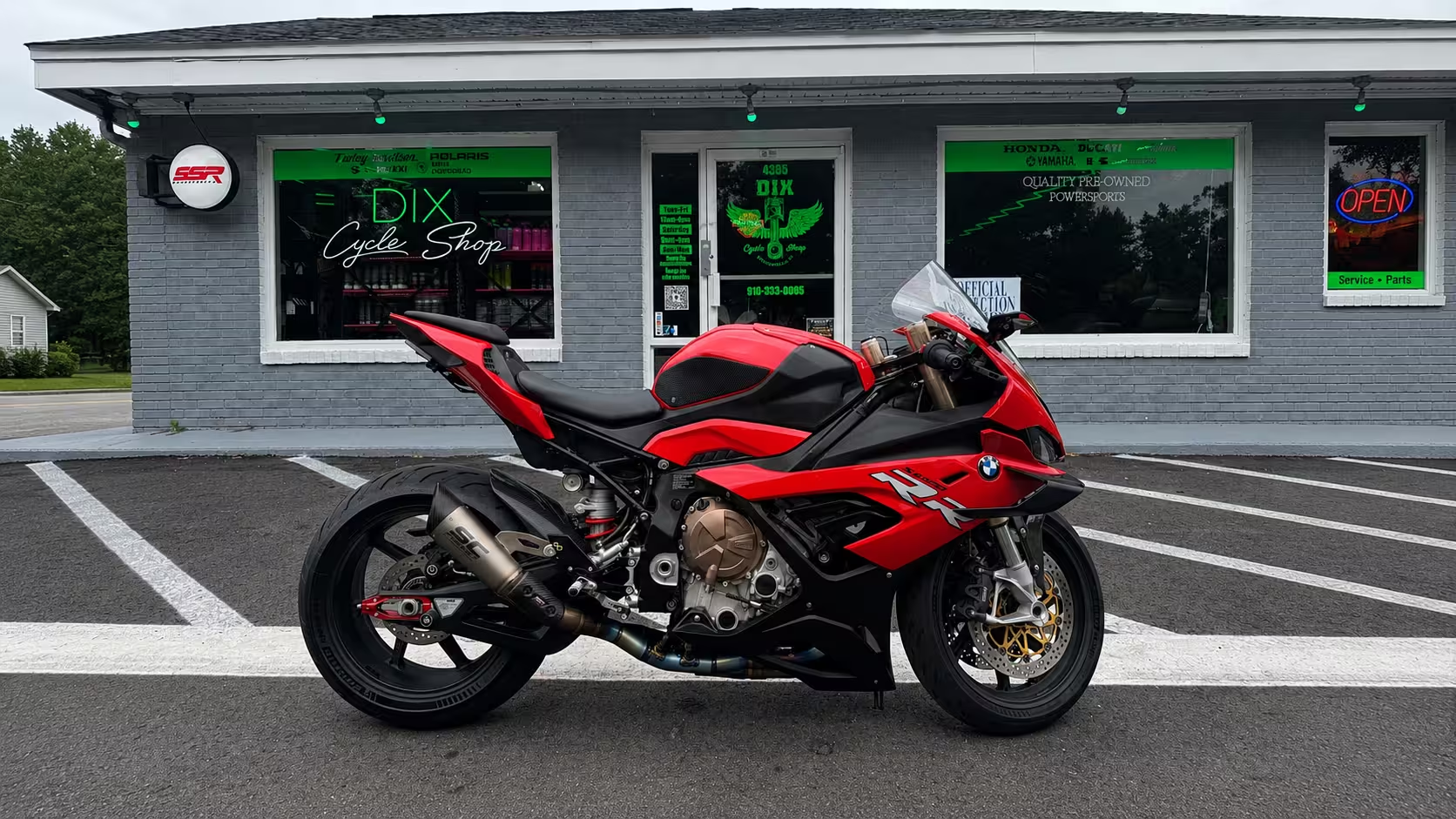
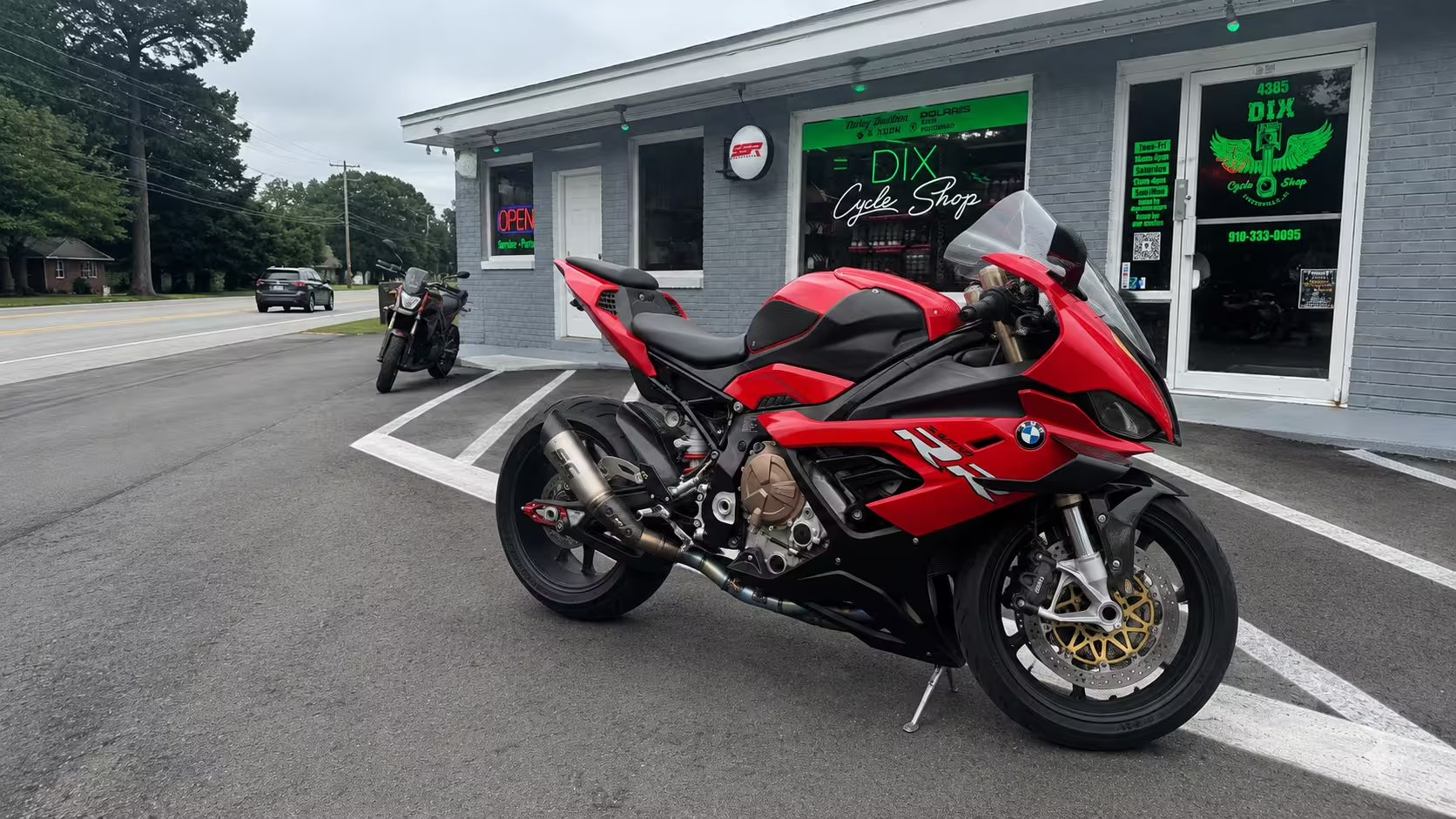


The BMW sportbike story is defined by the S 1000 RR, a liter-class machine that combines race-level speed with polished electronics and useful road features. Sports bikes still matter because they advance motorcycle engineering through lighter chassis, stronger brakes, smarter rider aids, and more efficient aerodynamics.
The S 1000 RR is more than a specification-sheet champion. Its appeal comes from predictable fueling, a readable dashboard, adjustable riding systems, and optional comfort equipment. For riders comparing performance bikes, racing bikes, and premium road motorcycles, it is a leading example of modern engineering serving both lap times and everyday use.
What Is a Sports Bike?
A sports bike is designed around acceleration, cornering, braking, aerodynamics, and rider control. Compared with naked bikes, sports motorcycles normally use full fairings, lower handlebars, higher footpegs, and stronger wind protection. Compared with touring bikes, they prioritize low weight and direct steering over luggage capacity and long-distance comfort.
A liter-class superbike is the most extreme road-going branch of the category. The BMW sportbike range places the S 1000 RR in this role, while the M 1000 R and R 1300 RS offer upright hyper-naked performance or a more relaxed sport-touring balance.

BMW Sportbike Engine and Performance
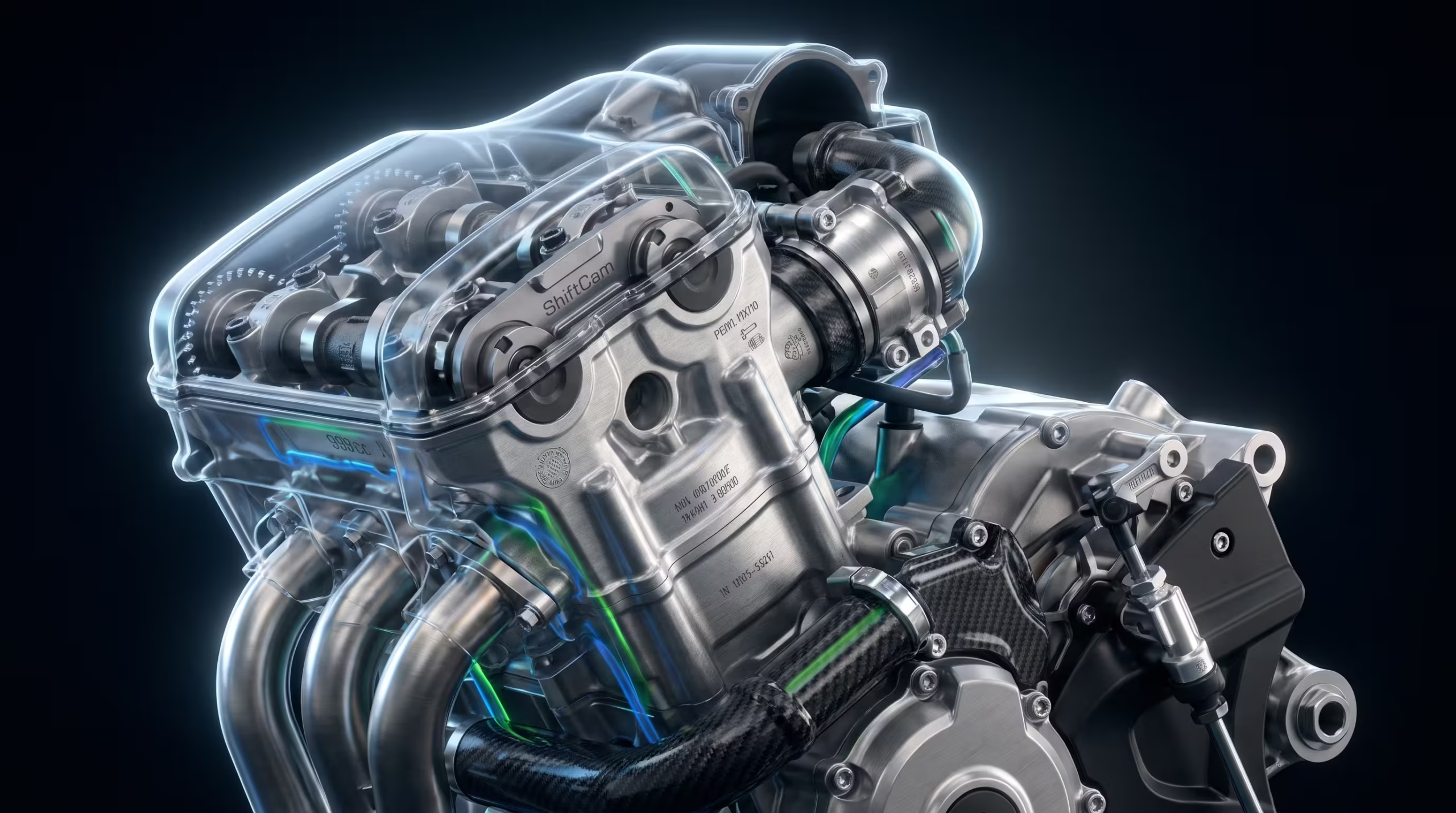
The S 1000 RR uses a 999cc inline-four engine with BMW ShiftCam variable intake control. The current U.S. specification produces 205 hp at 13,000 rpm and 83 lb-ft at 11,000 rpm. In the UK and European specification, BMW lists 210 hp at 13,750 rpm and 113 Nm. The difference reflects market-specific homologation and published ratings.
ShiftCam broadens the usable powerband, while ride-by-wire injection creates a progressive connection between throttle movement and rear-wheel response. Therefore, this BMW sportbike feels ferociously quick without delivering its power as an abrupt surge.
BMW publishes acceleration of about 3.2 seconds to 60 mph or 100 km/h, depending on regional measurement, and a maximum speed of 188 mph or 303 km/h. Its real circuit advantage, however, is the combined performance of the engine, brakes, chassis, aerodynamics, and corner-exit electronics.

Transmission and Clutch
A six-speed constant-mesh gearbox, chain final drive, and self-reinforcing wet multiplate slipper clutch transfer the power. Shift Assistant Pro enables clutchless upshifts and downshifts, reducing interruption during acceleration and helping the chassis remain settled under braking.
Key BMW S 1000 RR Specifications
| Specification | Current S 1000 RR |
|---|---|
| Engine | 999cc liquid-cooled inline-four with ShiftCam |
| Power | 205 hp U.S.; 210 hp UK/Europe specification |
| Torque | 83 lb-ft / 113 Nm |
| Transmission | Six-speed with Shift Assistant Pro |
| Clutch | Wet multiplate slipper and self-reinforcing clutch |
| Top speed | 188 mph / 303 km/h |
| Acceleration | About 3.2 seconds to 60 mph or 100 km/h |
| Front suspension | 45mm adjustable upside-down fork |
| Front brakes | Twin 320mm discs, four-piston fixed calipers |
| Display | 6.5-inch TFT with connectivity |
| Fuel capacity | 4.3 U.S. gallons |
| Road-ready weight | Approximately 437 lb / 198 kg |
| Seat height | About 32.7–32.8 in / 832 mm |
Handling, Suspension, and Chassis Feel
The S 1000 RR uses a cast-aluminum bridge frame with the engine acting as a load-bearing component. BMW’s Flex Frame approach balances corner feedback with stability under acceleration and braking.
A fully adjustable 45mm upside-down fork works with an aluminum swingarm and rear shock. Optional Dynamic Damping Control electronically adjusts damping, giving the BMW sportbike a broader setup range for uneven roads and circuit sessions. The standard M chassis kit also includes a raised rear and adjustable swingarm pivot.
The RR changes direction quickly, holds a line at high speed, and provides enough adjustment for experienced riders to tune geometry and damping for different tires or track conditions.
Braking Performance and Rider Control
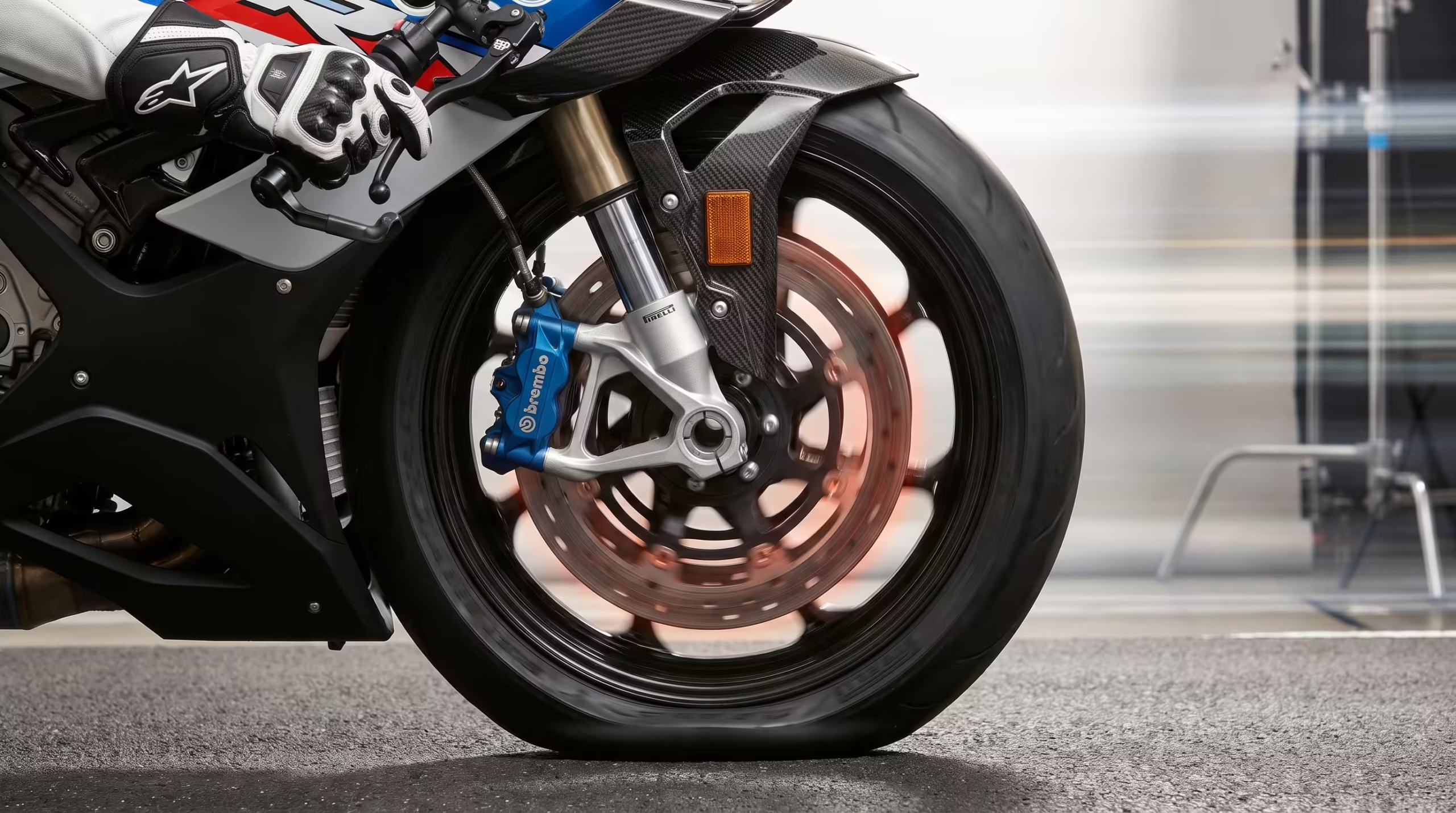
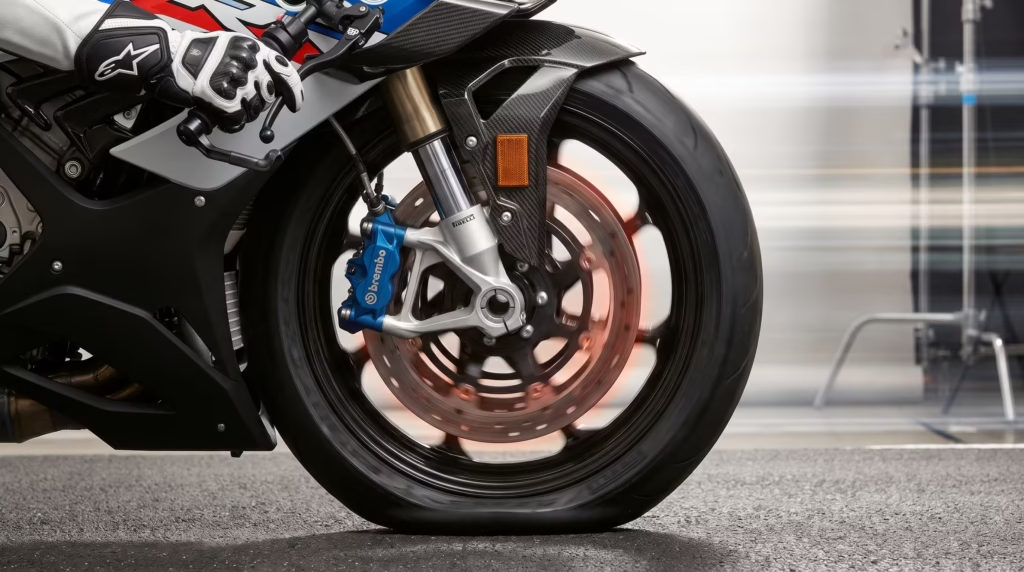
Twin 320mm front discs and four-piston fixed calipers provide the main stopping force. Race ABS, ABS Pro, Brake Slide Assist, and Dynamic Brake Control coordinate braking behavior according to riding mode and lean angle.
Because a 200-plus-horsepower BMW sportbike gains speed so easily, lever response and stability matter as much as outright braking force. M Brake Ducts direct cooling air toward the front brake area to improve consistency during repeated hard laps.
Aerodynamics and Fairing Design
The RR’s bodywork reduces drag, improves airflow around the rider, and generates front-end downforce. Winglets, a tall windscreen, revised side panels, and brake ducts give it a clear World Superbike influence.
BMW says the latest winglets substantially increase downforce at high speed. In practice, the package helps reduce front-wheel lift and supports stability, while the fairing makes sustained motorway speeds less tiring than on a naked performance bike.
Riding Position and Everyday Comfort
The riding position is committed, with low clip-ons, rear-set foot controls, and a forward lean. However, the tank and narrow seat area support the rider under braking and during cornering.
For daily use, the BMW sportbike is more accommodating than its appearance suggests. Fueling is smooth, the TFT is clear, and options include heated grips, cruise control, USB charging, semi-active suspension, and a passenger package.

Wrist pressure, heat, limited luggage space, and firm seating remain part of the experience. Riders prioritizing all-day comfort may prefer the R 1300 RS or S 1000 XR.
Technology, TFT Display, and Connectivity
The 6.5-inch color TFT presents speed, revs, riding mode, electronic settings, trip data, and track screens. Its interface makes complex settings relatively easy to read and adjust. Smartphone connectivity supports selected navigation, calling, and media functions.
Key rider systems include:
- Dynamic Traction Control
- ABS Pro and Race ABS
- Riding Modes Pro
- Launch control and pit-lane limiter
- Wheelie control
- Slide Control and Brake Slide Assist
- Dynamic Brake Control
- Engine-brake adjustment
- Hill Start Control Pro
- Shift Assistant Pro
This package is a major reason the BMW sportbike works on both road and track. Riders can tailor throttle response, engine braking, wheelie intervention, traction control, and ABS behavior to the conditions.

BMW S 1000 RR vs Superbike Rivals
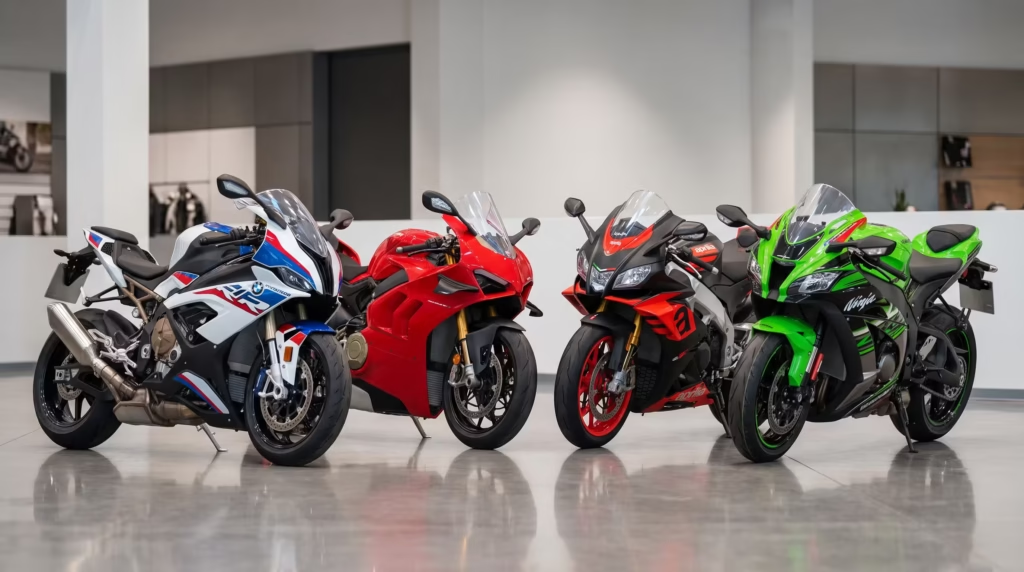
| Motorcycle | Engine | Claimed Power | Claimed Torque | Base U.S. Price | Character |
|---|---|---|---|---|---|
| BMW S 1000 RR | 999cc inline-four | 205 hp U.S. | 83 lb-ft | $19,975 | Balanced road-and-track technology |
| Ducati Panigale V4 | 1,103cc V4 | 209 hp U.S. | 89.5 lb-ft | $27,795 | Exotic V4 feel and premium design |
| Aprilia RSV4 | 1,099cc V4 | 220 hp | 127 Nm | $19,699 | Highest claimed output in this group |
| Kawasaki Ninja ZX-10R | 998cc inline-four | 190 hp | 82.5 lb-ft | $16,999 | Strong value and WorldSBK influence |
Base U.S. prices exclude destination, taxes, and dealer fees; current manufacturer listings may represent different model years.
The Ducati offers more torque and a distinctive V4 character, while the Aprilia leads on claimed horsepower. Kawasaki costs less and retains serious track credentials. The BMW sportbike stands out through its broad electronics, excellent interface, and optional road comforts.
Sportbike, Naked Bike, or Sport-Tourer?
Choose the S 1000 RR when aerodynamic protection, circuit precision, and maximum superbike performance matter most. A naked bike trades high-speed wind protection for upright ergonomics and easier low-speed use.
The M 1000 R is the aggressive alternative. Its 999cc inline-four produces 205 hp in U.S. specification, while higher handlebars create a more accessible road position. The current U.S. base price is $22,695.
The R 1300 RS is the long-distance option. Its boxer engine, broader seat, and more relaxed ergonomics create a middle ground between touring and a pure BMW sportbike. U.S. pricing starts at $17,095, while UK pricing starts at £13,780.
Fuel Economy, Running Costs, and Maintenance
BMW lists WMTC fuel consumption of 6.4 liters per 100 km for the European S 1000 RR. Actual consumption varies with speed, traffic, riding mode, and track use. The engine also requires premium fuel.
Ownership costs include premium sport tires, chain and sprocket wear, brake pads, insurance, and specialist labor. Track use accelerates tire and brake consumption. Consequently, the BMW sportbike should be treated as a premium superbike rather than an inexpensive commuter.
Pricing and Availability in the USA and Europe
BMW’s U.S. site currently lists the latest S 1000 RR from $19,975. The UK range lists the BMW sportbike from £18,050, including VAT in the manufacturer’s recommended price. Packages, forged or carbon wheels, electronic suspension, premium paint, exhaust upgrades, and M components can raise the total considerably.
The model is sold through BMW Motorrad dealers across the United States and major European markets. Equipment combinations vary by region, so buyers should compare standard specifications carefully.

Real-World Ownership and Market Impact
The S 1000 RR helped prove that a production superbike could combine extreme speed with a deep, usable electronics suite. Its influence appears across the class, where cornering ABS, configurable traction control, quickshifters, winglets, and advanced dashboards are now major selling points.
In real-world use, the BMW sportbike is most rewarding for riders who value precision and adjustability. It can commute and tour lightly, but it feels best on open roads or a circuit where its systems work together.
It is not a natural beginner sport bike. Riders still developing throttle, braking, and cornering skills will usually progress more easily on a lighter, lower-powered motorcycle.
Future Trends in Sports Bikes
Future sports motorcycles will rely increasingly on aerodynamic efficiency, electronic control, data analysis, lighter components, and emissions-compliant performance. Semi-active suspension, customizable intervention, integrated lap timing, and connectivity will continue shaping the category.
The BMW sportbike formula already points in that direction. The S 1000 RR uses software, sensors, chassis adjustment, and airflow management to make performance more accessible and repeatable.
The BMW S 1000 RR remains one of the most complete liter-class superbikes because it combines a powerful 999cc engine, stable chassis, strong brakes, advanced aerodynamics, and comprehensive electronics. It is focused enough for serious track use yet polished enough for road riding with optional cruise control, heated grips, and semi-active suspension.
For buyers comparing premium sports bikes, the BMW sportbike offers a convincing balance of speed, precision, technology, and everyday usability. The M 1000 R is better for upright road performance, while the R 1300 RS is the stronger long-distance choice.