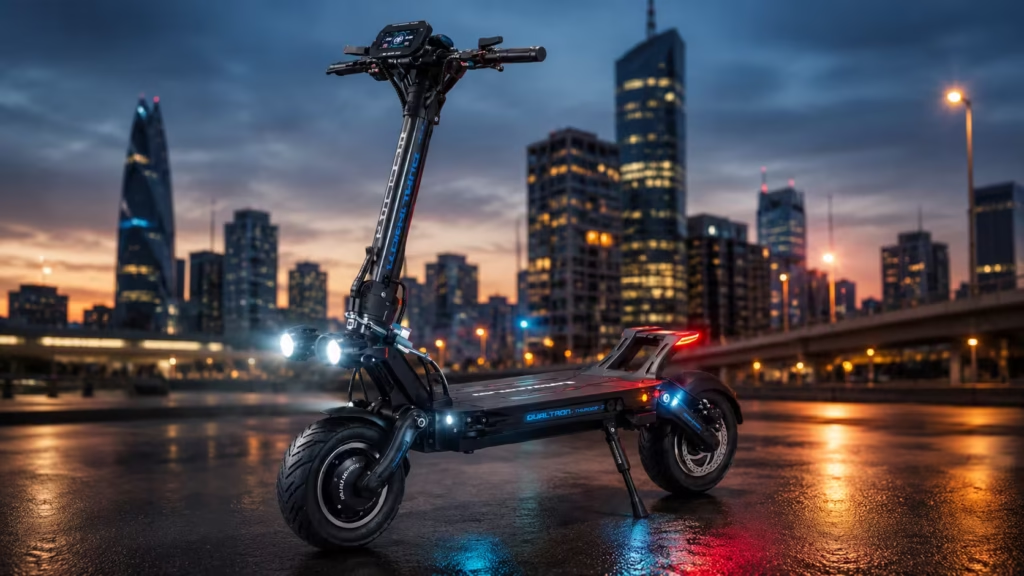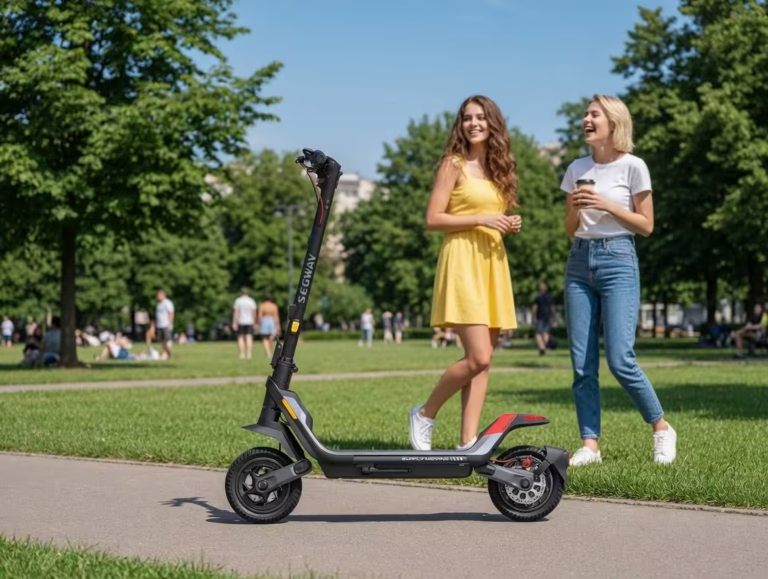
Xiaomi Mi Electric Scooter Guide Models, Range and Performance


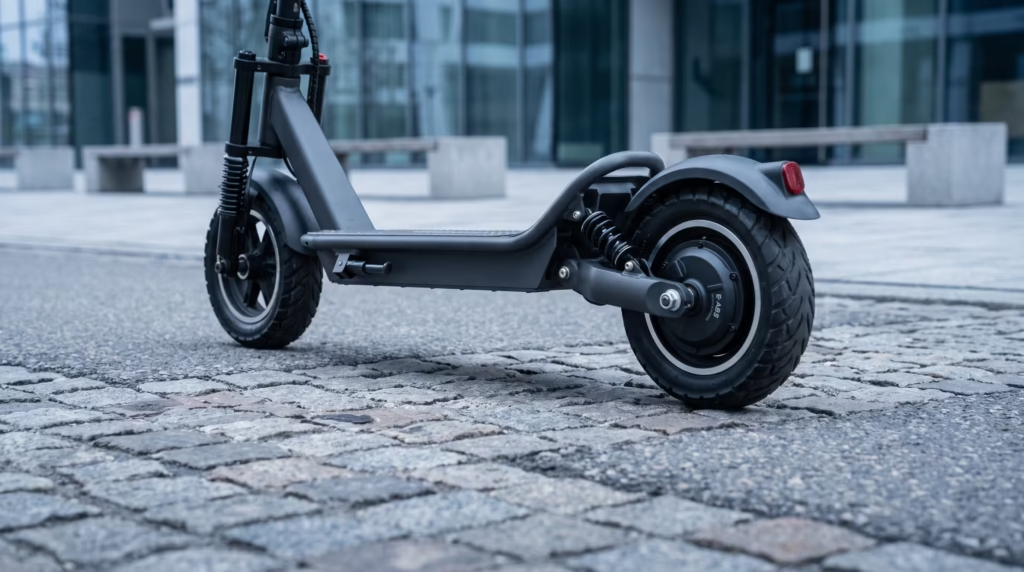


The Xiaomi Mi Electric Scooter has become a practical option for riders seeking a compact alternative to cars, taxis, and crowded public transport. Xiaomi’s current lineup covers lightweight folding scooters, long-range commuter models, and heavier performance machines with suspension, larger tires, connected apps, and intelligent energy management.
Electric scooters matter because cities need flexible urban mobility that uses less road and storage space. Yet weight, braking, comfort, charging, tire design, local rules, and service support can matter as much as headline power or range.
What Is an Electric Scooter?
An electric scooter is a stand-up personal mobility vehicle powered by a rechargeable battery and electric motor. Most use a handlebar throttle, display, lights, mechanical and electronic brakes, and a folding stem.
A Xiaomi Mi Electric Scooter can add battery data, mileage tracking, firmware updates, motor locking, lighting controls, and adjustable energy recovery. This suits commuting and first- or last-mile travel.
Types of Xiaomi Mi Electric Scooter Models

Commuter Electric Scooters
Commuter models prioritize useful range, stable braking, visibility, and comfort. The Xiaomi Electric Scooter 5 Max fits this role with a 60km manufacturer-rated range, suspension, 10-inch tubeless tires, turn signals, and a listed 25km/h top speed.
Folding Electric Scooters
A folding electric scooter works well for apartments, offices, car trunks, and mixed-mode journeys. The Mi Electric Scooter 3 is the lightest model compared here at 13.2kg, making it easier to lift and store than the premium alternatives.
Performance Electric Scooters
Performance scooters use stronger motors, larger batteries, more capable suspension, and sturdier frames. The Xiaomi Electric Scooter 6 Ultra represents this category with 1200W peak power, a 585Wh battery, dual swing-arm suspension, 12-inch all-terrain tires, and a maximum claimed range of 75km.
Xiaomi Mi Electric Scooter Key Specifications
| Model | Peak Power | Claimed Range | Top Speed | Battery | Tires | Suspension | Weight | Standard Charge |
|---|---|---|---|---|---|---|---|---|
| Xiaomi Electric Scooter 6 Ultra | 1200W | 75km | 25km/h | 585Wh | 12-inch all-terrain | Dual swing-arm | 33.7kg | 10.5 hours |
| Xiaomi Electric Scooter 5 Max | 1000W | 60km | 25km/h | 477Wh | 10-inch tubeless | Front hydraulic-spring and rear dual-spring | 22.3kg | 9 hours |
| Xiaomi Electric Scooter 4 Pro | 700W | 55km | 25km/h | 446Wh | 10-inch self-sealing tubeless | No full suspension listed | 17kg | 8–9 hours |
| Mi Electric Scooter 3 | 600W | 30km | 25km/h | 275Wh | 8.5-inch pneumatic | No full suspension listed | 13.2kg | 5.5 hours |
Popular Xiaomi Electric Scooter Models
Xiaomi Electric Scooter 6 Ultra
The 6 Ultra is the flagship choice for riders who value comfort, climbing ability, and distance more than low weight. Its motor is rated at 500W and reaches 1200W peak output. Xiaomi lists a 75km maximum range, a separate 55km range at maximum speed, and a 25% maximum incline.
Dual swing-arm suspension and 12-inch all-terrain tires give this Xiaomi Mi Electric Scooter the strongest rough-surface setup in the comparison. However, its 33.7kg weight makes frequent stair carrying unrealistic. It is best treated as a foldable road vehicle rather than a highly portable scooter.
Xiaomi Electric Scooter 5 Max
The 5 Max balances performance, comfort, and commuter-focused technology. It combines a 400W rated rear motor, 1000W peak power, 22% listed climbing capability, a 477Wh battery, and a claimed 60km range.
Front hydraulic-spring and rear dual-spring suspension help absorb uneven surfaces. The 10-inch, 60mm-wide tubeless tires improve stability, while traction control, automatic energy recovery, slope parking, turn signals, an automatic headlight, and app connectivity add daily value. A separately sold fast charger can reduce charging to roughly three hours; the standard charger takes about nine hours.
Xiaomi Electric Scooter 4 Pro
The 4 Pro is a practical middle-ground model. It uses a 350W rated motor with 700W peak power, a 446Wh battery, a claimed range of up to 55km, and a 17kg frame.
Its 10-inch Xiaomi DuraGel tires use a tubeless, self-sealing design intended to reduce inconvenience from small punctures. Other features include front E-ABS regenerative braking, a 130mm rear disc brake, a 2.5W headlight, reflectors, adjustable KERS, battery monitoring, firmware updates, and app-based motor locking.
Mi Electric Scooter 3
The Mi Electric Scooter 3 is the lightweight city option. It provides 300W rated power, 600W peak power, a 30km claimed range, 8.5-inch pneumatic tires, and a 13.2kg aerospace-grade aluminum frame.
This Xiaomi Mi Electric Scooter suits shorter journeys, smoother roads, and riders who regularly lift their scooter. It lacks the suspension, battery capacity, tire size, and hill performance of newer premium models, but it is easier to carry and store.
Motor Power, Torque and Acceleration
Peak wattage describes short-duration motor input, while rated wattage better represents sustained output. Stronger motors usually improve acceleration and hill climbing, although battery voltage, controller tuning, traction, and total weight also matter.
Battery Capacity, Range and Charging Time
Battery capacity rises from 275Wh in the Mi Electric Scooter 3 to 585Wh in the 6 Ultra. Larger batteries support longer journeys and less frequent charging, but they also increase weight and price.
Choose a Xiaomi Mi Electric Scooter with more rated range than your normal round trip. The reserve helps account for hills, cold conditions, stop-start traffic, rider weight, route changes, and gradual battery aging. Charging access is equally important because the longest-range models also have the longest standard charging times.

Braking, Suspension and Ride Comfort
The 5 Max pairs a front drum brake with rear E-ABS. The 4 Pro and Mi Electric Scooter 3 combine electronic braking with rear disc brakes, while the 6 Ultra lists disc brakes.
Suspension creates a clear difference in comfort. Riders facing cracked roads, paving stones, or frequent surface changes will benefit most from the 5 Max or 6 Ultra. On smooth cycle lanes, the lighter 4 Pro and Scooter 3 may feel more agile.

Tires, Frame Design and Build Quality
The Mi Electric Scooter 3 uses 8.5-inch pneumatic tires. The 4 Pro and 5 Max move to 10-inch tires, while the 6 Ultra uses 12-inch all-terrain rubber for greater obstacle clearance and stability.
Frame construction also varies. Xiaomi promotes aerospace-grade aluminum for the Mi Electric Scooter 3 and 4 Pro, while the 5 Max uses high-strength carbon steel. Aluminum supports lower weight; the steel design contributes to the 5 Max’s more substantial 22.3kg build.

Display, App Features and KERS
Compatible scooters connect to the Xiaomi Home app through Bluetooth. Depending on the model, riders can check battery status and mileage, adjust energy recovery, control lights, lock the motor, locate the scooter nearby, and install firmware updates.
KERS converts some energy from braking or coasting into usable electricity. It supports efficiency but does not fully recharge the battery during ordinary riding. The dashboard displays essential information such as speed, riding mode, charge level, indicators, and vehicle status.
Lighting, Visibility and Water Resistance
Newer models add brighter headlights, brake-responsive tail lights, reflectors, ambient lighting, and integrated turn signals. The 5 Max includes direction indicators and an automatic 2.5W headlight. The 4 Pro uses a 2.5W headlight, an upgraded tail light, and multiple reflectors.
The 6 Ultra carries the strongest published water-resistance rating in this group at IPX6, followed by the 5 Max at IPX5, the Mi Electric Scooter 3 at IP54, and the 4 Pro at IPX4.

Weight, Portability and Commuting Experience
At 13.2kg, the Mi Electric Scooter 3 is easiest to carry. The 17kg 4 Pro remains manageable for occasional lifting. The 22.3kg 5 Max is better rolled than carried, while the 33.7kg 6 Ultra is difficult to manage in buildings without elevators.
Consequently, the best Xiaomi Mi Electric Scooter for apartment commuting may not have the longest range. Consider stairs, storage space, doorway width, car-trunk access, and whether the folded scooter must be carried during a mixed-mode journey.

Pricing, Maintenance and Ownership Cost
Pricing for a Xiaomi Mi Electric Scooter changes by country, tax, retailer, promotion, and availability. Generally, the Mi Electric Scooter 3 occupies the affordable lightweight tier, the 4 Pro targets mid-range commuters, the 5 Max adds premium comfort and technology, and the 6 Ultra sits at the flagship end.
Ownership costs may include tire service, brake adjustment, fastener checks, cleaning, replacement parts, and eventual battery work. Pneumatic tires improve comfort but require pressure monitoring. Tubeless and self-sealing designs may reduce some puncture inconvenience, although they still need inspection and maintenance.
Xiaomi Scooters vs E-Bikes and Public Transport
A Xiaomi Mi Electric Scooter is smaller and easier to store than most e-bikes. It works well for short trips where secure bicycle parking is limited. An e-bike usually provides a seated position, larger wheels, better cargo capacity, and greater comfort over longer distances.
Compared with public transport, a scooter offers flexible routing and door-to-door travel. Public transport remains more practical for long journeys and high-capacity movement. Some commuters combine both, using a folding scooter for the first or last part of the route where permitted.
Xiaomi vs Competitor Electric Scooters
Segway-Ninebot, NIU, Navee, and other brands offer alternatives with different approaches to suspension, security, app design, servicing, and value. Xiaomi’s advantage is a broad lineup with a familiar folding design and connected ecosystem.
A useful competitor comparison should examine:
- Rated and realistic riding range
- Weight and folded dimensions
- Suspension and tire construction
- Brake configuration and lighting
- App reliability and firmware support
- Replacement parts and local servicing
- Warranty and total ownership cost
Environmental Impact and Market Influence
Electric scooters create no tailpipe emissions during use, although their overall footprint depends on battery production, electricity, lifespan, repairability, and utilization.
The Xiaomi Mi Electric Scooter lineup shows the market moving from basic last-mile devices toward fuller transport products with suspension, indicators, larger batteries, water resistance, and connected diagnostics.
Future Trends in Electric Scooters
Future scooters will likely emphasize lighter batteries, faster charging, better suspension, stronger theft protection, repairability, battery-health reports, and predictive maintenance. Regulation will continue shaping speed, lighting, insurance, parking, and permitted riding areas.
The Xiaomi Mi Electric Scooter range serves several types of rider. The Mi Electric Scooter 3 is the most portable choice for short trips. The 4 Pro balances range, weight, and self-sealing tires. The 5 Max is a comfort-focused commuter with suspension and smart functions, while the 6 Ultra delivers the strongest motor, largest tires, highest water-resistance rating, and longest claimed range in this comparison.
The right choice depends on route length, road quality, carrying needs, charging access, price, and local availability. Matching those factors to everyday use produces a better result than simply choosing the largest headline specification.