Sports Bikes Review Honda CBR929RR FireBlade 929 Tested


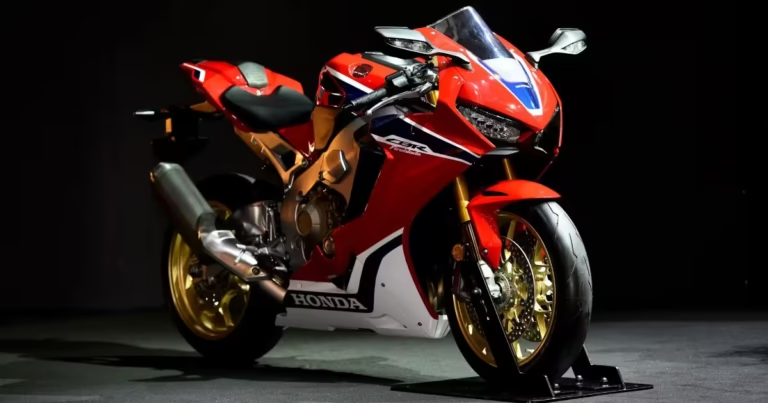
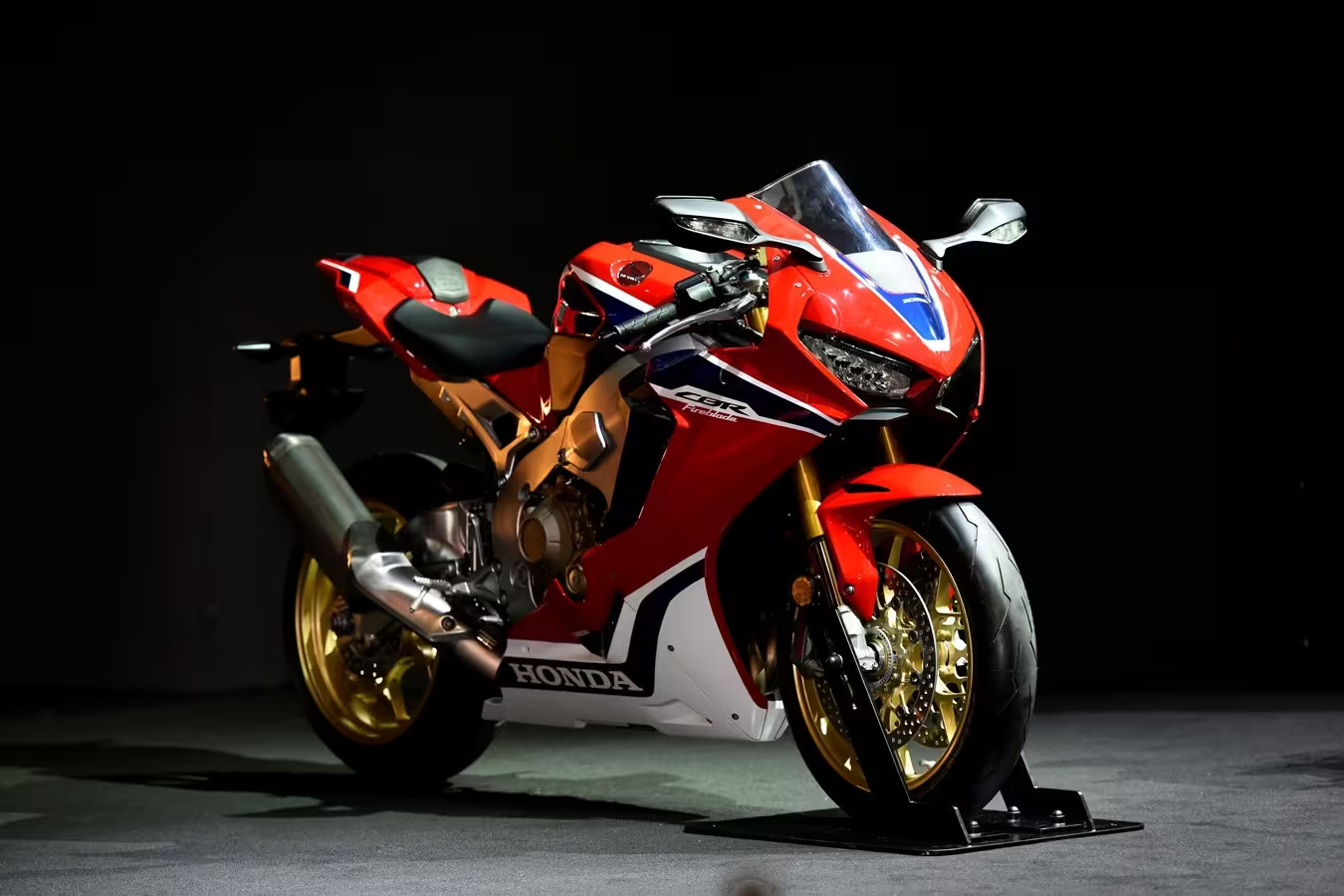
Sports Bikes have always been about more than speed. The best ones mix power, handling, braking, confidence, and emotion into one sharp package. The Honda CBR929RR FireBlade, sold for the 2000–2001 model years, remains one of the most important examples of that formula because it moved Honda’s FireBlade into the fuel-injected, 17-inch-front-wheel era while keeping the brand’s “Total Control” philosophy alive.
For riders in the USA and Europe, the CBR929RR is now a used-market classic rather than a new showroom machine. However, it still matters because it shows how modern performance bikes, superbikes, and track-focused motorcycles evolved before electronic rider aids became common.
What Are Sports Bikes?
Sports bikes are motorcycles designed around performance, sharp handling, aerodynamic bodywork, powerful brakes, and a committed riding position. Unlike cruisers or touring motorcycles, they prioritize acceleration, cornering, weight reduction, and high-speed stability.
The Honda CBR929RR sits in the liter-class superbike family, even though its engine is technically 929cc. It was built to compete with machines like the Yamaha YZF-R1, Kawasaki ZX-9R, and Suzuki GSX-R750 in the early 2000s. Motorcyclist listed the CBR929RR against those rivals in its 2000 superbike comparison, with a US MSRP of $9,999 when new.
Honda CBR929RR FireBlade Overview
The CBR929RR replaced the older 918cc FireBlade generation and brought major changes. Honda UK’s FireBlade history notes that the 2000 FireBlade gained a 17-inch front wheel, inverted forks, an aluminum twin-spar chassis, fuel injection, and a 929cc inline-four engine. Honda also stated that the model made around 150 bhp at the crank and lost 13 kg compared with the bike it replaced.
That matters because sports bikes at the time were entering a new phase. Yamaha had already shaken the class with the R1, and Honda needed a lighter, sharper, more modern FireBlade. The 929 was Honda’s answer: fast, compact, relatively refined, and still usable enough for road riders.
Key Specifications Section
| Category | Honda CBR929RR FireBlade |
|---|---|
| Production years | 2000–2001 |
| Engine | 929cc liquid-cooled inline-four, DOHC, 16-valve |
| Claimed power | About 150–152 hp |
| Torque | 103 Nm / 76 lb-ft at 9,000 rpm |
| Transmission | 6-speed manual |
| Clutch | Wet multi-disc clutch |
| Final drive | Chain |
| Front suspension | 43mm inverted fork |
| Rear suspension | Pro-Link monoshock |
| Front brakes | Dual 330mm discs, four-piston calipers |
| Rear brake | Single 220mm disc |
| Fuel capacity | Around 4.8 gallons / 18 liters |
| Claimed top speed | Around 176 mph / 283 km/h |
| Original US MSRP | $9,999 |
| UK used guide price | Around £2,500–£5,500, depending on condition |
Autoevolution lists the CBR900RR FireBlade 929 with 152 hp, 103 Nm of torque, a six-speed gearbox, dual 330mm front discs, a 220mm rear disc, and a claimed top speed of 176 mph. Bennetts BikeSocial lists the 2000–2001 FireBlade used guide at £2,500–£5,500 in the UK market.
Engine, Horsepower, and Torque
The CBR929RR uses a 929cc inline-four engine with liquid cooling and a high-revving character. For its time, the headline number was strong: roughly 150–152 hp claimed, with 103 Nm of torque. That gave it the muscle expected from serious sports bikes, but the real story was not only peak power.
The engine feels smoother and more flexible than many old-school carbureted machines, thanks to fuel injection. However, early fuel-injection systems were not as polished as today’s ride-by-wire setups. Bennetts notes that throttle response on the 929 could feel erratic compared with modern standards, and that real rear-wheel output was closer to 125 bhp than Honda’s crank claim.
For today’s riders, that means the CBR929RR still feels fast, but not as brutally electronic or filtered as modern liter-class sports bikes.
Acceleration and Top Speed
With a claimed top speed around 176 mph, the CBR929RR remains seriously quick even by current road-bike standards. However, that performance belongs on a closed circuit, not public roads.
Acceleration is strong from the midrange and aggressive near the top of the rev range. The six-speed transmission helps keep the engine in its powerband, while the chain final drive gives the direct feel expected from racing bikes and older superbikes.

Transmission and Clutch System
The CBR929RR uses a six-speed manual gearbox and a wet multi-disc clutch. Bring a Trailer’s 2025 listing for a 2001 CBR929RR also describes power routing through a multi-disc wet clutch, six-speed transmission, and drive chain.
There is no factory quickshifter, auto-blipper, or slipper-clutch feel like many modern sports bikes. As a result, rider input matters more. Smooth downshifts, clutch control, and throttle timing are part of the ownership experience.
Handling and Suspension
Handling is where the CBR929RR still earns respect. The move to a 17-inch front wheel made tire choice more modern and improved front-end behavior compared with older FireBlade generations. The inverted fork and aluminum twin-spar frame gave the bike a more contemporary superbike feel.
The suspension is adjustable, and clean examples can still feel sharp. However, because these motorcycles are now more than two decades old, suspension condition matters as much as original design. A tired rear shock or worn fork oil can make the bike feel vague.
For used sports bikes, always inspect:
- Fork seals and fork tube condition
- Rear shock damping quality
- Steering-head bearings
- Swingarm bearings
- Tire age and tire profile
- Brake fluid and brake lines
Braking Performance and Safety
The CBR929RR uses dual 330mm front discs with four-piston calipers and a single rear disc. For its era, this was strong hardware. Bring a Trailer’s example also listed Nissin triple disc brakes and adjustable suspension, showing the kind of equipment buyers should expect on a proper 929.
However, the big difference from modern sports bikes is electronics. The CBR929RR does not come with modern cornering ABS, traction control, wheelie control, riding modes, or IMU-based safety systems. That does not make it bad, but it does mean the rider must be more disciplined, especially in rain or cold conditions.

Aerodynamics and Fairing Design
The fully faired bodywork is classic early-2000s Honda: smooth, compact, and less aggressive than today’s winglet-heavy superbikes. It was designed to help the rider tuck in at speed, reduce wind pressure, and improve stability.
Compared with modern sports bikes, the CBR929RR looks cleaner and less extreme. There are no aero wings, no huge intake shapes, and no MotoGP-style body cuts. That simplicity is part of its appeal.
Riding Position and Comfort
The CBR929RR is sporty, but it is not as punishing as some modern track-first liter bikes. The clip-ons are low, the pegs are high, and the seat height is around 32 inches, so shorter riders may still need to check fit before buying.
For weekend rides, Sunday backroads, and occasional commuting, it can work. For long-distance touring, a sport-touring bike will be more comfortable. That is the key difference between sports bikes and touring motorcycles: performance comes first, comfort second.

Technology, Display, and Connectivity
This is an analog-era superbike with basic digital support. Instrumentation includes a tachometer and digital readouts for speed, coolant temperature, and time, as seen on a documented 2001 CBR929RR auction listing.
There is no Bluetooth, TFT display, smartphone connectivity, navigation, or app integration. Compared with modern sports bikes, the tech package is simple. For many riders, that is a benefit because there are fewer electronics to fail and more direct mechanical feedback.
Fuel Economy and Running Costs
Fuel economy varies heavily with riding style, condition, gearing, and modifications. As a realistic used-bike expectation, owners should budget for tires, chain and sprockets, brake pads, fluids, fork service, battery replacement, and valve-clearance checks.
The good news is that Honda parts support and used parts availability are generally better than for many rare European sports bikes. The bad news is that clean original fairings, exhausts, and OEM body panels can be expensive because the bike is now collectible.

Pricing and Availability in the USA and Europe
The CBR929RR is no longer sold new. In the USA, it appears mainly through used dealers, private sellers, and auction platforms. A 7,000-mile 2001 CBR929RR sold on Bring a Trailer for $6,250 in August 2025, while a Cycle Trader listing showed a used 2001 CBR929RR advertised at $7,799.
In Europe and the UK, availability depends on condition, mileage, and originality. Bennetts lists the 2000–2001 FireBlade at around £2,500–£5,500 in its used guide, which makes it cheaper than many modern liter-class sports bikes but potentially more expensive than ordinary older sport motorcycles.
Competitor Comparison
Against the Yamaha YZF-R1, the Honda feels more measured and less wild. Against the Kawasaki ZX-9R, it feels sharper and more modern. Against the Suzuki GSX-R750, it offers more engine capacity and torque, but the Suzuki may feel lighter and more race-focused.
The CBR929RR is best for riders who want old-school sports bikes with Honda reliability, strong performance, and real superbike history.
Sports Bikes vs Naked Bikes, Touring Bikes, and Superbikes
Compared with naked bikes, the CBR929RR offers better wind protection, higher top-end performance, and sharper track potential. However, naked bikes are usually easier in traffic and more comfortable at low speeds.
Compared with touring bikes, the FireBlade is lighter, faster, and more exciting, but it lacks luggage comfort, windscreen height, passenger comfort, and relaxed ergonomics.
Compared with today’s superbikes, the CBR929RR is simpler and less powerful. Modern sports bikes offer advanced electronics, better tires, stronger brakes, and more sophisticated suspension. Still, the Honda delivers a rawer and more mechanical ride.
Real-World Usability and Daily Riding
Can you ride a CBR929RR daily? Yes, but it depends on your tolerance. Heat, wrist pressure, insurance costs, tire wear, and theft risk all matter. For short commutes and weekend rides, it can be enjoyable. For heavy city traffic, a middleweight naked bike or sport-tourer may be easier.
This is why beginner riders should be cautious. The CBR929RR is not a beginner sport bike. It is powerful, responsive, and demands respect.
Track Performance
On track, the CBR929RR still makes sense if it is properly maintained. Its power is usable, the chassis is capable, and the brakes are strong enough for fast riding with the right pads, fluid, and tires.
However, it will not match modern sports bikes with traction control, quickshifters, cornering ABS, and race electronics. The Honda’s value is feel, feedback, and rider involvement.
Read More:-
- Honda CBR954RR Fireblade: The Pinnacle of Lightweight Superbikes
- Honda CBR1000RR Review 2026: The Ultimate Fireblade Experience
Maintenance and Ownership Experience
Ownership can be rewarding, but condition is everything. Look for service history, original parts, clean charging-system behavior, healthy brakes, and smooth fueling. Avoid abused examples with cheap fairings, poor wiring, crash damage, or badly installed performance parts.
A clean CBR929RR can feel like one of the best-value classic sports bikes from the early 2000s. A neglected one can become expensive quickly.
Market Impact and Future Trends
The CBR929RR helped bridge the gap between the original FireBlade philosophy and the modern liter-bike era. It brought fuel injection, sharper geometry, a 17-inch front wheel, and a more modern chassis into Honda’s flagship sport platform.
Future sports bikes are moving toward smarter electronics, stricter emissions compliance, lighter materials, semi-active suspension, and improved road-safety systems. In that context, the CBR929RR stands as a reminder of a simpler time: big power, low weight, sharp handling, and rider skill at the center.
Conclusion
The Honda CBR929RR FireBlade is not the newest, fastest, or most advanced superbike today. But as a used classic, it remains one of the most interesting early-2000s sports bikes for riders who want Honda engineering, strong real-world performance, and mechanical character.
Buy one for its history, handling, engine feel, and analogue personality. Just inspect carefully, budget for maintenance, and remember that this is a serious machine—not a beginner motorcycle.
What do you think of the CBR929RR FireBlade? Comment with your opinion, share this review with another rider, subscribe for more motorcycle guides, and read our related articles on superbikes, beginner sport bikes, and used performance motorcycles.