Porsche 911 Targa 4 AWD Open-Air Sports Car Review

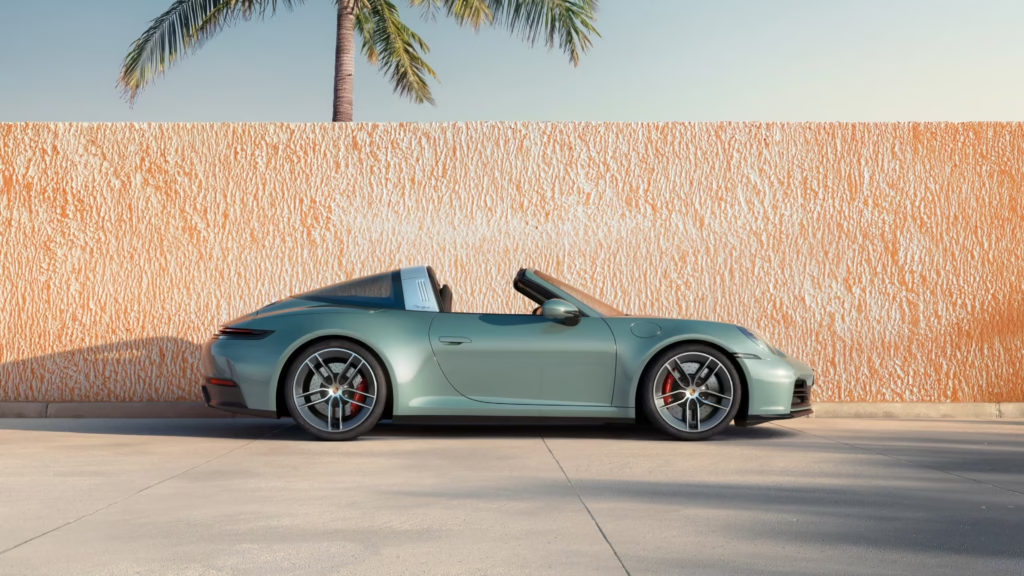


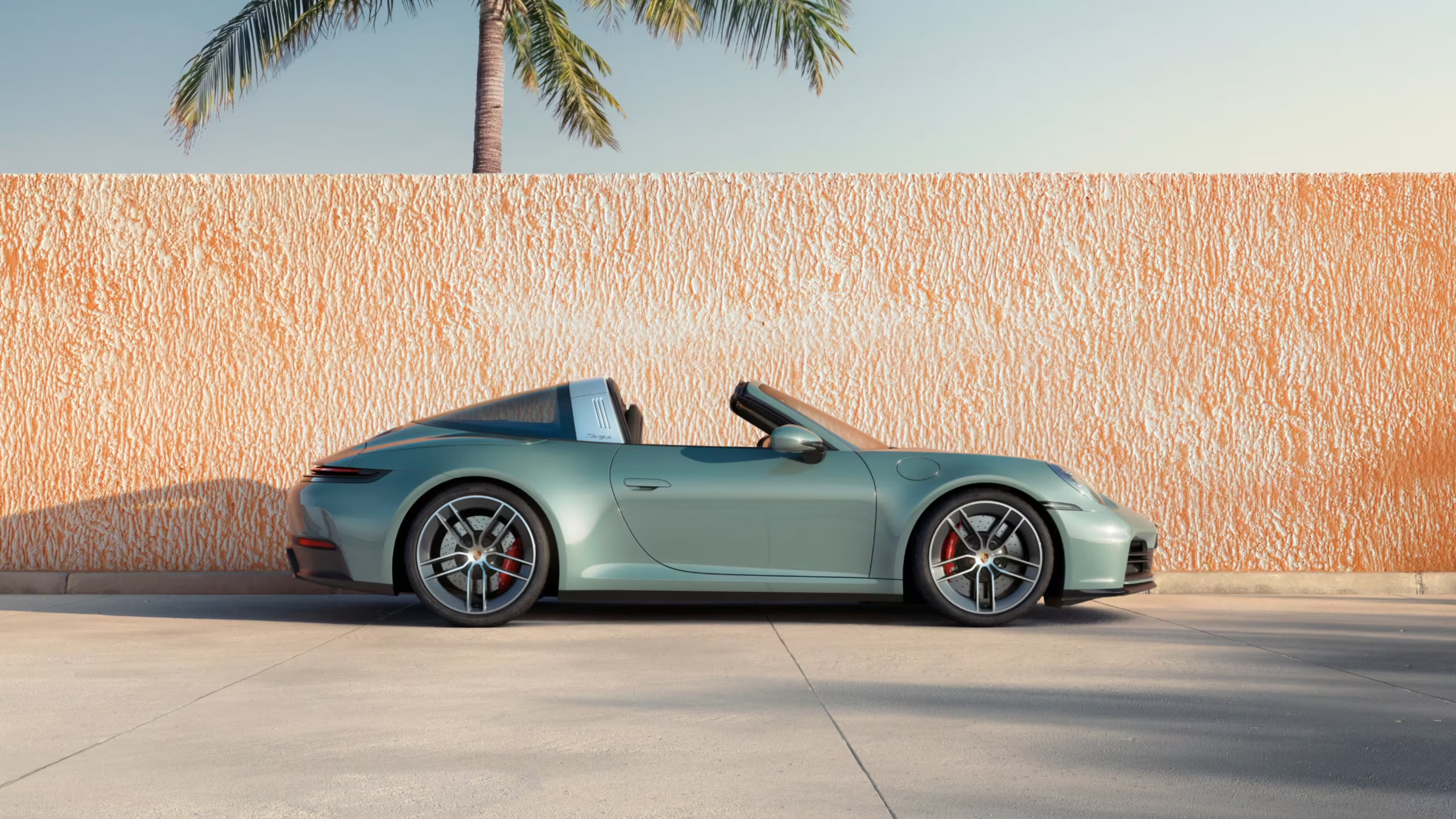


The Porsche 911 Targa 4 sits in one of the most interesting corners of the modern sports car market. It is not a full convertible, not a traditional coupe, and not a hardcore track special. Instead, it blends the iconic 911 shape with open-air driving, all-wheel-drive confidence, and genuine everyday usability.
That balance matters because sports cars are no longer judged only by horsepower figures. Buyers in the USA and Europe want performance, technology, comfort, safety, image, and long-term value. In that world, the Porsche 911 Targa 4 remains one of the most distinctive performance cars Porsche has ever built.
What Is a Sports Car?
A sports car is designed around driver engagement. That usually means sharp steering, strong acceleration, low seating, responsive braking, and a chassis built to make corners feel alive.
However, the modern sports car has evolved. Today’s best performance cars also need infotainment, safety technology, fuel efficiency, premium materials, and real-world comfort. The Porsche 911 Targa 4 fits that definition because it delivers serious pace while still feeling usable on normal roads.
Unlike many supercars, it does not feel built only for perfect weather or weekend driving. Unlike many luxury cars, it puts the driver first.

Porsche 911 Targa 4: Why It Still Matters
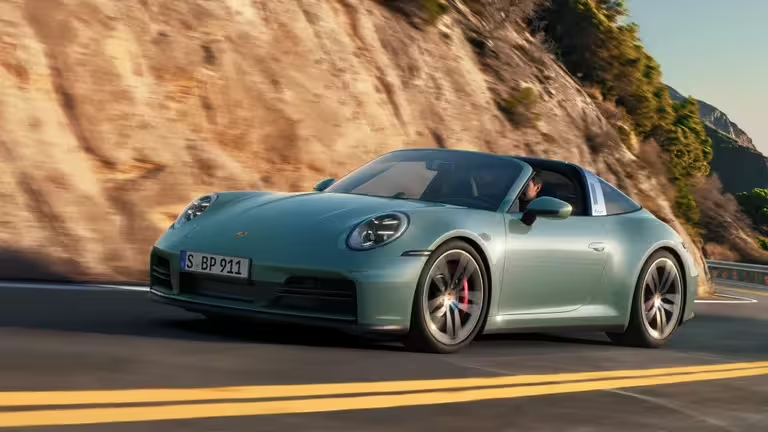
The Targa body style has deep Porsche history. Porsche introduced the modern 992-generation Targa with both 911 Targa 4 and 911 Targa 4S versions, using a distinctive roll hoop, movable roof panel, and wraparound rear glass. Porsche says the roof can open or close in 19 seconds, which gives the car a unique position between a coupe and a cabriolet.
That design is the main reason the Porsche 911 Targa 4 stands out. It offers the drama of open-air driving without fully giving up the visual strength of a coupe. For buyers who want a convertible sports car but dislike the look of a soft-top, the Targa format makes sense.
There is also an important availability note. Porsche’s current 2026 USA Targa lineup shows two available Targa variants: 911 Targa 4S and 911 Targa 4 GTS. The latest USA page lists the 2026 Targa 4S from $180,200 and the Targa 4 GTS from $203,300 before options, fees, taxes, dealer charges, and potential tariffs.
Engine, Horsepower, and Torque
The 992-generation Porsche 911 Targa 4 used a 3.0-liter twin-turbo flat-six engine. Porsche listed output at 283 kW, or 385 PS, for the European-market launch version, with 450 Nm of torque available from 1,950 to 5,000 rpm.
For USA buyers, dealer-published 2025 Targa 4 figures commonly list 379 hp and 331 lb-ft of torque, paired with all-wheel drive and an 8-speed Porsche Doppelkupplung dual-clutch automatic transmission.
The key point is not only the numbers. It is how the engine delivers them. The rear-mounted flat-six gives the Porsche 911 Targa 4 its signature balance: strong traction, quick throttle response, and a mechanical character that feels different from front-engine rivals.
Acceleration, Top Speed, and Transmission
The Porsche 911 Targa 4 is quick enough to feel genuinely special. Porsche stated that the 992-generation Targa 4 could accelerate from 0–100 km/h in 4.2 seconds with the optional Sport Chrono Package and reach a top speed of 289 km/h.
In USA-style figures, dealer data lists the Targa 4 at 0–60 mph in 4.2 seconds and a top track speed of 179 mph with summer tires.

The standard transmission is Porsche’s 8-speed PDK automatic. Porsche’s PDK is one of the best dual-clutch gearboxes in the industry because it shifts quickly, behaves smoothly in traffic, and keeps the engine in its power band during aggressive driving.
Handling, Suspension, and AWD Confidence
The Porsche 911 Targa 4 comes with Porsche Traction Management all-wheel drive. That matters in wet, cold, or broken-road conditions, especially for drivers in northern Europe, the UK, Germany, the Pacific Northwest, or the northeastern United States.
Porsche also fitted the Targa models with PASM, or Porsche Active Suspension Management, as standard. PASM adjusts damping depending on road conditions and driving mode, helping the car feel more comfortable in normal driving and more controlled during fast cornering.
This is where the Targa 4 feels different from many high-performance vehicles. It is fast, but it is not nervous. The car’s AWD system gives security, while the rear-engine layout keeps the traditional 911 feel alive.
Braking Performance and Road Control
Braking performance is another major part of the Porsche 911 Targa 4 package. Porsche stated that the Targa 4 used 330 mm brake discs on both axles with black four-piston monobloc fixed calipers, while the Targa 4S received larger hardware. Porsche Ceramic Composite Brakes were available as an option.
For real-world drivers, that means the standard braking system is already strong enough for spirited road use. However, owners who plan frequent track days may prefer upgraded brake packages, especially because the Targa is heavier than a regular 911 coupe.
Aerodynamics and Exterior Design
The Porsche 911 Targa 4 is not as visually aggressive as a GT3 or Turbo S, but it uses smart aerodynamic details. Porsche highlighted the wider rear spoiler, integrated rear light bar, aluminum exterior skin sections, and stronger 992-generation body surfacing.
The Targa roof is the visual centerpiece. The silver or black roll hoop gives the car a retro-modern identity that separates it from ordinary coupes and convertibles. It looks expensive without needing oversized wings or exaggerated vents.
Interior Technology and Infotainment
Inside, the Porsche 911 Targa 4 keeps the classic 911 driving position but adds modern technology. Porsche described the 992 Targa cabin as using a clean dashboard design inspired by earlier 911 generations, with a central rev counter, two thin digital displays, and a 10.9-inch Porsche Communication Management screen. Standard PCM features included online navigation and Connect Plus with Apple CarPlay.
The cabin is still driver-focused. The seating position is low, the steering wheel feels compact, and the main controls are positioned for quick use. This is not a lounge-style luxury car. It is a driver-focused sports car with enough technology to feel modern.
Safety Features and Driver Assistance
The Porsche 911 Targa 4 includes performance-focused safety systems rather than relying only on passive protection. Porsche Wet Mode was standard on the 992 Targa models, using sensors to detect water on the road and recommend a mode change for better stability. Porsche InnoDrive with adaptive cruise control was also available for the Targa range.
For buyers, the message is simple: the Targa 4 is not just about speed. It is designed to help drivers manage difficult road conditions, especially where weather changes quickly.
Pricing and Availability in the USA and Europe
Pricing depends heavily on model year, market, options, and whether the car is new, certified pre-owned, or used.
For the standard Porsche 911 Targa 4, USA dealer-published 2025 data listed an MSRP of $134,500.
However, Porsche’s current 2026 USA Targa page now shows the Targa 4S from $180,200 and the Targa 4 GTS from $203,300, with both listed as all-wheel-drive automatic models.
In the UK, Porsche lists the 2026 911 Targa 4S from £137,600 including VAT and the Targa 4 GTS from £154,400 including VAT.
For Europe, availability varies by country, taxes, emissions rules, and local Porsche allocation. Buyers should check their national Porsche configurator or authorized dealer.
Porsche 911 Targa 4 vs Competitors
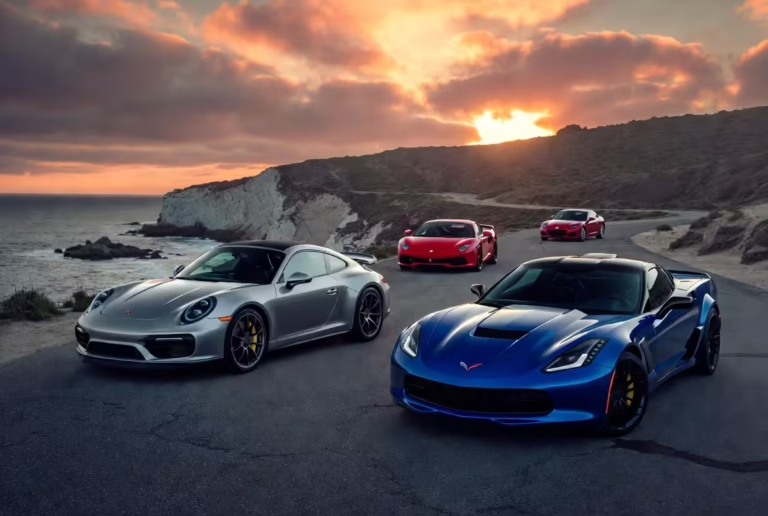
The Porsche 911 Targa 4 competes in a wide performance space. Some rivals are cheaper, some are faster, and some are more luxurious. Few match its mix of heritage, design, usability, and AWD confidence.
Chevrolet Corvette Stingray
The 2026 Corvette Stingray starts at $70,000, offers up to 495 hp, can do 0–60 mph in 2.9 seconds when properly equipped, and reaches a 194 mph top track speed.
That makes the Corvette a performance bargain. However, the Porsche 911 Targa 4 feels more premium, more compact, and more all-weather friendly.
Mercedes-AMG GT 55 Coupe
The 2026 Mercedes-AMG GT 55 Coupe uses a handcrafted 4.0-liter biturbo V8 with 469 hp and AMG Performance 4MATIC+ AWD, with a 0–60 mph time listed at 3.8 seconds.
The AMG is more of a muscular luxury GT. The Porsche feels lighter on its feet and more connected to the road.
Maserati MC20 Cielo
The Maserati MC20 Cielo is closer to a true supercar. Maserati lists 621 hp, 538 lb-ft of torque, 0–60 mph in 3.0 seconds, and a 199 mph top speed.
The MC20 Cielo is more exotic, but the Porsche 911 Targa 4 is easier to use daily and likely more practical for mixed driving.
BMW M4 Competition xDrive Convertible
The BMW M4 Competition xDrive Convertible gives buyers strong performance, four-seat usability, and AWD security. It is more practical and usually less expensive, but it does not have the same rear-engine character or Targa design identity as the Porsche.
Comparison With Luxury Cars and Supercars
Compared with traditional luxury cars, the Porsche 911 Targa 4 is sharper, lower, louder, and more engaging. A Mercedes S-Class or BMW 7 Series is more comfortable, but neither gives the same driver connection.
Compared with supercars, the Targa 4 is more subtle. It does not chase extreme horsepower or wild doors. Instead, it focuses on balance, traction, build quality, and daily usability. That is why many enthusiasts see the 911 as the sweet spot between luxury and performance.
Real-World Usability and Daily Driving Comfort
The Porsche 911 Targa 4 is one of the few open-air sports cars that can realistically work as a daily driver. It has a front luggage area, supportive seats, strong visibility for a sports car, and a cabin that feels solid at highway speeds.
The ride is firm but not punishing. The PDK transmission is easy in traffic, and all-wheel drive adds confidence in poor weather. For city driving, the low nose and expensive wheels require care, but the car is not difficult to manage.
Fuel Economy, Running Costs, and Ownership
Running costs are high because this is a premium Porsche sports car. Tires, brakes, insurance, servicing, and optional equipment can add up quickly. Porsche options are also expensive, so the final transaction price can move far beyond the base MSRP.
For fuel economy, Porsche listed the 992-generation Targa 4 at 9.8 L/100 km combined at launch in European testing, while the latest UK Targa 4S page lists 25.8–26.2 mpg combined under WLTP-style figures.
Still, the Porsche 911 Targa 4 is more efficient and easier to live with than many larger-displacement supercars.
Driving Experience
The magic of the Porsche 911 Targa 4 is not only straight-line speed. It is the way the car feels.
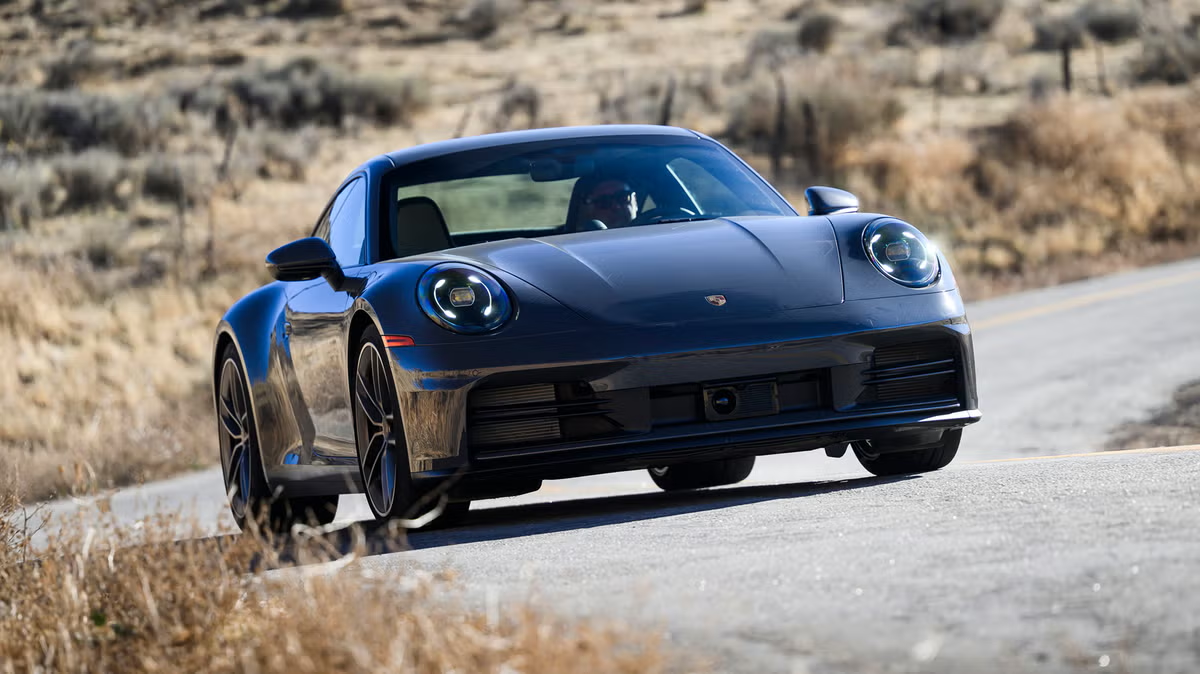
The steering is precise. The engine sits behind you. The AWD system gives grip without making the car feel dull. The roof mechanism adds theater every time it opens. On a mountain road, coastal highway, or fast European autobahn, the Targa 4 feels special without becoming intimidating.
That is the difference between a good performance car and a great one.
Market Impact and Future Trends
The future of sports cars is changing. Hybrid systems, stricter emissions rules, and electrification are reshaping the segment. Porsche has already moved in that direction with the 911 Targa 4 GTS, which uses T-Hybrid technology and is listed in the USA with 532 hp, 0–60 mph in 3.0 seconds, and a 194 mph top track speed.
That shows where the 911 is heading. The Porsche 911 Targa 4 represents the traditional turbocharged gasoline era, while the latest Targa GTS points toward the electrified future of performance cars.
Conclusion
The Porsche 911 Targa 4 remains one of the most complete open-air sports cars ever made. It delivers strong acceleration, AWD security, sharp handling, premium technology, and a design that no normal coupe or convertible can copy.
It is expensive to buy and run, and the latest new-car lineup has shifted toward the Targa 4S and Targa 4 GTS. Even so, the Porsche 911 Targa 4 continues to make sense for buyers who want a usable, emotional, beautifully engineered performance car.
What do you think? Comment below, share this article with other car fans, subscribe for more performance car reviews, and read our related guides on the best sports cars, luxury coupes, and modern high-performance vehicles.
Key Specifications Section
| Category | Porsche 911 Targa 4 |
|---|---|
| Body style | 2-door Targa sports car |
| Engine | 3.0-liter twin-turbo flat-six |
| Power | 283 kW / 385 PS Europe launch figure; 379 hp commonly listed in USA data |
| Torque | 450 Nm Europe launch figure; 331 lb-ft USA data |
| Drivetrain | All-wheel drive with Porsche Traction Management |
| Transmission | 8-speed PDK dual-clutch automatic |
| 0–100 km/h | 4.2 seconds with Sport Chrono Package |
| 0–60 mph | 4.2 seconds in USA dealer data |
| Top speed | 289 km/h / about 179 mph |
| Roof | Fully automatic Targa roof, 19-second operation |
| Suspension | PASM adaptive damping standard |
| Brakes | 330 mm discs front and rear on Targa 4 |
| Infotainment | 10.9-inch PCM screen, online navigation, Apple CarPlay |
| USA pricing note | 2025 dealer-published MSRP: $134,500 |
| Current new Targa lineup note | 2026 USA Porsche page lists Targa 4S and Targa 4 GTS |
Sources: Porsche Newsroom, Porsche USA, Porsche GB, and Porsche dealer data.
Read More:-
- Best Luxury Cars in 2026: Top Premium Picks
- 2026 Tesla Model 3 RWD Review: Complete Specs, Range & Performance Guide
Explore EVs, Cars & Bikes:-