Honda CBR1000RR-R Fireblade Review 2026 Specs & Verdict


The Pinnacle of Liter-Class Sportbikes
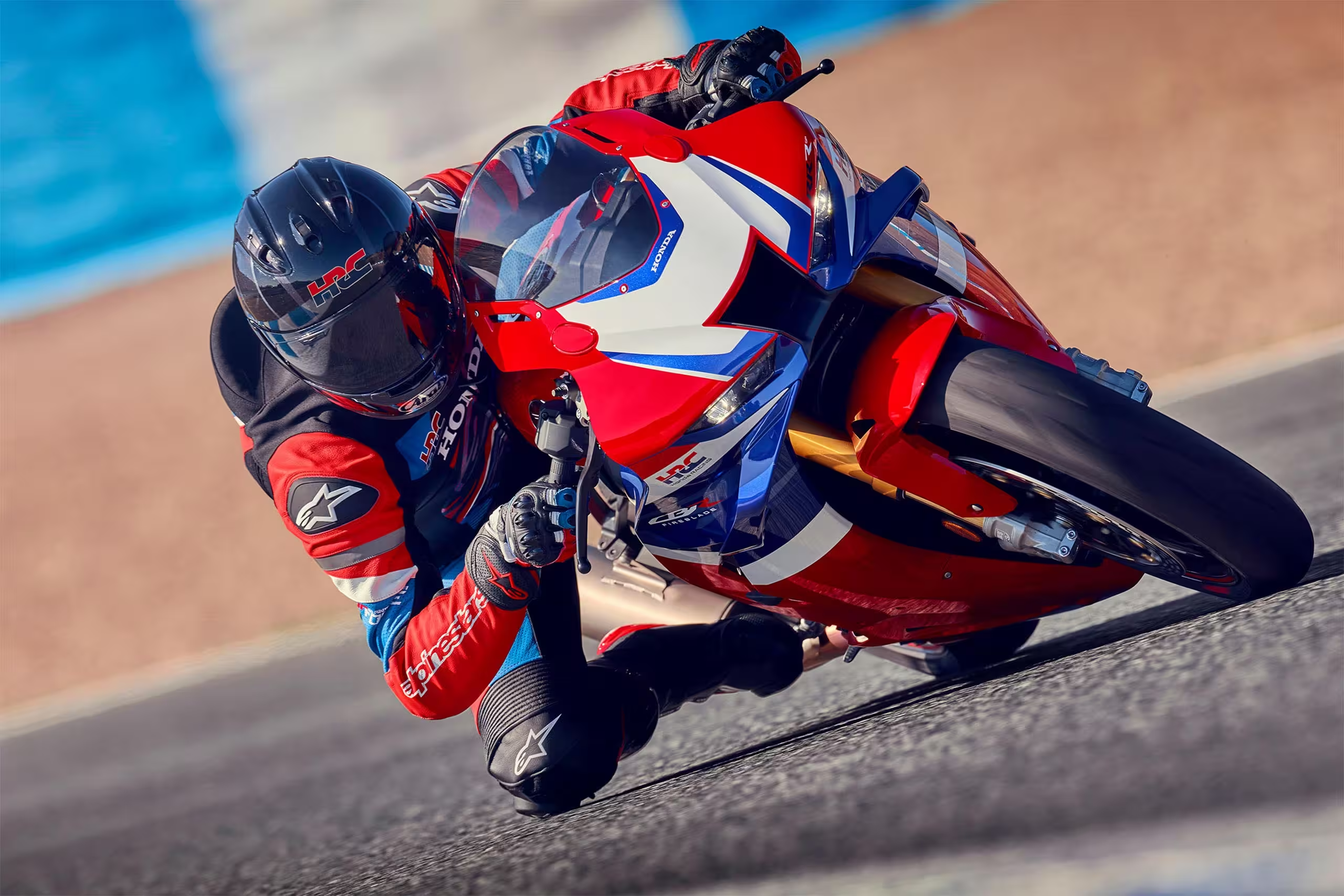
If you are seeking the absolute pinnacle of Japanese motorcycle engineering, look no further than the latest iteration of Honda’s flagship liter-class sportbike. In this comprehensive Honda CBR1000RR-R review, we are diving deep into what makes the 2026 Fireblade an uncompromising, track-focused weapon that still manages to offer street usability. For decades, the Fireblade nameplate has commanded immense respect among sportbike enthusiasts, track-day veterans, and die-hard Honda fans. With the latest model year, Honda has relentlessly blurred the line between a road-legal motorcycle and a factory MotoGP racing machine.
This motorcycle is specifically designed for serious track riders, experienced sportbike enthusiasts, and those who demand uncompromising top-tier performance from their machines. Throughout this extensive review, we will explore exactly what readers need to know before throwing a leg over this legendary bike. You will learn about the breathtaking CBR1000RR-R Fireblade specs, its aerodynamic design, engine performance, razor-sharp handling, and state-of-the-art electronics. Furthermore, we will compare it directly against its fiercest competitors in the liter-bike segment to see how the Honda sportbike 2026 lineup stacks up against the rest of the world. By the end of this article, you will know exactly whether the new Fireblade is the right superbike to park in your garage.
The Honda Brand and the Fireblade Legacy
To truly appreciate the 2026 Fireblade, it is crucial to understand the incredible history of the Honda brand in the motorcycle world. Honda’s history is steeped in racing dominance, prioritizing engineering perfection and reliability above all else. The CBR series evolution is a testament to this philosophy, but everything changed in 1992 when engineer Tadao Baba introduced the original CBR900RR Fireblade. That motorcycle revolutionized the sportbike industry by prioritizing lightweight agility over raw, brute horsepower, setting a new benchmark that competitors spent years trying to match.
Since 1992, the Fireblade history has been one of continuous refinement. However, in recent years, Honda realized that to dominate the World Superbike Championship (WSBK), they needed to inject more raw power and pure racing DNA into their street bikes. The current “RR-R” designation signifies a massive technology transfer directly from Honda’s RC213V MotoGP racing program to their street-legal sportbikes. Every millimeter of the new Fireblade’s chassis and engine internals has been influenced by HRC (Honda Racing Corporation). From the bore and stroke dimensions of the engine to the aerodynamic winglets on the fairing, this motorcycle represents Honda’s unparalleled racing pedigree brought to the public road.
Honda CBR1000RR-R
Engine and Performance Specifications
At the heart of the beast is an engineering marvel. Here is a detailed breakdown of the critical liter-class motorcycle 2026 performance metrics.
| Specification | Detail |
| Engine Type | 999cc liquid-cooled inline-4, DOHC |
| Power | ~214 hp @ 14,000 rpm |
| Torque | ~83 lb-ft @ 12,000 rpm |
| Transmission | 6-speed, slipper clutch |
| Frame | Aluminum twin-spar |
| Weight | ~445 lbs (wet/curb weight) |
| Top Speed | ~186–190 mph (electronically limited) |
| Electronics | Ride-by-wire, multiple modes, IMU, traction control |
Let us explain these specifications in layman’s terms. The 999cc inline-four engine produces a staggering 214 horsepower. In terms of acceleration, this translates to a motorcycle that can launch from 0 to 60 mph in under 3 seconds, pulling relentlessly all the way to its estimated 186+ mph top speed.
The torque figure of 83 lb-ft is highly optimized for high-rpm track behavior. While some mid-range street bikes offer low-end grunt, the Fireblade is designed to scream at the top of its rev range. When you are cornering on a race track, this high-rpm power delivery allows for incredibly smooth throttle application at the apex, preventing sudden jerks that could upset the suspension. The 6-speed transmission features a finely tuned slipper clutch, which prevents the rear wheel from hopping or locking up during aggressive downshifts. While its behavior on the street is remarkably smooth for such a highly strung machine, it becomes undeniably clear that this engine’s true home is on the front straightaway of a closed circuit.


Exterior Design and Aerodynamics
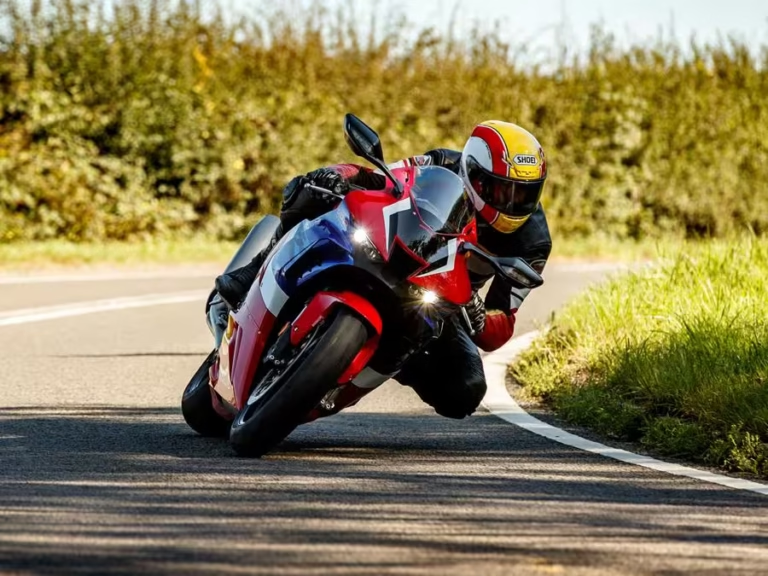
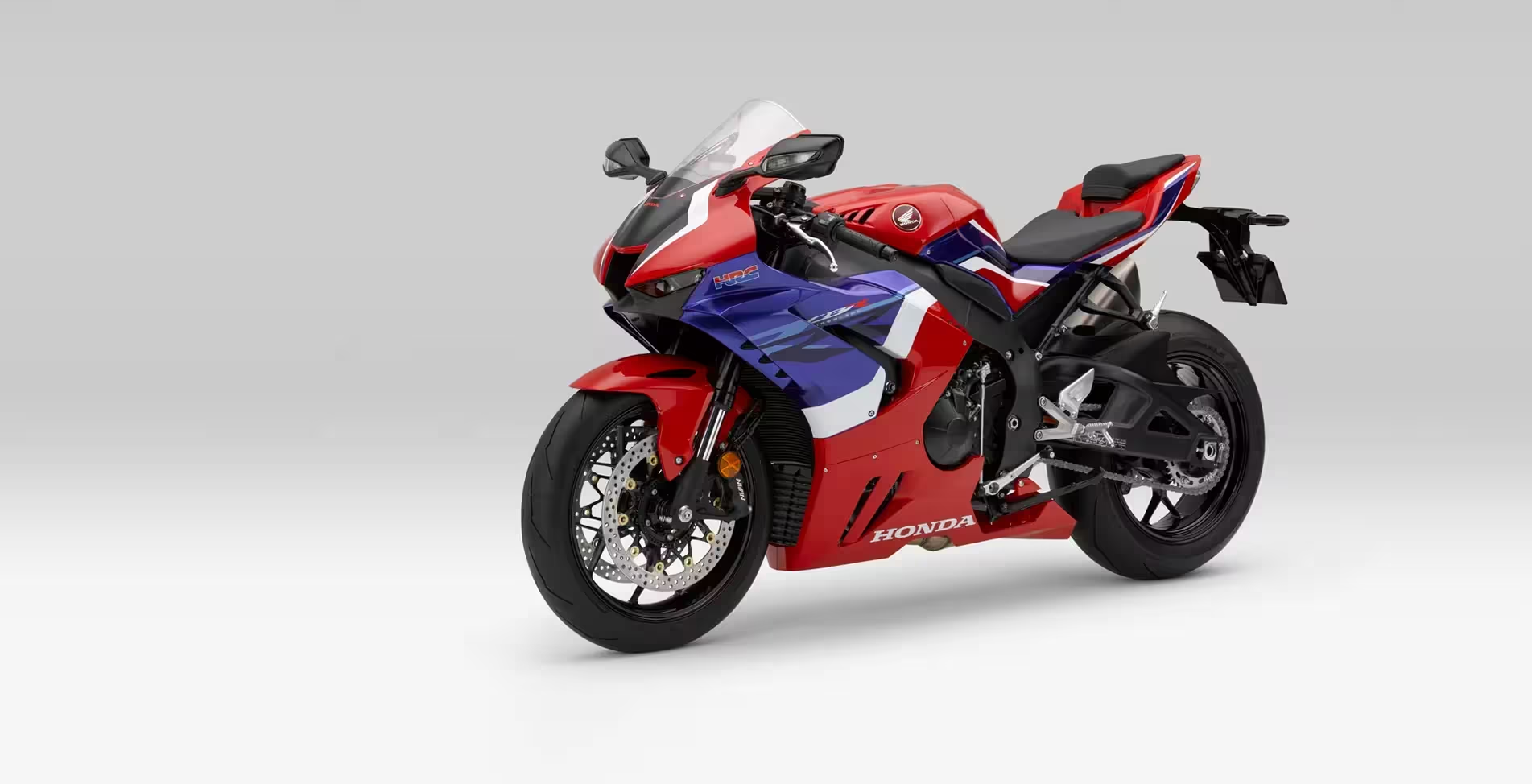
Approaching the Honda CBR1000RR-R, its aggressive styling is immediately evident. The aesthetic is heavily driven by functional aerodynamics rather than mere visual appeal. The MotoGP-inspired fairing is incredibly compact, designed to punch the smallest possible hole through the air.
The most striking visual element is the integration of aerodynamic winglets. Built directly into the side fairings, these winglets generate significant downforce at high speeds. This wind management technology helps keep the front wheel planted on the ground during ferocious acceleration, mitigating the electronics’ need to cut power to prevent wheelies. Consequently, the rider can accelerate harder and faster out of corners.
Furthermore, the lighting is exceptionally modern, featuring a sharp, minimalist twin-LED headlight setup that integrates seamlessly into the ram-air duct. The wheel design features lightweight cast-aluminum rims that reduce unsprung mass, finished in striking colors that contrast beautifully against the classic Grand Prix Red color scheme. Overall, the aesthetics are perfectly balanced between minimalistic street legality and track-focused aggression.
Chassis, Suspension, and Handling Characteristics
A motorcycle producing well over 200 horsepower requires a phenomenal chassis to keep it under control. Honda utilizes a highly refined aluminum twin-spar frame that balances rigidity with exactly the right amount of lateral flex. This microscopic flex is crucial when the bike is leaned all the way over, acting as secondary suspension to provide the rider with critical feedback from the tires.
Suspension setups vary slightly depending on the trim level. The standard model features highly capable Showa Big Piston Forks (BPF) at the front, which are fully adjustable for preload, compression, and rebound damping. The rear utilizes a fully adjustable Showa shock paired with an extended swingarm design. If you step up to the SP model, you are treated to the magnificent Öhlins Smart Electronic Control (S-EC3.0) suspension, which actively adjusts damping in milliseconds.
When it comes to handling characteristics, the Fireblade is a scalpel. Its cornering stability is practically unmatched, offering turn-in agility that belies its 445-pound wet weight. High-speed feedback through the handlebars is crystal clear. Compared to rivals like the Yamaha R1 or the Kawasaki ZX-10R, the Honda feels slightly more compact and incredibly precise, offering a level of refinement that inspires immense confidence at the absolute limit of tire grip.
Electronics and Advanced Rider Aids
In the modern superbike era, power is nothing without control. The Fireblade boasts one of the most sophisticated electronics suites ever fitted to a production motorcycle. The system revolves around a 6-axis Inertial Measurement Unit (IMU) that constantly monitors the bike’s pitch, roll, and yaw.
At the rider’s right hand is a two-motor ride-by-wire throttle system, delivering incredibly precise fueling. Riders can select from multiple riding modes (such as Rain, Sport, and Track), which automatically adjust the engine map and electronic intervention levels. The Honda Selectable Torque Control (HSTC) acts as an advanced traction control system, allowing you to seamlessly dial in exactly how much rear-wheel slip you want before the computer intervenes.
Additional features include highly adjustable wheelie control, slide control, and an aggressive launch control system for perfect race starts. Cornering ABS ensures that if you grab a handful of brakes while leaned over, the bike won’t instantly wash out the front tire. All of this is controlled via a vibrant, full-color TFT display that offers outstanding connectivity and customization. Ultimately, these electronics dramatically improve performance on the track by allowing riders to safely push the limits, while heavily improving safety on unpredictable public roads.
Braking System and Safety Features
Decelerating a missile from 186 mph requires world-class stopping power. The CBR1000RR-R is equipped with a high-end braking setup sourced from industry leader Brembo.
At the front, the bike features massive dual 330mm discs clamped by top-tier radial-mount calipers (with the SP utilizing the phenomenal Brembo Stylema R calipers). The rear features a single disc setup, primarily used for low-speed maneuvering and mid-corner line adjustments.
The brake bite is incredibly strong but highly progressive, meaning you will not accidentally lock the front wheel with a minor twitch of your fingers. The ABS performance is track-oriented; in its race setting, it allows for rear-wheel lift and minimal intervention, ensuring it does not ruin a fast lap. However, for street riding, the ABS can be adjusted to provide a critical safety net against panic braking on wet, sandy, or unpredictable tarmac, drastically reducing overall stopping distances in emergencies.
Ergonomics, Posture, and Comfort
Make no mistake: the Fireblade is a dedicated track motorcycle with mirrors and turn signals. Consequently, the ergonomics heavily favor high-speed aerodynamic efficiency over daily comfort.
The riding position features an aggressive sportbike posture. The seat height sits at approximately 32.7 inches, which is standard for the class, but the footpegs are mounted exceptionally high and far back for maximum ground clearance in corners. Furthermore, the clip-on handlebars are positioned low and wide, pulling the rider forward over the tank to weight the front wheel.
For track use, this layout is absolute perfection, allowing the rider to easily transition their body weight from side to side. However, for street use and long-ride usability, it is punishing. Commuting for more than an hour will likely result in aching wrists and a sore lower back. Wind protection at highway speeds is decent if you tuck completely behind the bubble screen, but sitting upright exposes your torso to the blast. Simply put, this is not a touring motorcycle.
Exhaust System, Sound, and Engine Character
The auditory experience of the Fireblade is spine-tingling. Honda partnered with Akrapovič to design the titanium exhaust system, which is an incredible piece of standard equipment.
Because it is an inline-4 engine rather than a V4 or crossplane crank design, the sound profile is a classic, high-pitch, Formula 1-esque scream. At low RPMs, the exhaust valve remains partially closed to comply with strict noise regulations and maintain street legality, resulting in a somewhat subdued hum. However, once you cross the 6,000 RPM threshold and the exhaust valve fully opens, the throttle response sharpens, the engine character transforms, and the bike unleashes a deafening, glorious howl that reverberates through your chest. It is a highly intoxicating engine character that begs to be ridden hard.
Fuel Economy and Riding Range
When purchasing a 214-horsepower superbike, fuel economy is rarely the primary concern, but it is necessary for ride planning. The Fireblade features an approximately 4.4-gallon fuel tank capacity.
Because the engine is highly strung and aerodynamic drag increases exponentially with speed, the approximate combined MPG sits around 25-30 miles per gallon. In the city, heavy stop-and-go traffic will drag that number down further, while gentle highway cruising might edge it slightly higher.
In terms of real-world range, expect the low-fuel light to illuminate around the 100 to 115-mile mark during mixed street riding. On a track day, where the throttle is pinned wide open most of the time, fuel consumption increases dramatically, requiring you to top off the tank after every few sessions.
Honda CBR1000RR-R vs. Key Competitors
The liter-class segment is the most fiercely contested battleground in the motorcycle industry. Let us examine how the Honda compares to its primary rivals.
| Motorcycle | Power | Weight | Electronics | Price |
| Honda CBR1000RR-R | 214 hp | 445 lbs | Advanced IMU ride aids | |
| Yamaha YZF-R1 | 200 hp | 448 lbs | Comprehensive suite | |
| Kawasaki ZX-10R | 203 hp | 452 lbs | Track-focused electronics | $$$ |
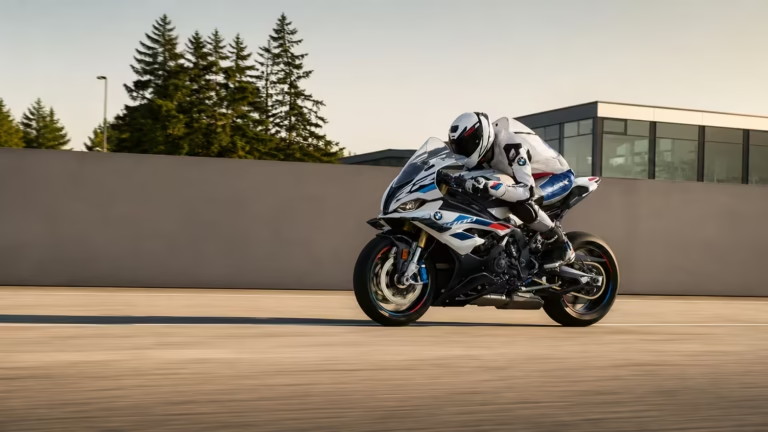
| BMW S1000RR | 205 hp | 434 lbs | Full customizable suite |
Comparison Breakdown:
- Track Performance: The Honda and the BMW S1000RR are arguably the most potent out of the box. The Honda’s MotoGP-derived aerodynamics give it an incredible edge in high-speed sectors.
- Street Usability: The BMW S1000RR features cruise control and heated grips as options, making it surprisingly livable on the street. The Yamaha R1’s crossplane engine offers more mid-range torque, making it slightly better for city riding than the high-revving Honda.
- Value: The Kawasaki ZX-10R often undercuts the Honda significantly in price while delivering world-championship-winning chassis dynamics, making it the value king of the group. However, the Fireblade SP’s fit, finish, and premium components justify its higher entry fee.
Pros and Cons Breakdown
Before committing to a purchase, it is essential to weigh the immediate advantages and drawbacks.
Pros:
- ✔ Unbelievable track-ready performance right off the showroom floor.
- ✔ Factory MotoGP-inspired aerodynamics that effectively generate downforce.
- ✔ A class-leading, highly customizable advanced electronics suite.
- ✔ Legendary Honda reliability and build quality.
Cons:
- ✖ Highly aggressive ergonomics that make daily commuting painful.
- ✖ Premium price tag, especially for the high-end SP model.
- ✖ Maintenance costs and insurance premiums are much higher than mid-range sportbikes.
Ownership Costs and Street Practicality
Owning a flagship superbike comes with financial responsibilities beyond the initial purchase price. The maintenance schedule for the Fireblade is rigorous. Because it revs to the stratosphere, valve clearance checks are absolutely critical and labor-intensive. Furthermore, the bike consumes soft, sticky sport compound tires and chain/sprocket sets at an alarming rate if ridden aggressively.
When it comes to coverage, liter-class sportbikes sit in the absolute highest insurance category. Potential buyers should quote insurance before purchasing, as premiums for young or newly licensed riders can be astronomical.
On the positive side, the resale value of the Fireblade series is exceptionally strong. Honda’s reputation for bulletproof reliability means that second-hand buyers are willing to pay a premium for a well-maintained CBR. Ultimately, its practicality for commuting is nearly zero, but its practicality for dominating weekend track days is infinite.
Frequently Asked Questions (FAQs)
Definitive Evaluation of the 2026 Fireblade
To summarize its strengths, the 2026 Honda CBR1000RR-R Fireblade is nothing short of a mechanical masterpiece. The breathtaking engine performance, the confidence-inspiring chassis, the flawlessly integrated electronics, and the functional MotoGP-inspired design make it one of the most capable motorcycles ever legally sold for the street. It is a bike that completely erases the excuses; if you are slow on a track with this machine, the fault lies entirely with the rider, not the motorcycle.
Conversely, its weaknesses stem from its absolute singular focus. The aggressive ergonomics make it a poor choice for daily commuting, the asking price is undeniably steep, and the sheer heat generated by the inline-four engine can roast your legs in slow-moving traffic. It sacrifices everyday practicality at the altar of lap times.
Therefore, this motorcycle is best suited for dedicated track enthusiasts, highly experienced riders, and loyal Honda fans who want to own a piece of HRC engineering history. If you intend to spend your weekends carving up mountain roads or chasing lower lap times at your local circuit, the Fireblade will never disappoint. We give it a highly respected overall rating of 9.2/10.
If you are ready to experience the ultimate Honda superbike, visit your local Honda Powersports dealer today to schedule a viewing or inquire about a test ride!