Top 10 Cars of 2026 Best Modern Models for Every Driver





The top 10 cars of 2026 show how quickly the automotive market has evolved. Buyers no longer have to choose strictly between performance, fuel economy, comfort and technology. Today’s strongest vehicles combine efficient powertrains with advanced safety, connected infotainment and useful real-world usability.
This list covers sedans, SUVs, a compact pickup, an EV and a sports car, judged on powertrain quality, efficiency, technology, safety, practicality and ownership costs.
What Makes the Top 10 Cars Modern?
A modern car should use technology to improve driving without making basic controls difficult. The best examples offer hybrid or electric power, digital dashboards, wireless smartphone connectivity, over-the-air software capability, comprehensive driver assistance and better energy management than older cars.
Compared with cars from a decade ago, today’s leaders deliver stronger low-speed response, quieter cabins, better efficiency and more standard safety technology. Yet screens alone do not make a car better. The top 10 cars below also succeed in comfort, visibility, durability, cargo space and driving character.
Top 10 Cars of 2026 Ranked by Overall Appeal
Honda Civic
The Honda Civic blends sharp road manners with low running costs. The 2026 Civic Sedan starts at $24,695, while the Sport Hybrid begins at $29,395. Its two-motor hybrid system produces 200 total system horsepower and returns an EPA-rated 49 mpg combined in sedan form.
Google built-in, available Bose audio and Honda Sensing strengthen its modern credentials. Against the Toyota Corolla and Mazda3, the Civic feels more energetic without sacrificing commuter efficiency. Among the top 10 cars, it is the strongest all-round choice for drivers who want one affordable vehicle to handle nearly everything.

Toyota Camry
The 2026 Toyota Camry is now exclusively hybrid, making electrification the default rather than an expensive upgrade. Its 2.5-liter hybrid system delivers 225 net horsepower with front-wheel drive or up to 232 horsepower with electronic all-wheel drive. Fuel economy reaches an estimated 51 mpg combined, and pricing starts at $29,300.
Toyota Safety Sense 3.0, available JBL audio and a polished multimedia interface support daily usability. Compared with older Camrys, it is more responsive, efficient and distinctive. It earns a place among the top 10 cars by turning the traditional family sedan into a convincing high-mileage alternative to compact SUVs.

Tesla Model Y
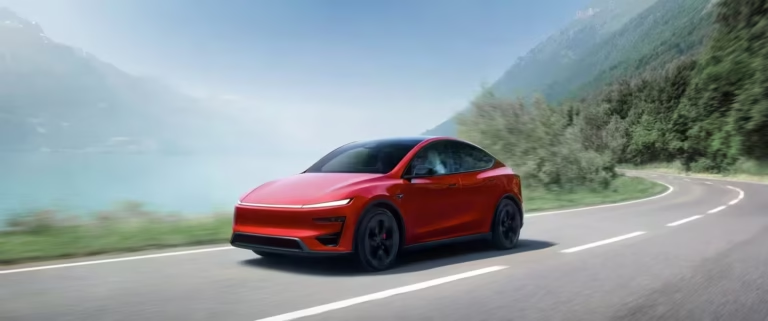
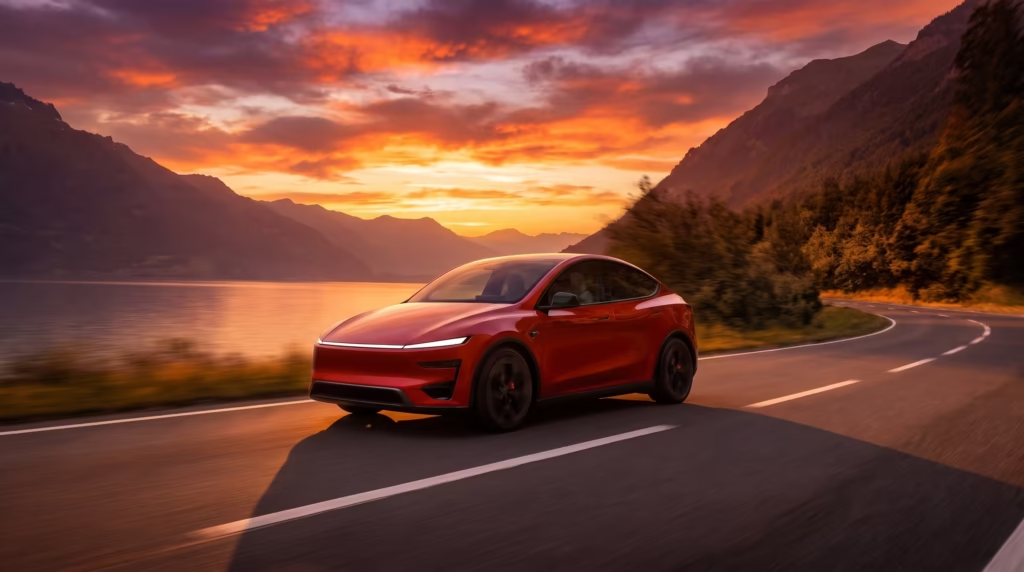
The Tesla Model Y remains a benchmark because its efficiency, cargo space, route planning and charging access work as one system. The rear-wheel-drive version starts at $39,990, offers an EPA-estimated 321 miles of range and can add up to 160 miles in 15 minutes at a compatible Supercharger.
Tesla lists a maximum 225-kW charging rate for this version, although it does not publish usable battery capacity on the consumer specifications page. A large center display, phone controls and software updates create a distinctly digital experience. It ranks among the top 10 cars for drivers ready to replace gasoline with a practical, long-range electric crossover.
Subaru Forester
The Subaru Forester continues to prioritize visibility, space and all-weather confidence. Every 2026 Forester includes symmetrical all-wheel drive, while the new hybrid develops an estimated 194 horsepower and achieves 35 mpg city and 34 mpg highway. Hybrid pricing begins at $34,730, with up to 581 miles per tank.
EyeSight driver assistance, a practical cabin and easy entry make it especially appealing for families and older drivers. Compared with the Honda CR-V and Toyota RAV4, the Forester’s upright design and standard AWD remain major advantages. Within the top 10 cars, it is one of the most sensible choices for mixed weather, light outdoor use and everyday errands.

BMW X5
The BMW X5 represents the luxury end of modern versatility. The 2026 X5 xDrive50e plug-in hybrid produces 483 horsepower, uses all-wheel drive and offers an EPA-rated electric range of 33 miles. BMW lists a starting MSRP of $75,500 and an AC charging time of approximately one hour and 45 minutes under ideal conditions.
The cabin combines premium materials, Live Cockpit technology and available parking assistance. Compared with older luxury SUVs, the X5 can complete many local trips electrically without losing long-distance flexibility. It joins the top 10 cars because it balances performance, refinement and electrified commuting more convincingly than many luxury competitors.

Chevrolet Corvette
The 2026 Chevrolet Corvette proves that modern performance does not have to follow the traditional front-engine formula. The Stingray starts at $70,000 and can produce up to 495 horsepower, with an available 0–60 mph time of 2.9 seconds.
Buyers can move further into electrification with the all-wheel-drive E-Ray hybrid, rated at 655 combined horsepower. Its mid-engine layout delivers exotic-car proportions and track-ready balance at a lower price than many European alternatives.
Running costs, tires and insurance will be higher than those of a normal coupe, but performance value remains exceptional. It is the emotional entry in the top 10 cars.

Toyota Grand Highlander
The Toyota Grand Highlander solves a common three-row SUV problem: the third row is genuinely useful while the hybrid system controls fuel consumption. The 2026 Hybrid XLE delivers up to 37 mpg city and 34 mpg highway, seats seven or eight and starts at $46,780.
Drivers wanting more performance can choose the Hybrid MAX, which produces 362 horsepower and 400 lb-ft of torque. A 12.3-inch display, wireless smartphone integration, Toyota Safety Sense 3.0 and up to 97.5 cubic feet of cargo space support family duty. Among the top 10 cars, it is the best fit for large households that need space without full-size-SUV fuel bills.

Subaru Crosstrek
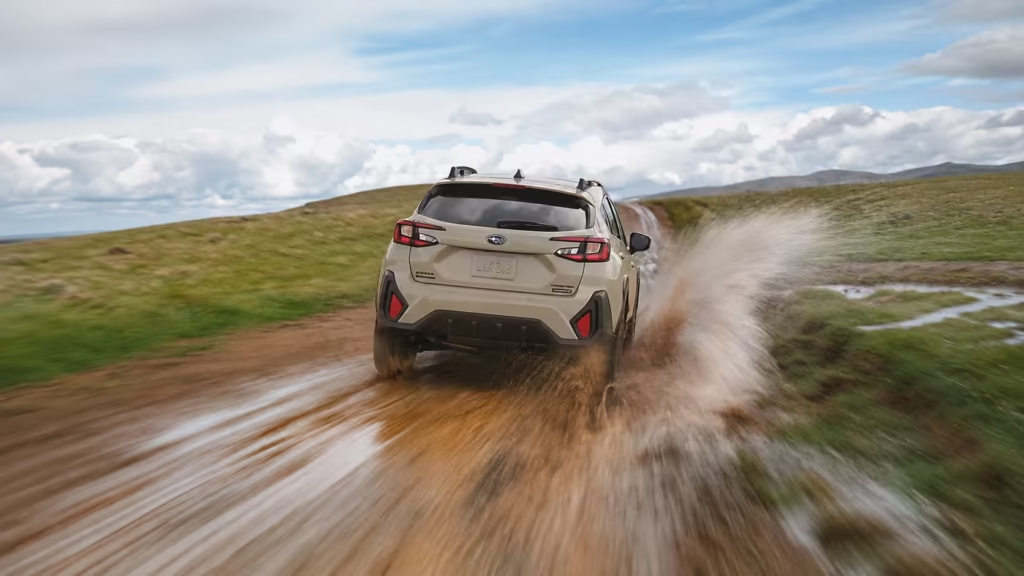
The Subaru Crosstrek is compact enough for urban use but tougher than the average subcompact crossover. The 2026 hybrid starts at $33,995, combines a 2.5-liter boxer engine with dual electric motors and produces an estimated 194 horsepower.
It returns 36 mpg city and highway, offers up to 597 miles of total range and retains 8.7 inches of ground clearance with standard all-wheel drive. EyeSight safety technology and an available 11.6-inch display improve usability.
Compared with road-focused rivals such as the Honda HR-V, the Crosstrek is better suited to rough access roads and winter conditions. That capability secures its place in the top 10 cars.
Ford Maverick
The Ford Maverick remains one of the market’s smartest packaging exercises. The 2026 XL starts at $28,145 with a standard 2.5-liter full-hybrid powertrain producing 184 combined horsepower. Front-wheel-drive hybrids are rated at 42 mpg city, 35 mpg highway and 38 mpg combined, while hybrid all-wheel drive is also available.
It can tow up to 4,000 pounds with the proper package and carry up to 1,500 pounds. A 13.2-inch center display, wireless smartphone integration and flexible bed storage make it useful beyond its footprint. In the top 10 cars, the Maverick is the standout for buyers who need occasional truck ability without full-size operating costs.

Lexus NX
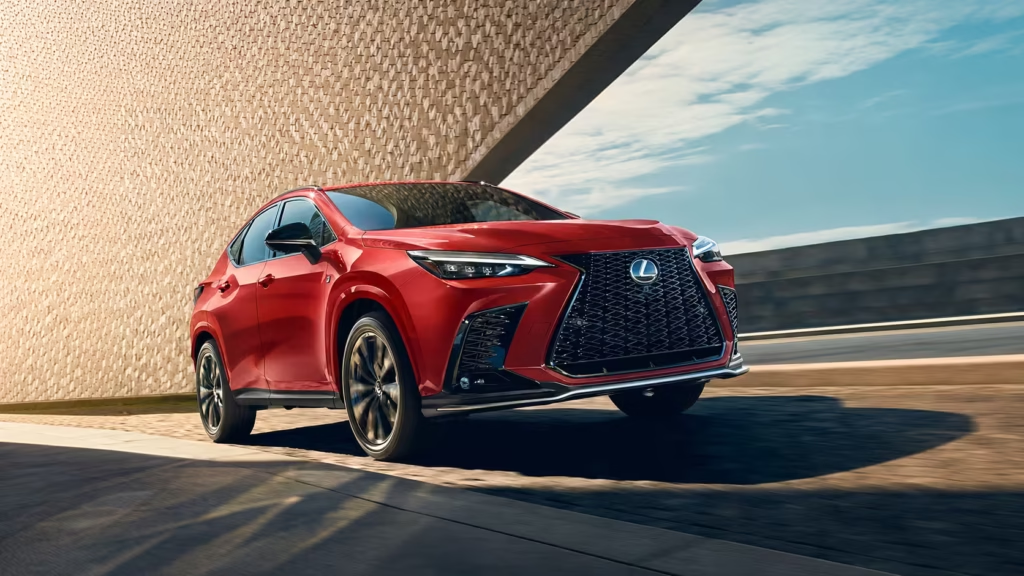
The 2026 Lexus NX combines luxury finishing with one of the broadest powertrain selections in its class. The NX 350h hybrid produces 240 combined horsepower and can return up to 40 mpg combined in front-wheel-drive form.
The NX 450h+ plug-in hybrid adds a 37-mile EPA-estimated electric range, an 84-MPGe rating and a roughly three-hour full charge on 240-volt power with its 7-kW onboard charger. The NX lineup starts at $45,570, while the 450h+ Premium begins at $59,205.
Compared with sportier European rivals, the Lexus emphasizes quietness and efficiency. It closes the top 10 cars as a refined choice for long-term luxury use.
Key Specifications for the Top 10 Cars
| Model | Powertrain Highlight | Output | Efficiency or EV Range | Starting Price |
|---|---|---|---|---|
| Honda Civic | 2.0L two-motor hybrid | 200 hp | 49 mpg combined | $24,695; hybrid $29,395 |
| Toyota Camry | 2.5L hybrid, FWD/AWD | 225–232 hp | Up to 51 mpg combined | $29,300 |
| Tesla Model Y | Rear-motor EV | Not published | 321 miles EPA | $39,990 |
| Subaru Forester | 2.5L hybrid AWD | 194 hp estimated | 35/34 mpg city/highway | Hybrid $34,730 |
| BMW X5 xDrive50e | Plug-in hybrid AWD | 483 hp | 33 electric miles | $75,500 |
| Chevrolet Corvette Stingray | 6.2L V8 | Up to 495 hp | Performance-focused | $70,000 |
| Toyota Grand Highlander | Hybrid or Hybrid MAX | Up to 362 hp/400 lb-ft | Up to 37/34 mpg | Hybrid $45,610 |
| Subaru Crosstrek | 2.5L hybrid AWD | 194 hp estimated | 36 mpg combined | Hybrid $33,995 |
| Ford Maverick | 2.5L full hybrid | 184 hp | 38 mpg combined | $28,145 |
| Lexus NX | Hybrid or plug-in hybrid | 240 hp hybrid | 37 electric miles PHEV | $45,570 |
Technology, Safety and Ownership Trends
The top 10 cars reflect a market moving toward electrification without forcing every buyer into a full EV. Conventional hybrids dominate because they reduce fuel use without requiring charging. Plug-in hybrids serve drivers who can charge at home but still need effortless long-distance travel, while the Model Y shows how a mature charging ecosystem can make an EV work as a primary family vehicle.
Automatic emergency braking, lane support, blind-spot monitoring and adaptive cruise control are increasingly expected. Digital dashboards, wireless smartphone integration and connected navigation are also becoming standard expectations.
Ownership costs still vary. Civic, Camry, Forester and Maverick emphasize manageable routine service. Tesla removes oil changes but may bring higher tire or insurance costs, while Corvette and BMW owners should budget more for performance parts and specialized service.
Future of Modern Cars
The next generation of the top 10 cars will use faster charging, more efficient motors, improved batteries and smarter software. Yet screen size alone will not define success. Leading vehicles will combine intuitive controls, repairable hardware, dependable driver assistance and powertrains matched to how people actually travel.
Hybrids are likely to remain important because they reduce consumption across a broad customer base. At the same time, EV range and charging speed will continue improving, while plug-in hybrids will bridge the gap for drivers who cannot rely entirely on public charging.
The top 10 cars of 2026 demonstrate that modern engineering can serve very different priorities. The Civic and Camry lead on everyday efficiency, the Model Y advances electric usability, the Forester and Crosstrek add all-weather practicality, and the Maverick makes truck ownership more accessible.
The Grand Highlander excels for families, the Lexus NX and BMW X5 bring electrification into luxury segments, and the Corvette preserves excitement in an increasingly efficient market.
The best choice depends on where you drive, passenger needs, home-charging access and budget. A test drive should assess comfort, controls, visibility, rear-seat space and real cargo needs—not only horsepower or screen size.