Rivian R1T Dual-Motor Review Range, Performance and Everyday Capability


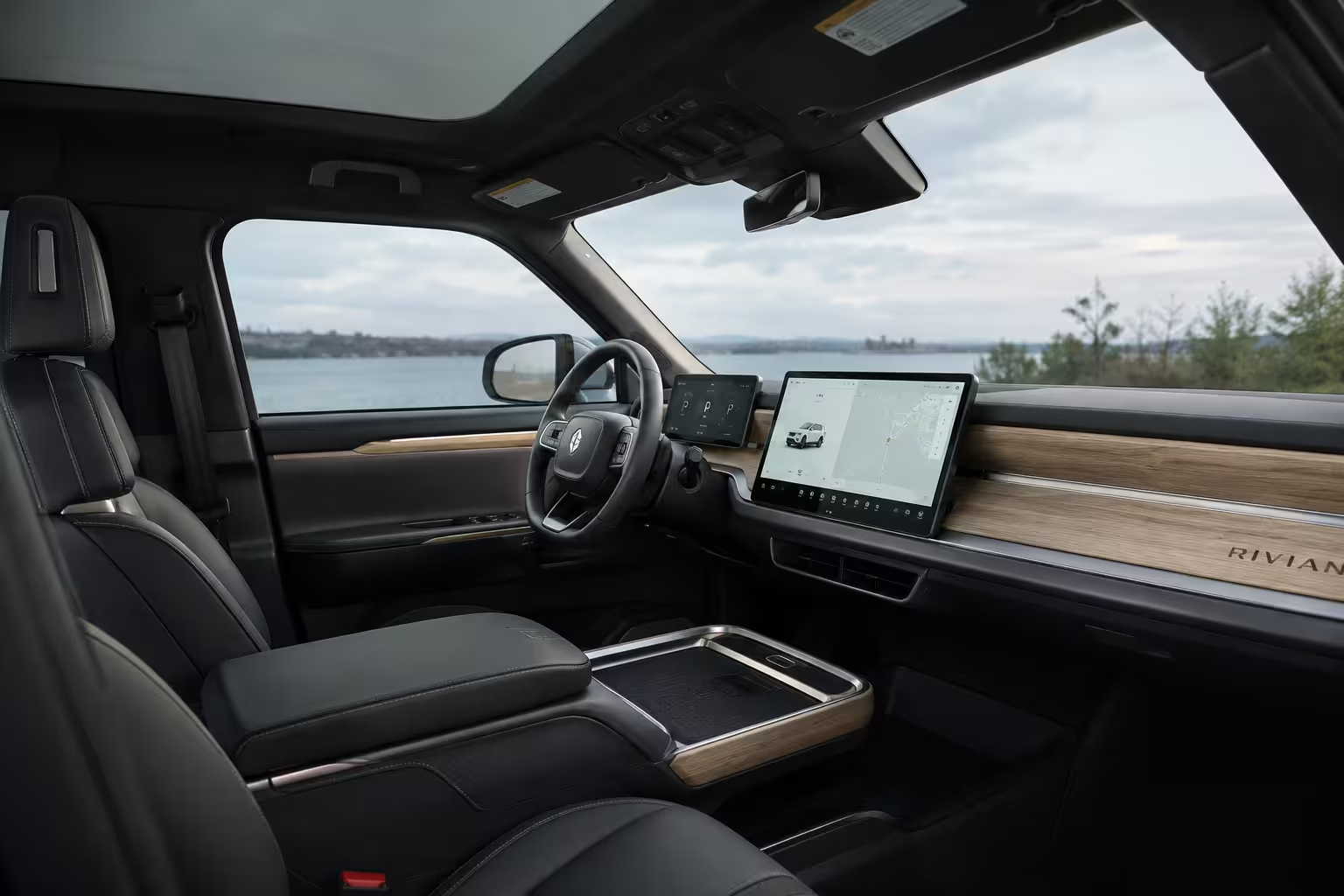


The Rivian R1T Dual-Motor has become the efficiency-focused sweet spot of Rivian’s electric pickup range. It combines genuine truck utility, strong off-road ability, premium technology and acceleration that would have belonged to sports cars not long ago. More importantly, it delivers those qualities without requiring buyers to move into the far more expensive Tri- or Quad-Motor versions.
Electric vehicles increasingly matter because they are changing more than how cars are powered. EVs offer instant torque, regenerative braking, lower routine powertrain maintenance and the possibility of charging at home. In the pickup segment, models such as the R1T also demonstrate that electrification can support towing, cargo hauling and recreational driving rather than being limited to commuter cars.
Rivian R1T Dual-Motor Key Specifications
As of August 2026, the current configurator starts the Rivian R1T Dual-Motor with the Large battery rather than the previously available Standard pack. The Dual lineup now spans an EPA-estimated 329 to 420 miles depending on battery choice, while the Performance Upgrade increases power substantially.
| Specification | R1T Dual | R1T Dual Performance |
|---|---|---|
| Drivetrain | Dual-motor AWD | Dual-motor AWD |
| Horsepower | 533 hp | 665 hp |
| Torque | 610 lb-ft | 829 lb-ft |
| 0–60 mph | 4.5 sec | 3.4 sec |
| Large Battery Range | 329 miles EPA est. | Configuration dependent |
| Max Battery Range | Up to 420 miles EPA est. | Up to 420 miles EPA est. |
| Large Battery Capacity | Approx. 108.5 kWh | Approx. 108.5 kWh |
| Max Battery Capacity | Approx. 140 kWh | Approx. 140 kWh |
| Maximum DC Charging | About 220 kW | About 220 kW |
| Maximum Towing | 7,700 lb | 7,700 lb |
| Maximum Payload | Up to 2,116 lb | Configuration dependent |
| Seating | 5 | 5 |
What Is an EV and How Does It Differ From a Hybrid?
The Rivian R1T Dual-Motor is a battery-electric vehicle, or BEV. It has no gasoline engine, fuel tank or conventional multispeed transmission. Electrical energy stored in its high-voltage battery powers electric motors at the front and rear axles.
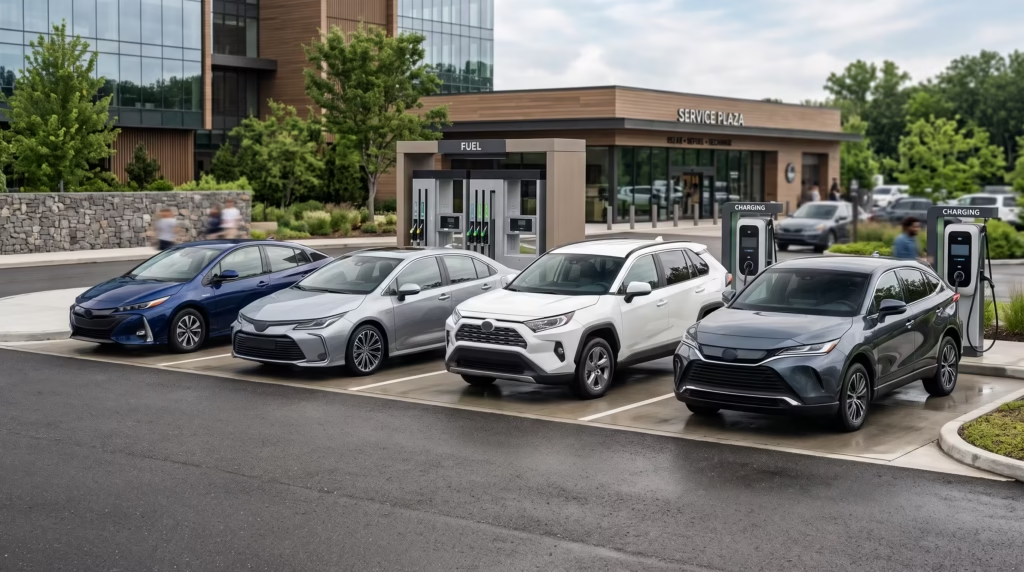
That differs from other electrified vehicles:
- EV: Runs entirely on electricity and is charged externally.
- Hybrid: Combines a gasoline engine with an electric motor and normally does not require plugging in.
- Plug-in hybrid: Uses both an engine and a larger rechargeable battery that can provide limited electric-only driving.
- Mild hybrid: Uses a small electrical system to assist a combustion engine but cannot normally drive meaningful distances on electric power alone.
Rivian R1T Dual-Motor Performance and Driving Experience
The standard Rivian R1T Dual-Motor produces 533 horsepower and 610 lb-ft of torque, reaching 60 mph in an estimated 4.5 seconds. The optional Performance Upgrade raises output to 665 horsepower and 829 lb-ft, cutting the sprint to approximately 3.4 seconds.
That makes the Performance version extremely quick without moving to Rivian’s more complex Tri- or Quad-Motor layouts.
Straight-line speed, however, is only part of the appeal. The R1T uses an adjustable suspension system and sophisticated electronic chassis controls to deliver a surprisingly controlled driving experience for a heavy electric pickup.
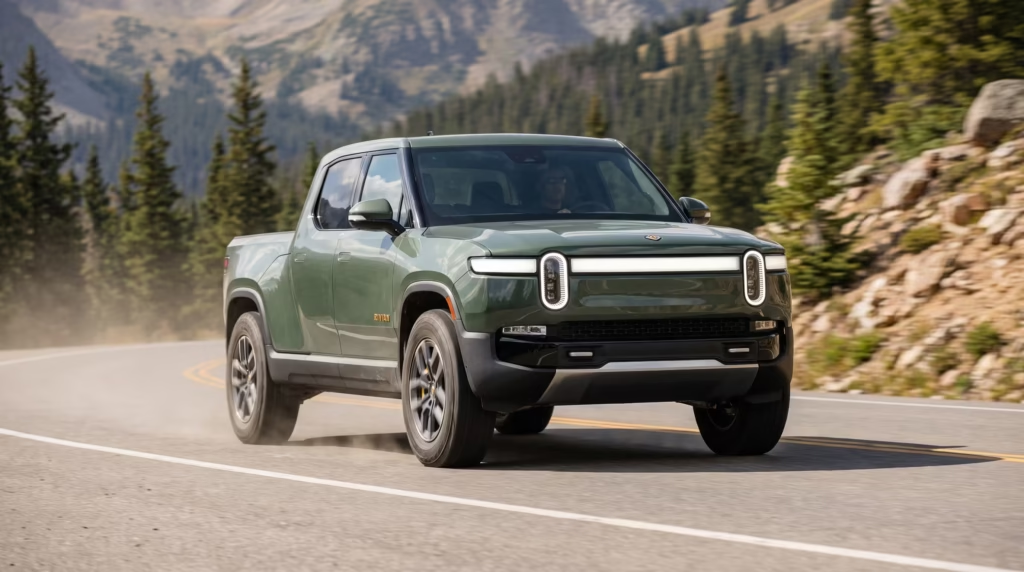
Around town, instant torque makes merging and overtaking effortless. On winding roads, relatively direct steering and well-managed body movement help the truck feel smaller than its dimensions suggest.
Meanwhile, selectable drive modes adapt its behavior for pavement, snow and loose surfaces. Performance-equipped Dual-Motor trucks also gain Sport, Soft Sand and Rally modes.
Battery Range and Real-World Efficiency
Range is one of the strongest reasons to choose the Dual-Motor configuration.
The current Large battery provides an EPA-estimated 329 miles, or roughly 529 km, with the specified 22-inch wheel configuration. Moving to the Max battery raises maximum EPA-estimated range to 420 miles, approximately 676 km.
That makes the Rivian R1T Dual-Motor Max battery particularly attractive for long-distance driving.
Real-world range will still change significantly with:
- Highway speed
- Outside temperature
- Heating and air-conditioning use
- Wheel and tire choice
- Elevation changes
- Payload
- Off-road driving
- Trailer weight

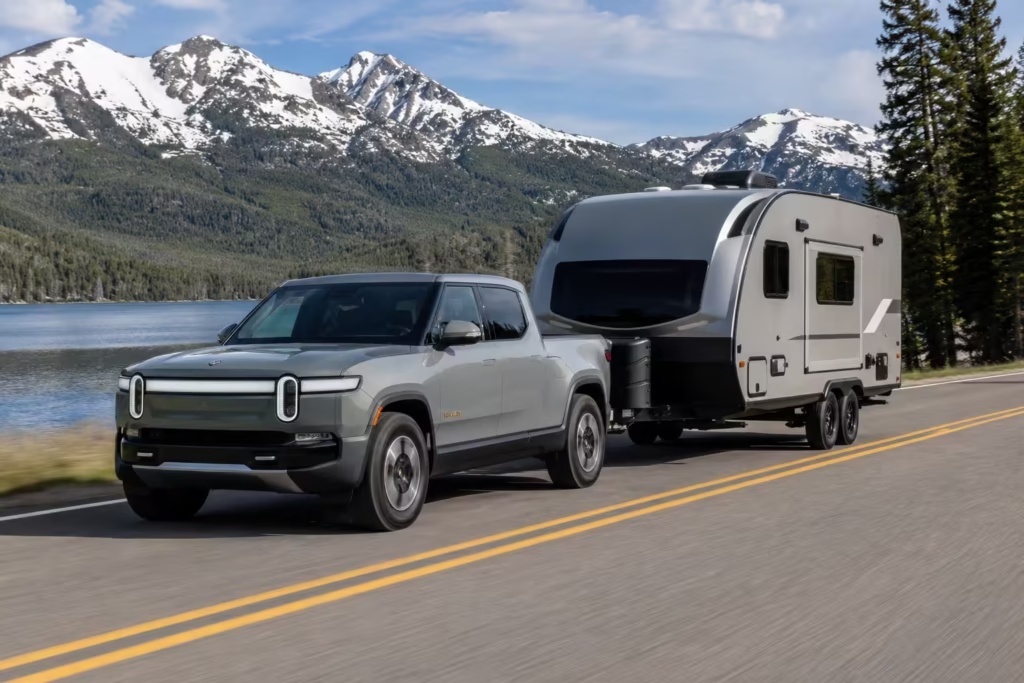
Towing can have an especially large impact because pulling a high-drag trailer dramatically increases energy consumption.
In efficiency terms, the Dual-Motor is generally the most sensible R1T powertrain. EPA estimates for certain Dual-Motor configurations reach around 93 MPGe city and 80 MPGe highway, although wheels and battery specification affect the final rating.
Charging Speed and Charging Time
The Rivian R1T Dual-Motor supports DC fast charging at up to roughly 220 kW with the Large and Max batteries. Under suitable conditions, charging from approximately 10% to 80% can take roughly 30–40 minutes, although charger output, battery temperature and the charging curve can change the result.
One of the biggest improvements for the 2026 model year is charging compatibility.
All 2026 and newer Rivian vehicles use a built-in NACS charging port, providing direct access to more than 21,500 compatible Tesla Superchargers without requiring the NACS DC adapter used by earlier Rivians.
At home, overnight Level 2 charging remains the most convenient approach for many owners. Instead of making dedicated fuel stops, the truck can begin most mornings with a predetermined charge level.

Interior Technology and Infotainment
The cabin combines minimalist EV design with the durability expected from an adventure-focused truck.
The dashboard is dominated by a 15.6-inch central infotainment screen, while the driver gets a separate 12.3-inch digital instrument display. Rear passengers also receive a 6.8-inch display.
Other available or standard features include:
- Rivian navigation
- Bluetooth connectivity
- Wireless phone charging
- Multiple USB-C charging ports
- Heated and ventilated front seats
- Heated steering wheel
- Dual-zone automatic climate control
- Over-the-air software updates
- Voice assistance
- Integrated flashlight
- Multiple 120V outlets
Storage and Everyday Truck Usability
The Rivian R1T Dual-Motor stands out because it uses its electric architecture to create storage areas unavailable in conventional pickups.
Its signature Gear Tunnel sits between the passenger compartment and rear wheels, providing secure storage without consuming bed or cabin space. There is also a large front trunk, or frunk, plus under-bed storage.

These compartments make the R1T particularly useful for camping equipment, tools, groceries and luggage.
Current specifications list up to 2,116 pounds of payload capacity for the Dual-Motor model. Current 2026 specifications list 7,700 pounds of towing capacity, so buyers should not assume the Dual version carries the same 11,000-pound rating currently listed for the Tri- and Quad-Motor R1T.
Driver Assistance and Safety Technology
Rivian continues expanding its software-based driver-assistance capabilities.
New R1T deliveries include a trial of Autonomy+, which offers features such as Universal Hands-Free driving on compatible roads with visible lane markings. Rivian also lists features including Lane Change on Command, while additional automated functions are being introduced through software development.
The important advantage of this connected architecture is that software features can evolve after the truck leaves the factory.
However, systems of this type remain driver-assistance technologies rather than a reason to treat the vehicle as universally autonomous.
Rivian R1T Dual-Motor Pricing in 2026
The current U.S. starting price for an R1T Dual with Large battery is $79,990 before applicable taxes and fees. Rivian currently lists the Max battery as a $7,000 upgrade, while the Dual-Motor Performance Upgrade adds $5,000.
That produces several useful price points:
- Dual + Large: from $79,990
- Dual Performance + Large: approximately $84,990
- Dual + Max: approximately $86,990
- Dual Performance + Max: approximately $91,990
Paint, wheels, interior choices, equipment packages and accessories can increase the final price substantially.
The previously offered lower-cost Dual Standard configuration has been phased out of the current configurator, making the Large battery the effective entry point for new customer builds.
Rivian R1T vs Cybertruck and Silverado EV
| Model | Maximum Range | Max Towing | Key Strength |
|---|---|---|---|
| Rivian R1T Dual-Motor | 420 miles EPA est. | 7,700 lb | Range, handling, storage, adventure capability |
| Tesla Cybertruck AWD | Around 325 miles EPA est. | 11,000 lb | Charging power, technology, towing |
| Chevrolet Silverado EV | Up to 478 miles GM-est. | Up to 12,500 lb | Range, towing and full-size truck utility |
Current manufacturer specifications place the Cybertruck AWD at roughly 325 miles of EPA range and 11,000 pounds of towing, while Chevrolet advertises as much as 478 miles of estimated Silverado EV range and 12,500 pounds of available towing.
The R1T therefore does not dominate every specification. Instead, its advantage is balance. It is smaller and more maneuverable than many full-size electric trucks while providing strong range, rapid acceleration, sophisticated suspension and highly creative cargo storage.

How Does It Compare With a Gasoline Pickup?
A conventional gasoline truck can still make more sense for buyers who tow heavy trailers over long distances in areas with limited charging infrastructure.
Refueling also remains considerably faster than recharging a large EV battery.
However, the Rivian R1T Dual-Motor offers advantages in daily driving:
- Instant power delivery
- No gasoline consumption
- Quiet operation
- Regenerative braking
- Home charging
- No engine oil changes
- Fewer traditional powertrain components
- Strong acceleration at virtually any road speed
For commuting, urban driving and moderate-distance recreation, the electric experience can be easier than gasoline ownership when dependable home charging is available.
Ownership and Maintenance Costs
Electric vehicles remove several traditional maintenance items. There are no spark plugs, engine oil changes, exhaust systems or conventional multispeed automatic transmissions to service.
Owners still need to budget for tires, brakes, suspension components, cabin filters, coolant-system inspections and normal wear.
Tires deserve particular attention because the R1T is heavy and powerful. Frequent hard acceleration can shorten tire life, reducing some of the maintenance savings associated with an EV.
The Large and Max battery and drivetrain coverage is 8 years or 150,000 miles for applicable Rivian configurations, while comprehensive coverage is listed at 4 years or 50,000 miles.
Electricity costs vary dramatically by region, but owners who primarily charge at residential rates can often spend less on energy per mile than comparable high-performance gasoline pickup owners.
Environmental Impact
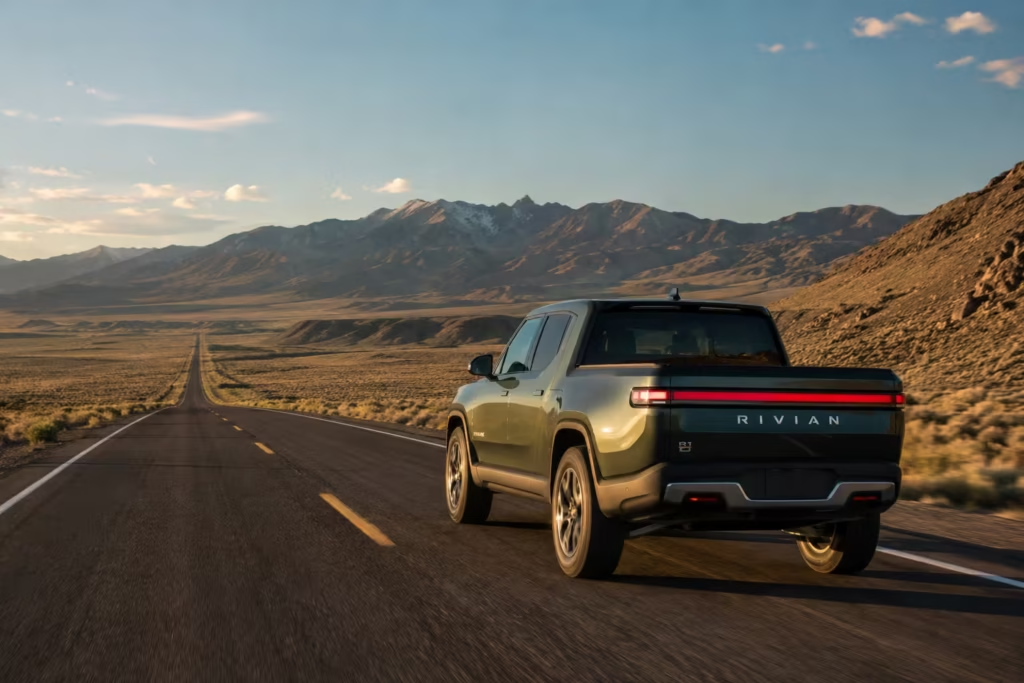
The Rivian R1T Dual-Motor produces no tailpipe emissions while driving. That can improve local air quality, particularly in densely populated areas.
Nevertheless, an EV is not impact-free. Large battery packs require substantial raw materials and energy during manufacturing, while a heavy electric pickup consumes considerably more electricity and resources than a small electric car.
Its environmental case therefore depends partly on how the vehicle is used, how electricity is generated and how many miles it replaces from combustion-powered transportation.
For truck buyers who genuinely need pickup capability, electrification can reduce lifetime fossil-fuel consumption without eliminating utility.
Worldwide Availability
The R1T remains primarily a North American product.
Rivian currently offers consumer R1T purchasing in the United States and Canada, with Canadian pricing and ordering available directly through Rivian.
For European and UK buyers, the situation is different. The R1T is not officially sold there as a mainstream Rivian consumer model, and private imports can create complications involving servicing, charging compatibility, parts support and vehicle regulations.
Rivian’s smaller R2 platform is more closely connected with the company’s longer-term international expansion ambitions.
Market Impact and Future of Electric Pickups
The Rivian R1T Dual-Motor represents an important shift in the electric-truck market.
Early EV pickups often competed by maximizing headline horsepower. The Dual-Motor R1T demonstrates a more mature approach: provide enough performance to be genuinely exciting while improving range, efficiency and everyday value.
That balance may become increasingly important as electric pickups move beyond early adopters.
Future competition will likely focus increasingly on battery efficiency, charging curves, towing efficiency, bidirectional power, software, battery cost and real-world range rather than horsepower alone.
The Rivian R1T Dual-Motor is arguably the most balanced version of Rivian’s premium electric pickup. The standard 533-hp model already delivers performance beyond what most drivers need, while the 665-hp Performance Upgrade turns it into an exceptionally rapid truck without sacrificing the long-range advantages of the Dual-Motor platform.
Its strongest qualities are the 329–420-mile range, sophisticated driving experience, NACS charging access, innovative Gear Tunnel, premium technology and practical storage.
Buyers focused primarily on maximum towing may find stronger numbers elsewhere. However, drivers looking for a premium electric pickup that combines road manners, adventure capability, efficiency and usable range will find the Dual-Motor configuration particularly compelling.