Dualtron Thunder 3 Review Extreme Power Meets Long-Range Mobility




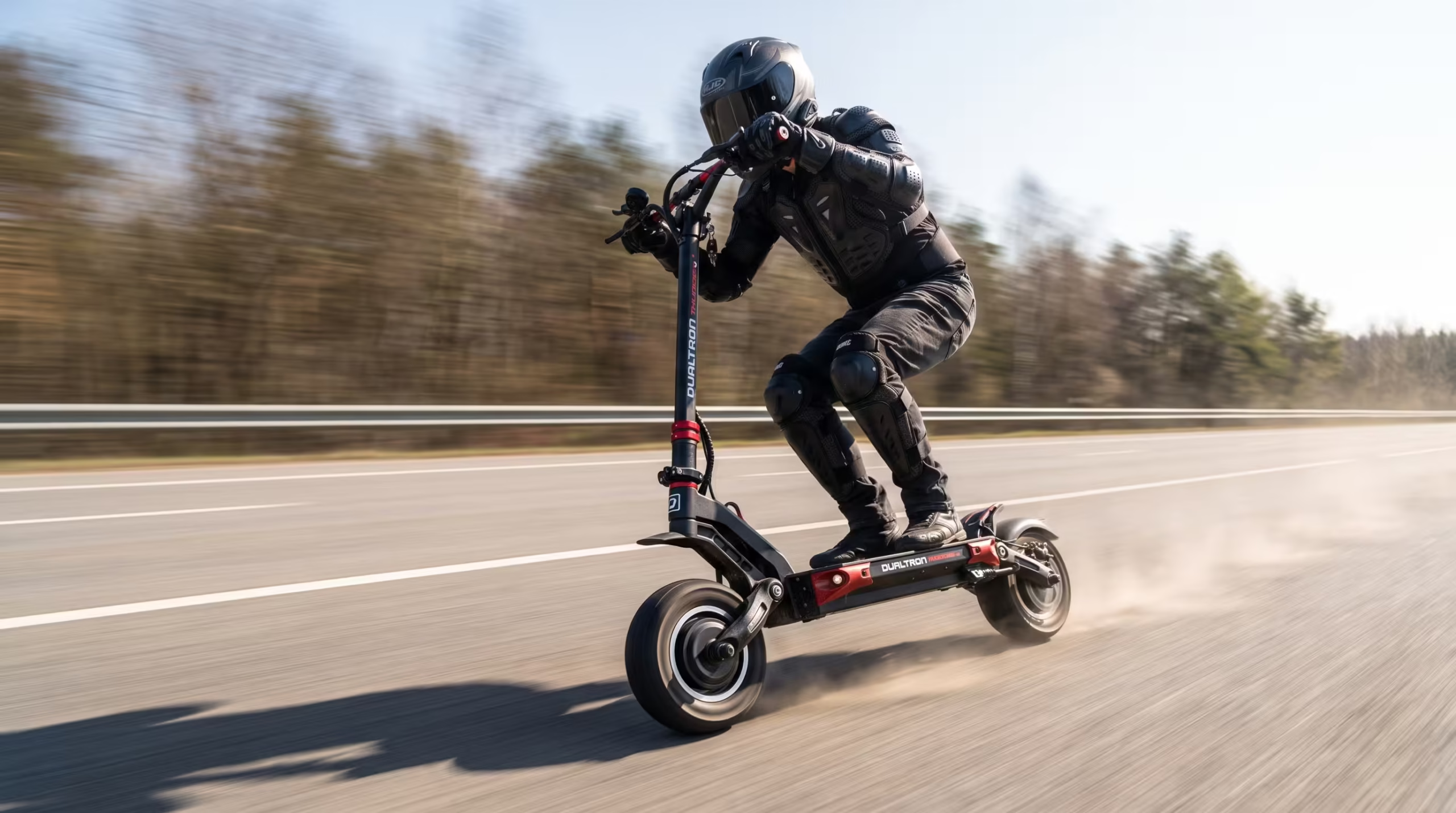


The Dualtron Thunder 3 sits at the extreme end of the electric scooter market. Instead of focusing on lightweight portability and short urban trips, it combines a large 72V battery, dual high-output motors, hydraulic brakes, substantial suspension, wide tires and connected technology in a machine designed primarily for experienced performance-scooter riders.
Electric scooters have become an increasingly visible part of urban mobility. Basic models provide an alternative to walking, short car journeys and public transport, while high-performance electric scooters explore how far the platform can be pushed in terms of acceleration, range, braking and chassis capability. The Thunder 3 belongs firmly in that second category.
What Type of Electric Scooter Is the Dualtron Thunder 3?
Electric scooters generally fall into several groups.
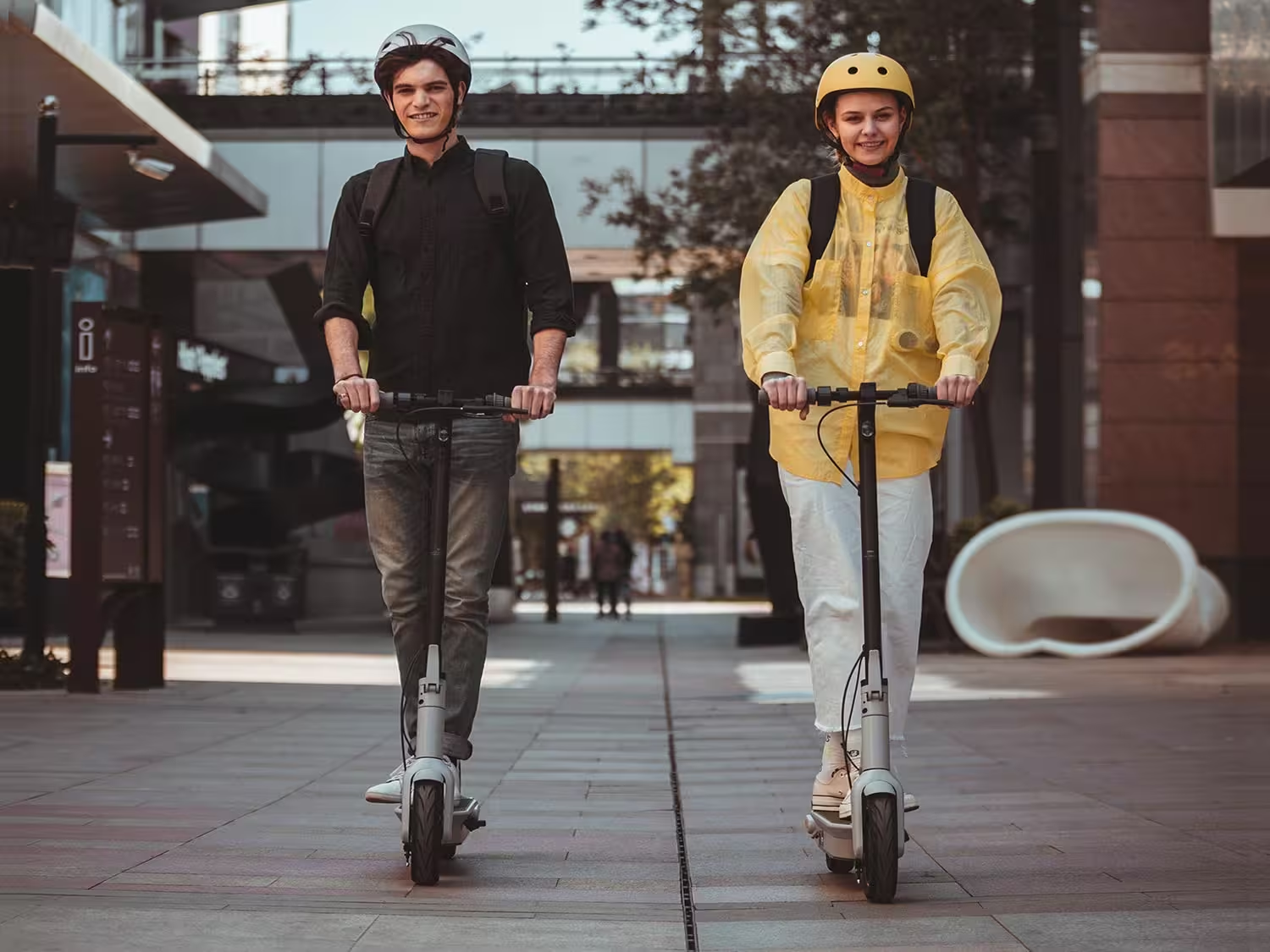
Commuter electric scooters emphasize manageable weight, efficiency and practical city range. Folding electric scooters prioritize storage and portability. Entry-level city scooters usually combine moderate motor power with smaller batteries.

The Dualtron Thunder 3 is a premium performance electric scooter built around power, stability and long-distance capability. Although its stem folds, its approximately 51 kg weight means it should not be confused with a conventional portable folding scooter.
Dualtron Thunder 3 Key Specifications
| Specification | Dualtron Thunder 3 |
|---|---|
| Motor system | Dual hub motors |
| Nominal motor power | 2,500W × 2 |
| Maximum motor output | Up to 10,800W |
| Battery | 72V 40Ah |
| Battery energy | Approx. 2.8 kWh |
| Battery cells | LG 21700 on applicable 40Ah version |
| Maximum claimed speed | Around 100 km/h / 60+ mph |
| Claimed maximum range | Up to roughly 125–170 km depending on test conditions |
| Standard charging time | Around 28 hours |
| Brakes | NUTT hydraulic disc brakes, 160 mm discs |
| Tires | 11-inch ultra-wide tubeless tires |
| Display | EY4 color LCD with Bluetooth connectivity |
| Suspension | Adjustable front and rear cartridge suspension |
| Water resistance | IPX5 |
| Weight | Around 51–51.2 kg |
| Lighting | Headlights, brake/tail lighting, LEDs and turn signals |
Published range figures vary because testing methods, speed and configurations differ. Manufacturer documentation lists approximately 125 km for the 40Ah version, while some market specifications quote figures approaching 170 km under favorable conditions.
Motor Power, Torque and Acceleration
Motor performance is one of the clearest reasons riders consider the Dualtron Thunder 3.
Its dual motors can deliver approximately 10.8kW of maximum combined output, placing it far beyond ordinary commuter scooters. The high-voltage system and powerful controllers are designed to provide substantial torque during acceleration and climbing.

A dedicated overtake or boost function can temporarily provide stronger controller output. Consequently, throttle response is intentionally aggressive compared with low-powered city scooters.
This performance architecture also highlights a major difference between the Thunder 3 and smoother sine-wave-controlled competitors. The Dualtron’s power delivery can feel more immediate and forceful rather than exceptionally soft or gradual.
Top Speed and High-Performance Capability
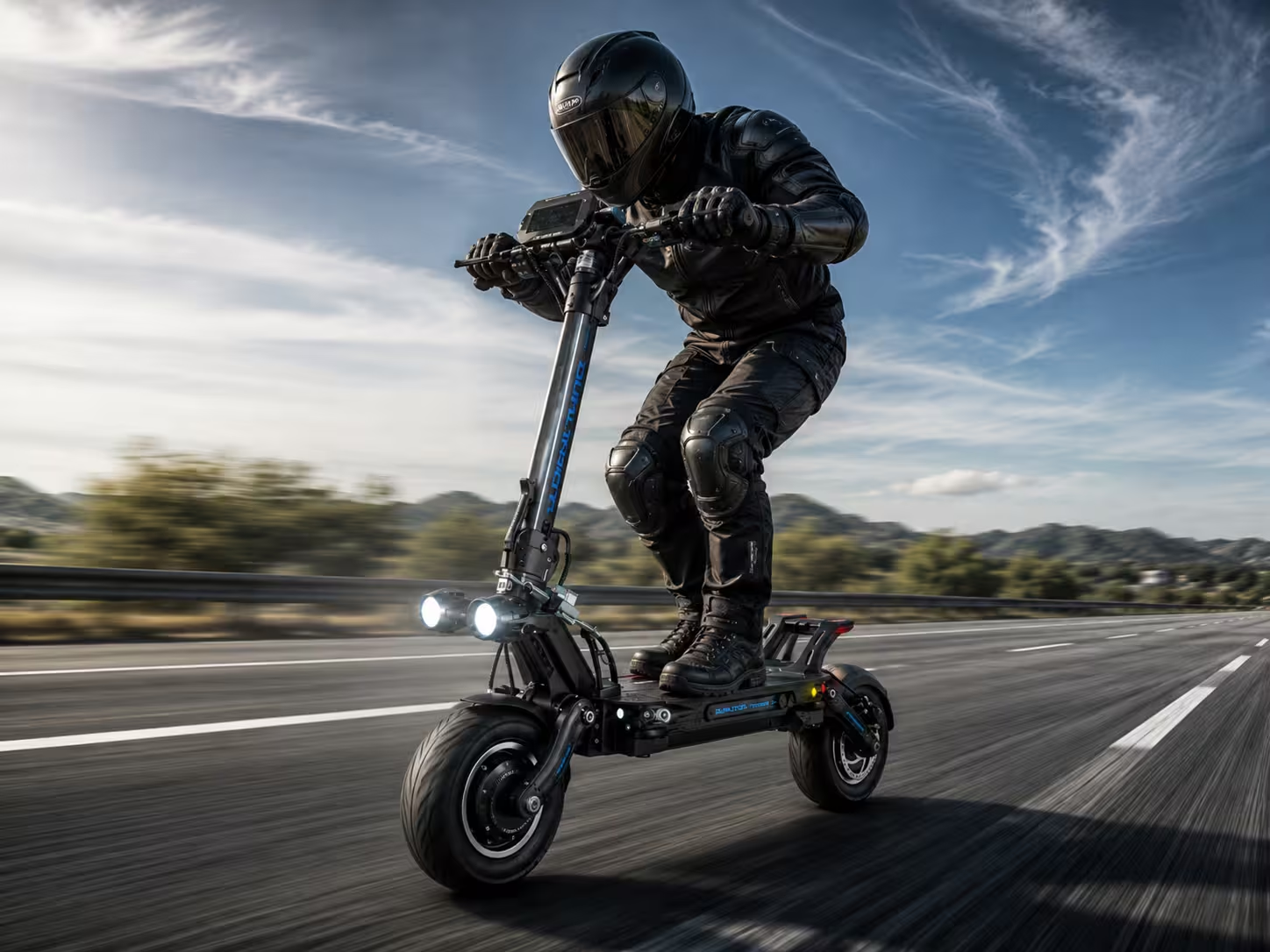
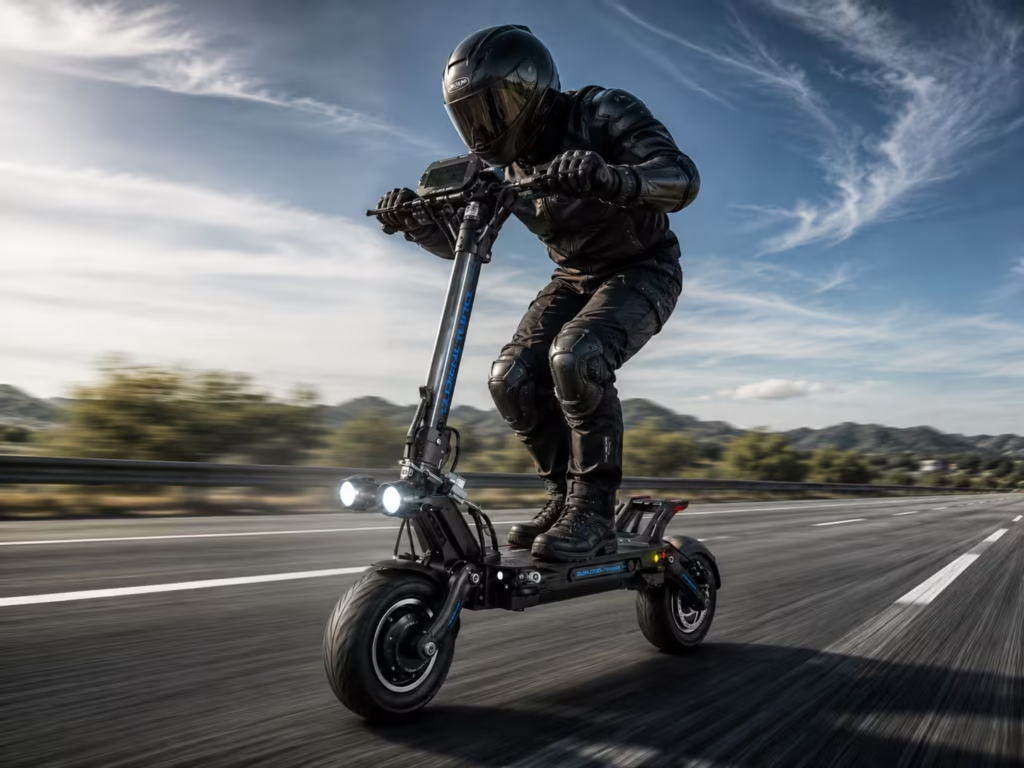
Depending on specification, setup and market configuration, the Thunder 3 platform is capable of approximately 100 km/h, with some listings describing 60–63+ mph performance.
That figure places the scooter among the fastest production electric scooters rather than ordinary urban commuters.
Street legality for scooters with this level of performance varies significantly between countries, states and cities, making local classification rules an important part of ownership.
Battery Capacity, Range and Charging
The large 72V 40Ah battery provides roughly 2.8 kWh of energy storage. That capacity supports the Thunder 3’s combination of strong acceleration and long-distance riding.
However, maximum advertised EV range should never be interpreted as guaranteed everyday range. Rider weight, speed, temperature, hills, tire pressure, acceleration and stop-start riding all affect energy consumption.
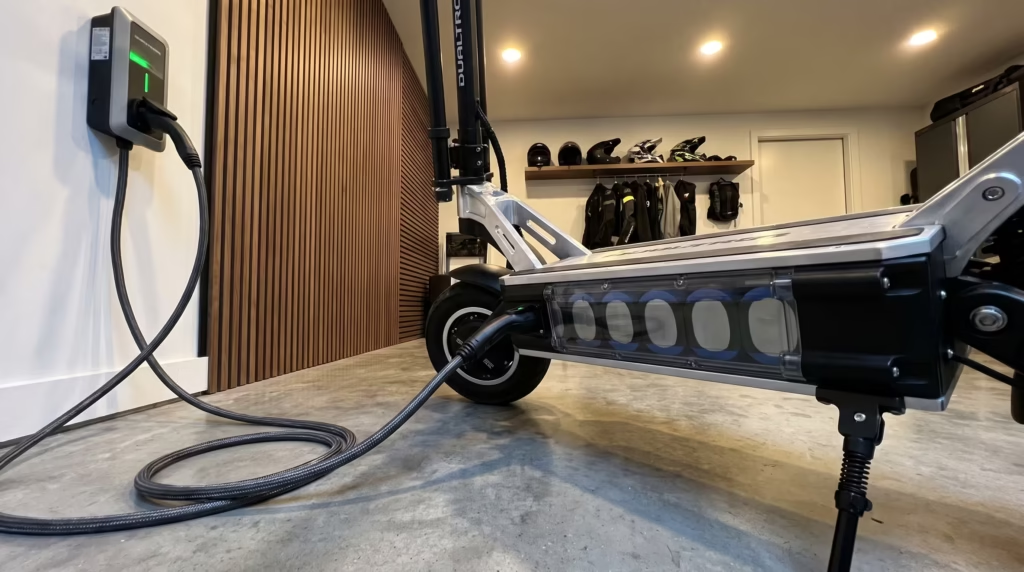
Standard charging is another important ownership consideration. Documentation lists approximately 28 hours with the standard low-current charger, while compatible higher-output charging equipment can reduce charging time considerably.
Brakes, Suspension and Ride Comfort
A scooter this powerful requires equally serious chassis hardware.
The Dualtron Thunder 3 uses NUTT hydraulic braking with large 160 mm discs, while current manufacturer information also highlights upgraded multi-piston calipers.
The braking package works alongside electronic braking assistance.

At both ends, adjustable cartridge suspension helps control the considerable mass of the scooter. Riders can tune the suspension characteristics rather than relying on the basic spring systems commonly found on inexpensive commuter scooters.
Its 11-inch ultra-wide tubeless tires further improve contact with the road and contribute to stability, grip and bump absorption.
Frame, Stem and Build Quality
The chassis is built around a reinforced aluminum structure with a large deck, substantial stem and redesigned folding mechanism.
The Thunder 3 also includes a steering damper as standard equipment. Combined with the wide tires, long chassis and significant overall mass, the design emphasizes planted handling rather than portability.
At roughly 51 kg, however, carrying the scooter upstairs or repeatedly loading it into a vehicle is substantially more difficult than handling a typical 15–25 kg commuter model.

EY4 Display, App Connectivity and Lighting
One of the most useful modernization upgrades is the EY4 display.
The color LCD communicates speed, battery and ride information while Bluetooth connectivity enables integration with the Dualtron app.
Connected controls can provide access to selected scooter settings and ride configuration.
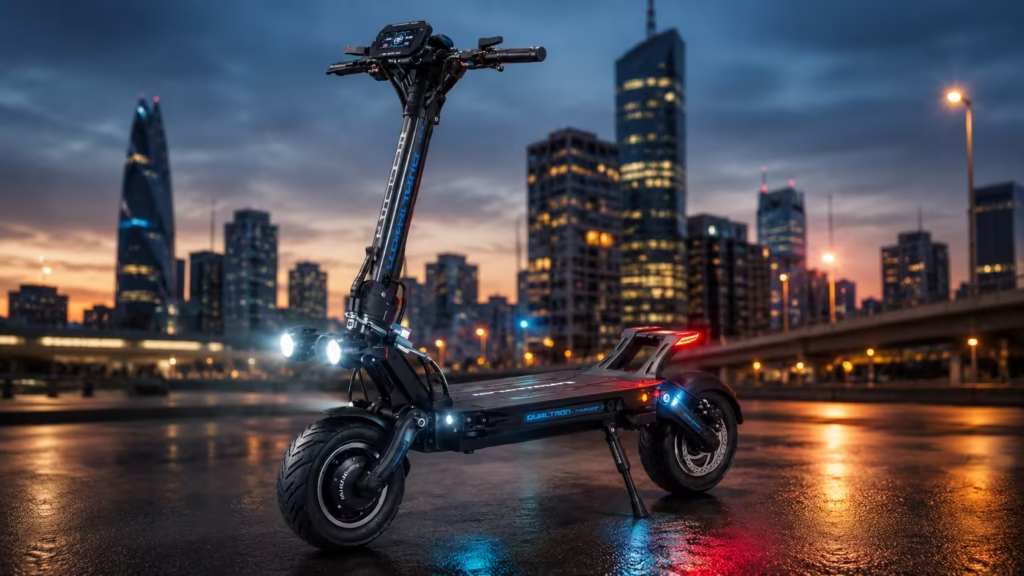
Lighting is equally comprehensive. The platform incorporates strong front lighting, rear illumination, brake lights, turn signals and decorative LEDs. Manufacturer information also specifies dedicated 60W headlight output.

Another important improvement is the official IPX5 water-resistance rating, giving the Thunder 3 a defined level of protection that earlier performance scooters did not always provide.
Dualtron Thunder 3 vs Other Urban Mobility Options
| Category | Thunder 3 | Typical Commuter Scooter | E-Bike | Public Transport |
|---|---|---|---|---|
| Performance | Extremely high | Low to moderate | Moderate | Not rider-controlled |
| Practical range | Very high potential | Moderate | High with pedaling | Network dependent |
| Portability | Low | High | Low to moderate | Excellent after boarding |
| Storage space needed | Significant | Low | Significant | None |
| Charging required | Yes | Yes | Yes | No |
| Physical effort | Minimal | Minimal | Optional/required | Minimal |
| Maintenance | Performance-level | Relatively simple | Bicycle + electrical | Operator managed |
| Best use | Performance and long rides | Urban commuting | Daily transport | High-density commuting |
Real-World Commuting and Ownership
For normal city commuting, the Dualtron Thunder 3 is arguably more machine than most riders require. A smaller commuter electric scooter will usually be easier to carry, park and charge.
Its strengths become clearer for riders prioritizing acceleration, long riding distances, hill-climbing ability and substantial chassis hardware.
Ownership costs can also be higher than those of basic scooters. Wide performance tires, hydraulic brake components, brake pads and other wear parts eventually require servicing. Battery replacement would also represent a substantial long-term expense because of the pack’s size.
However, electric drivetrains eliminate several maintenance requirements associated with gasoline vehicles. There is no engine oil, exhaust system, fuel system or conventional transmission to service.
Environmental and Market Impact
Electric scooters can reduce the energy required for short individual journeys, especially when replacing larger combustion vehicles. Nevertheless, environmental impact depends on electricity generation, manufacturing, battery lifespan and whether the scooter replaces a car journey rather than walking or public transportation.
The growing performance segment also demonstrates how quickly electric mobility technology is developing. Larger lithium-ion batteries, smarter battery management, stronger controllers and advanced displays have allowed scooter manufacturers to move beyond basic last-mile transportation.
Future of Performance Electric Scooters
Future premium scooters are likely to focus less exclusively on maximum motor output and more on usable refinement.
Important trends include smoother controller response, improved thermal management, better app integration, advanced battery monitoring, more efficient motors, traction-related electronics and lighter high-strength materials.
The Dualtron Thunder 3 already reflects several parts of this transition through Bluetooth connectivity, an updated display, formal water resistance, substantial lighting and an upgraded braking package.
Pros and Cons
Pros
- Exceptional dual-motor performance
- Large 72V 40Ah battery
- Very strong acceleration and hill-climbing potential
- NUTT hydraulic braking
- 11-inch wide tubeless tires
- Adjustable suspension
- EY4 Bluetooth display
- IPX5 water resistance
- Extensive lighting and turn signals
- Steering damper supplied as standard
Cons
- Approximately 51 kg weight limits portability
- Standard charging can take around 28 hours
- Large physical footprint
- Higher maintenance costs than basic commuter scooters
- Aggressive power delivery may feel less refined than smoother controller systems
- Performance capability is unnecessary for many everyday commuters
The Dualtron Thunder 3 is not simply a faster version of a conventional city scooter. Its dual-motor system, approximately 10,800W maximum output, 72V 40Ah battery, hydraulic brakes, adjustable suspension, EY4 connectivity and 11-inch tires place it firmly in the hyper-performance category.
Its greatest strengths are power, range potential, braking hardware and high-speed-oriented chassis design. Its biggest compromises are weight, charging time, portability and ownership cost.
For riders comparing premium performance electric scooters, the Thunder 3 represents a distinctive combination of traditional Dualtron engineering and newer connected electric-mobility technology.