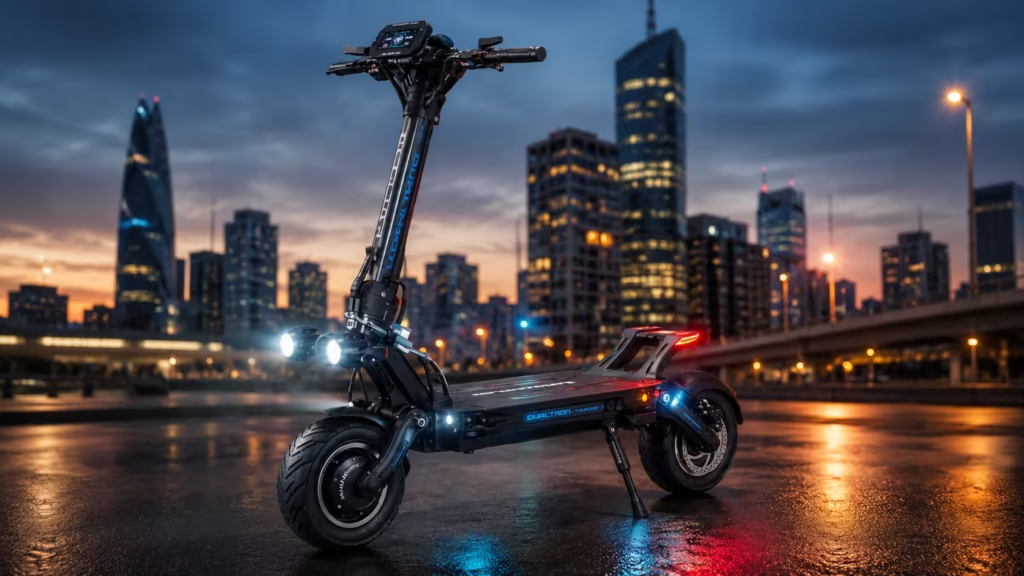
Segway-Ninebot ES2 Review Range, Specs and Commuter Value





The Segway-Ninebot ES2 is a lightweight folding electric scooter built for short commutes, first-and-last-mile transportation, and casual urban riding. Its streamlined frame, quick folding mechanism, smartphone connectivity, and customizable under-deck lighting helped make it one of the most recognizable early commuter scooters.
Electric scooters now play an important role in urban mobility because they can connect homes, workplaces, transit stations, and local services without requiring a car. However, the market has advanced considerably since the Segway-Ninebot ES2 arrived. Buyers must therefore compare its portability and simple design against the better brakes, larger tires, and longer ranges offered by newer models.
What Is an Electric Scooter?
An electric kick scooter combines a standing deck, handlebar, rechargeable battery, controller, electric motor, brakes, and two wheels. Most models require the rider to push off before a thumb throttle activates the motor.
Electric scooters generally fall into four categories:
- Commuter electric scooters for daily city trips
- Folding electric scooters for storage and public transportation
- Performance electric scooters with stronger motors and larger batteries
- Recreational scooters for relaxed neighborhood riding

The Segway-Ninebot ES2 sits between the commuter and recreational classes. It is more portable than many current commuter models, but it is not intended for demanding hills, poor roads, or long-distance travel.
Segway-Ninebot ES2 Key Specifications
| Specification | Official figure or equipment |
|---|---|
| Maximum speed | Up to 15.5 mph |
| Claimed riding range | Up to 15.5 miles |
| Motor output | 300W nominal, up to 700W maximum |
| Battery capacity | 187 Wh |
| Charging time | Approximately 3.5 hours |
| Maximum climbing grade | Approximately 10% |
| Scooter weight | 27.6 lb |
| Maximum rider weight | 220 lb |
| Front tire | 8-inch solid tire |
| Rear tire | 7.5-inch solid tire |
| Suspension | Front and rear shock absorption |
| Braking system | Electronic brake and rear mechanical foot brake |
| Water resistance | IP54 |
| Lighting | Front LED, rear brake light and ambient deck lights |
| Connectivity | Bluetooth and mobile-app support |
| Frame | Aluminum-alloy construction |
These figures were measured or estimated under controlled conditions. Temperature, rider weight, wind, hills, battery age, riding mode, pavement, and repeated acceleration can reduce real-world performance.
Motor Power, Torque and Acceleration
The Segway-Ninebot ES2 uses a 300W nominal motor with a stated maximum output of 700W. Segway does not publish an official torque figure or acceleration time for this model.
Performance is tuned for predictable city riding rather than forceful launches. The motor engages only after the rider pushes the scooter forward, reducing accidental throttle activation while stationary.
Acceleration is adequate on flat streets, particularly for lighter riders. Nevertheless, heavier riders and steep routes will expose the limits of the small motor and battery. Its 10% grade rating should not be interpreted as a guarantee that the scooter will maintain full speed uphill.
Top Speed and Urban Performance
A maximum speed of 15.5 mph places the Segway-Ninebot ES2 within the normal range for an entry-level commuter scooter.
That speed is sufficient for short neighborhood trips and connections to public transportation. However, 15.5 mph can feel fast on small solid tires when the pavement is wet, cracked, or uneven.
Riders should slow down around pedestrians, driveways, intersections, loose surfaces, and blind corners. The ES2 is not designed for racing, off-road riding, or unauthorized speed modifications.
Battery Capacity and Real-World Range
The Segway-Ninebot ES2 contains a 187 Wh lithium-ion battery and has a claimed maximum range of 15.5 miles.
Daily riders should plan more conservatively. A practical range of approximately 8 to 12 miles may be more realistic when traveling near maximum speed or encountering:
- Hills and repeated acceleration
- Cold temperatures
- Headwinds
- Heavier rider loads
- Stop-and-start traffic
- An aging battery
Battery condition is especially important because many ES2 scooters are now sold as used, refurbished, or older unsold stock.
The standard charging time is approximately 3.5 hours. That is relatively quick, although the small battery also stores less energy than those in newer long-range scooters.
External Battery Upgrade
A compatible stem-mounted battery can transform the Segway-Ninebot ES2 into an ES4-style configuration.
The upgraded setup has official figures of up to:
- 18.6 mph maximum speed
- 28 miles claimed range
- 374 Wh combined battery capacity
- 30.9 lb total scooter weight
- 15% climbing grade
The additional pack improves range and power but also increases charging time, weight, cost, and complexity.
Before purchasing an older external battery, inspect its casing, mounting bracket, connectors, screws, and charging behavior. A degraded add-on battery may provide less value than buying a newer scooter with a larger integrated pack.
Braking System and Stopping Control
The Segway-Ninebot ES2 combines a thumb-controlled electronic front brake with a rear mechanical foot brake.
The electronic system provides convenient speed control and regenerative braking. Pressing the rear fender against the tire adds mechanical stopping force when a shorter stop is required.
This design is simple and lightweight, but it is less confidence-inspiring than a modern drum or disc brake. Riders should begin braking early and avoid depending entirely on the electronic system.
Stopping distance can increase on wet, dusty, or loose surfaces. Regularly inspect the rear fender and confirm that both braking methods operate correctly before riding.

Tires, Suspension and Ride Comfort
The Segway-Ninebot ES2 uses an 8-inch solid front tire and a 7.5-inch solid rear tire.
Solid tires eliminate ordinary punctures and reduce maintenance. However, they provide less cushioning and can deliver less grip than good-quality pneumatic tires.
Front and rear shock absorption helps soften smaller impacts, but it cannot completely compensate for the small wheel diameter. The scooter feels most comfortable on smooth asphalt, maintained bicycle paths, and relatively level sidewalks where riding is permitted.
Potholes, deep cracks, raised covers, gravel, and wet markings deserve extra caution. The firm ride can also become tiring over longer distances.

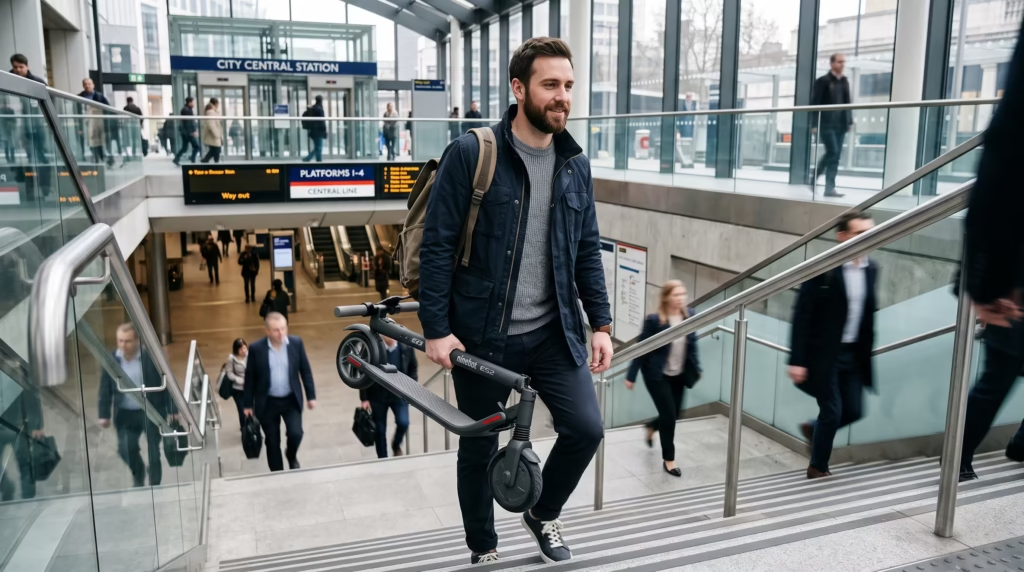
Folding Design, Weight and Portability
At 27.6 lb, the Segway-Ninebot ES2 is noticeably lighter than many current commuter scooters.
Its folding stem locks against the rear fender, creating a compact package for:
- Apartment storage
- Car trunks
- Elevators
- Office storage
- Short staircases
- Public transportation where permitted
The aluminum-alloy construction and internally routed cables give the scooter a clean, uncluttered appearance.
Its deck is relatively narrow by modern standards. Riders may need time to find a secure foot position, particularly when wearing large shoes.
Inspect the folding pedal, locking mechanism, handlebar fasteners, stem, rear fender, and wheel alignment regularly. This is particularly important when considering a used scooter with an unknown riding history.
Display and App Connectivity
The handlebar display shows speed, battery level, riding mode, Bluetooth status, and basic error information.
The Segway-Ninebot ES2 connects to Segway’s mobile app for initial activation and vehicle information. Depending on the app version, firmware, and regional settings, available functions may include:
- Riding-mode adjustment
- Battery and trip information
- Firmware updates
- Cruise-control settings
- Electronic locking
- Ambient-light customization
- Diagnostic information
The electronic lock is only a deterrent. It does not physically secure the scooter, so owners should use an appropriate external lock when leaving it unattended.
Lighting and Visibility
The Segway-Ninebot ES2 includes a front LED headlight, rear brake light, and customizable LEDs beneath the deck.
The ambient lights give the scooter a distinctive appearance, but they should not be treated as primary safety equipment. The front and rear lights are more important for being seen by other road users.
Reflective clothing, a properly fitted helmet, and additional legal lighting can improve visibility. Riders should avoid dark routes where the standard headlight does not provide enough forward illumination.
Water Resistance and Rider Safety
The Segway-Ninebot ES2 carries an IP54 water-resistance rating. This indicates limited protection against dust and splashing water, not waterproof construction.
The operating guidance advises against riding in rain or through deep puddles. The scooter should never be submerged, pressure-washed, or charged while the port or cable is wet.
Additional safety practices include:
- Wear an approved helmet and closed shoes
- Keep both hands on the handlebar
- Do not carry passengers
- Avoid hanging heavy items from the handlebar
- Slow down before bumps and corners
- Follow local scooter and traffic laws
- Check tire, brake, stem, and folding-system condition
Buyers should also check the model and serial number through current manufacturer and government safety resources. A recall involving another Ninebot model does not automatically apply to the ES2.
Segway-Ninebot ES2 Competitor Comparison
| Feature | Segway-Ninebot ES2 | Segway E2 Plus II | NIU KQi 200 |
|---|---|---|---|
| Maximum speed | 15.5 mph | 15.5 mph | 19.5 mph |
| Claimed range | 15.5 miles | About 15.5 miles | Up to 33.6 miles |
| Maximum motor power | 700W | 500W | 700W |
| Battery capacity | 187 Wh | 220 Wh | 365 Wh |
| Tires | 8/7.5-inch solid | 8.1-inch inner-hollow | 10-inch tubeless |
| Suspension | Front and rear | Front spring | Dual-tube front |
| Main brake hardware | Electronic and foot brake | Electronic and drum | Drum and electronic |
| Water resistance | IP54 | IPX4 | IPX5 |
| Weight | 27.6 lb | About 35 lb | Heavier commuter design |
| Primary advantage | Portability | Newer safety equipment | Range and ride comfort |
The Segway-Ninebot ES2 remains the easiest of these scooters to carry. However, the E2 Plus II provides newer braking hardware and a more modern platform, while the KQi 200 offers a much larger battery, bigger tires, and greater claimed range.
Commuting and Real-World Usability
The Segway-Ninebot ES2 works best on short, flat routes with reasonably smooth pavement. Its low weight is especially useful when a commute combines riding with buses, trains, elevators, or stairs.
Its weaknesses become apparent on longer journeys. The narrow deck, firm tires, modest hill performance, and limited battery reserve make it less suitable for demanding daily travel.
A two-to-five-mile round trip can be practical when the battery is healthy. A route approaching the scooter’s full claimed range leaves little allowance for cold weather, detours, wind, or battery degradation.
Electric Scooter Versus E-Bike
Compared with an e-bike, the Segway-Ninebot ES2 is easier to carry and store. It may be a better fit for a small apartment, office, or crowded transit journey.
An e-bike offers several advantages:
- A seated riding position
- Larger and more stable wheels
- Better rough-road comfort
- More carrying capacity
- Greater typical range
- Improved hill performance
The scooter is more convenient for very short journeys, while an e-bike is usually better for longer and more varied commutes.
Electric Scooter Versus Public Transportation
The Segway-Ninebot ES2 can remove waiting time and provide direct first-and-last-mile transportation. It also allows riders to avoid parking costs on short local trips.
Public transportation remains preferable for long distances, poor weather, busy roads, and routes where scooters are prohibited.
Combining both can be effective. The ES2’s folding design and low weight are valuable when transit policies permit folded scooters onboard.
Pricing and Ownership Costs
The Segway-Ninebot ES2 is now a legacy product rather than a leading current-generation model. Third-party prices can range from roughly $250 to $400 for refurbished or older-stock units, although availability and warranty protection vary.
A higher price is difficult to justify when newer scooters offer larger tires, drum brakes, turn signals, and stronger support coverage.
Before purchasing, check:
- Battery health and charging behavior
- Original charger and accessories
- Folding-system condition
- Brake operation
- App pairing and activation
- Error codes
- Motor noise
- Replacement-part availability
- Seller return policy and warranty
Solid tires keep routine maintenance low, but batteries, control boards, fenders, suspension components, and folding parts can be expensive relative to the scooter’s value.
Environmental and Market Impact
A small electric scooter uses fewer materials and a much smaller battery than a car. When the Segway-Ninebot ES2 replaces short automobile journeys and remains in use for several years, it can support lower-energy urban travel.
Its environmental benefit is reduced when an aging scooter is discarded rather than repaired. Responsible battery recycling, safe charging, correct storage, and replacement-part availability all influence its lifetime impact.
The ES series also helped popularize folding frames, app connectivity, integrated displays, regenerative braking, and customizable lighting. Newer scooters have expanded those ideas with larger wheels, turn signals, traction control, improved waterproofing, and longer range.
Future Trends in Electric Scooters
Future commuter scooters are likely to introduce more accurate range predictions, safer batteries, better theft tracking, improved visibility, and stronger diagnostic systems.
Manufacturers are also developing:
- Self-sealing and tubeless tires
- Lighter high-strength frames
- Better folding locks
- Turn indicators
- Traction control
- Battery-health reporting
- Maintenance reminders
- More effective suspension
The Segway-Ninebot ES2 demonstrates how valuable low weight can be, but it also shows why modern riders increasingly expect better comfort, braking, and battery capacity.
The Segway-Ninebot ES2 remains a practical lightweight scooter for short, flat, and relatively smooth urban routes. Its 15.5 mph speed, 27.6 lb weight, fast charging, app support, folding design, and puncture-resistant tires make it convenient to carry and store.
However, its firm ride, limited realistic range, basic braking hardware, and aging battery supply require careful consideration. It is worth buying only when its condition and price clearly outperform a newer alternative.
Share your ES2 experience in the comments, send this guide to another commuter, subscribe for more electric-mobility coverage, and read our related articles about e-bikes, commuter scooters, and battery care.