Xiaomi Mi Electric Scooter 1S Review City Commuter Guide

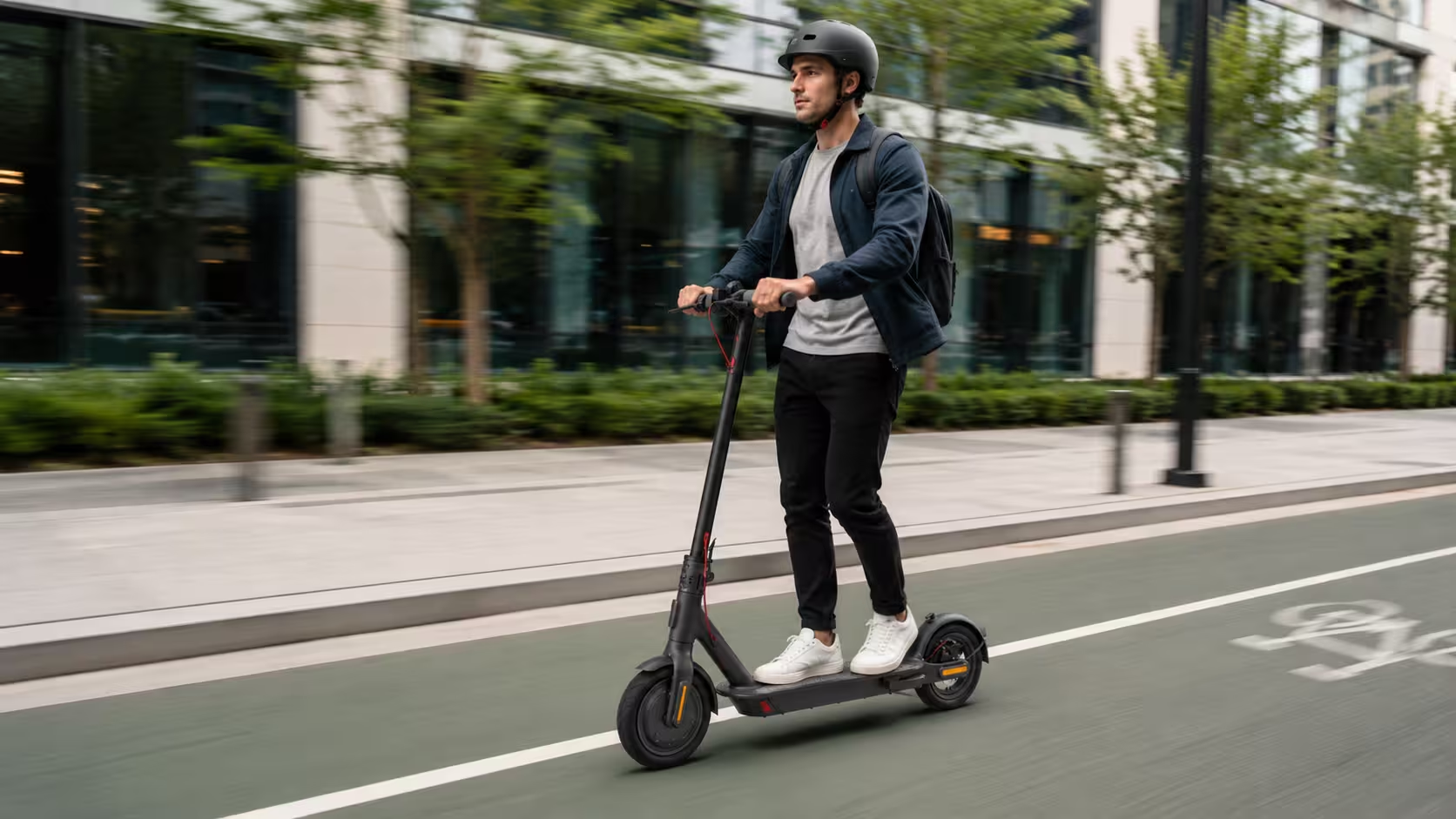

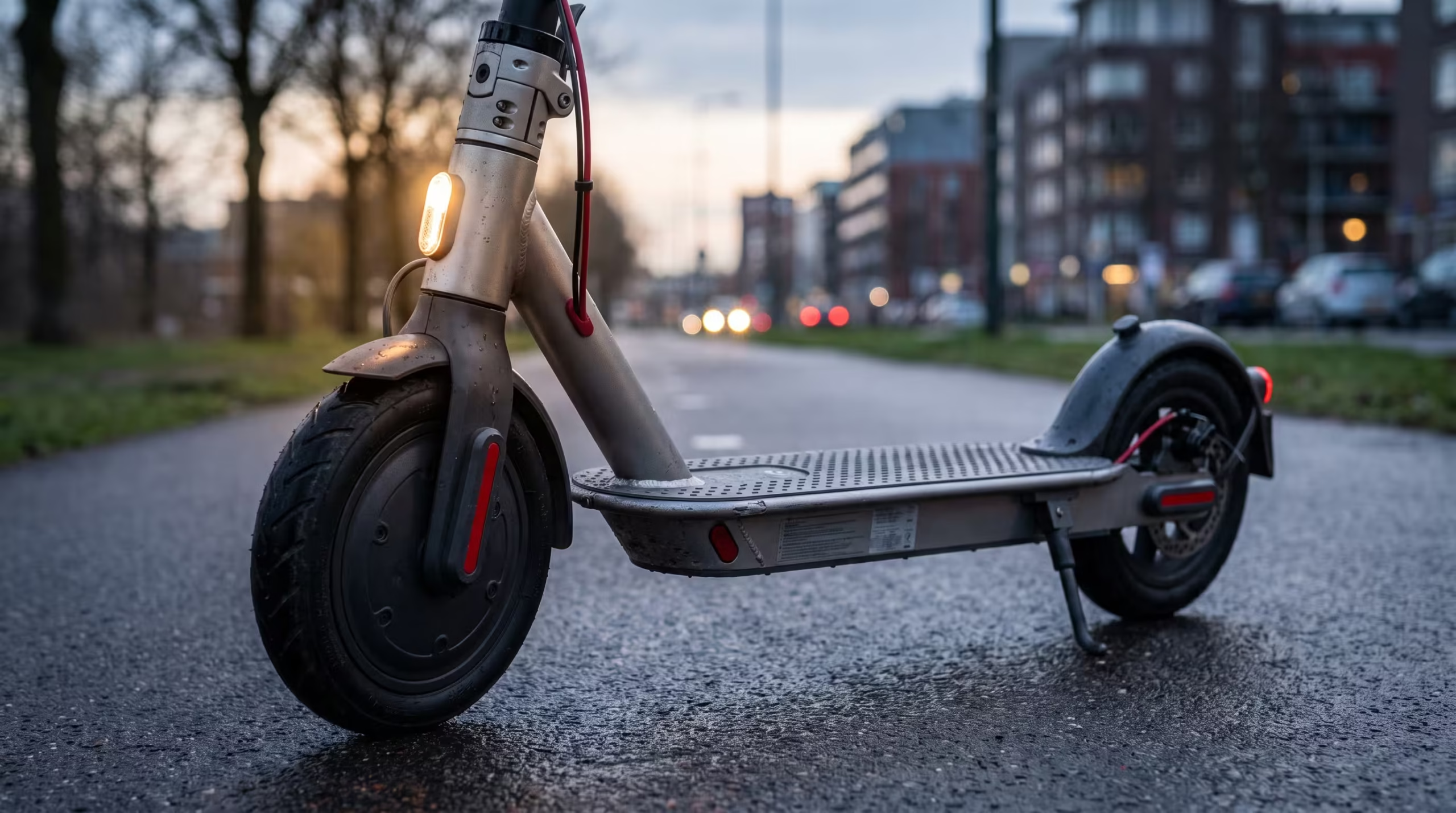


The Xiaomi Mi Electric Scooter 1S remains a compelling lightweight electric scooter for riders who value portability, simple controls, and practical urban performance. Developed as an evolution of Xiaomi’s popular M365 platform, it adds a more useful digital dashboard, multiple riding modes, smart-app connectivity, and several small design refinements without abandoning the straightforward formula that made its predecessor successful.
Electric scooters have become an important part of urban mobility because they can bridge short distances that are inconvenient to walk but unnecessary to cover by car. For commuters connecting a train station to an office, travelling across a university campus, or completing short neighborhood trips, a compact folding scooter can be particularly convenient.
What Is the Xiaomi Mi Electric Scooter 1S?
The Xiaomi Mi Electric Scooter 1S is a folding commuter scooter powered by a 250W nominal brushless motor. Its design focuses on manageable weight, straightforward operation, moderate city speeds, and enough claimed range for short daily journeys.
It sits between basic low-powered scooters and heavier performance electric scooters equipped with larger motors, suspension systems, and much bigger batteries.
The 1S is best described as a commuter electric scooter. Its strengths are portability, simplicity, and predictable city-road behavior rather than maximum acceleration.
Different Types of Electric Scooters
Electric scooters vary considerably depending on their intended use.
Commuter electric scooters prioritize reasonable range, low weight, reliability, and manageable dimensions.
Folding electric scooters are designed for riders who need to carry their scooter into an office, apartment, car, bus, or train.
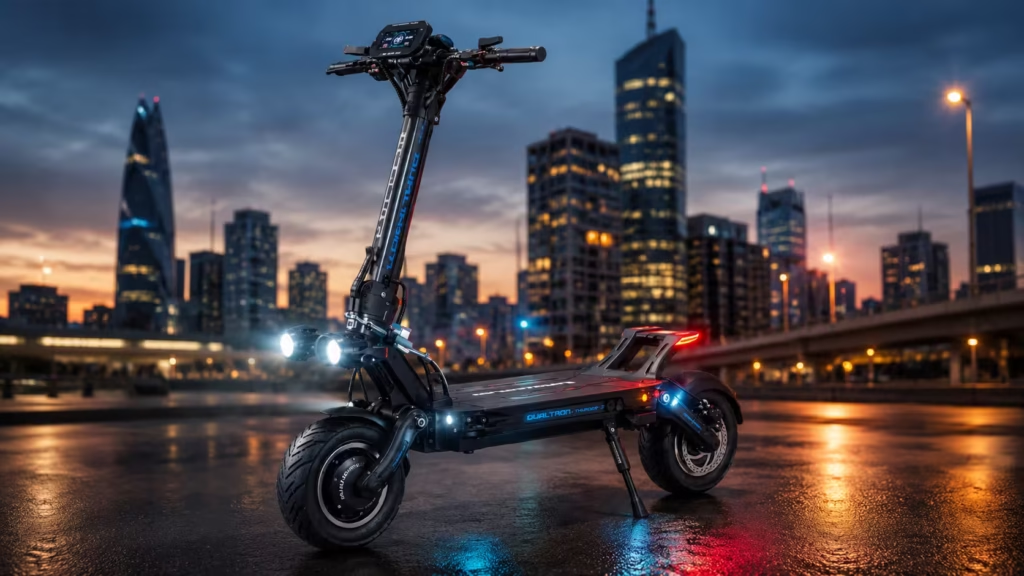
Performance electric scooters typically use larger motors, bigger batteries, wider tires, stronger braking systems, and sometimes dual-motor drivetrains.
Xiaomi Mi Electric Scooter 1S Key Specifications
| Specification | Xiaomi Mi Electric Scooter 1S |
|---|---|
| Motor | 250W nominal brushless DC |
| Peak Motor Output | Up to 500W |
| Maximum Speed | Up to 25 km/h |
| Claimed Maximum Range | Up to 30 km |
| Battery Capacity | Approximately 275 Wh |
| Typical Charging Time | Around 5.5 hours |
| Scooter Weight | Approximately 12.5 kg |
| Tire Size | 8.5 inches |
| Tire Type | Pneumatic |
| Front Braking | Electronic regenerative/E-ABS |
| Rear Braking | Mechanical disc brake |
| Suspension | No dedicated suspension |
| Riding Modes | Pedestrian, Standard and Sport |
| Water Resistance | IP54 |
| Connectivity | Bluetooth with Mi Home app |
| Display | Integrated digital dashboard |
Motor Power, Torque and Acceleration
The Xiaomi Mi Electric Scooter 1S uses a 250W nominal motor with peak output of up to 500W.
That output is appropriate for normal urban commuting but modest compared with modern performance scooters. Acceleration feels controlled rather than aggressive, which can make the scooter approachable for newer riders.
Xiaomi does not commonly promote a specific torque figure for the 1S, so it is more useful to evaluate its performance through real-world behavior.
On flat streets, the motor provides enough power for typical city use. Mild inclines are manageable, although speed can fall noticeably on steeper hills, particularly with a heavier rider.
This is not a hill-climbing performance machine. Instead, its powertrain is tuned around efficient short-distance transportation.
Top Speed and Three Riding Modes
The scooter’s maximum rated speed is 25 km/h, although regional software configurations and local regulations can affect available speed.
Three riding modes make performance easier to control:
- Pedestrian Mode: approximately 5 km/h
- Standard D Mode: up to approximately 20 km/h
- Sport S Mode: up to approximately 25 km/h
Standard mode works well when efficiency matters, while Sport mode provides stronger acceleration and access to maximum available performance.
Battery Capacity, Range and Charging Time
The Xiaomi Mi Electric Scooter 1S uses a battery pack of roughly 275 Wh and carries a manufacturer-rated range of up to 30 km under favorable test conditions.
However, maximum range should not be confused with guaranteed everyday range.
Riders travelling quickly in Sport mode, climbing hills, making frequent starts, or carrying more weight should expect less than the headline figure. Real-world range around 18 to 22 km can be more realistic under demanding commuter conditions.
Charging typically takes around 5.5 hours, making overnight or workday charging practical.

Folding Design and Portability
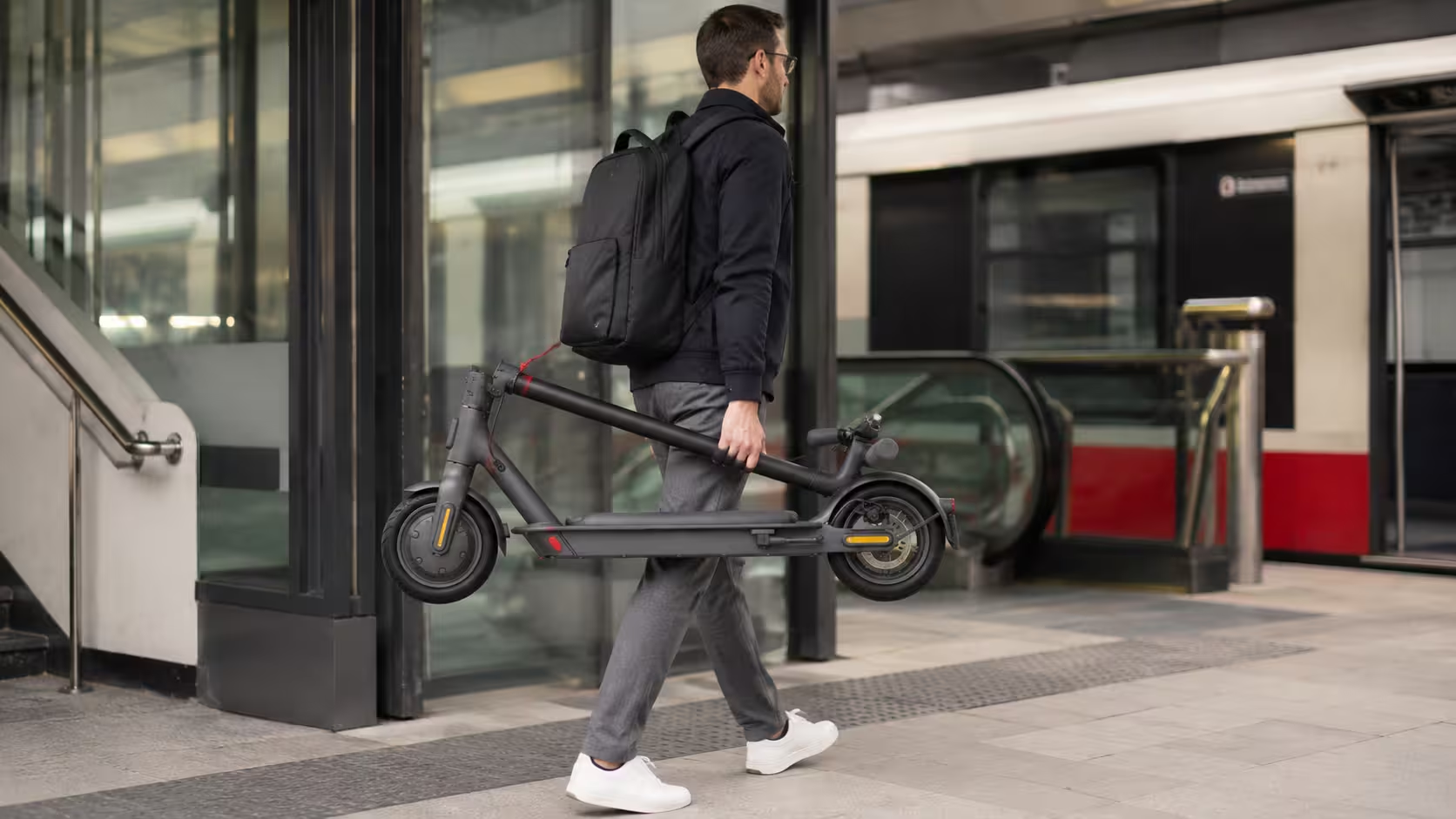
Portability is one of the biggest advantages of the Xiaomi Mi Electric Scooter 1S.
At approximately 12.5 kg, it is substantially easier to carry than many modern high-performance scooters. The folding mechanism allows the steering column to collapse toward the deck, creating a more compact shape for storage and transportation.
This matters if you:
- Live in an apartment
- Need to climb stairs
- Store the scooter beneath a desk
- Combine scooter travel with public transport
- Carry the scooter into a car
- Have limited home storage space

Tires, Suspension and Ride Comfort
The 8.5-inch pneumatic tires help absorb small surface imperfections better than solid tires.
However, the scooter does not have dedicated mechanical suspension.
On smooth asphalt and maintained cycle paths, ride quality is stable and predictable. On broken pavement, paving stones, deep cracks, and rough surfaces, vibrations become much more noticeable.
This is one area where newer competitors with front or dual suspension can deliver a significant comfort advantage.
Nevertheless, pneumatic tires provide some cushioning while keeping the scooter relatively light.
Braking and Safety Features
The Xiaomi Mi Electric Scooter 1S combines electronic braking at the front with a mechanical rear disc brake.
The system provides progressive stopping performance while regenerative braking can help recover a small amount of energy during deceleration.
Other practical safety-related features include:
- Front lighting
- Rear light
- Side reflectors
- Electronic speed control
- Battery management protections
- Rear disc brake
- E-ABS electronic braking
- Bell for pedestrian awareness

Digital Dashboard and Smart Connectivity
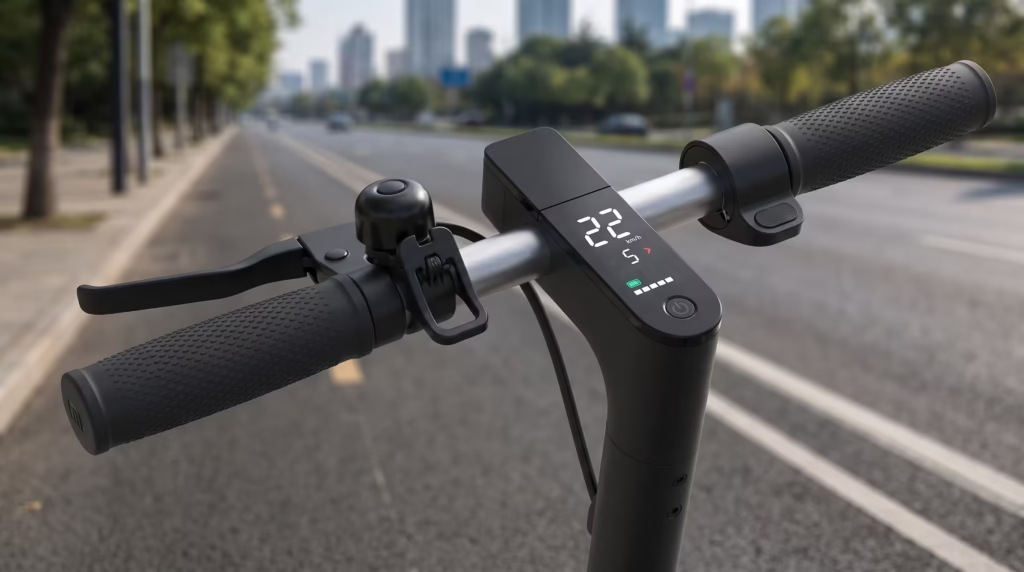
One of the most useful upgrades over the original M365 is the integrated display.
Instead of relying primarily on simple battery indicator lights, riders can quickly view information such as:
- Current speed
- Riding mode
- Battery status
- System indicators
The Xiaomi Mi Electric Scooter 1S also connects to the Mi Home app through Bluetooth.
Depending on firmware and app support, riders can access scooter information, check riding data, adjust supported settings, activate the scooter, and use electronic locking functions.
The app adds useful information, although the scooter remains simple enough to operate without constantly checking a smartphone.
Xiaomi Mi Electric Scooter 1S vs M365
| Feature | Xiaomi M365 | Xiaomi Mi Electric Scooter 1S |
|---|---|---|
| Dashboard | Basic LED indicators | Digital speed display |
| Riding Modes | Fewer mode options | Three riding modes |
| Motor | 250W nominal | 250W nominal |
| Claimed Range | Around 30 km | Around 30 km |
| Top Speed | Around 25 km/h | Around 25 km/h |
| Folding Design | Yes | Yes |
| Smart App | Yes | Yes |
| Reflectors | Basic configuration | Improved visibility elements |
Xiaomi Mi Electric Scooter 1S vs Modern Competitors
Modern commuter scooters increasingly offer larger batteries, 10-inch tires, stronger motors, suspension, and improved displays.
That creates a clear trade-off.
The Xiaomi Mi Electric Scooter 1S is lighter and mechanically simpler than many newer models, but competitors may offer:
- More climbing power
- Longer real-world range
- Larger tires
- Better suspension
- Faster charging
- Stronger acceleration
- More advanced app functions
Electric Scooter vs E-Bike
An e-bike generally provides better comfort for longer journeys, larger wheels for rough roads, and the ability to pedal when battery power is unavailable.
However, an electric scooter such as the Xiaomi Mi Electric Scooter 1S is much easier to fold and store.
A scooter may be better for short multimodal trips, while an e-bike generally makes more sense for longer daily distances.
The right choice depends on commute length, storage space, road quality, and how often public transportation is involved.
Electric Scooter vs Public Transport
Public transport can move people efficiently across long urban distances, but it rarely delivers true door-to-door mobility.
That is where a folding electric scooter becomes useful.
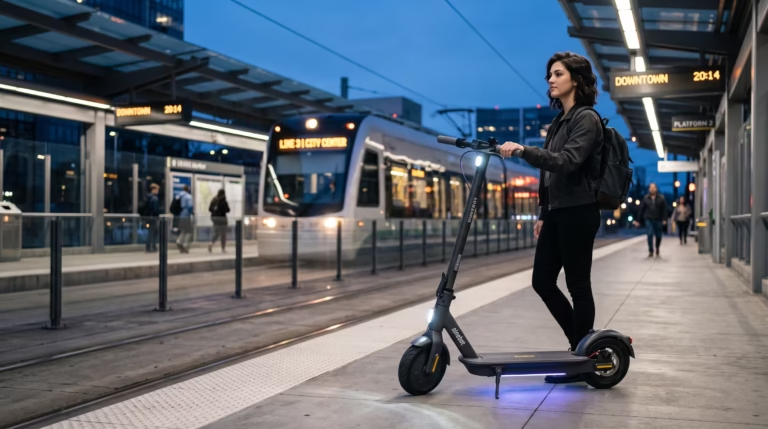
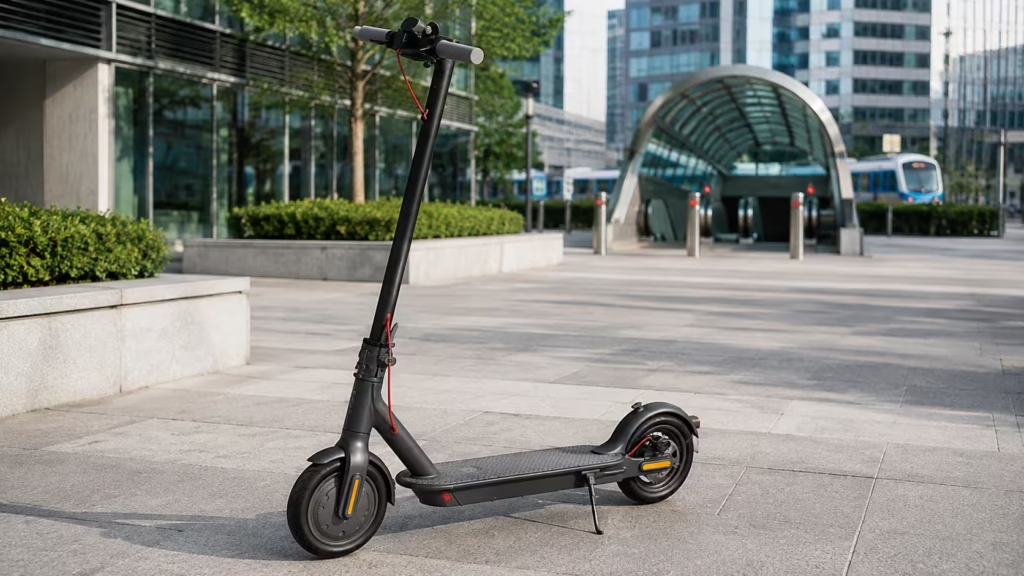
A rider might take a train for the main part of a journey and use the scooter for the final one or two kilometers.
For short trips, a scooter can also eliminate waiting time. However, public transportation remains more practical for longer distances, poor weather, or routes unsuitable for scooters.
Real-World Commuting Experience
The Xiaomi Mi Electric Scooter 1S works best in relatively flat urban environments with reasonably smooth road surfaces.
Its narrow dimensions make it easy to maneuver, while its low weight makes parking and storage straightforward.
The biggest compromises are equally clear.

There is no suspension, acceleration is moderate, and sustained high-speed riding can reduce range significantly.
For a short office commute, campus trip, or last-mile connection, those compromises may be acceptable. For long daily rides or consistently steep terrain, a higher-powered alternative will be more suitable.
Pricing, Maintenance and Ownership Cost
Because the Xiaomi Mi Electric Scooter 1S is an older model, pricing can vary considerably according to market, condition, seller, and whether the unit is new, refurbished, or used.
Routine ownership costs are generally simpler than those of a car or motorcycle.
Common maintenance items include:
- Tire pressure checks
- Inner tubes or tire replacements
- Brake adjustment
- Disc brake servicing
- Fastener inspection
- Charging equipment
- Battery monitoring
Environmental and Market Impact
Electric scooters have contributed to the broader shift toward micromobility in cities.
They require far less physical space than cars and can be particularly efficient for short individual journeys.
However, environmental impact also depends on battery lifespan, electricity generation, manufacturing, repairability, and how long the scooter remains in service.
A durable scooter used regularly instead of short car journeys has more potential to deliver meaningful transportation benefits than a device treated as disposable technology.
The popularity of Xiaomi’s early scooter platform also helped establish expectations that remain common today: folding frames, smartphone connectivity, regenerative braking, compact batteries, and minimalist controls.
Future Trends in Electric Scooters
Electric scooters are becoming increasingly sophisticated.
Future commuter models are likely to place greater emphasis on:
- Larger and safer battery systems
- Improved battery management
- Faster charging
- Better suspension
- Larger tubeless tires
- More efficient motors
- Integrated navigation
- Smarter theft protection
- Better visibility systems
- Improved repairability
- Lower overall weight
Its 250W nominal motor, 25 km/h maximum rated speed, folding aluminum design, 8.5-inch pneumatic tires, dual braking approach, digital dashboard, smart connectivity, and approximately 12.5 kg weight create a practical package for short-distance city use.
It cannot match newer performance scooters for hill climbing, suspension comfort, or long-range capability. Nevertheless, its light weight and simple design continue to make it appealing for riders who want a manageable commuter scooter rather than a heavyweight performance machine.
For short city journeys, public-transport connections, campus travel, and limited storage situations, the Xiaomi Mi Electric Scooter 1S remains an intelligently focused example of practical electric mobility.