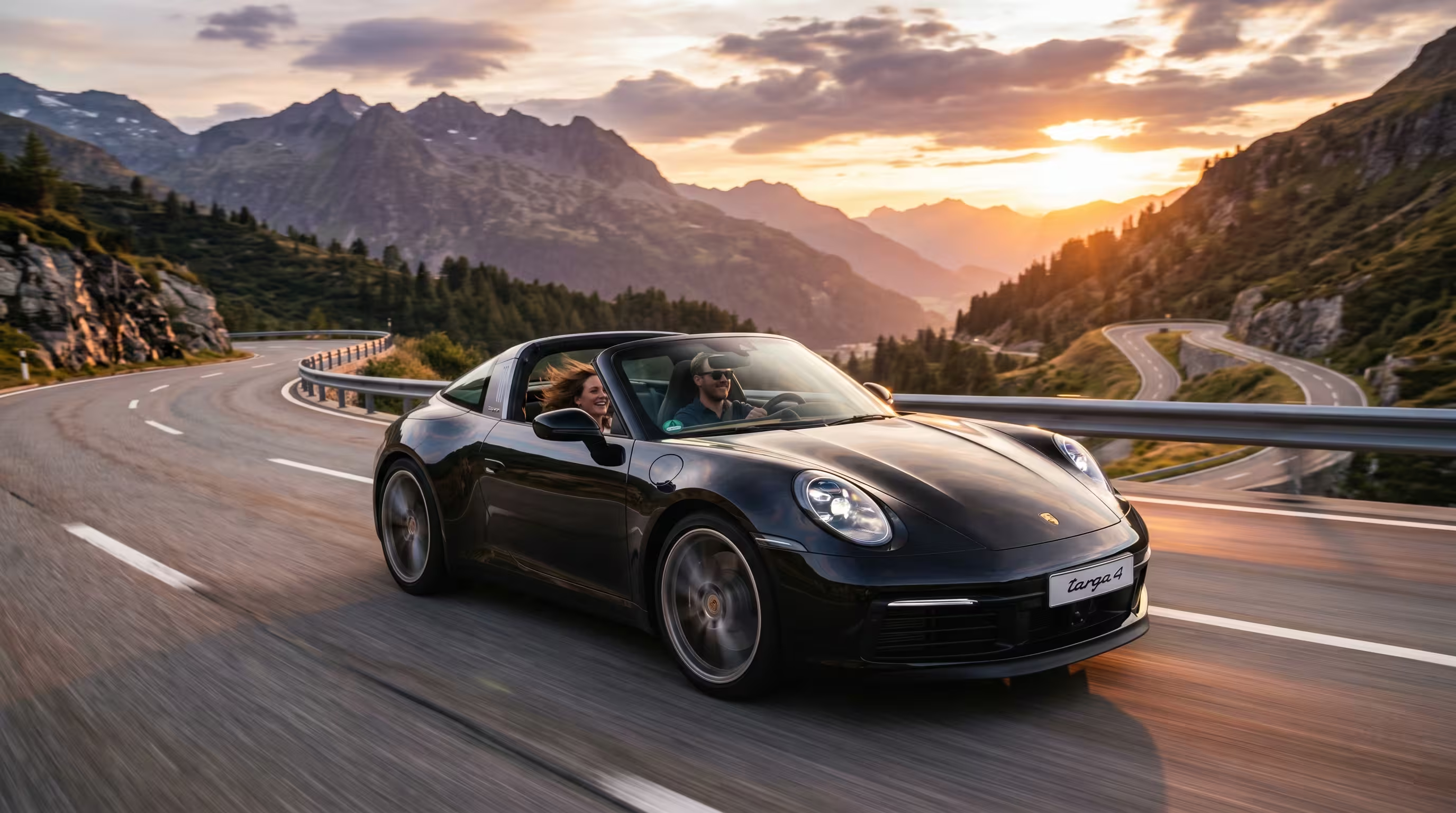
Porsche 911 Carrera Review Specs, Performance & Verdict


When it comes to the definitive benchmark for modern sports cars, few vehicles command the same universal respect as the entry-level 911. In this comprehensive Porsche 911 Carrera review, we are diving deep into what makes the 992-generation (specifically the latest 992.2 update) an absolute masterclass in automotive engineering. Whether you are seeking a weekend canyon carver or a reliable Porsche 911 daily driver, the Carrera serves as the gateway to Stuttgart’s legendary lineup.
While it may carry the “base model” moniker, do not let that fool you. The current generation 911 Carrera proves that you do not need the astronomical horsepower figures of the Turbo S or the track-focused rigidity of the GT3 to experience the pinnacle of driving dynamics. This article covers everything you need to know, from its iconic heritage and twin-turbocharged flat-six performance to real-world usability and competitive comparisons.
The Porsche Heritage and the 911 Legacy
To truly understand the modern 992 Porsche 911 review, you must first look back at the incredible history that shaped it. Porsche introduced the original 911 in 1964, effectively replacing the 356. From its inception, it utilized a rear-engine layout, a quirk of engineering that many critics claimed was fundamentally flawed for vehicle balance. However, over the past six decades, Porsche engineers have relentlessly refined this exact layout, turning a perceived disadvantage into the car’s greatest dynamic strength.
The evolutionary path of the 911 is marked by its chassis codes: the classic 930, the universally beloved 964 and 993 (the final air-cooled models), the controversial but capable 996, the modernized 997, the refined 991, and now, the highly sophisticated 992 generation. Through every iteration, Porsche has managed to maintain the unmistakable silhouette of the 911. The sloping roofline, the pronounced rear haunches, and the classic round headlights are non-negotiable design elements that instantly communicate the car’s identity.
What makes the 911’s design philosophy so successful is its stubborn consistency. While competitors completely reinvent their sports cars every decade to chase fleeting trends, Porsche practices the art of continuous, incremental improvement. This dedication to heritage means that when you purchase a modern 911 Carrera, you are buying into an unbroken lineage of motorsport success and engineering triumphs.

911 Carrera Specs and Technical Breakdown
Before we get behind the wheel, let us examine the raw numbers. The latest iteration of the base Carrera has received subtle but impactful upgrades, bringing it closer to the performance figures of older S models.
| Specification | Details |
| Engine | 3.0L Twin-Turbo Flat-6 |
| Power | 388 hp (394 PS) |
| Torque | 331 lb-ft |
| Transmission | 8-speed dual-clutch PDK automatic |
| Drivetrain | Rear-Wheel Drive (RWD) |
| 0–60 mph | 3.9 seconds (3.7 sec with Sport Chrono) |
| Top Speed | ~183 mph |
| Weight | ~3,342 lbs |
| Layout | Rear-engine |
What these Porsche 911 specs mean in real-world driving is pure, unadulterated accessibility. Producing nearly 400 horsepower, the Carrera provides more than enough thrust to pin you back in your seat, yet the power delivery remains entirely manageable. The addition of larger turbos and an upgraded intercooler derived from the Turbo models ensures that the 3.0-liter engine breathes better than ever, resulting in a beautifully flat torque curve that makes overtaking on the highway utterly effortless.
Exterior Design and Aerodynamics
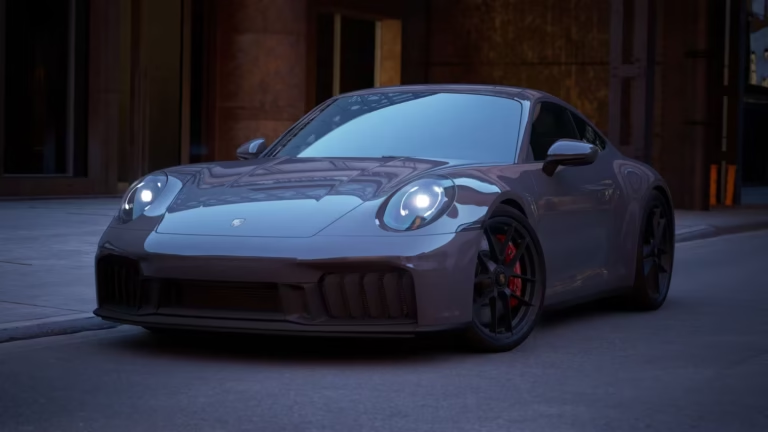
Approaching the 992-generation Carrera, the first thing you notice is its incredibly wide stance. Historically, Porsche reserved the “wide body” look for its all-wheel-drive Carrera 4 models and the Turbo range. However, with the 992 generation, every 911 gets the wide hips, giving the base Carrera an aggressively planted footprint that commands attention on the road.
The front fascia is characterized by the iconic, rounded LED headlights (now featuring standard Matrix Design LED technology) that flank a sharply sculpted hood. This design subtly nods to the classic G-Series 911s from the 1970s and 1980s. Moving along the profile, the flush electronic door handles keep the aerodynamics clean while adding a touch of modern theater when you unlock the car.

At the rear, the 911 Carrera features a stunning full-width LED light bar that perfectly accentuates the car’s width. Above that sits an active rear spoiler that seamlessly integrates into the bodywork when parked or driving at low speeds, but automatically deploys at higher speeds to provide critical downforce and improve cooling. Porsche perfectly balances its rich heritage with modern, aggressive aerodynamic improvements, creating a sports car that looks just as appropriate parked outside a five-star restaurant as it does sitting in the pit lane of a race track.
Interior Quality and Cabin Technology
Stepping inside the cabin, the Porsche 911 Carrera proves that a hardcore sports car does not have to compromise on luxury. The interior of the 992 is a masterful blend of analog tradition and cutting-edge digital technology.
Front and center is the driving position, which is arguably the best in the automotive industry. The steering wheel frames a newly updated, fully digital 12.6-inch instrument cluster. While purists might mourn the loss of the physical, analog tachometer that sat dead center in previous generations, the digital display is remarkably sharp, highly customizable, and perfectly visible.
In the center console, you will find a beautifully integrated 10.9-inch touchscreen housing the Porsche Communication Management (PCM) infotainment system. It is incredibly responsive and comes standard with wireless Apple CarPlay and Android Auto. Moreover, the build quality is absolutely flawless. Whether you opt for standard leather or upgrade to Race-Tex (Porsche’s Alcantara equivalent), carbon fiber, or brushed aluminum, every touchpoint feels expensive, solid, and meticulously assembled.
Regarding practicality, the 911 retains its famous “2+2” seating arrangement. While the rear seats are largely symbolic and not suitable for adults on long journeys, they provide excellent supplementary cargo space, making the 911 uniquely practical among mid- and rear-engine rivals.
Engine Performance and Acceleration Dynamics
The beating heart of this machine is the spectacular 3.0-liter twin-turbocharged flat-six engine. In our detailed 911 Carrera performance analysis, it becomes abundantly clear that you do not need the GTS or Turbo models to have an exhilarating time.
With 388 horsepower and 331 lb-ft of torque available from as low as 1,950 RPM, the twin-turbo flat-six exhibits virtually no turbo lag. When you press the throttle, the response is immediate and linear, mimicking the characteristics of a naturally aspirated engine while delivering the low-end punch of a modern turbocharged unit. Mated exclusively to the lightning-fast 8-speed PDK (Porsche Doppelkupplung) transmission, the acceleration is relentless. Shifts are executed in mere milliseconds, completely uninterrupted, allowing the Carrera to sprint from 0 to 60 mph in just 3.7 seconds when equipped with the optional Sport Chrono Package.
As you climb the rev range toward the 7,500 RPM redline, the exhaust note transforms from a deep, burbling growl into a frantic, mechanical howl that is uniquely Porsche. When compared directly to V8-powered rivals like the Chevrolet Corvette Stingray or the Mercedes-AMG GT, the 911’s flat-six feels incredibly refined and wonderfully distinct. Furthermore, the rear-engine layout places the weight of the engine directly over the rear drive wheels, giving the Carrera a distinct traction advantage off the line that front-engine competitors simply cannot match.
Handling, Steering, and Driving Dynamics
This is the true heart of the review. The Porsche 911 handling characteristics are the primary reason this car maintains its legendary status.
Because the engine is located behind the rear axle, the 911 has a unique weight distribution. In the hands of amateur engineers, this could cause pendulum-like snap oversteer. However, Porsche has perfected the geometry. The light front end makes the turn-in incredibly sharp and precise. As you enter a corner, the electromechanical steering communicates the exact amount of grip available at the front tires, feeding information straight to your fingertips.

Mid-corner stability is heavily aided by the Porsche Active Suspension Management (PASM) adaptive dampers, which now come standard. They effectively eliminate unwanted body roll while keeping the tires glued to the tarmac. As you reach the apex and apply the throttle, the rear-engine weight distribution squats down, pressing the massive rear tires into the pavement and firing you out of the corner with a level of mechanical grip that borders on physics-defying.
Whether you are navigating tight mountain switchbacks, executing high-speed sweepers on a track day, or simply taking an on-ramp at spirited speeds, the 911 Carrera behaves dynamically flawlessly. It inspires massive driver confidence, making novices feel like heroes while rewarding advanced drivers with deep, exploitable limits.
Ride Comfort and Daily Usability
The most remarkable trick the 911 performs is its dual personality. A Porsche 911 daily driver is not an automotive myth; it is a highly realistic proposition.
When you toggle the drive mode selector from Sport Plus back into Normal, the active exhaust quiets down, the PDK transmission shifts early and smoothly, and the adaptive suspension slackens to absorb road imperfections. The cabin insulation is excellent, keeping tire roar and wind noise at bay during highway cruising.
Additionally, the front trunk (or “frunk”) provides 4.6 cubic feet of deep cargo space—easily enough to swallow two airline carry-on bags or a substantial load of groceries. Combined with the rear seats, the Carrera offers practicality that completely shames the Audi R8 or the Corvette. Fuel economy is surprisingly respectable as well, easily achieving upwards of 25 MPG on the highway when cruising in eighth gear, proving that sports car ownership does not strictly require massive sacrifices at the pump.
Braking Performance
To cope with its blistering acceleration, the 911 Carrera is equipped with an exceptional braking system. For the latest 992.2 update, Porsche actually fitted the base Carrera with the larger brakes derived from the previous-generation S and GTS models.
The standard steel brakes offer an incredibly firm, communicative pedal feel. There is zero dead travel at the top of the pedal; as soon as you apply pressure, the calipers bite hard. Fade resistance is spectacular for street use and highly competent for light track duty. Under emergency braking scenarios, the car remains dead straight and completely stable, a byproduct of the rearward weight bias allowing all four tires to share the braking load more evenly than a front-engine vehicle.
While Porsche offers Carbon Ceramic Brakes (PCCB) as a costly option, the standard steel setup is more than sufficient for 95% of buyers.
Trim Levels and Options Explained
Porsche is famous for its extensive—and expensive—options list. Understanding the 911 hierarchy is crucial for prospective buyers.
- Carrera: The base, rear-wheel-drive model with 388 hp. The purest starting point.
- Carrera 4: Adds an intelligent all-wheel-drive system for all-weather capability.
- Carrera T: A lightweight, enthusiast-focused version that strips out some sound deadening and offers a manual transmission.
- Carrera S / 4S: Historically steps up the power output (to around 473 hp in the newest iterations) and adds performance hardware.
For most drivers, the base Carrera provides more performance than can legally or safely be utilized on public roads. However, options like the Sport Chrono Package (adding launch control and dynamic engine mounts) and the Sport Exhaust System are highly recommended boxes to check when configuring your vehicle.
Porsche 911 Carrera vs. Key Competitors
How does the benchmark compare to the rest of the industry? Let us look at a breakdown:
| Model | Power | Engine Layout | 0-60 mph | Starting Price |
| Porsche 911 Carrera | 388 hp | Rear-engine | 3.9 sec | $$$ |
| Chevrolet Corvette C8 | 490 hp | Mid-engine | 2.9 sec | $$ |
| Mercedes-AMG GT Coupe | 469 hp | Front-engine | 3.7 sec | |
| Audi R8 V10 (Used) | 562 hp | Mid-engine | 3.4 sec |
The Breakdown:
- Vs. Corvette C8: The Corvette offers unbelievable mid-engine performance and V8 power for a fraction of the Porsche’s price. However, the 911 counters with vastly superior interior quality, much better outward visibility, and a more refined, communicative steering feel.
- Vs. AMG GT: The AMG is a sledgehammer, offering brute V8 force and a stunning design. However, it feels much larger and heavier on a twisting road compared to the scalpel-like precision of the relatively lightweight 911.
- Vs. Audi R8: While the R8 brings a screaming naturally aspirated V10 to the table, the 911 is far more practical for daily use and arguably more engaging dynamically at lower speeds.
Ownership Costs, Maintenance, and Reliability
Owning a Porsche is a premium experience, and the maintenance costs reflect that reality. Routine service intervals (oil changes, brake fluid, inspections) will run significantly higher than mass-market vehicles. Insurance premiums also fall into the high-performance luxury category.
However, the 911 is widely considered one of the most reliable high-performance sports cars on the market. Furthermore, the Porsche 911 Carrera boasts absolutely class-leading resale value. Unlike many luxury cars that plummet in value the moment they leave the showroom, the 911’s depreciation curve is incredibly shallow, meaning your long-term cost of ownership is often much lower than you might expect.
Pros & Cons
Pros
- ✔ Iconic, timeless exterior design.
- ✔ Exceptional, benchmark-setting steering and handling.
- ✔ Highly practical and comfortable for daily driving.
- ✔ Premium, flawlessly assembled interior.
- ✔ Industry-leading resale value and depreciation resistance.
Cons
- ✖ The base price climbs alarmingly fast once you add basic options.
- ✖ Rear seats are essentially just padded luggage shelves.
- ✖ Exhaust note is heavily muted by modern turbochargers and emissions filters.
Frequently Asked Questions (FAQs)
Is the Porsche 911 Carrera fast enough?
Absolutely. With a 0-60 mph time of 3.7 seconds (with Sport Chrono) and nearly 400 horsepower, it possesses more than enough speed to thrill on the street and hold its own on a track.
Is the 911 Carrera good for daily driving?
Yes, it is arguably the best daily-drivable sports car in the world. Its adaptive suspension is comfortable, visibility is excellent, and it features enough cargo space for routine errands.
What is the difference between the Carrera and the Carrera S?
The Carrera S typically features larger turbochargers, more horsepower (upwards of 473 hp), larger brakes, and additional standard performance hardware.
Is maintenance on a Porsche 911 expensive?
Yes, routine services, tires, and brake replacements carry a premium price tag commensurate with the luxury sports car segment.
Does the base Carrera come in a manual transmission?
Currently, the standard 992.2 Carrera is only offered with the 8-speed PDK automatic. If you want a manual, you must step up to the Carrera T or higher trims like the GT3.
Is the Porsche 911 reliable?
Porsche consistently ranks at or near the top of reliability indexes for luxury and performance brands. The powertrains are robust and well-engineered.
What is the fuel economy like?
The base Carrera is surprisingly efficient, frequently achieving 18 MPG in the city and up to 25 MPG on the highway.
Does it have Apple CarPlay and Android Auto?
Yes, the modern PCM infotainment system supports both Apple CarPlay and Android Auto wirelessly.
Final Verdict
The 2025 Porsche 911 Carrera continues to prove that it is the undisputed king of the everyday sports car segment. While competitors attempt to dethrone it by offering more horsepower or wilder styling, Porsche simply refines perfection.
Its ability to deliver spine-tingling mechanical feedback on a twisty canyon road, only to seamlessly transition into a quiet, comfortable highway cruiser on the drive home, remains completely unmatched. The precision of its steering, the rapid-fire shifts of the PDK transmission, and the bulletproof build quality justify its premium price tag.
For the vast majority of enthusiasts, the base Carrera is not just enough car—it is everything you could ever want. We rate it a resounding 9.5/10.