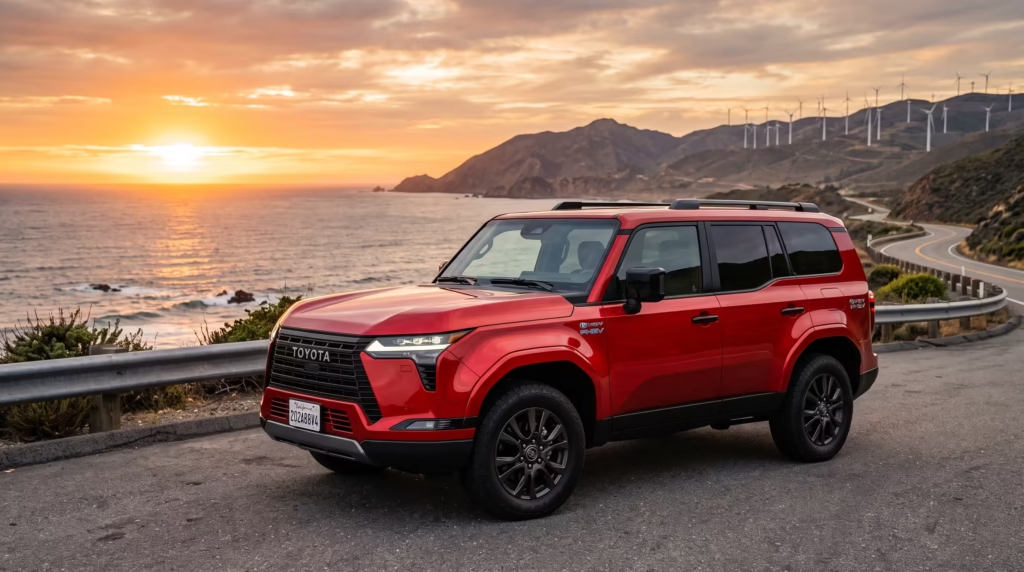
Toyota Highlander Review Reliable Hybrid Midsize SUV for Families


The Toyota Highlander continues to stand out as one of the most dependable and practical three-row midsize SUVs available. Praised by outlets such as Edmunds and Kelley Blue Book for its fuel efficiency, long-term reliability, and everyday family utility, it delivers a refined ownership experience that prioritizes comfort and low running costs over maximum interior volume.
While newer, larger rivals offer more adult-friendly third-row space, the Highlander remains a smart choice for buyers who value proven durability, strong resale value, and efficient powertrains. This review explores its performance options, cabin strengths and limitations, technology, ride quality, and overall value in the competitive midsize SUV segment.
Why Midsize Three-Row SUVs Remain Essential
Midsize three-row SUVs fill a critical role for growing families and multi-purpose households. They provide seating for up to eight, meaningful cargo capacity, elevated driving positions, and better all-weather capability than minivans or crossovers, while remaining more manageable and efficient than full-size SUVs.
Within this category, hybrid powertrains have become increasingly important. They deliver substantial fuel savings without sacrificing the versatility families expect. The Toyota Highlander has long led this space with its hybrid option and reputation for mechanical longevity.

Powertrain Options and Performance
The Highlander offers two well-differentiated powertrains designed for different priorities.
The standard 2.4-liter turbocharged four-cylinder produces 265 horsepower and 310 lb-ft of torque. It delivers lag-free acceleration, reaching 0–60 mph in approximately 7.4 seconds. EPA estimates stand at 21 city / 28 highway mpg. Under heavy throttle the engine can sound somewhat coarse, a common note among reviewers, yet everyday response remains strong and usable.
The 2.5-liter hybrid pairs a gasoline engine with electric motors for 243 net horsepower. This highly efficient system achieves an impressive 35 mpg combined. In recent model years Toyota has made all-wheel drive standard across hybrid trims, enhancing traction and confidence in varied conditions without a significant efficiency penalty.
Both powertrains prioritize smooth, predictable performance over sporty engagement, aligning with the vehicle’s family-focused mission.

Interior Comfort, Space, and Practicality
The cabin emphasizes ergonomic design and everyday convenience. Front and second-row seats are widely regarded as plush and supportive, with available heating and ventilation on higher trims. Small-item storage is thoughtfully executed, including an integrated passenger dashboard shelf and a rolling center-console storage box that improves organization.
Cargo capacity reaches up to approximately 80 cubic feet with the second and third rows folded flat, providing solid versatility for larger loads. Behind the third row, however, space is limited.
The third row itself is the Highlander’s most consistent criticism. Legroom is tight and the seat cushion sits low, making it suitable primarily for children on shorter trips. Adults will find it cramped for anything beyond brief use. Buyers who regularly need adult-sized third-row seating are frequently directed toward the larger Toyota Grand Highlander.

Technology and Infotainment
Higher trims feature dual 12.3-inch digital displays—one for the instrument cluster and one for the central infotainment system. Wireless Apple CarPlay and Android Auto are supported, delivering a modern and responsive interface. The system is intuitive for most users and integrates cleanly with Toyota’s safety and driver-assistance suite.
Ride Quality and Safety Features
The suspension is tuned for a plush, compliant ride that absorbs major road imperfections effectively while remaining composed at highway speeds. It avoids excessive float, contributing to a relaxed long-distance character.
Every Highlander includes a comprehensive safety suite with adaptive cruise control and lane-keep assist as standard. Some testers note that the lane-departure warning can feel overly sensitive, requiring occasional adjustment of settings for personal preference.
Pros and Cons at a Glance
| Category | Strengths | Limitations |
|---|---|---|
| Fuel Economy | Hybrid achieves 35 mpg combined | Gas turbo models less efficient in cold city driving |
| Cabin Space | Comfortable front and second rows; clever storage | Cramped third-row legroom best suited for children |
| Reliability | Excellent long-term durability and resale value | Turbo four-cylinder can sound gritty under hard acceleration |
| Ride & Handling | Plush, compliant suspension | Not sporty or particularly engaging |
| Technology | Dual 12.3-inch displays and wireless smartphone integration | Standard safety alerts can feel sensitive |
Comparison with the Toyota Grand Highlander and Rivals
The most relevant comparison is with Toyota’s own larger sibling.
Quick Comparison Table
| Feature | Toyota Highlander | Toyota Grand Highlander |
|---|---|---|
| Third-Row Comfort | Best for children / short trips | Adult-sized, more usable daily |
| Max Cargo Capacity | Up to ~80–84 cubic feet | Up to 97.5 cubic feet |
| Cargo Behind Third Row | Approximately 16 cubic feet | Approximately 20.6 cubic feet |
| Overall Size & Maneuverability | More compact and easier to park | Larger footprint, more road presence |
| Fuel Economy (Hybrid) | Up to 35 mpg combined | Competitive but typically slightly lower |
| Best For | Daily family use with occasional extra passengers | Frequent adult third-row use and maximum cargo |
Against broader competitors such as the Honda Pilot, Kia Telluride, and Chevrolet Traverse, the Highlander typically leads in hybrid efficiency and long-term reliability while trailing in pure third-row space and sometimes in interior material richness on base trims.
Real-World Ownership and Value
Owners consistently praise the Highlander’s quiet cabin, smooth hybrid operation, and low ownership stress. Fuel costs remain modest, especially with the hybrid, and Toyota’s reputation for durability supports strong resale values years down the road.
Maintenance is straightforward, with hybrid components covered by extended warranties. The vehicle’s balanced size makes it easier to maneuver in urban environments and park than many larger three-row alternatives.
Environmentally, the hybrid powertrain meaningfully reduces fuel consumption and emissions compared with traditional gasoline three-row SUVs, particularly for high-mileage family use.

Market Position and Outlook
The Toyota Highlander occupies a sweet spot for buyers who want proven reliability and efficiency without stepping up to a full-size or oversized midsize SUV. As hybrid and plug-in options expand across the segment, the Highlander’s established hybrid expertise and brand trust continue to give it an advantage.
Future updates are likely to refine efficiency, technology, and safety systems further while preserving the core attributes that have sustained its popularity.
Key Specifications Summary
- Turbo 2.4L: 265 hp, 310 lb-ft, ~7.4-second 0–60 mph, 21/28 mpg
- Hybrid 2.5L: 243 net hp, up to 35 mpg combined, AWD standard on hybrids
- Cargo: Up to ~80 cubic feet with seats folded
- Third row: Best suited for children
- Tech: Dual 12.3-inch displays available, wireless Apple CarPlay & Android Auto
- Safety: Adaptive cruise control and lane-keep assist standard
The Toyota Highlander remains a highly capable and trustworthy midsize three-row SUV for families who prioritize efficiency, comfort in the first two rows, and long-term reliability. Its hybrid powertrain stands among the most efficient in the class, while the overall driving experience is refined and low-stress.
The primary trade-off is third-row space, which limits adult usability. Shoppers who need regular adult seating in the back should strongly consider the Grand Highlander or larger rivals. For everyone else, the Highlander continues to deliver a balanced, practical, and cost-effective solution that has earned its strong reputation over many years.
If you currently own a Highlander, have compared it with the Grand Highlander, or are shopping for a family SUV, share your experiences and questions in the comments. Pass this review along to other families researching three-row options, and subscribe for more in-depth coverage of hybrid SUVs and ownership insights. Explore our related articles on family SUV comparisons and hybrid ownership costs for additional guidance.